Understanding fractions Easy Geometry Worksheets for 6-Year-Olds
6 filtered results
-
From - To
Welcome to our "Understanding Fractions Easy Geometry Worksheets for 6-Year-Olds" page! Designed specifically for young learners, these engaging worksheets introduce the fundamental concept of fractions in a fun and interactive way. Through colorful illustrations and a variety of exercises, kids will discover how to recognize, compare, and create fractions. Our materials encourage critical thinking and make learning fractions enjoyable. With simple instructions and activities tailored for little hands, these worksheets are perfect for parents and teachers alike. Dive into the world of fractions with us, and help your 6-year-old build a strong mathematical foundation today!
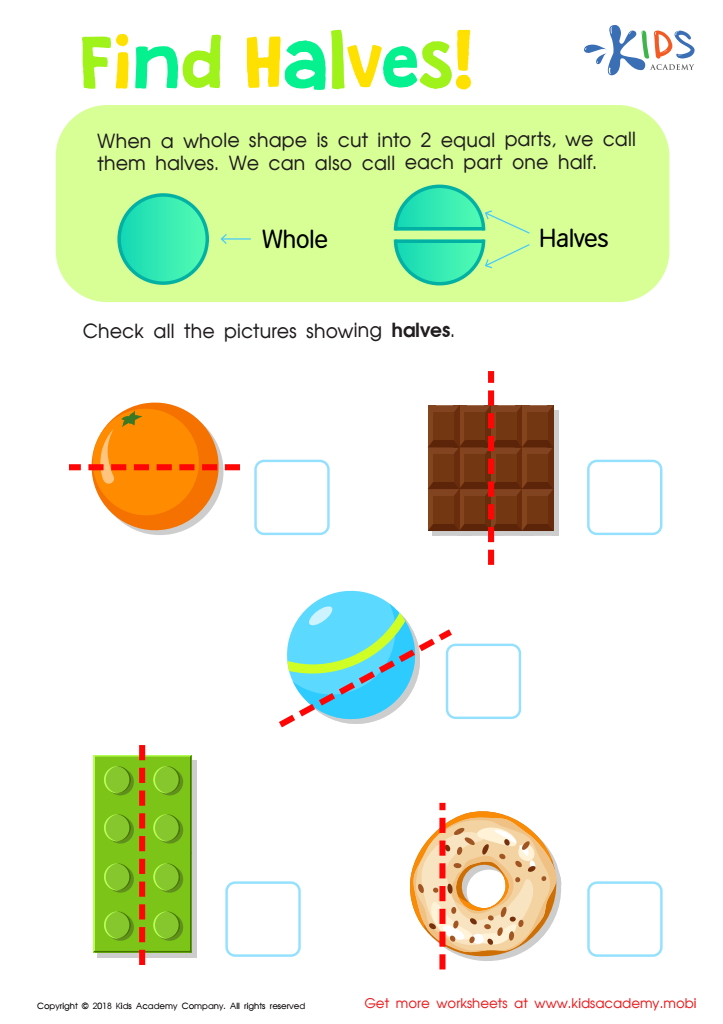
Find Halves Worksheet
 Assign to My Students











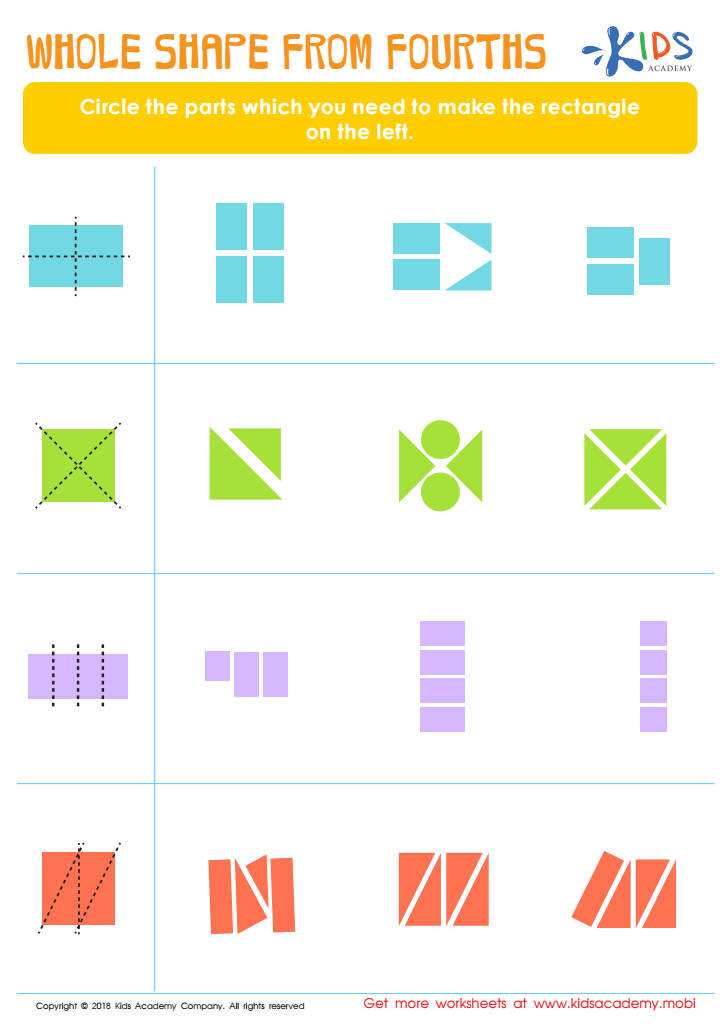
Whole Shape from Fourths Worksheet
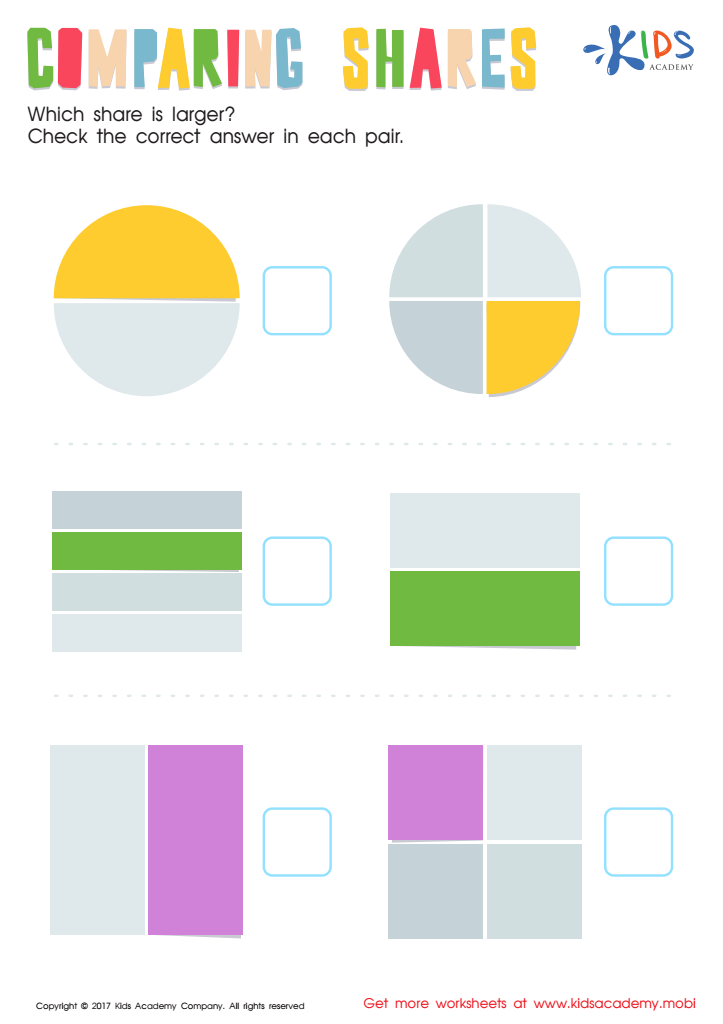
Comparing Shares Worksheet
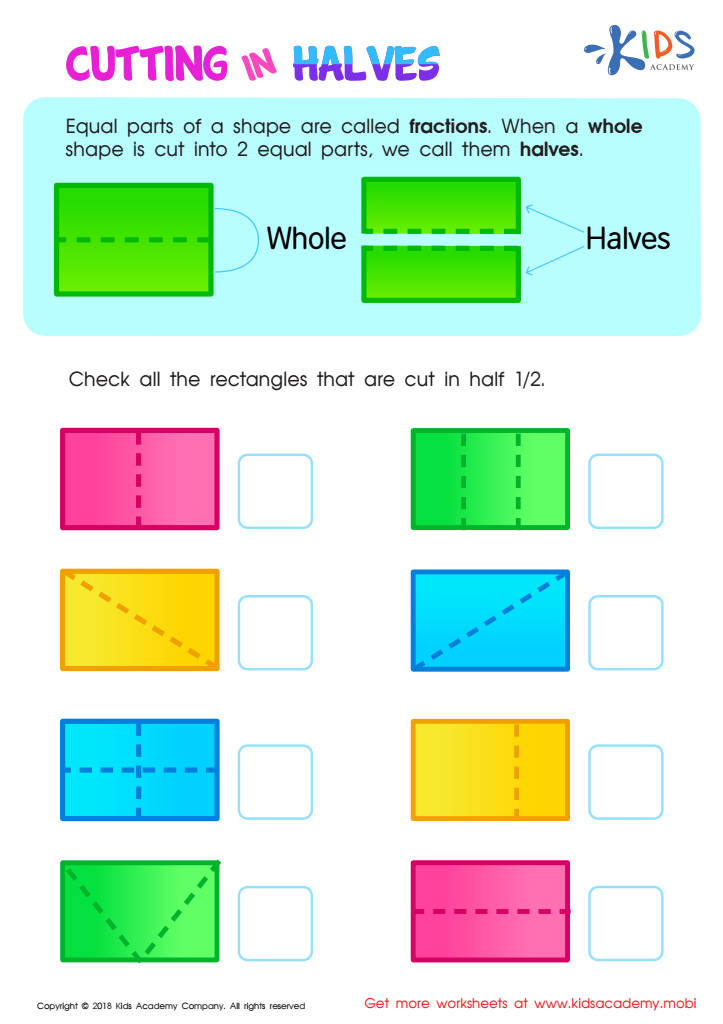
Cutting in Halves Worksheet
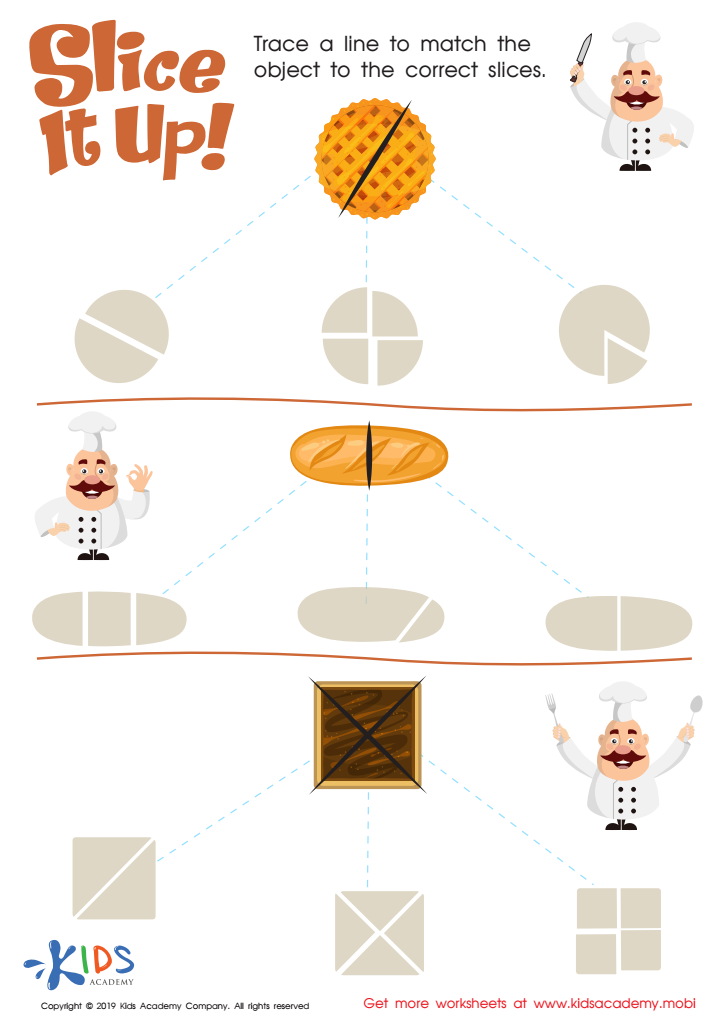
Slice It Up Worksheet
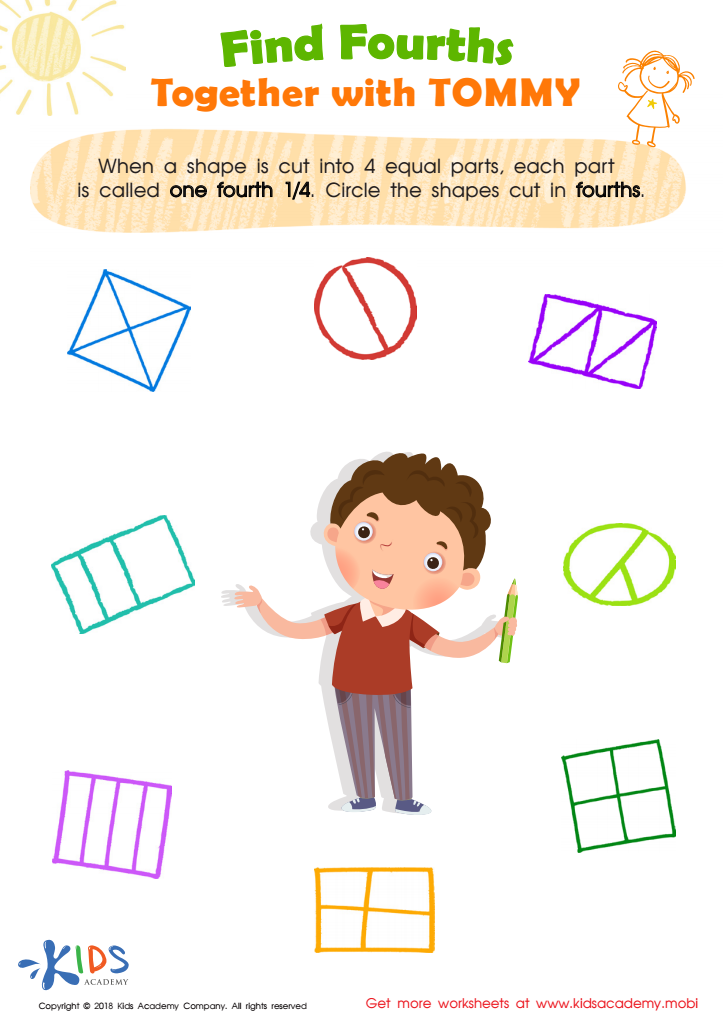
Find Fourths Together with Tommy Worksheet








Understanding fractions and basic geometry is fundamental for young learners, especially for 6-year-olds. At this age, children are beginning to grasp essential mathematical concepts that will serve as the foundation for more complex ideas later on. Integrating fractions and geometry into early education helps develop critical thinking, problem-solving skills, and spatial awareness.
Parents and teachers should care because these concepts encourage children to make meaningful connections between math and real-life situations. For instance, understanding fractions can help children comprehend portions—like sharing a pizza or splitting a candy bar—which promotes fairness and cooperation. Similarly, introducing basic shapes and spatial reasoning through geometry fosters creativity and helps children describe and sort the world around them.
Moreover, mastering these foundational skills can significantly enhance children's confidence in their mathematical abilities, leading to a positive attitude towards math in general. This confidence will benefit them as they progress in their education, making it easier to tackle more challenging subjects later on. Developing a strong mathematical base and enthusiasm for learning ensures a smoother academic journey, promoting lifelong skills essential for future success. Thus, engaging with these concepts early on truly enriches children's educational experience.








