Observational skills Easy Numbers Worksheets for 6-Year-Olds
3 filtered results
-
From - To
Enhance your 6-year-old's learning experience with our engaging Observational Skills Easy Numbers Worksheets! These worksheets are expertly designed to foster critical thinking and observation abilities through fun activities involving numbers. Children will enjoy exercises that challenge them to spot differences, identify patterns, and match quantities, all while developing a strong foundation in numeracy. With vibrant illustrations and age-appropriate content, these worksheets not only make learning enjoyable but also encourage children to explore their surroundings and sharpen their focus. Perfect for teachers and parents alike, these resources will cultivate essential skills in young learners while paving the way for future mathematical success.
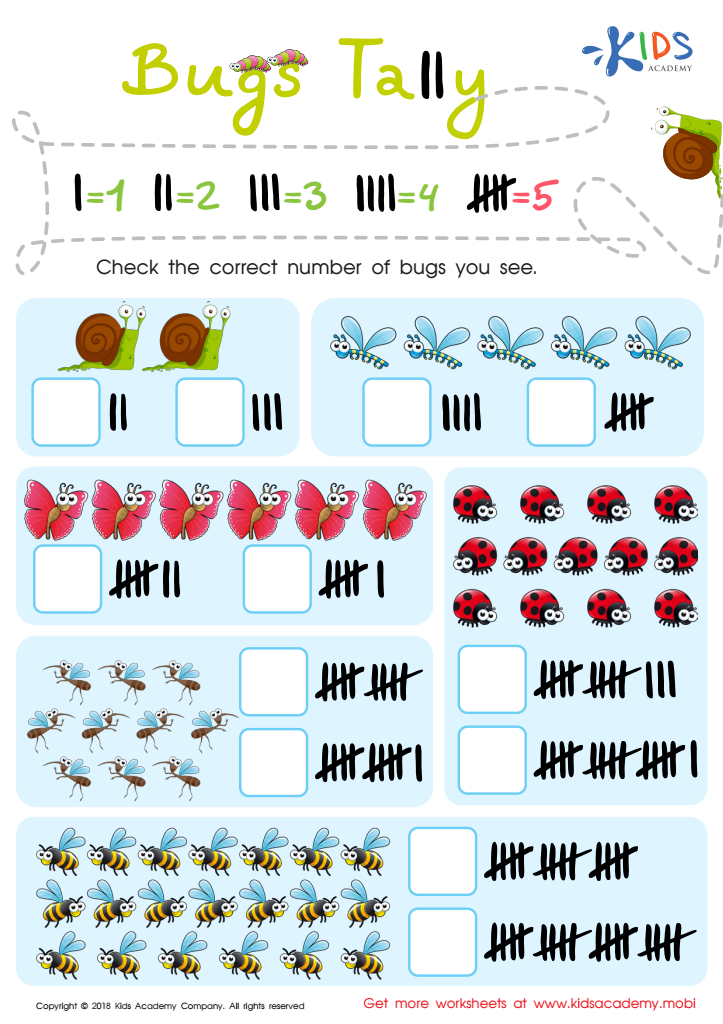
Bugs Tally Worksheet
 Assign to My Students
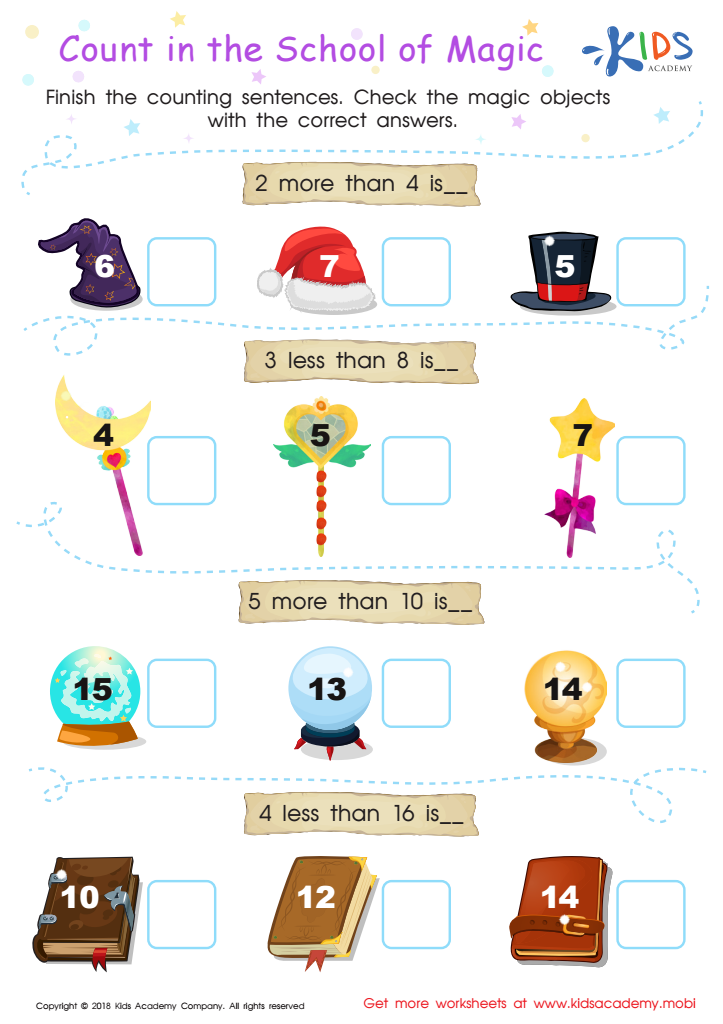
Count in the School of Magic Worksheet
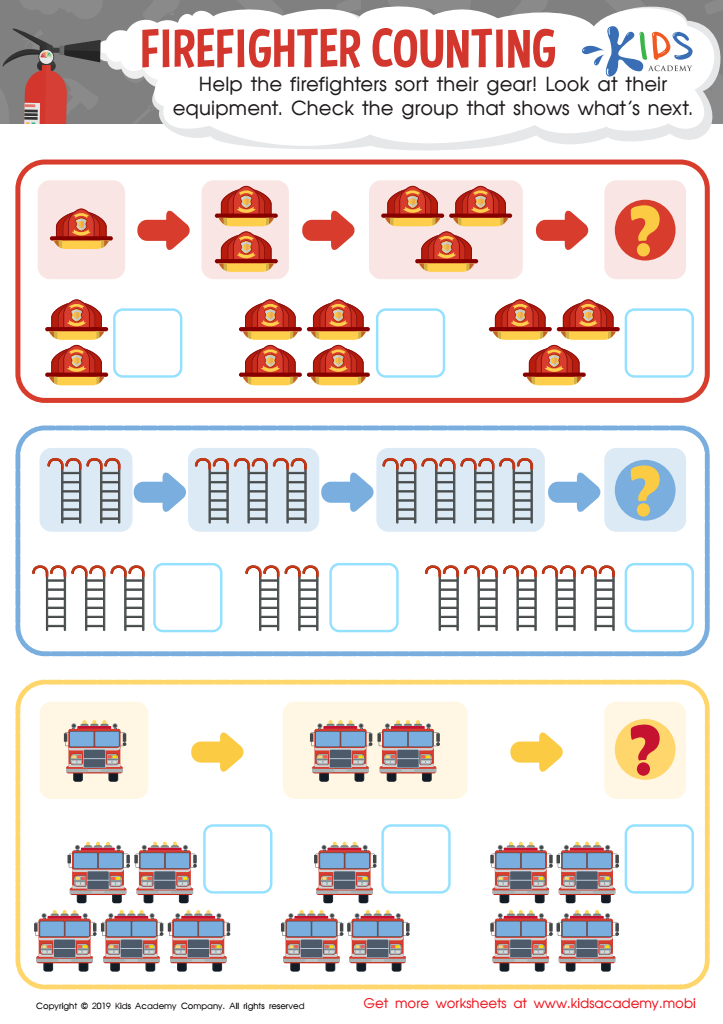
Firefighter Counting Worksheet








Observational skills are crucial for young children's cognitive development, particularly for 6-year-olds who are in a crucial stage of early learning. By focusing on their observational skills with Simple Numbers, parents and teachers can help children develop critical thinking and problem-solving abilities. These skills enable children to recognize patterns, make connections, and understand numerical concepts in real-world contexts.
When children practice observational skills in math, they learn to identify and compare quantities, recognize shapes, and understand spatial relationships, fostering a solid foundation for more advanced mathematical concepts. This active engagement enhances their ability to think critically about numbers rather than just memorizing them.
Furthermore, developing strong observational skills promotes a number of other educational outcomes. Children become more curious and attentive, which leads to an increased capacity for learning across subjects. Additionally, these skills can translate to improved attention and focus, which are essential for successful classroom participation and academic performance.
Ultimately, fostering observational skills through engaging activities helps prepare children not just for current academic success but also for lifelong learning. Therefore, parents and teachers should prioritize these skills, as they play a vital role in helping children grow into confident, capable learners.








