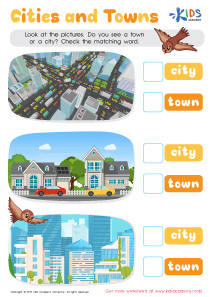
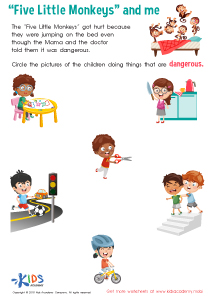
Cognitive Development Easy Reading Comprehension Worksheets for 6-Year-Olds
4 filtered results
-
From - To
Nurture your child's cognitive development with our Easy Reading Comprehension Worksheets specially designed for 6-year-olds. These worksheets offer engaging and age-appropriate texts to help young learners enhance their reading skills, critical thinking, and understanding. Each activity is crafted to stimulate curiosity and boost cognitive abilities through fun and interactive exercises. Perfect for home or classroom use, our worksheets are an excellent resource for parents and teachers aiming to foster a love of reading and learning in early childhood. Explore and watch your child blossom into a confident reader with these enriching tools.
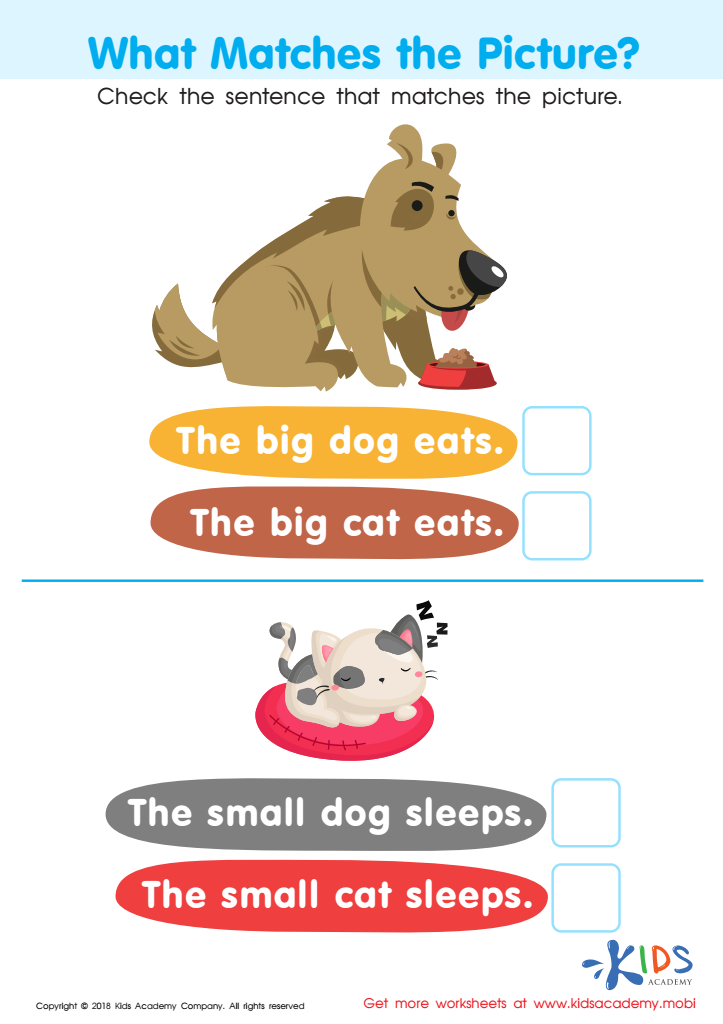
What Matches the Picture? Worksheet
 Assign to My Students
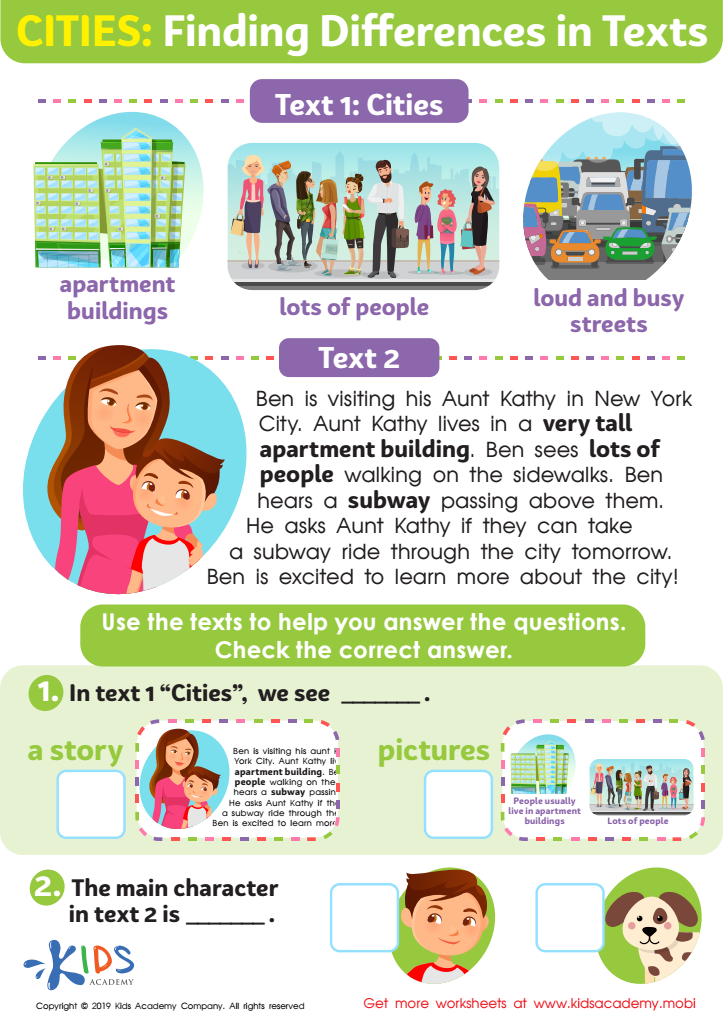
Cities: Finding Differences Worksheet
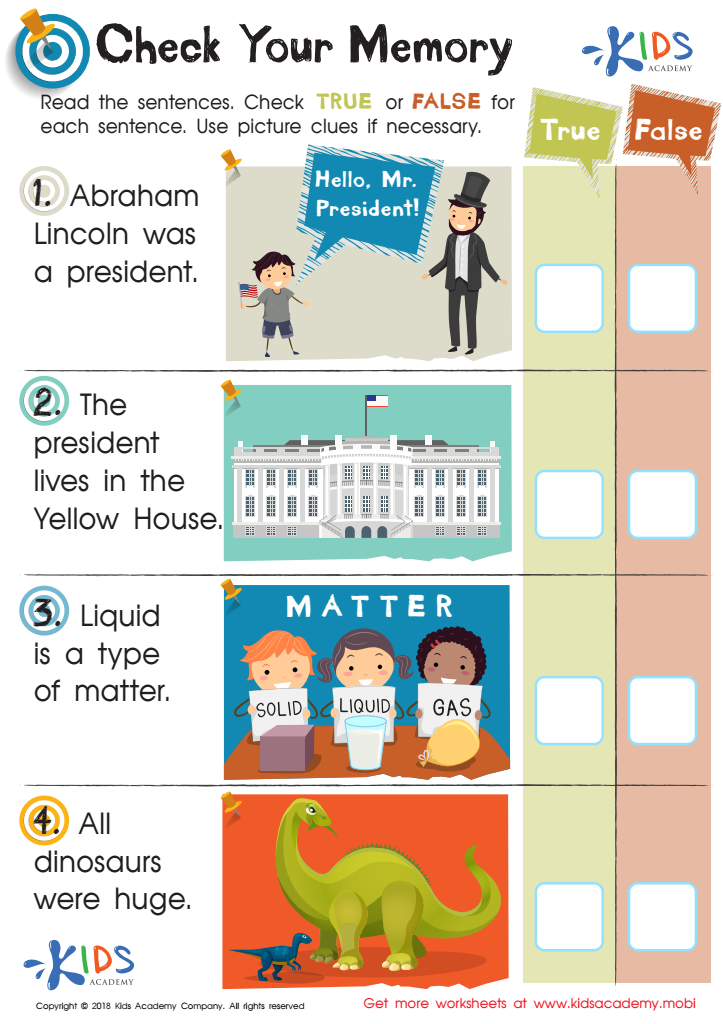
Check Memory Worksheet
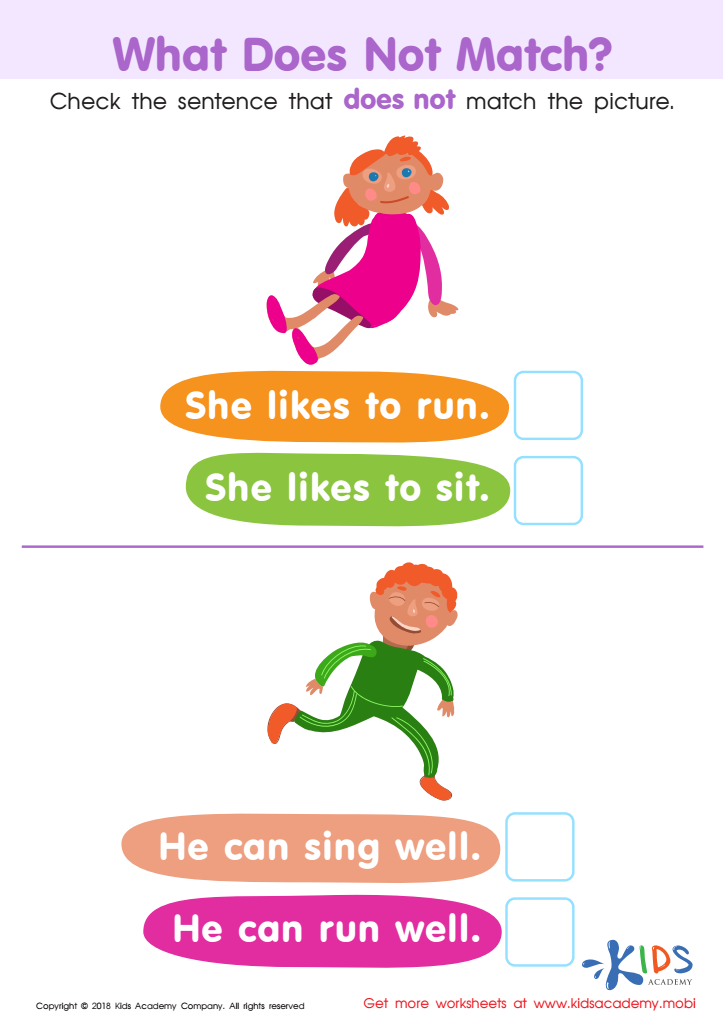
What Does Not Match? Worksheet








Parents and teachers should care deeply about cognitive development and reading comprehension for 6-year-olds due to the foundational skills these areas build for a child's future education and life. Cognitive development at this age involves enhancing memory, attention, problem-solving, and critical thinking skills. When children engage in easy reading comprehension activities, they practice decoding words and sentences, which not only improves their reading fluency but also their cognitive abilities. These skills are essential as they apply to nearly all academic subjects.
Moreover, reading comprehension at a young age nurtures curiosity and imagination, encouraging children to explore and understand the world around them. Understanding stories helps children make sense of their own experiences, cultivate empathy, and develop social skills by seeing the world from different perspectives. When children can comprehend what they read, it boosts their confidence and motivation to learn.
Additionally, early reading success positively affects long-term academic achievement. Research shows that children who develop skills early tend to perform better in school and experience fewer difficulties with learning later on. Therefore, by placing importance on cognitive development and reading comprehension at an early age, parents and teachers equip children with the critical foundational skills they need for lifelong learning and development.