
Pattern recognition Easy Worksheets for Ages 7-8
3 filtered results
Difficulty Level
Grade
Age
-
From - To
Subject
Activity
Standards
Explore our engaging pattern recognition worksheets designed specifically for children ages 7-8! These easy-to-follow activities support early math skills by helping students identify, compare, and extend patterns. Creative exercises include picture patterns, number sequences, and shape arrangements that make learning fun! Perfect for classroom practice or at-home learning, our printable worksheets encourage critical thinking and boost cognitive development. Ideal for teachers and parents, these resources foster a deeper understanding of patterns while enhancing observational skills. Discover the joy of learning through play as your child develops confidence in their abilities. Download our worksheets today for enriching educational experiences!
Favorites
With answer key
Interactive
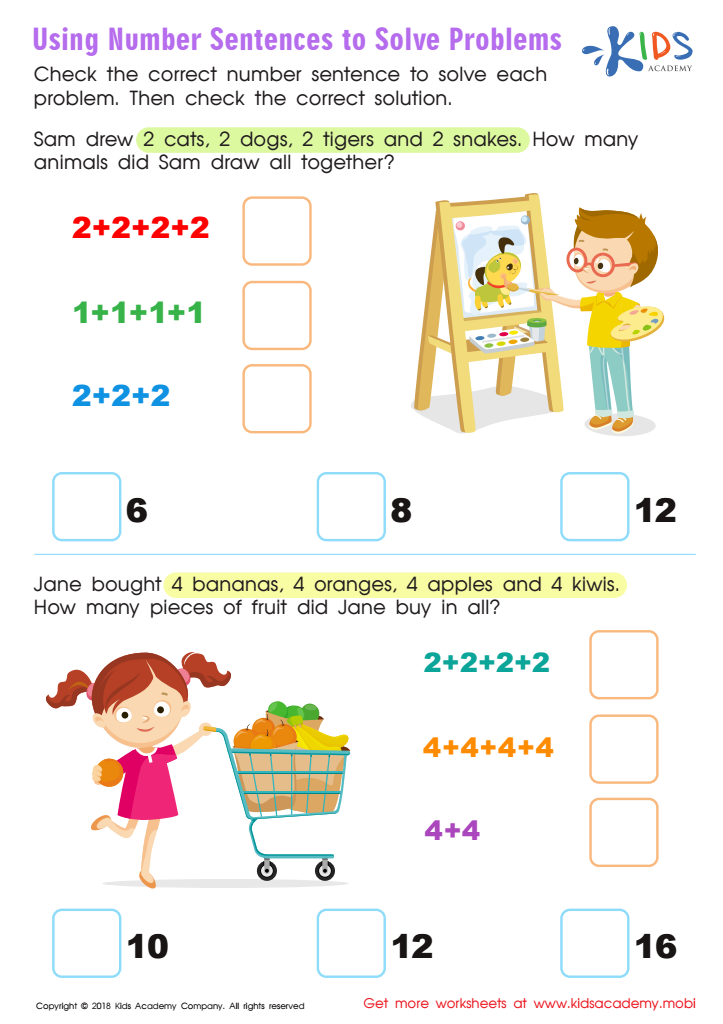
Using Number Sentences to Solve Problems Worksheet
Solving math problems requires an efficient strategy. Picture representation can help young mathematicians with basic addition problems, especially when it involves repeated addends. As they gain confidence, they'll be able to apply their number sentence solving abilities to more complex equations.
 Assign to My Students
Using Number Sentences to Solve Problems Worksheet
Worksheet
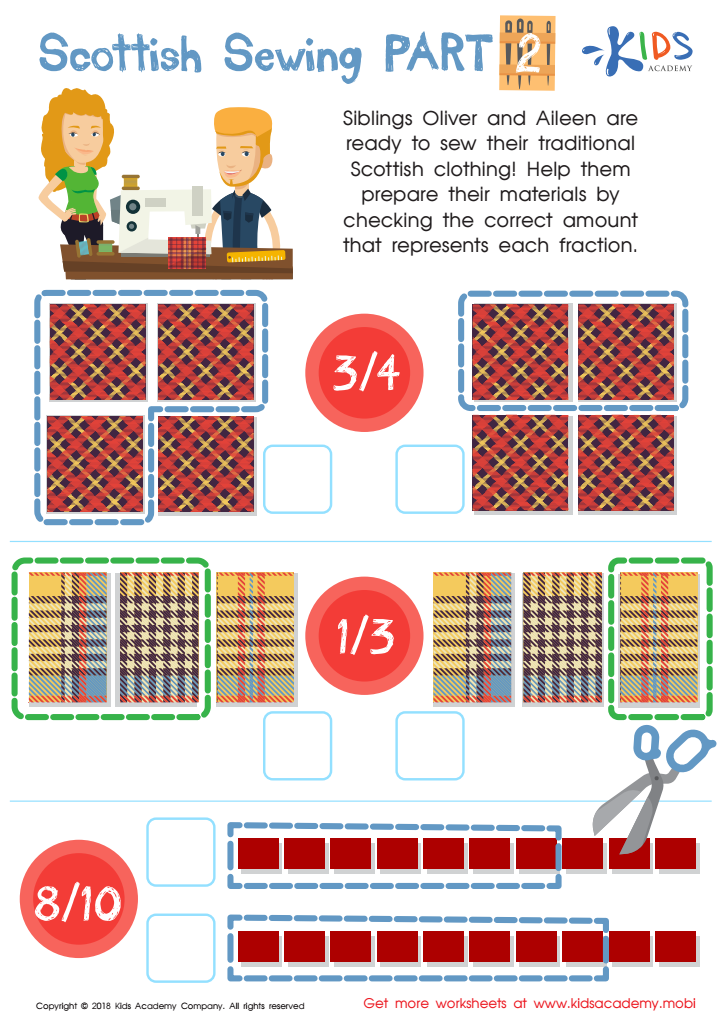
Scottish Sewing Part 2 Worksheet
Oliver and Alleen are sewing traditional Scottish attire. Help your kids count the cloth and check the correct fraction to support them. Have your kids check the correct amount that represents each fraction to help the brother-sister duo prepare their material.
Scottish Sewing Part 2 Worksheet
Worksheet
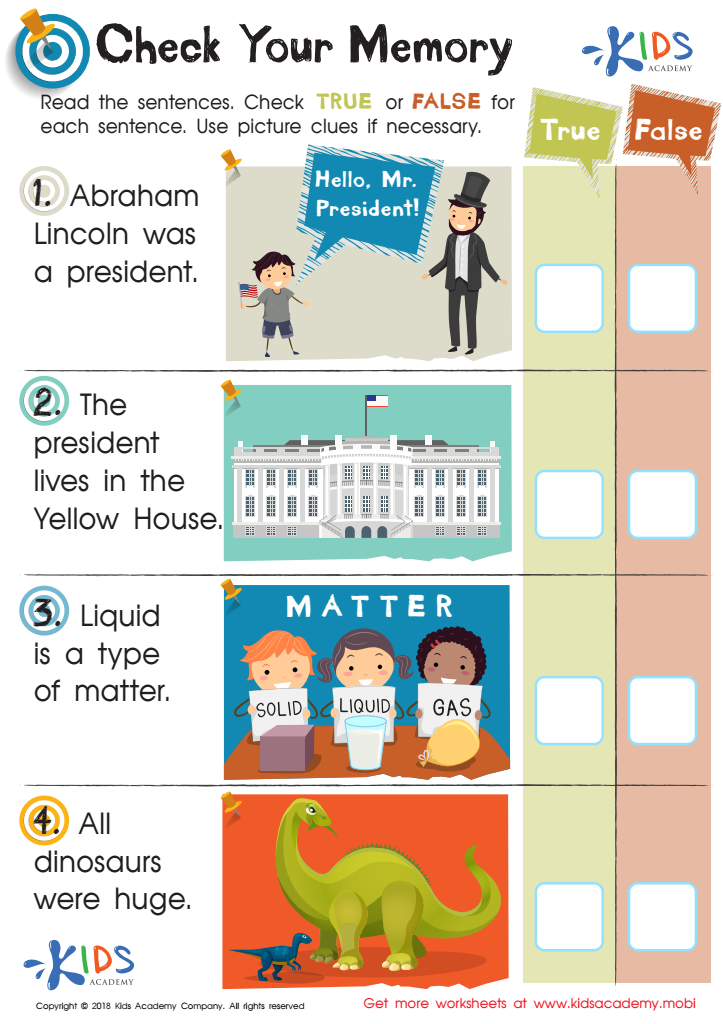
Check Memory Worksheet
Assisting your kids with their homework and using worksheets is a great way for them to learn. The vibrant visuals in this printout can help stimulate the mind and motivate your child. Have them read the sentences and then point to the associated images. Afterwards, ask them to state True or False for each sentence. If they are still uncertain, offer them the picture clues to assist further.
Check Memory Worksheet
Worksheet
Join Kids Academy for Free
Who is primarily going to use this learning content?








Pattern recognition is an essential skill for children aged 7-8, forming a foundational element for their academic and everyday lives. By engaging in pattern recognition activities, children develop critical thinking skills that help them make connections and solve problems. In mathematics, for example, recognizing patterns in numbers allows them to understand addition, subtraction, and even multiplication concepts more easily.
Moreover, pattern recognition fosters creativity and innovation. Whether in art, music, or science, identifying patterns helps children see relationships and make predictions, inspiring them to think outside the box. It encourages a growth mindset, where mistakes are seen as opportunities for learning rather than failures.
For parents and teachers, nurturing this skill is vital for creating a rich learning environment that promotes curiosity and resilience. By providing activities like puzzles, games, and real-world examples, adults can actively support children’s pattern recognition skills, extending their learning beyond the classroom. Ultimately, caring about and cultivating this skill in children equips them with tools to understand the world around them, enhances their social-emotional development by boosting confidence, and prepares them for future educational challenges. Emphasizing pattern recognition in early education benefits not only children's academic success but also their problem-solving abilities throughout life.








