
Understanding fractions Easy Worksheets for Ages 7-8
19 filtered results
Difficulty Level
Grade
Age
-
From - To
Subject
Activity
Standards
Dive into a fun and engaging way for your 7-8 year-olds to master fractions with our "Understanding Fractions Easy Worksheets"! Specially designed to build a strong foundation in fraction concepts, these worksheets feature colorful visuals, simple instructions, and interactive exercises. Perfect for young learners, each sheet encourages hands-on practice to confidently grasp halves, thirds, and quarters. Ideal for classroom use or extra practice at home, our easy-to-follow worksheets make learning fractions an enjoyable journey for kids. Enhance their math skills and ensure a smooth transition to more complex concepts with Kids Academy!
Favorites
With answer key
Interactive
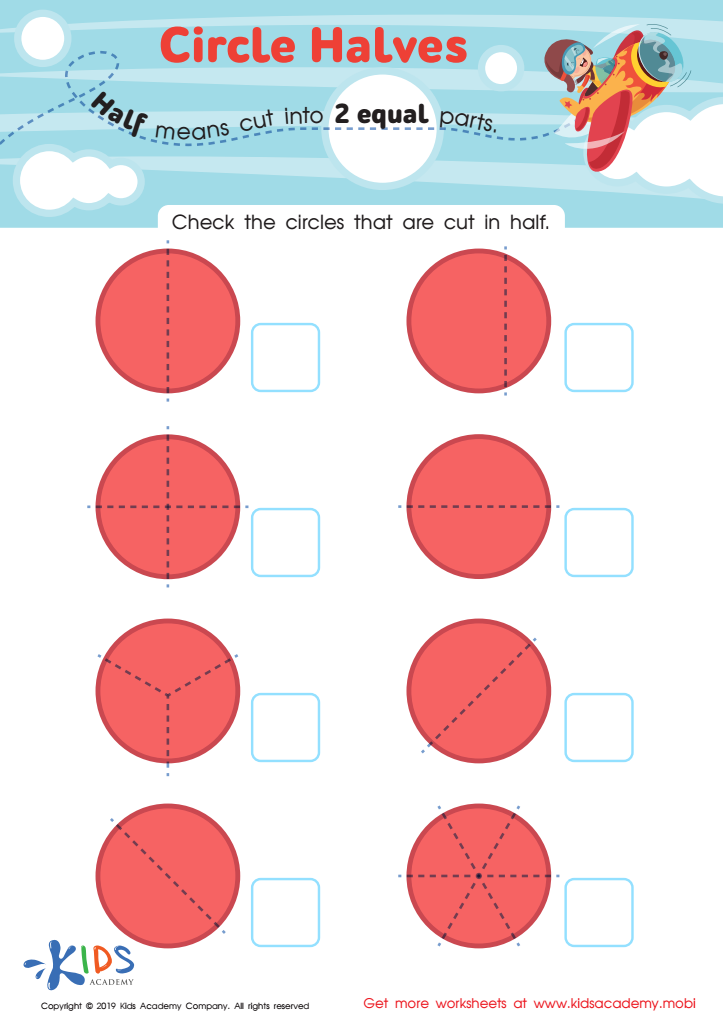
Circle Halves Worksheet
Remind your kindergartners that objects can be divided into halves, thirds and fourths. Now, look at this worksheet with your students and help them check the circles cut in half.
 Assign to My Students
Circle Halves Worksheet
Worksheet
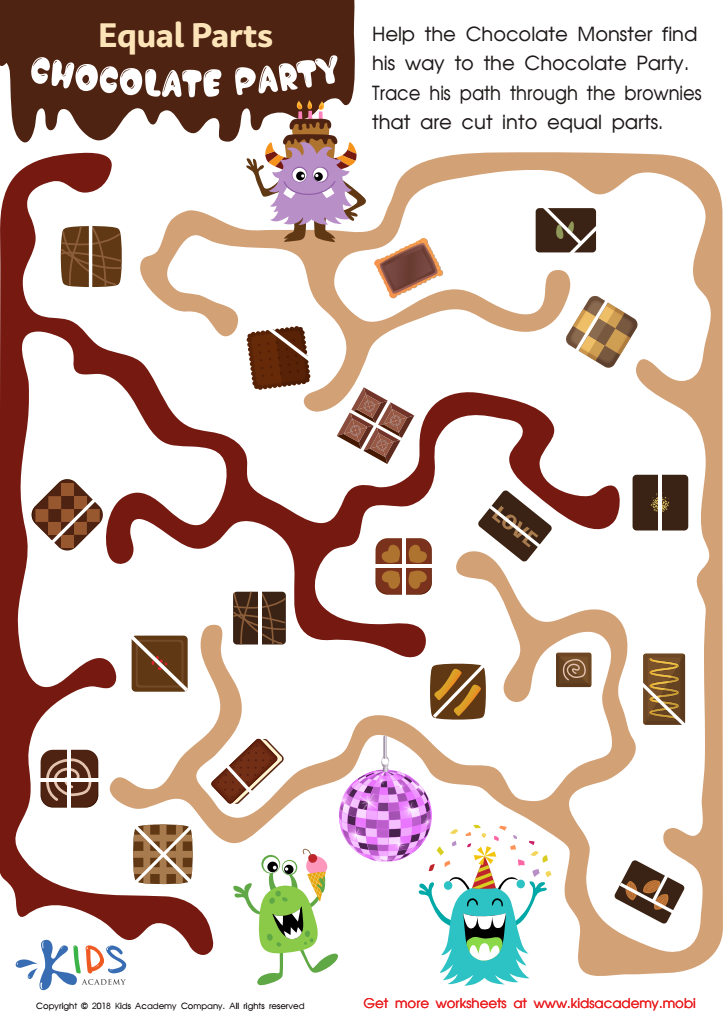
Equal Parts: Chocolate Party Worksheet
Mention "chocolate" and watch your kids' excitement soar! Learning can go hand-in-hand with that sugary treat. This worksheet helps kids guide the Chocolate Monster to the Chocolate Party, following a trail of brownie halves. It's an easy, tasty way to have fun!
Equal Parts: Chocolate Party Worksheet
Worksheet
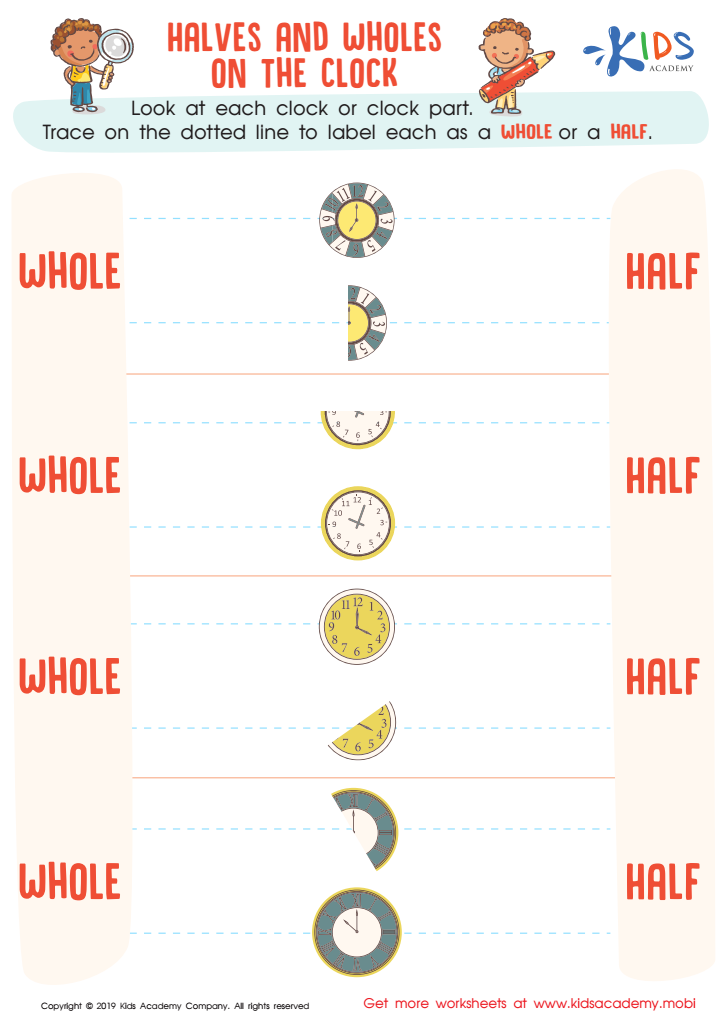
Halves and Wholes on the Clock Worksheet
Ask your kids if they know the difference between a whole and a half. If not, explain it's when a whole is divided into two equal parts. Show them the worksheet with clocks and clock parts, and help them label each shape as a whole or a half by tracing on the dotted line.
Halves and Wholes on the Clock Worksheet
Worksheet
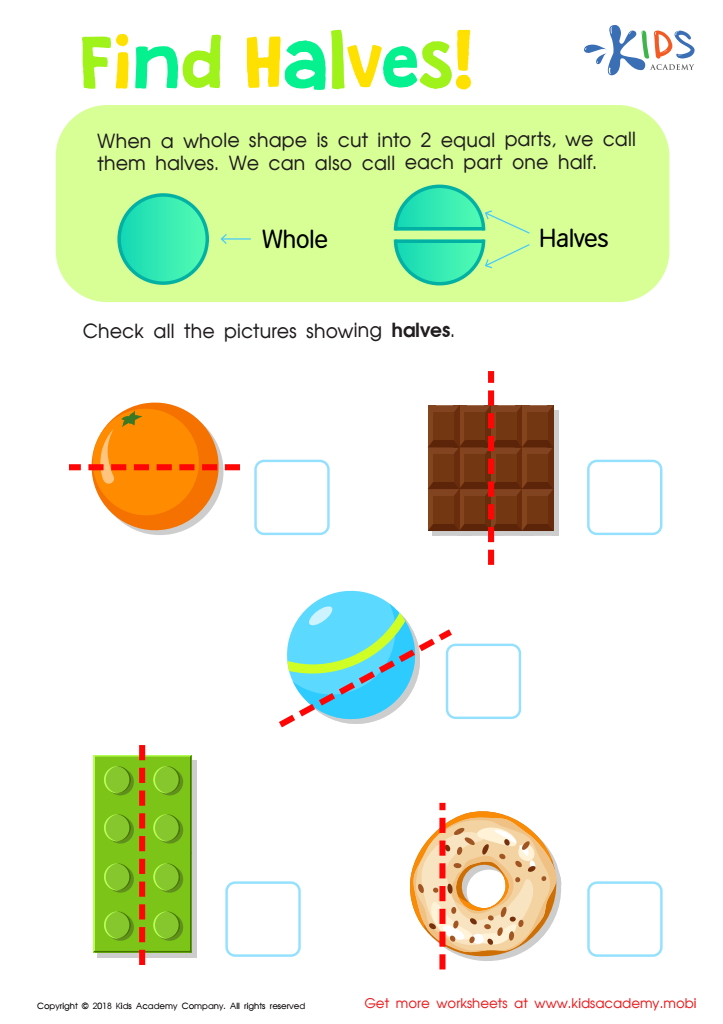
Find Halves Worksheet
If your child can tell you what two, three and four equal parts are called, give yourself a pat on the back! If not, this worksheet can help. Halves are two equal parts of a whole shape. Check the pictures in this printable pdf to help your child understand.
Find Halves Worksheet
Worksheet
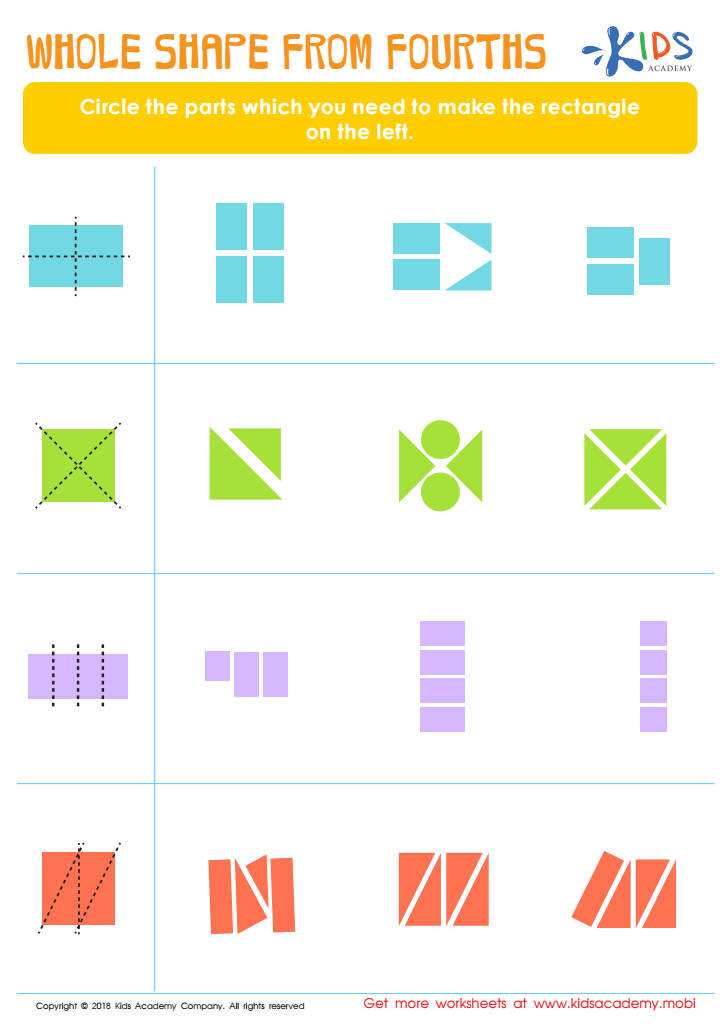
Whole Shape from Fourths Worksheet
Have your kids circle the shapes that'll form the rectangle on the left. It'll test their knowledge of shapes and ability to put them together to make a new one. Ask them to look at the parts on the right and circle the ones that'll form the rectangle.
Whole Shape from Fourths Worksheet
Worksheet
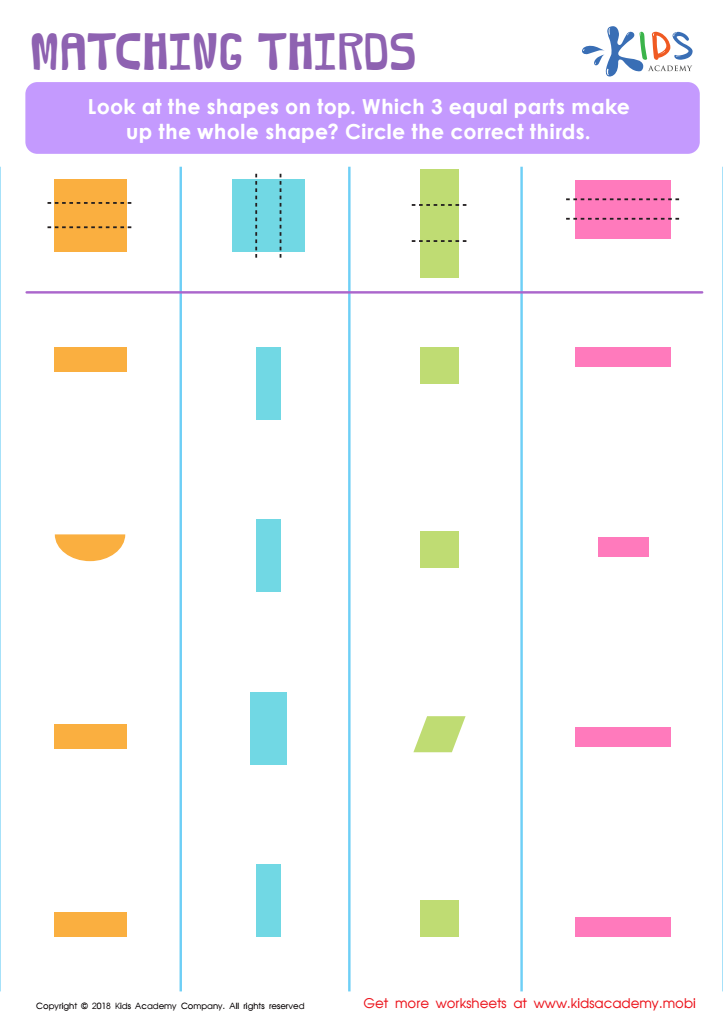
Matching Thirds Worksheet
Have your child examine the shapes on the worksheet. Ask them to identify them and then look at the fractions underneath. Ask them to circle the 3 parts that make up the whole shape. Understanding shapes and fractions is key!
Matching Thirds Worksheet
Worksheet
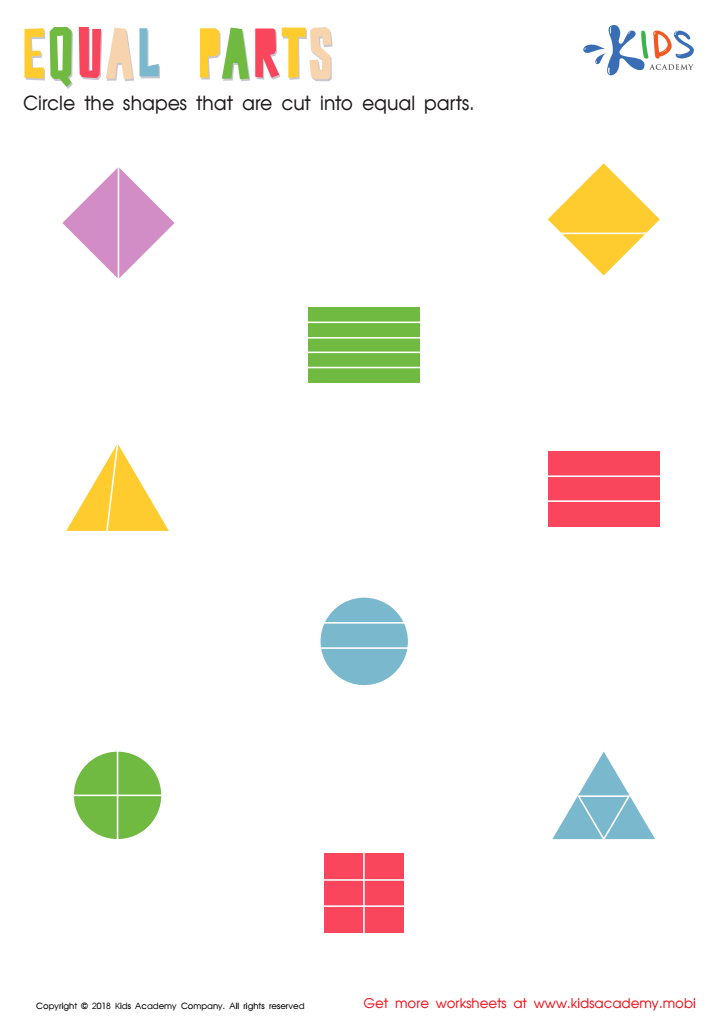
Equal Parts: Shapes Worksheet
Test your child's ability to cut shapes into equal parts with this colorful printout. It includes rectangles, kites, circles, squares, and triangles - your child must circle the shapes that are split evenly. A simple task, but it will show if they understand the concept.
Equal Parts: Shapes Worksheet
Worksheet
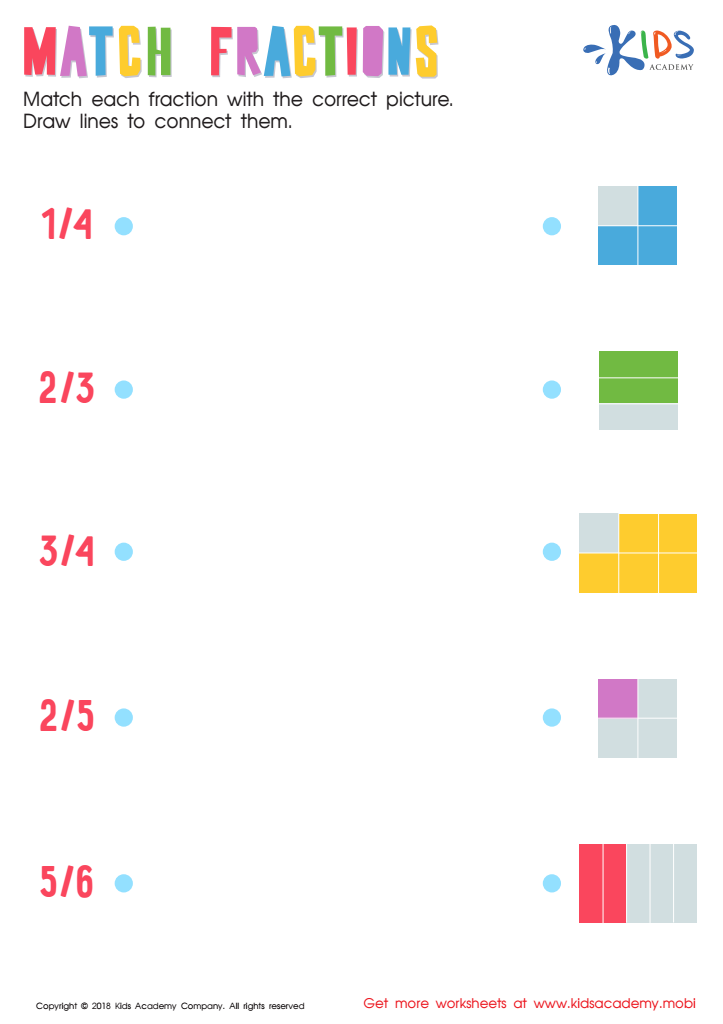
Match Fractions Worksheet
Have your child match fractions to images with this worksheet. There are five fractions on the left and five pictures on the right. Ask them to draw lines to connect each fraction to the right image. It's a great way to learn while having fun!
Match Fractions Worksheet
Worksheet
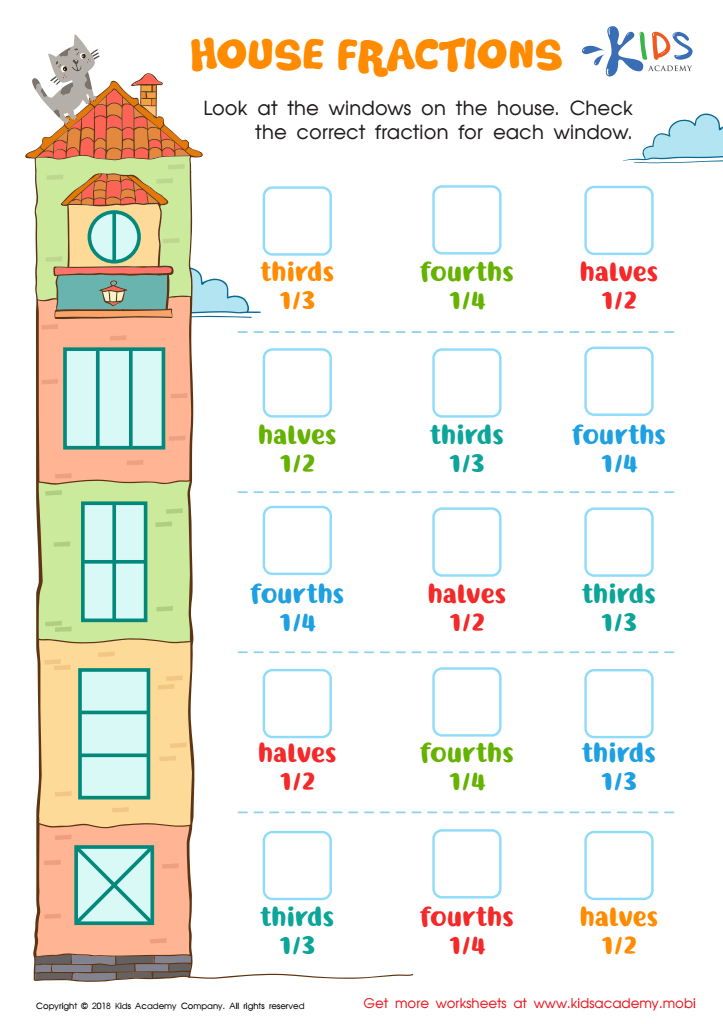
House Fractions Worksheet
Test your child's knowledge of fractions with this worksheet! Have them examine the windows of a house and select the correct fraction from the options given. This is a great way to see how much they understand about wholes, fractions, halves, one thirds, and one fourths.
House Fractions Worksheet
Worksheet
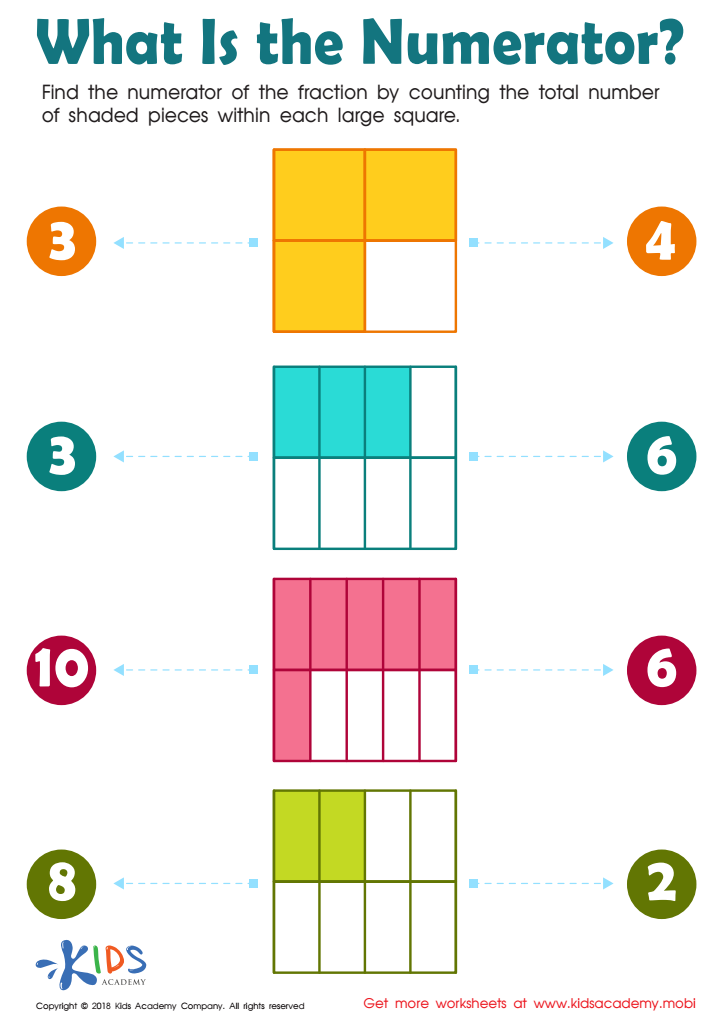
What Is the Numerator? Worksheet
Help your kids learn fractions with this simple worksheet. Explain that the numerator is the number atop another number, then have them count the shaded pieces in each large square to find the numerator of the fraction. This activity is perfect for young kindergartners starting out with fractions.
What Is the Numerator? Worksheet
Worksheet
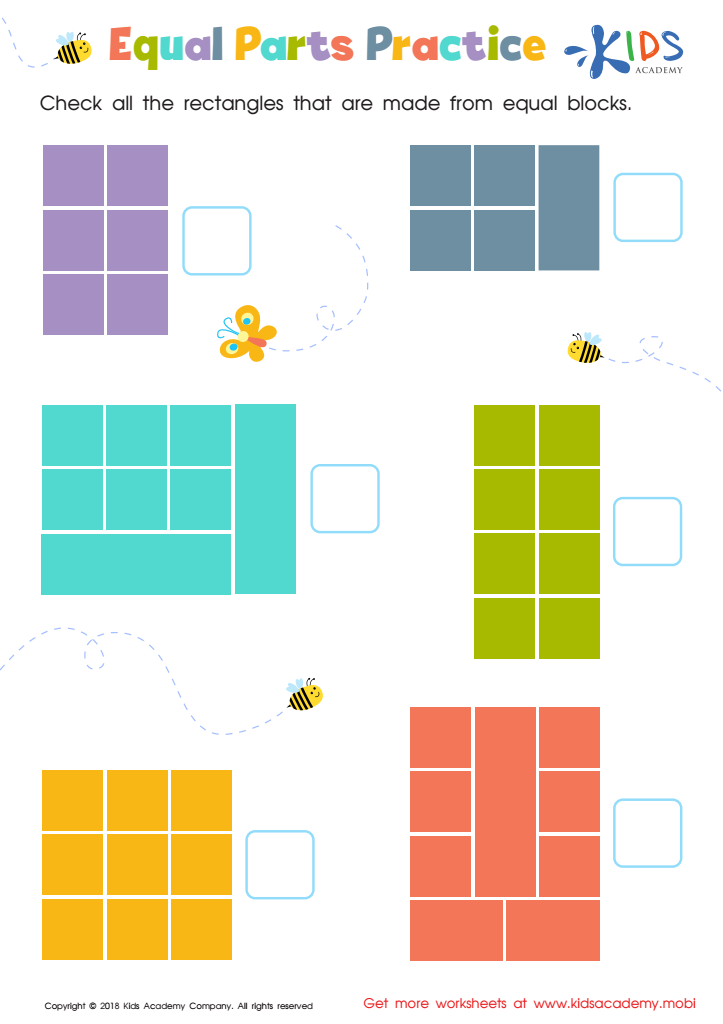
Equal Parts Practice Worksheet
This worksheet checks your child's knowledge of halves and equal pieces. Have them go through the rectangles and check those made up of equal blocks. Your kids should be able to tell which parts are equal and which are not after the exercise.
Equal Parts Practice Worksheet
Worksheet
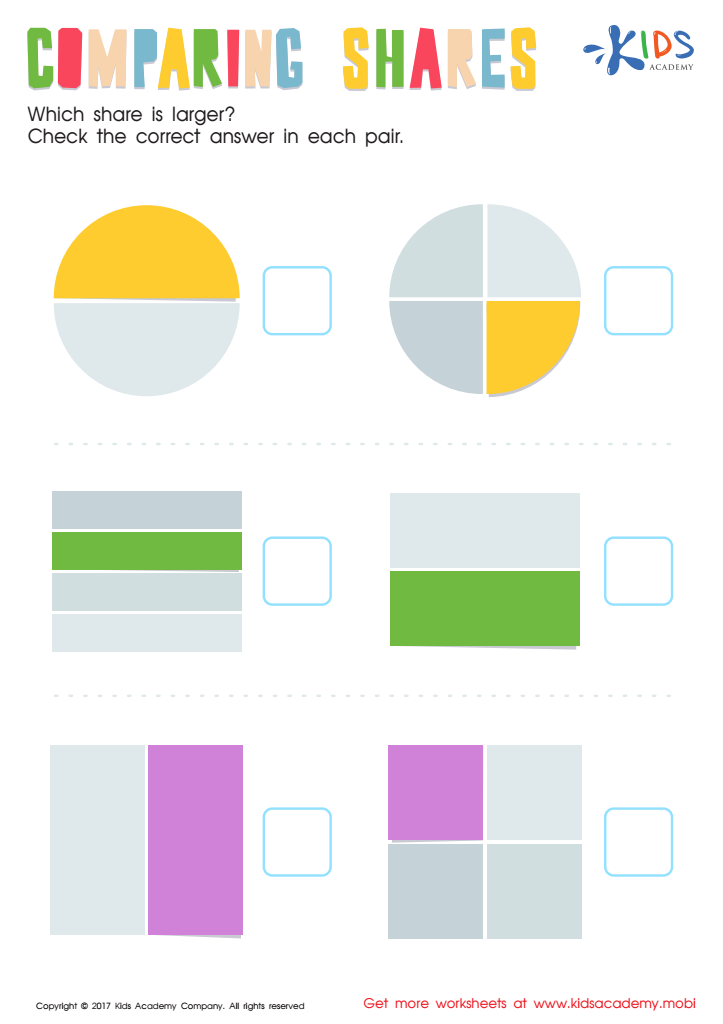
Comparing Shares Worksheet
Can your students identify and draw shapes correctly? If so, this exercise may be too easy. For those who are still learning, extra help may be needed. The worksheet requires students to select which shape is larger in each pair; circles and squares are included.
Comparing Shares Worksheet
Worksheet
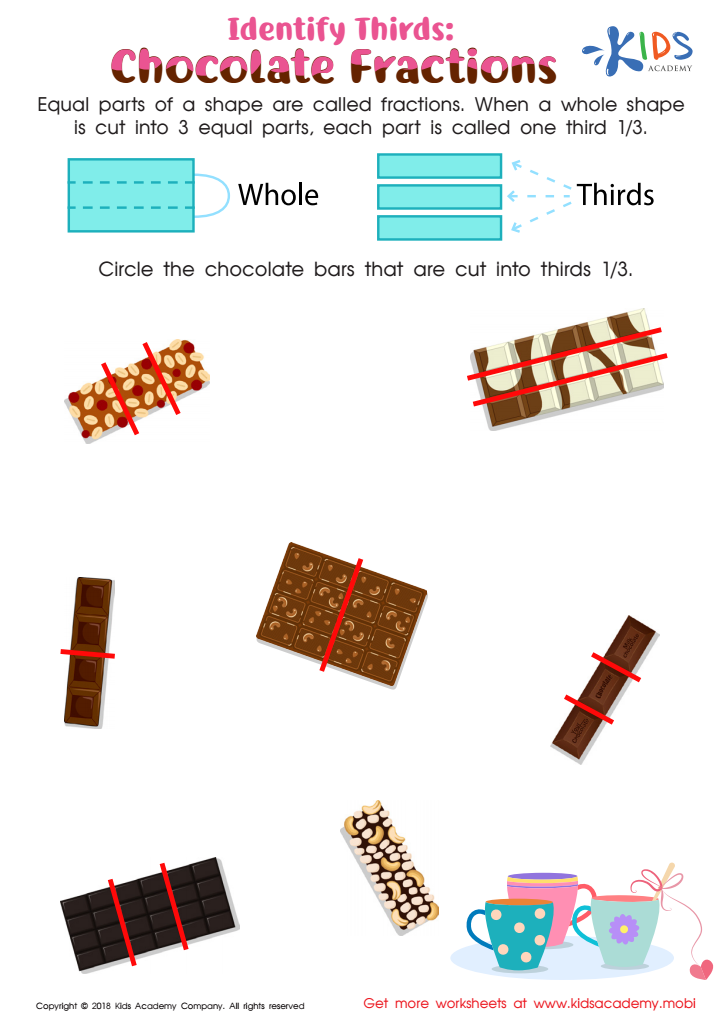
Identify Thirds: Chocolate Fractions Worksheet
Divide shapes into equal parts and explain fractions to your child. Show them a worksheet with pictures of chocolate bars cut into thirds (1/3) and ask them to circle them.
Identify Thirds: Chocolate Fractions Worksheet
Worksheet
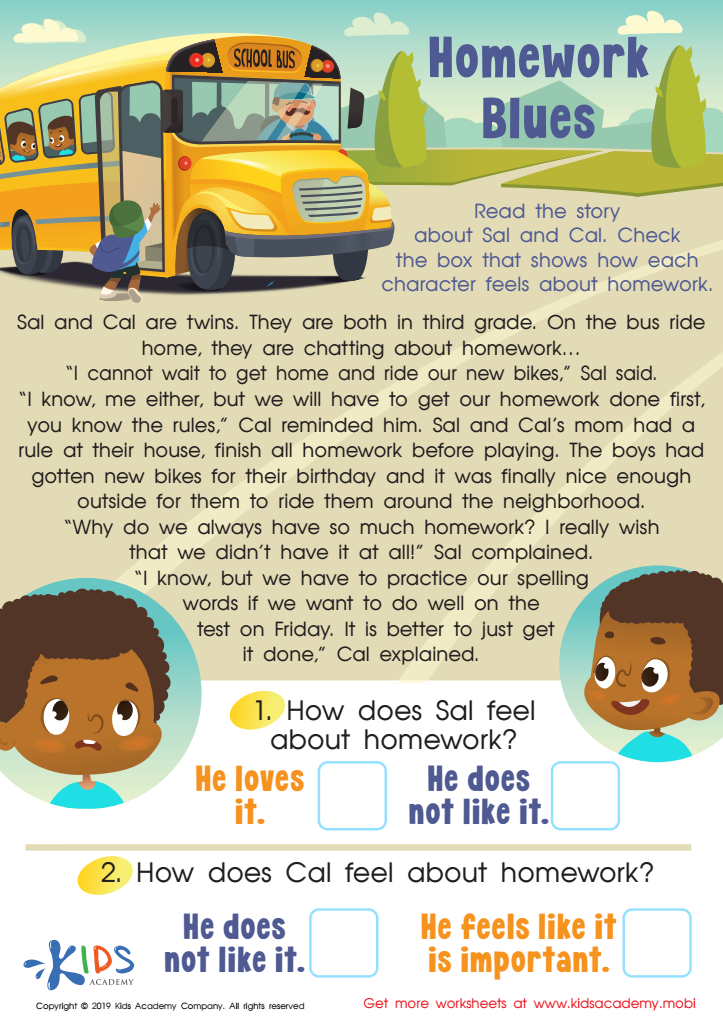
Homework Blues Worksheet
Cal and Sal don't love doing homework, just like your kids. Use this worksheet to help your children understand why homework is important. Read the passage together and then answer the questions at the bottom of the page. It's a fun way to learn together!
Homework Blues Worksheet
Worksheet
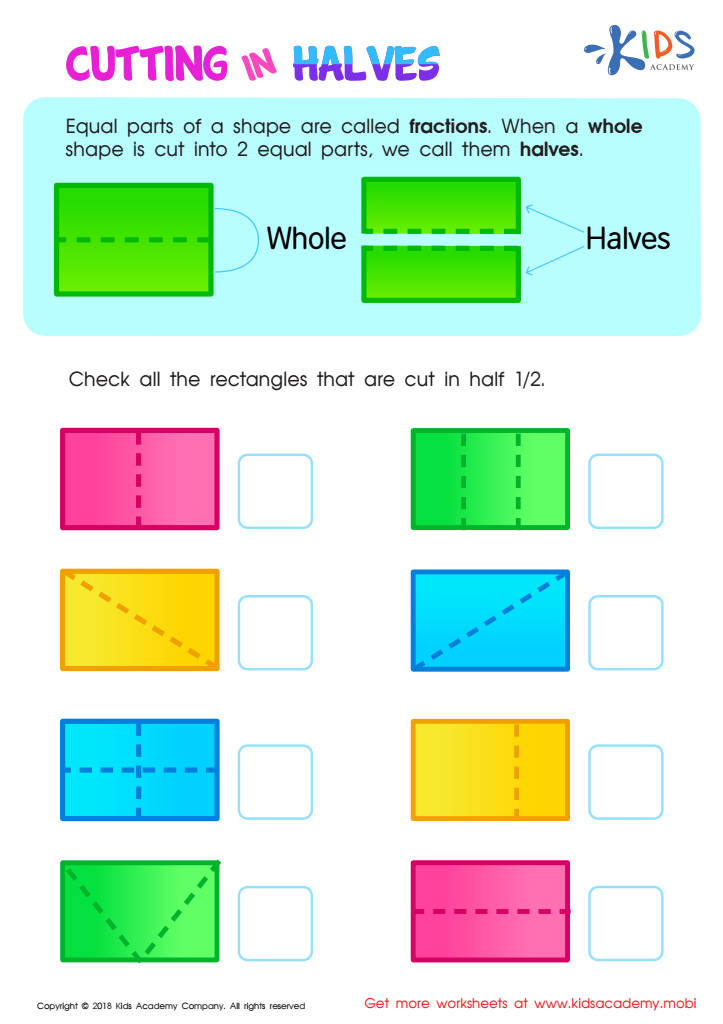
Cutting in Halves Worksheet
Show your child how to divide a whole shape, like a square, into smaller pieces to become fractions. Point out when a shape is divided into two equal parts, it's called a half. Look at the worksheet together, and identify all rectangles that are cut in half (½).
Cutting in Halves Worksheet
Worksheet
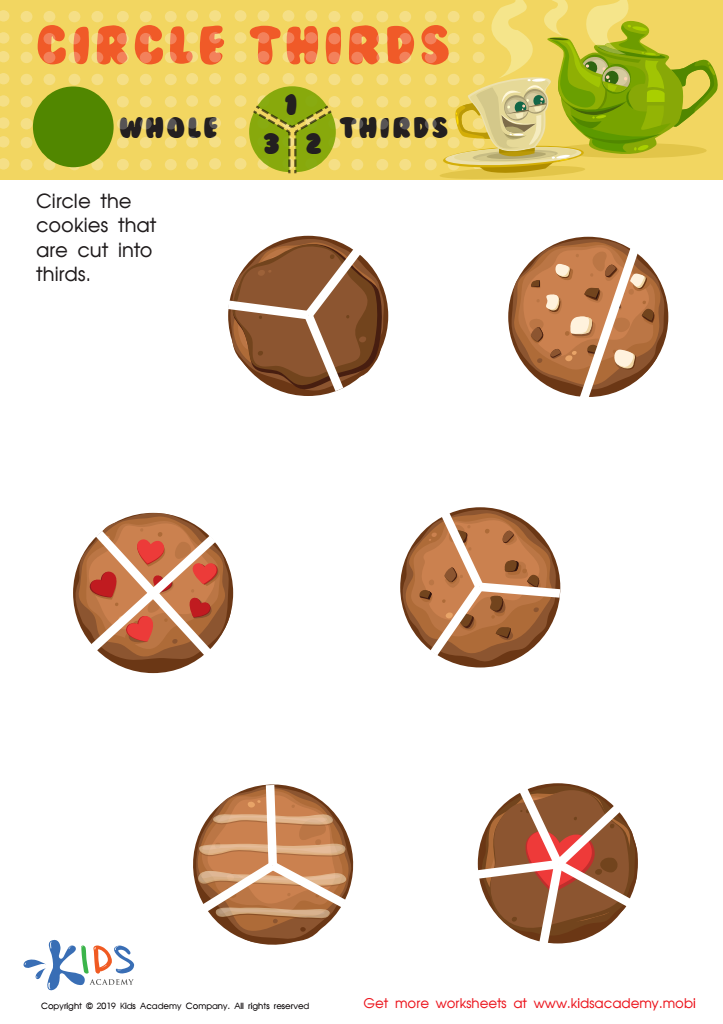
Circle Thirds Worksheet
Remind your kids of the different ways shapes can be divided: wholes, halves, thirds, and fourths. Now, look at the shapes in the worksheet and have them circle the cookies cut into thirds.
Circle Thirds Worksheet
Worksheet
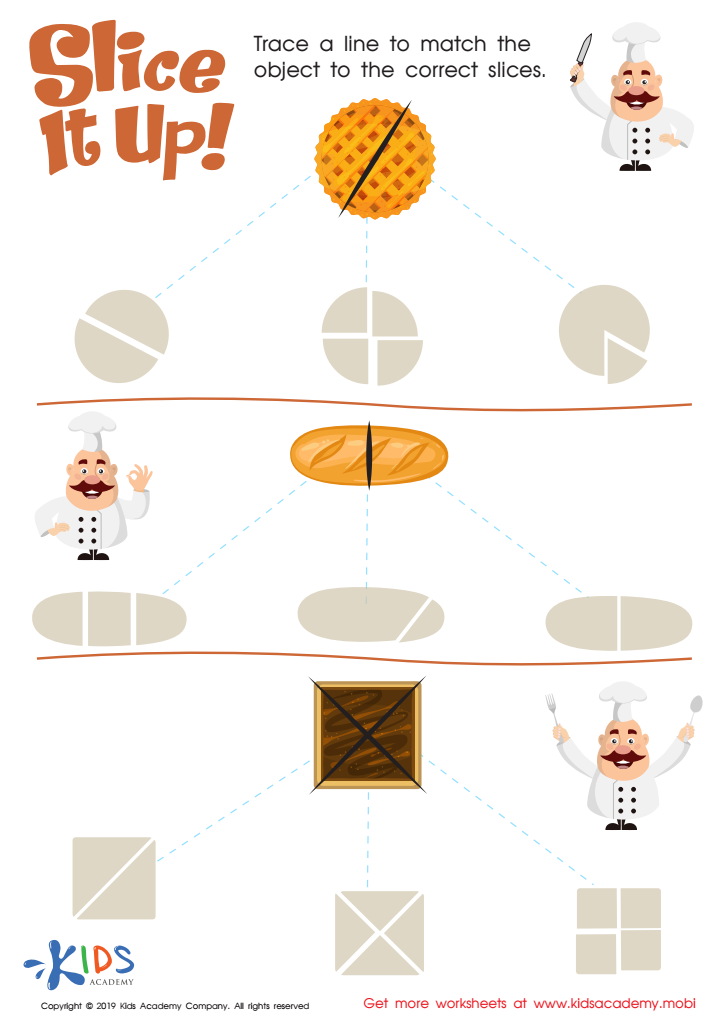
Slice It Up Worksheet
Try this fun math, reading and writing worksheet with your kids! They will love the colorful activities that perfect coordination and tracing. Engaging learning exercises help keep young minds sharp and boost skills. With these worksheets, your kids will be academically ahead of the curve!
Slice It Up Worksheet
Worksheet
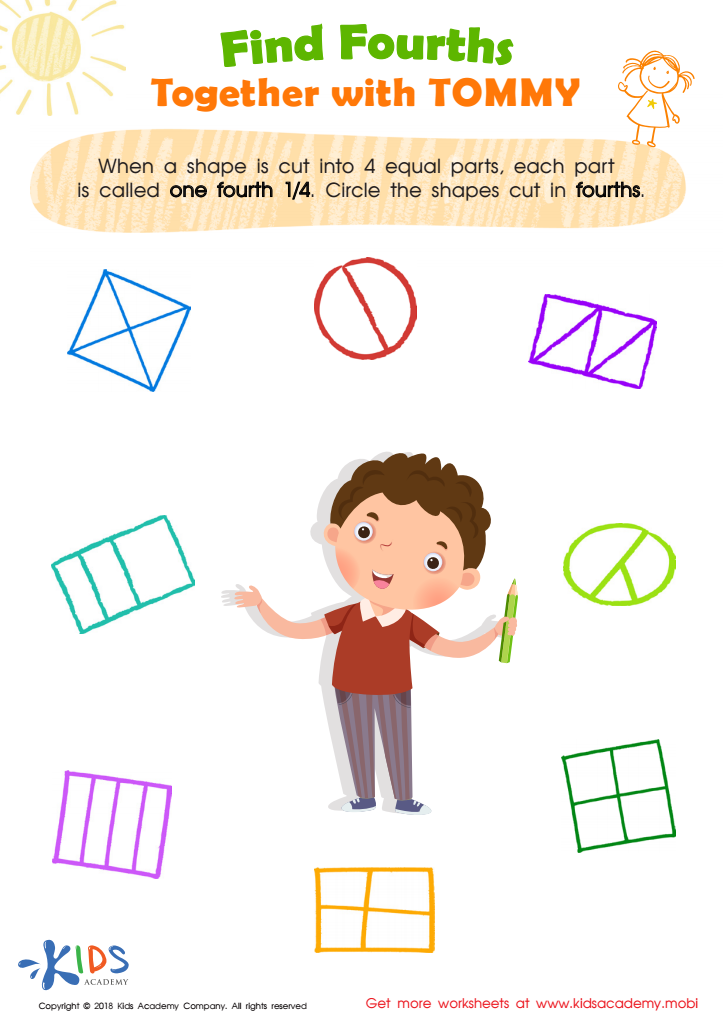
Find Fourths Together with Tommy Worksheet
Teach your kids fractions with this easy and fun worksheet! They should already know that two equal parts is a half, and three is a third. Now, help them understand one fourth (¼) by asking them to circle shapes that are divided into four parts. Make fractions learning stress-free for you and your children!
Find Fourths Together with Tommy Worksheet
Worksheet
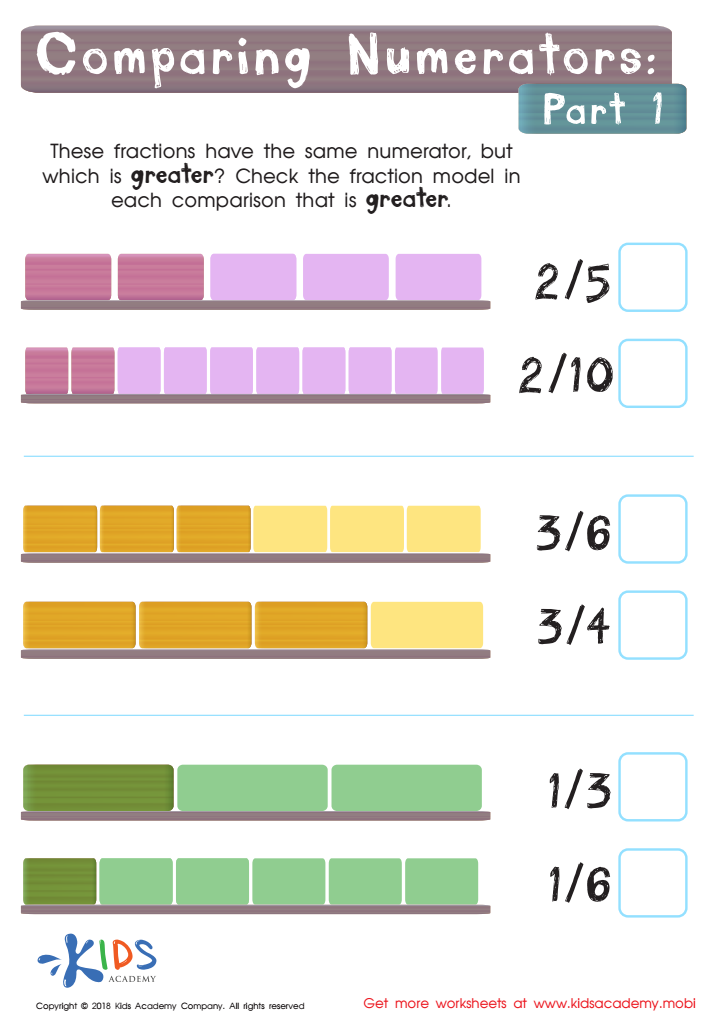
Comparing Numerators Part 1 Worksheet
This worksheet has 3 fractions groups with the same numerator. Your child must determine which fraction is greater in each comparison. Check the fraction model to see the greater one.
Comparing Numerators Part 1 Worksheet
Worksheet
Join Kids Academy for Free
Who is primarily going to use this learning content?




Understanding fractions is a fundamental concept that often serves as a building block for more advanced mathematical ideas. For children ages 7-8, comprehending fractions can greatly influence their overall progress in math. Parents and teachers should care about making fractions easy to understand at this age for several reasons.
Firstly, an early understanding of fractions helps to develop critical mathematical skills. Fractions introduce children to the concepts of division, ratios, and proportions, all of which are important for higher-level math. Grasping these ideas early can make future math classes less intimidating and more enjoyable.
Secondly, fractions are relevant in everyday life. Whether it's sharing a pizza, cooking with measurements, or even understanding portions in sports statistics, fractions play a practical role. Teaching kids to comprehend and use fractions confidently can improve their problem-solving skills and practical life applications.
Lastly, a strong foundation in fractions can boost a child’s confidence. When children conquer challenging concepts early on, they feel capable and motivated to tackle new challenges. This positive attitude toward learning spills over into other areas of their education.
In sum, for children aged 7-8, understanding fractions isn't just about math; it's about setting the stage for academic success and real-world problem-solving abilities, making it a priority for teachers and parents alike.








