Subtraction practice Easy Addition & Subtraction Worksheets for Ages 7-8
18 filtered results
-
From - To
Give your 7-8-year-old a solid math foundation with our meticulously designed subtraction practice worksheets! Our easy-to-follow worksheets enhance subtraction skills, offering a mix of engaging problems that will help young learners confidently solve equations up to 20. Ideal for classroom use or extra practice at home, these worksheets encourage independent learning and bolster mathematical fluency. Each sheet includes fun designs and varied difficulty levels to cater to different learning speeds, ensuring children find learning both enjoyable and rewarding. Equip your young mathematician with the tools needed for success and boost their arithmetic confidence with Kids Academy's subtraction practice worksheets!
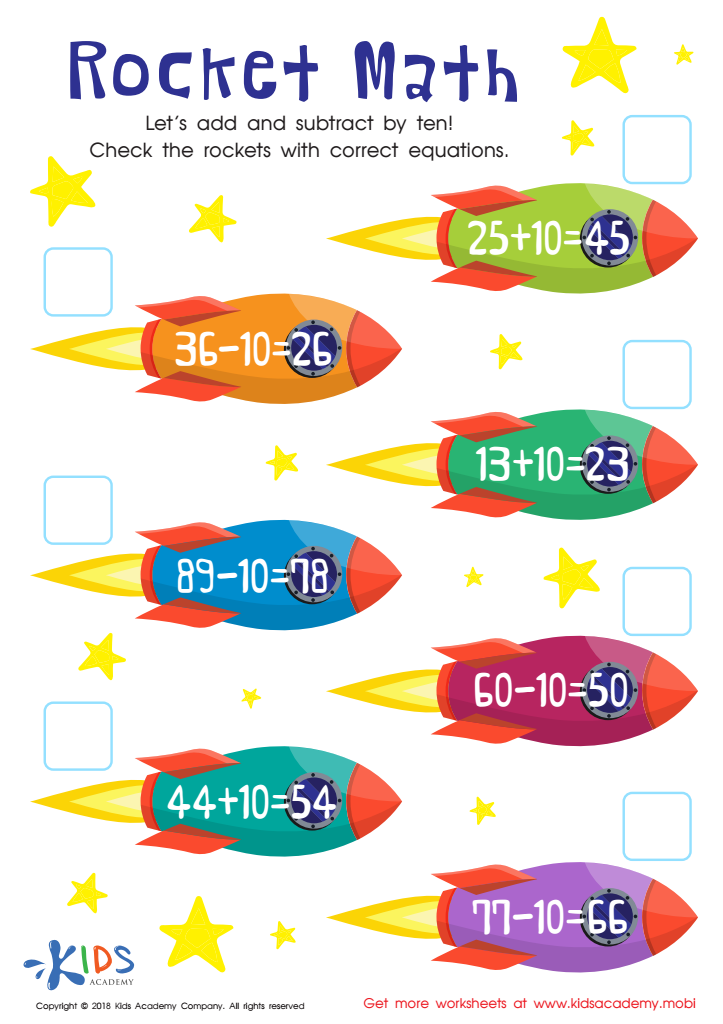
Rocket Math Worksheet
 Assign to My Students
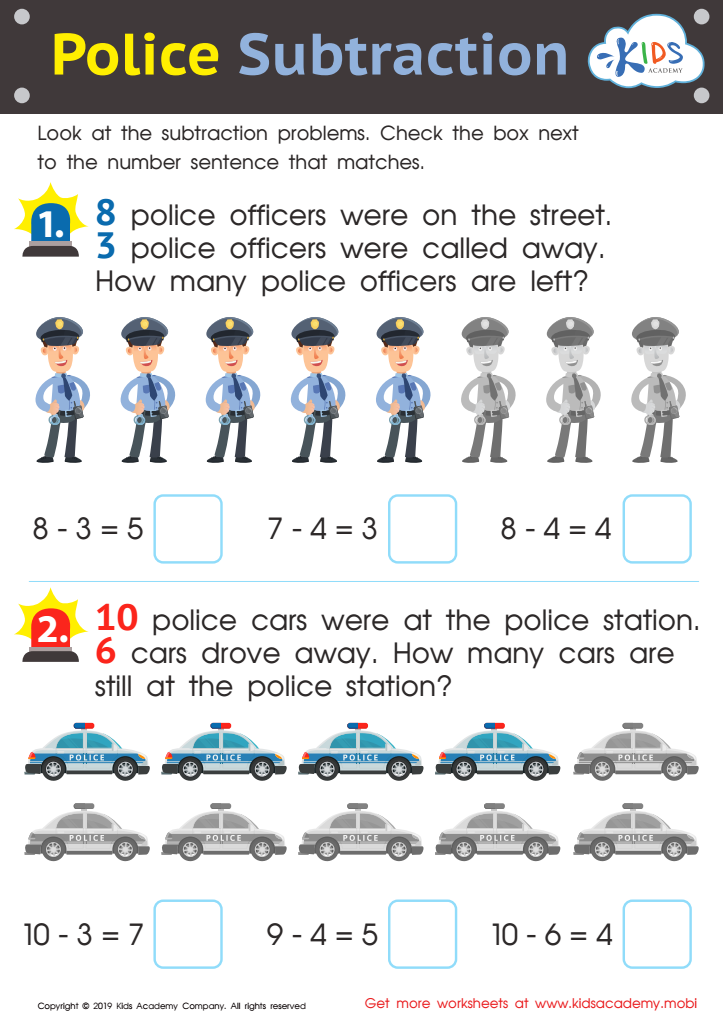
Police Subtraction Worksheet
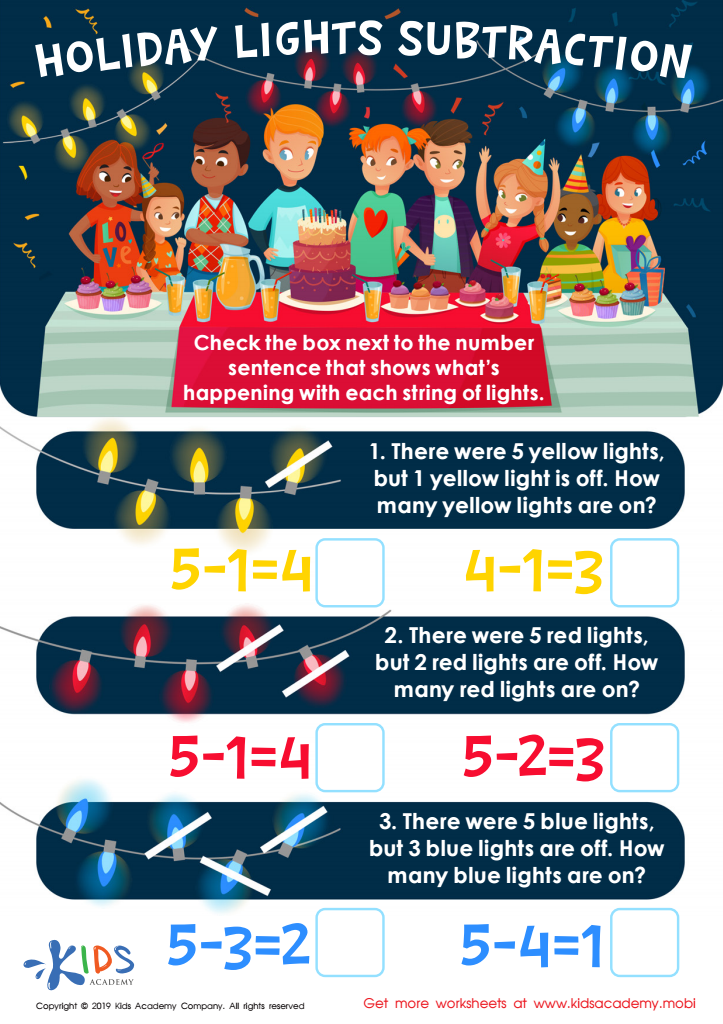
Holiday Lights Subtraction Worksheet
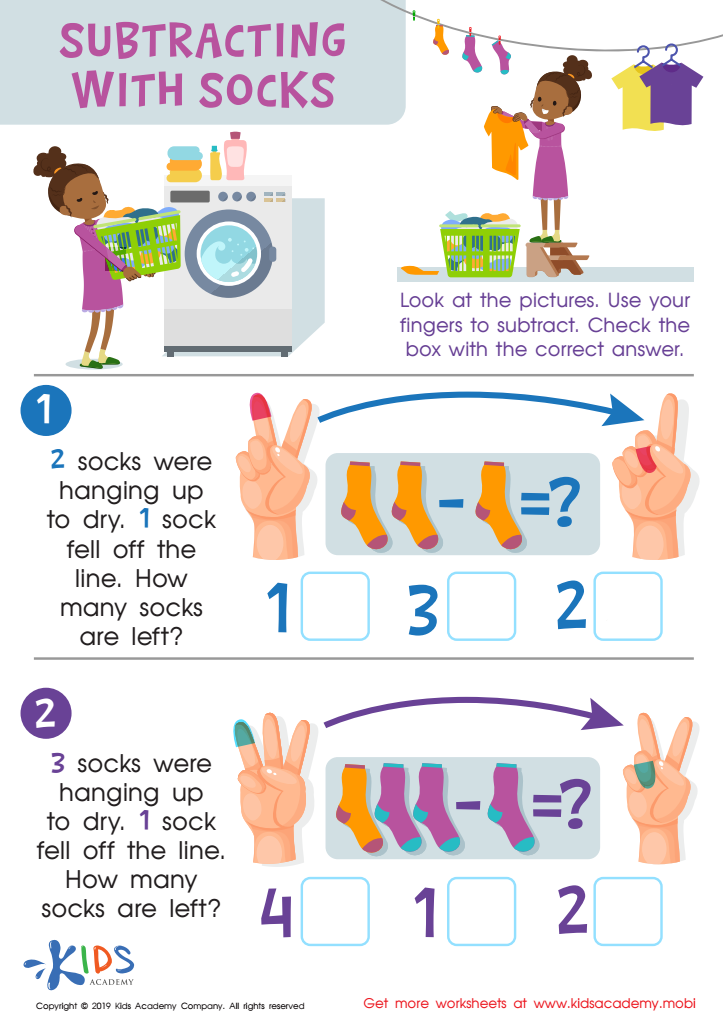
Subtracting Socks Worksheet
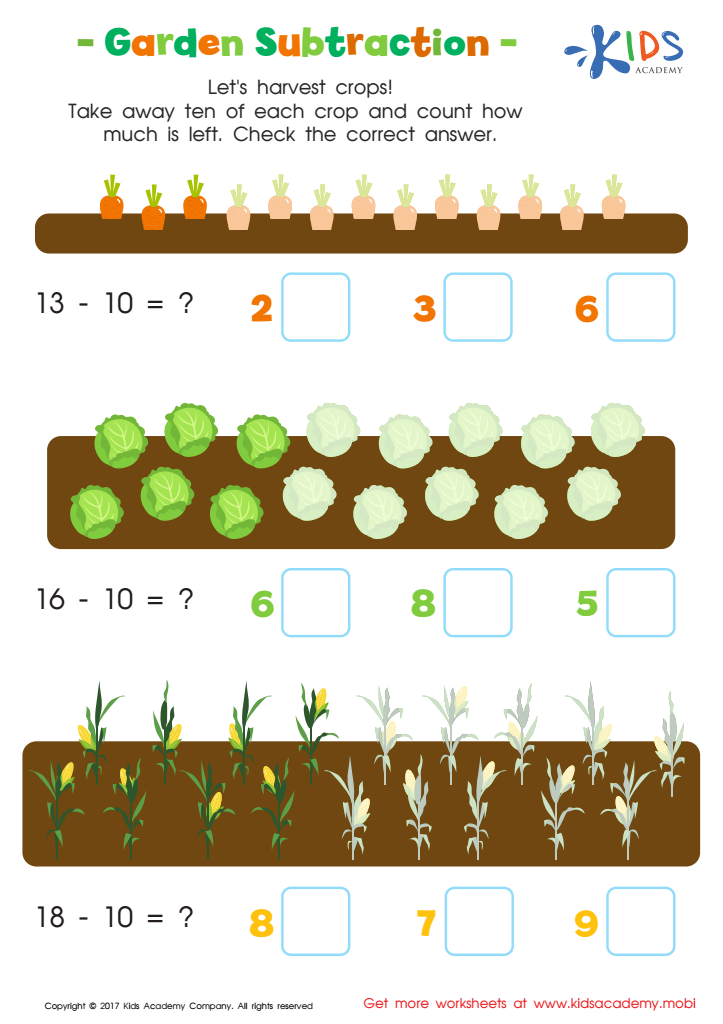
Garden Subtraction Worksheet
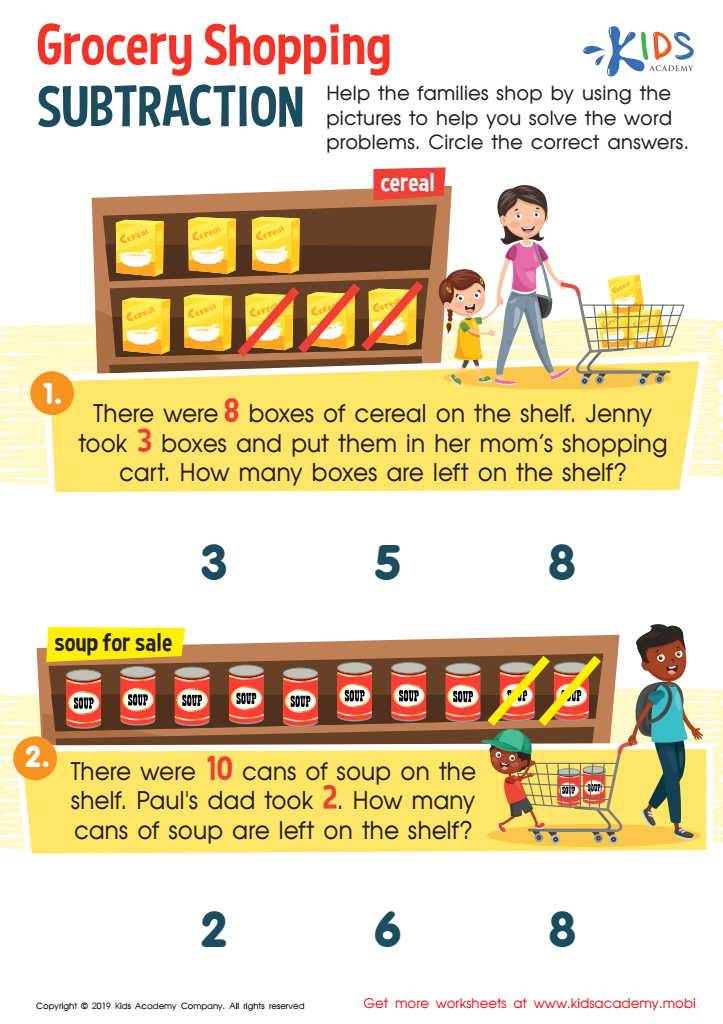
Grocery Shopping Subtraction Worksheet
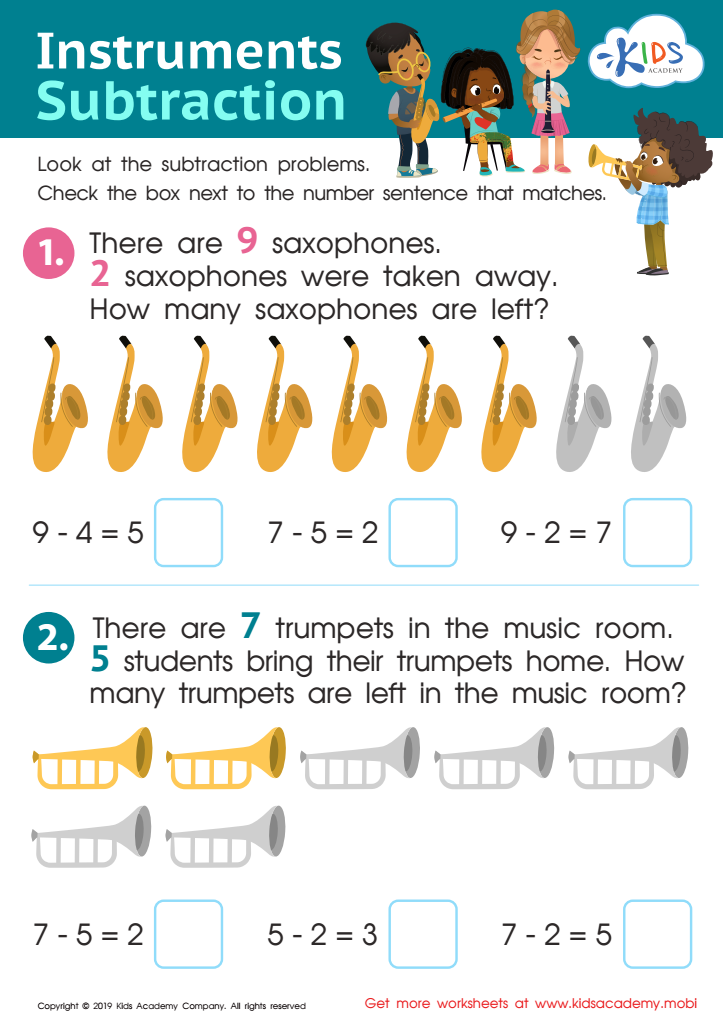
Instrument Subtraction Worksheet
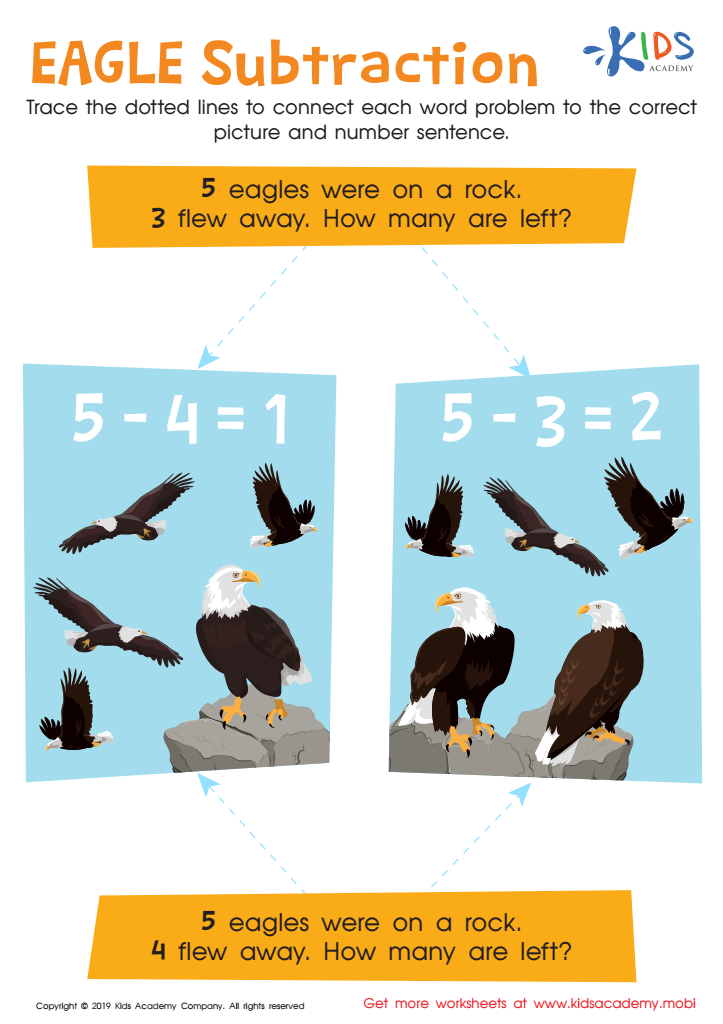
Eagle Subtraction Worksheet
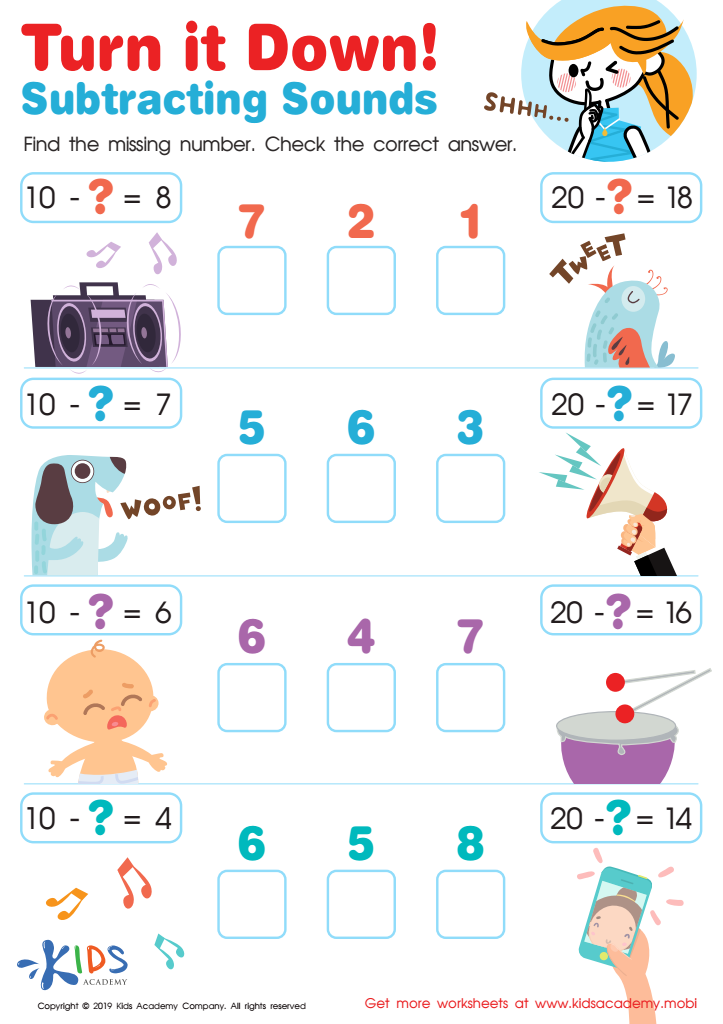
Turn It down! Subtracting Sounds Worksheet
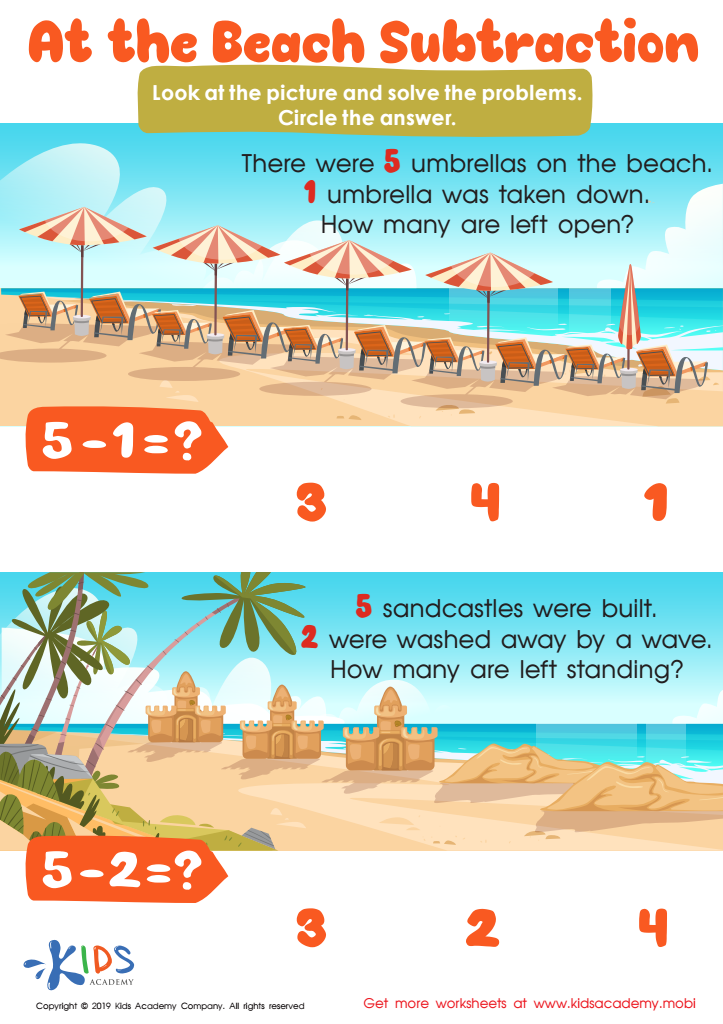
At the Beach Subtraction Worksheet
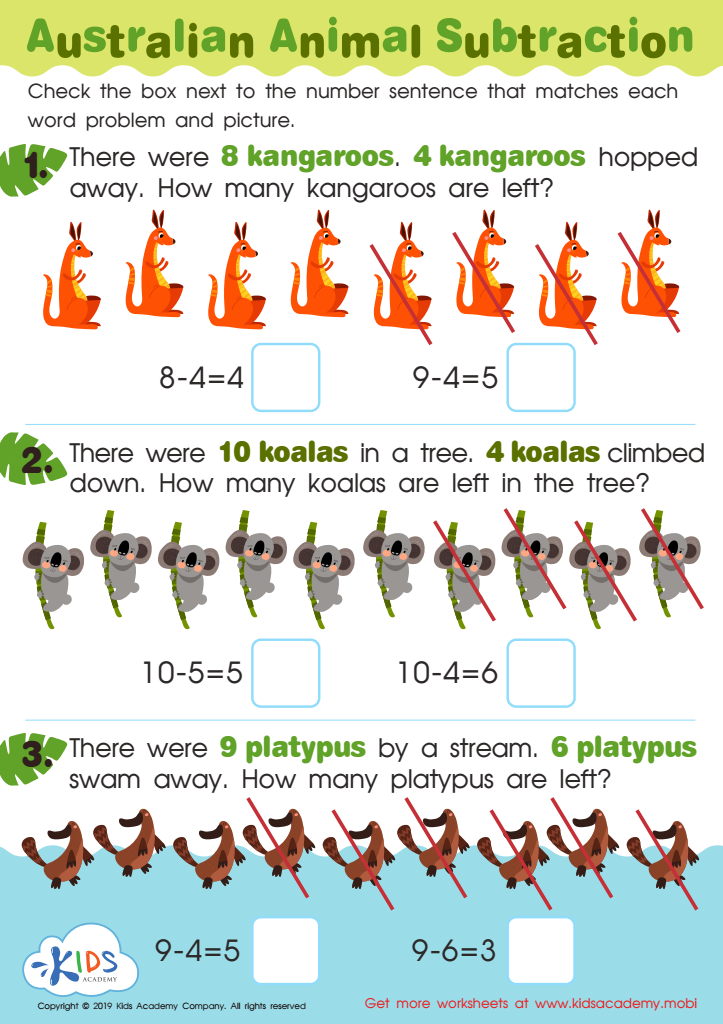
Australian Animal Subtraction Worksheet
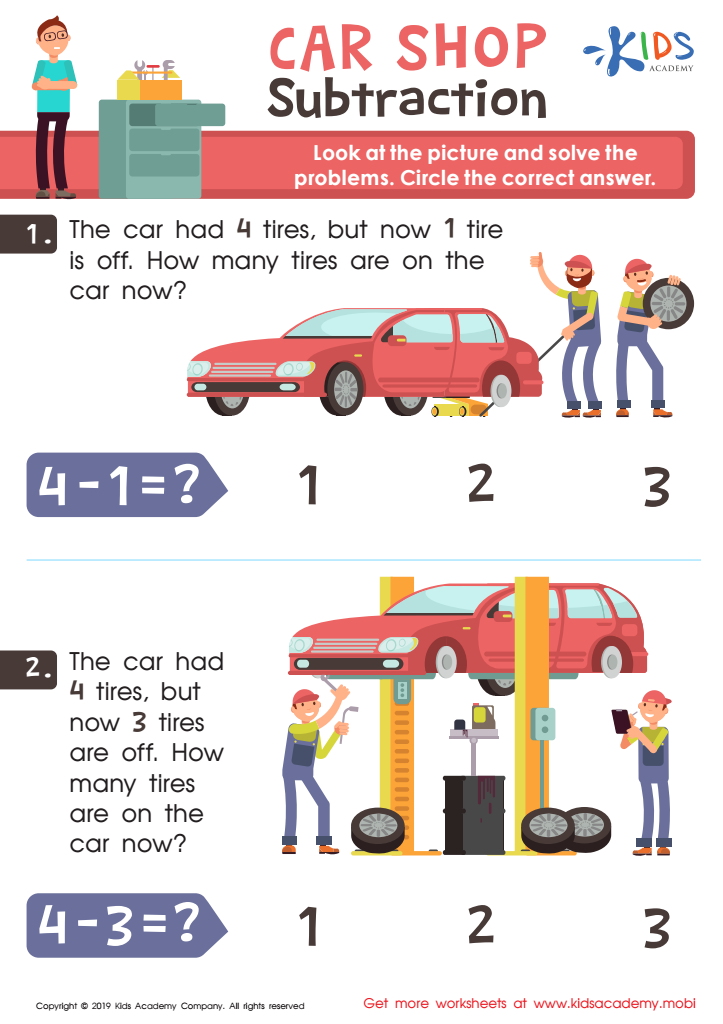
Car Shop Subtraction Worksheet
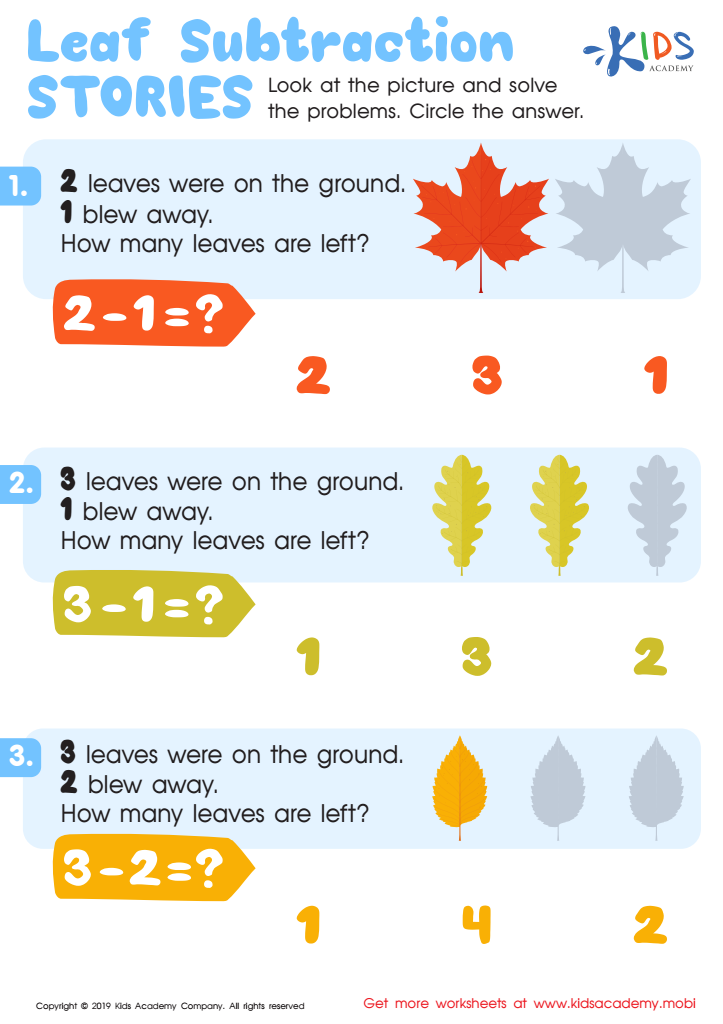
Leaf Subtraction Stories Worksheet
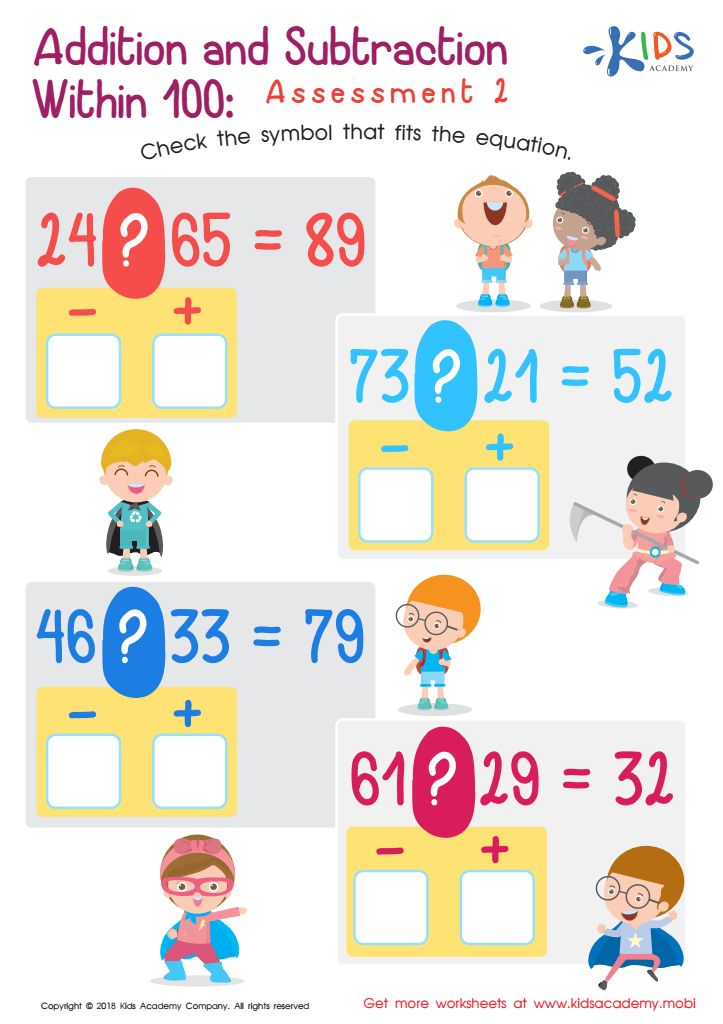
Addition and Subtraction Within 1: Assessment 2 Worksheet
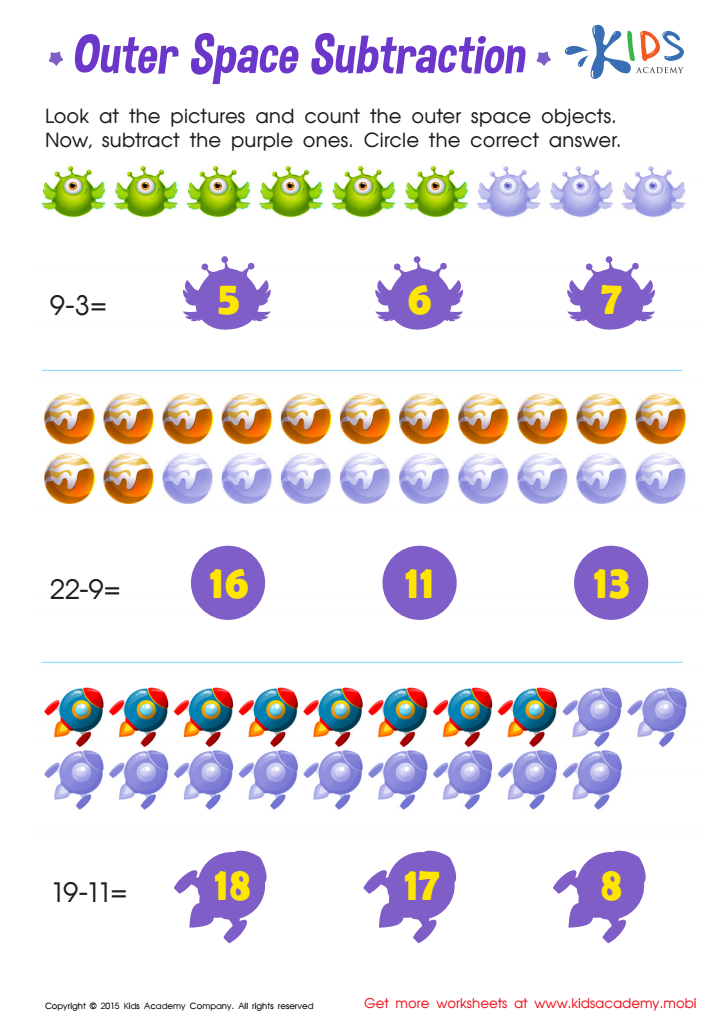
Outer Space Substraction Worksheet
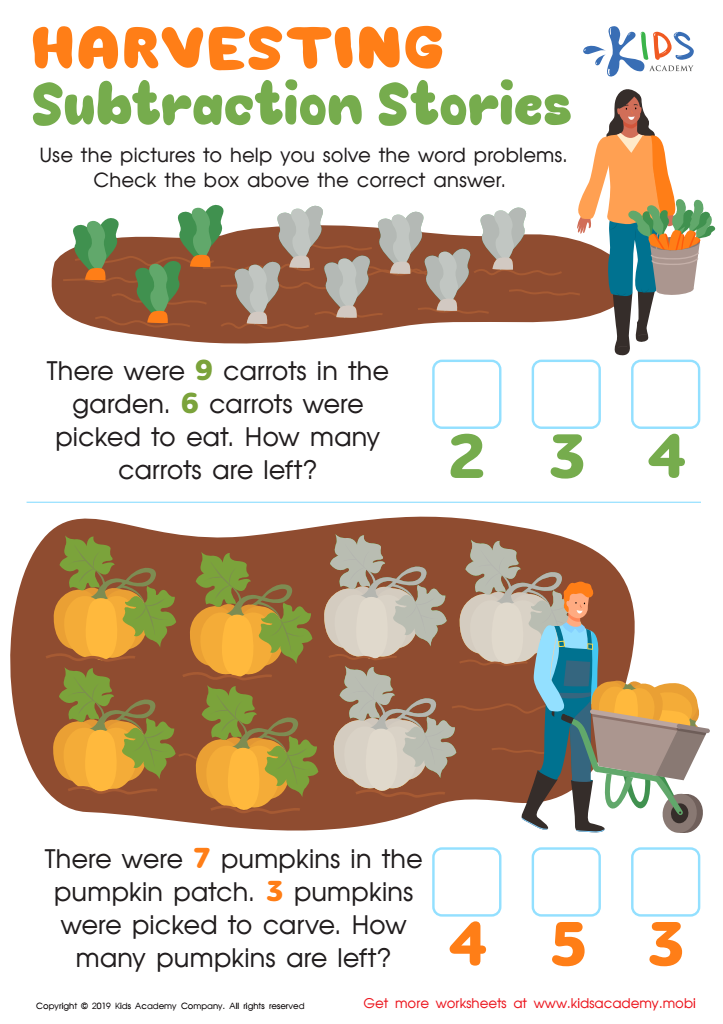
Harvesting Subtraction Stories Worksheet
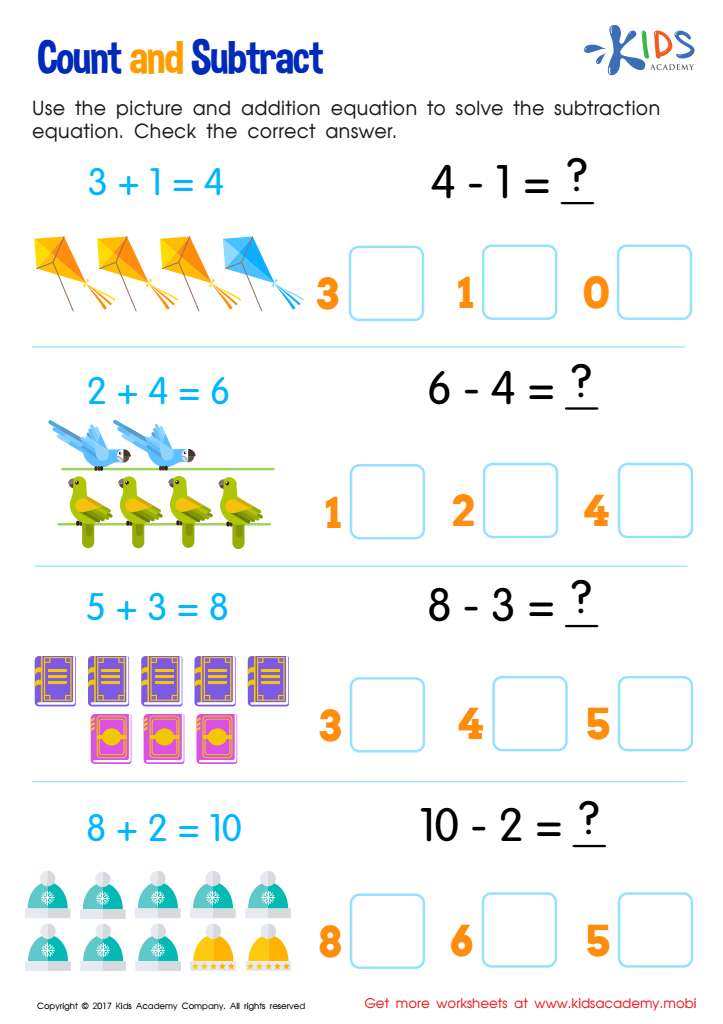
Count and Subtract Worksheet
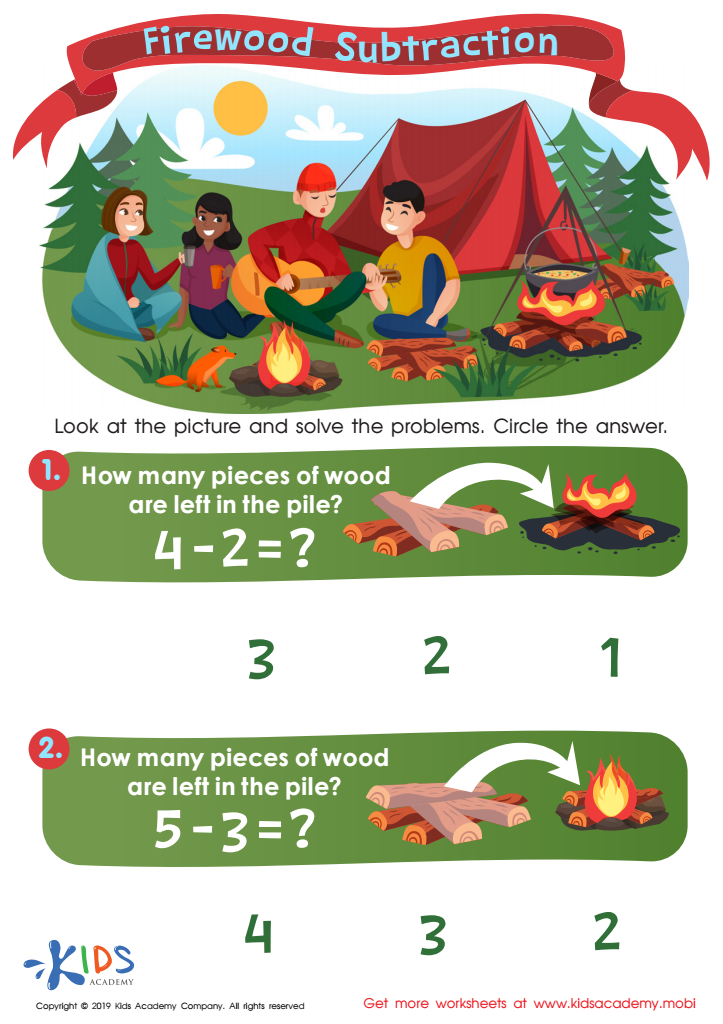
Firewood Subtraction Worksheet








Subtraction and basic arithmetic are fundamental skills that form the cornerstone of mathematical understanding for children ages 7-8. Parents and teachers should care deeply about providing subtraction practice along with easy addition and subtraction exercises for several key reasons.
These early math skills lay the groundwork for more complex mathematical concepts. Proficiency in basic arithmetic enhances a child’s numerical fluency, making future learning in subjects like multiplication, division, algebra, and geometry much easier. Additionally, practicing subtraction and addition can help boost a child’s confidence in their mathematical abilities, reducing anxiety and fostering a positive attitude towards math.
Moreover, these skills are essential for daily life. Being able to quickly and accurately subtract or add numbers can help children with everyday tasks such as counting change, measuring ingredients for a recipe, or even following a schedule. By practicing these skills early on, children build a strong mental arithmetic foundation, improving their problem-solving abilities and logical thinking.
In an educational context, considerable practice in subtraction can ensure that students meet academic standards and perform well in assessments. By supporting students in mastering these skills through regular practice, both parents and teachers can contribute to their overall academic success and long-term intellectual development.








