Understanding patterns Easy Math Worksheets for Ages 7-9
5 filtered results
-
From - To
Explore the world of patterns with our "Understanding Patterns Easy Math Worksheets" designed specifically for children aged 7-9! Our carefully crafted worksheets help young learners recognize and create patterns, enhancing their mathematical thinking and problem-solving skills. Through fun and engaging activities, kids will complete sequences, identify relationships, and develop critical reasoning. With colorful visuals and age-appropriate exercises, these worksheets make learning exciting and effective. Ideal for classroom use or at-home practice, our resources foster a solid foundation in math while encouraging creativity. Join us on this educational journey and watch your child's confidence in mathematics soar!
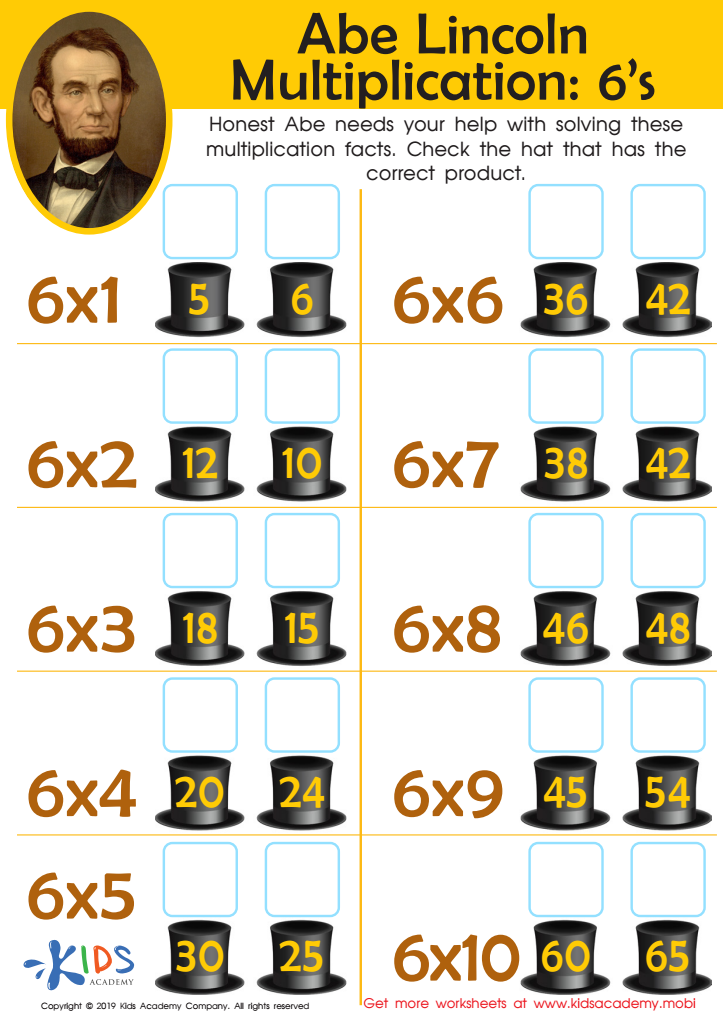
Abe Lincoln Multiplication: 6’s Worksheet
 Assign to My Students
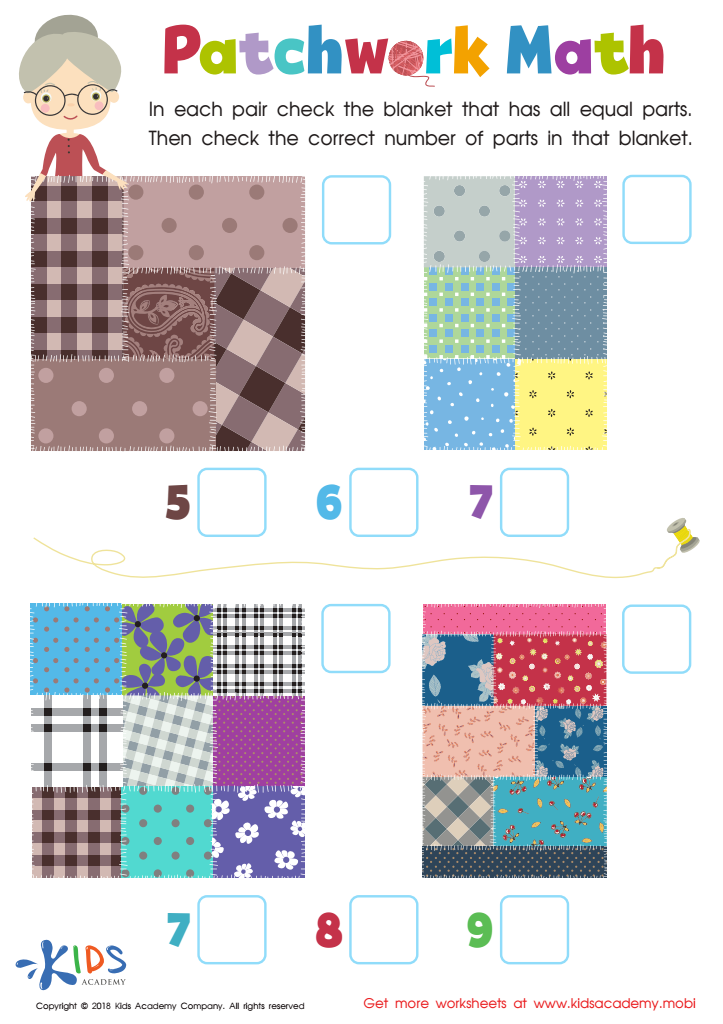
Patchwork Math Worksheet
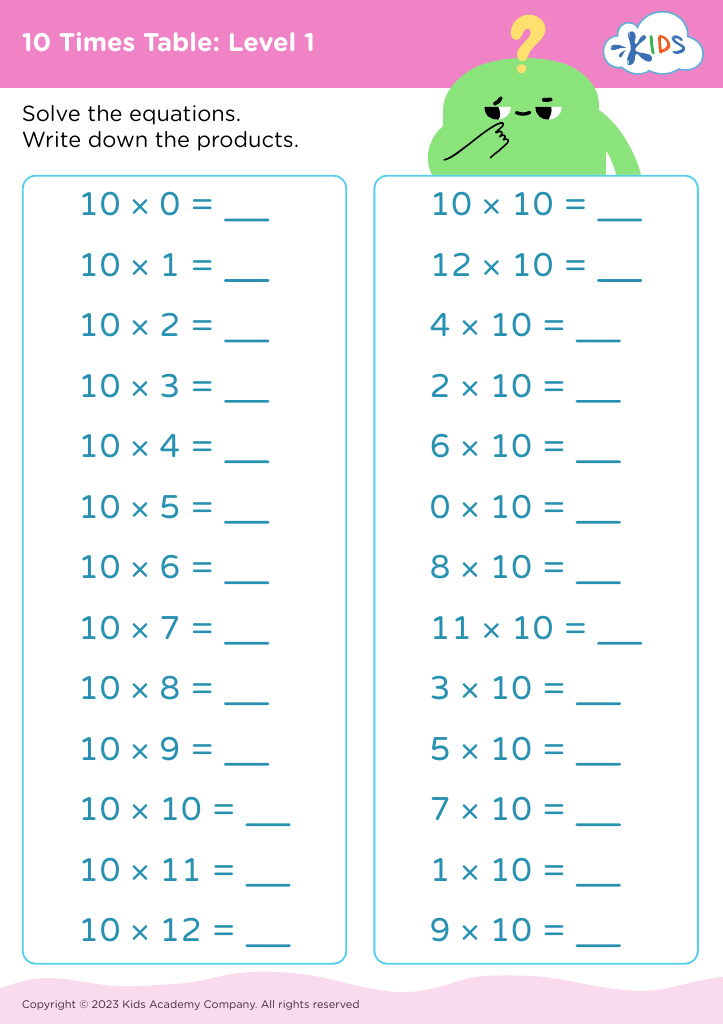
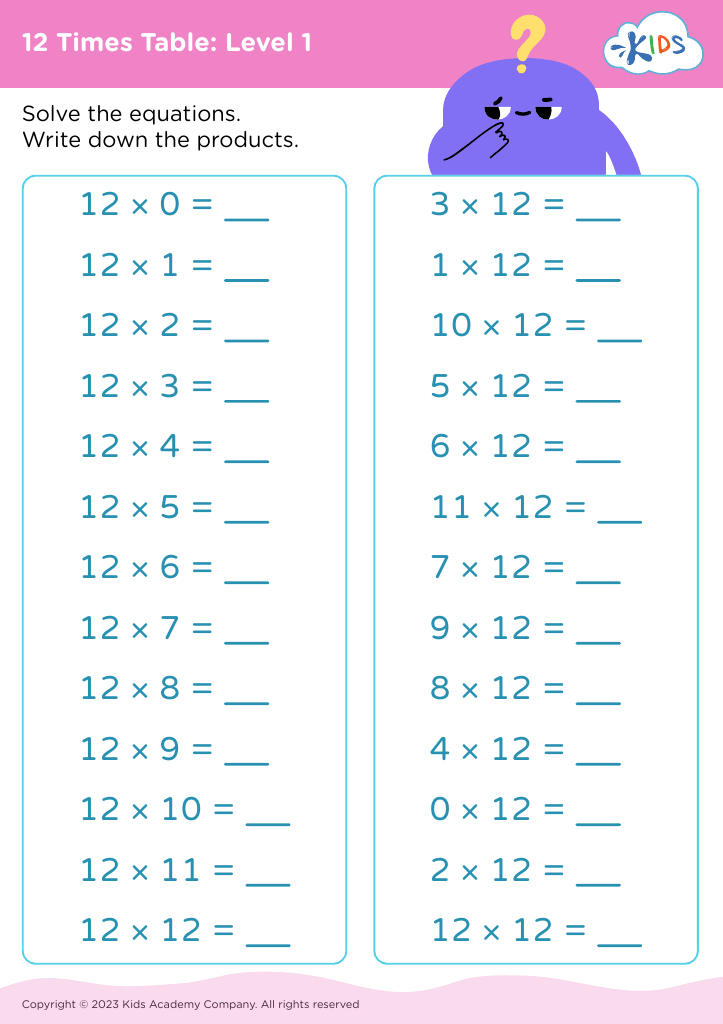
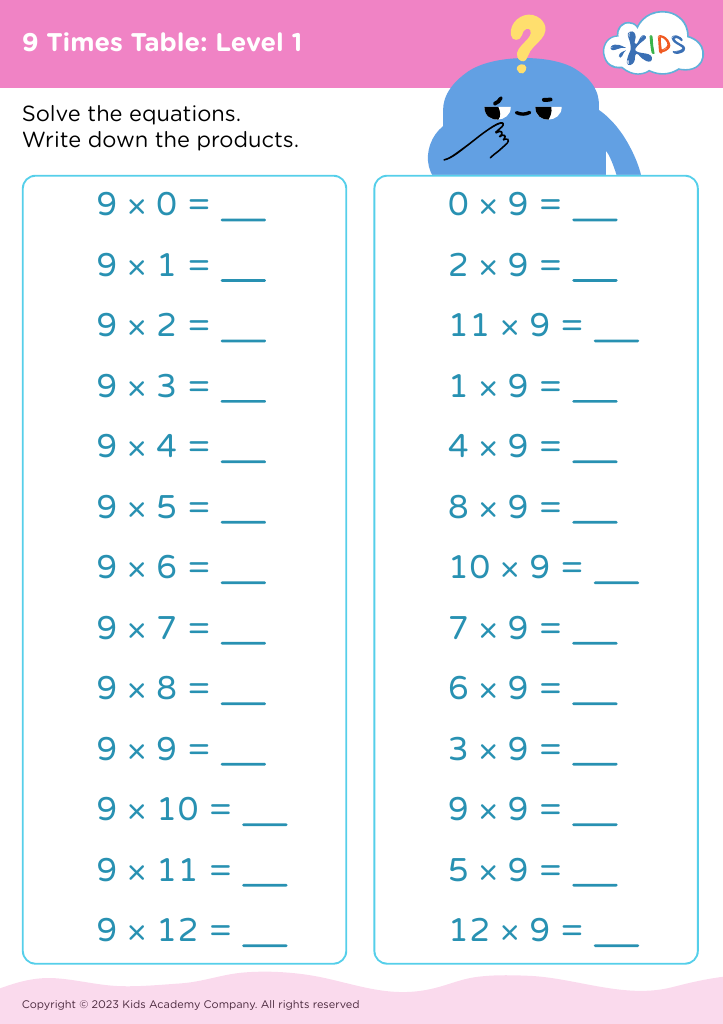







Understanding patterns in mathematics is crucial for children aged 7-9 because it lays the groundwork for more complex mathematical concepts they will encounter later. At this age, children are developing their problem-solving skills and logical reasoning, and recognizing patterns helps them make connections between numbers and operations. Patterns enhance critical thinking, enabling children to predict outcomes and establish relationships between different elements in mathematics.
Moreover, grasping patterns fosters confidence in young learners. When they can identify and extend patterns, they take ownership of their learning and feel empowered in their math abilities. This skill is especially important as they transition to more challenging topics like algebra and geometry where algebraic thinking relies heavily on understanding patterns.
For parents and teachers, nurturing this skill not only supports academic growth but also encourages a love for math. Engaging children with pattern-based activities, such as games and puzzles, makes math enjoyable and interactive. This approach can also strengthen parent-child or teacher-student bonds as they explore math together. Ultimately, emphasizing patterns helps build a foundation for lifelong math skills, contributing to overall academic success and enhanced cognitive development during these formative years.








