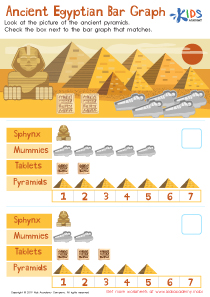
Comparing lengths Easy Measurement Worksheets for Ages 7-9
5 filtered results
-
From - To
Discover engaging "Comparing Lengths" worksheets designed for children aged 7 to 9. Our easy measurement resource provides young learners with essential skills in comparing different lengths and understanding measurement concepts. Each worksheet is tailored to reinforce comprehension through fun activities and visual aids, making math both enjoyable and effective. Ideal for classroom settings or at-home practice, these worksheets enhance critical thinking and promote confidence in measurement. Equip your child with the tools they need to master comparing lengths in a playful, interactive manner. Explore our collection today and watch your child's mathematical skills flourish!
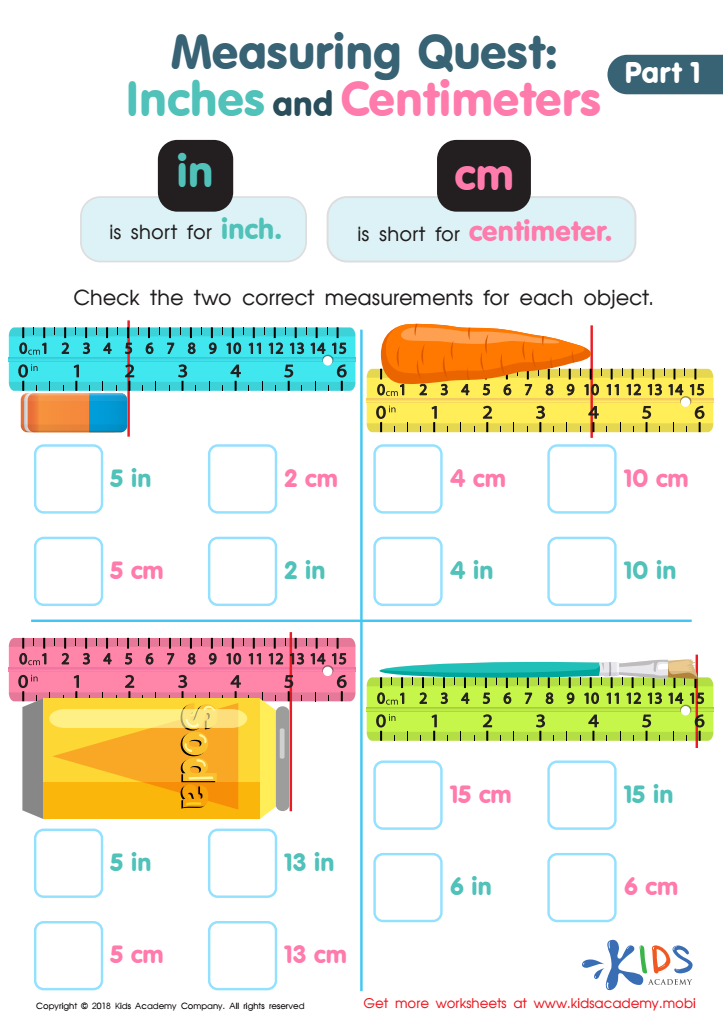
Measuring Quest: Inches and Centimeters Worksheet
 Assign to My Students
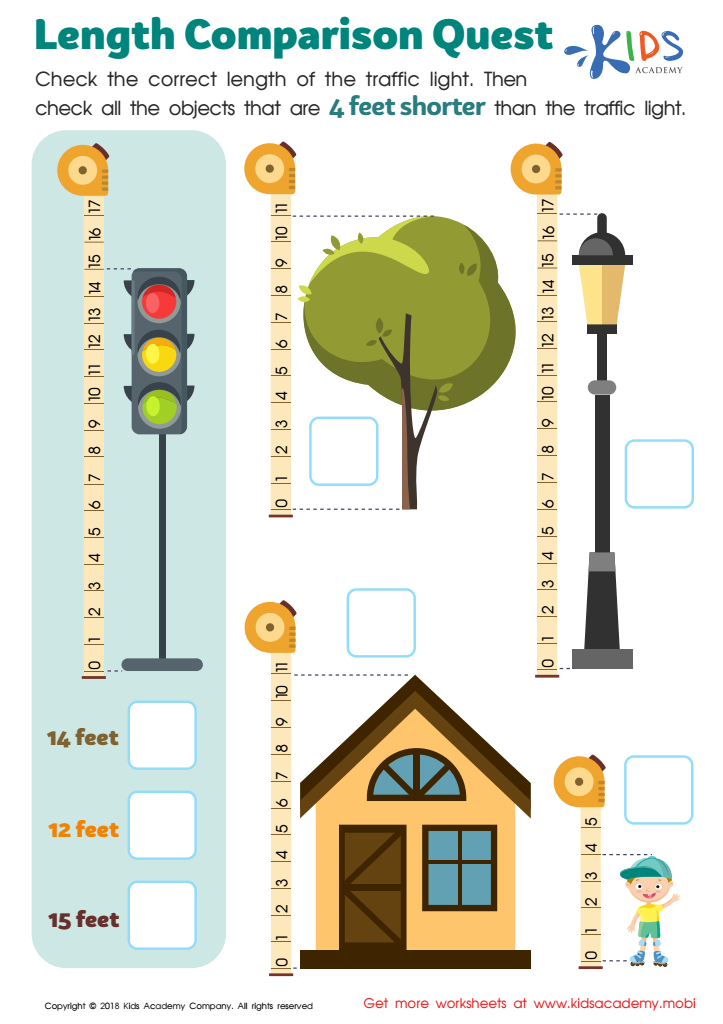
Length Comparison Quest Worksheet
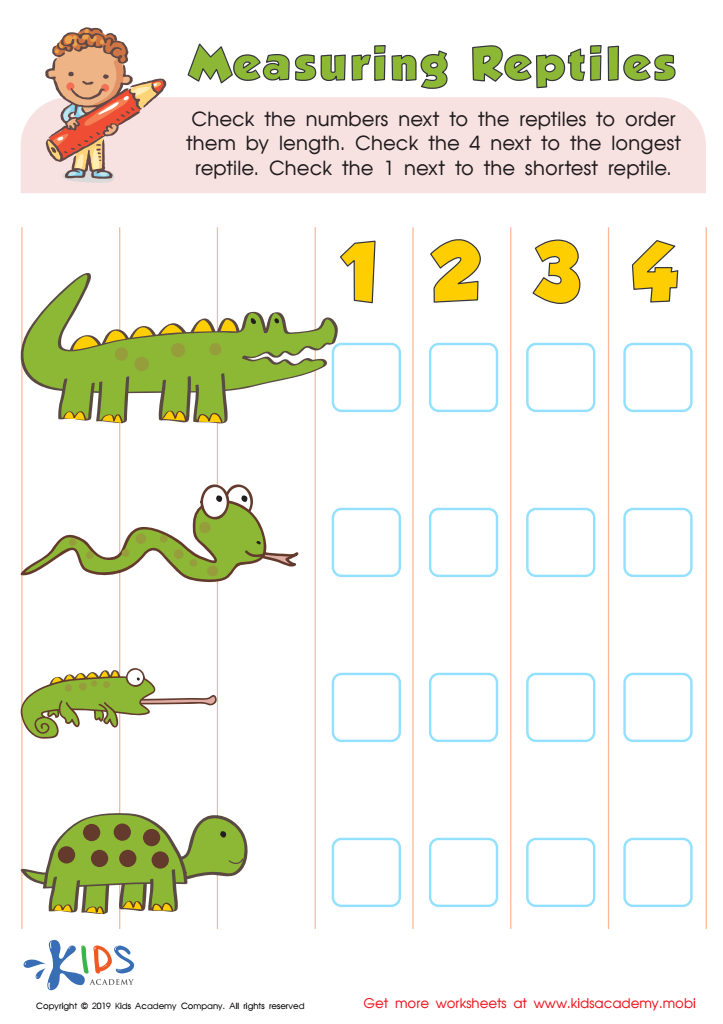
Measuring Reptiles Worksheet
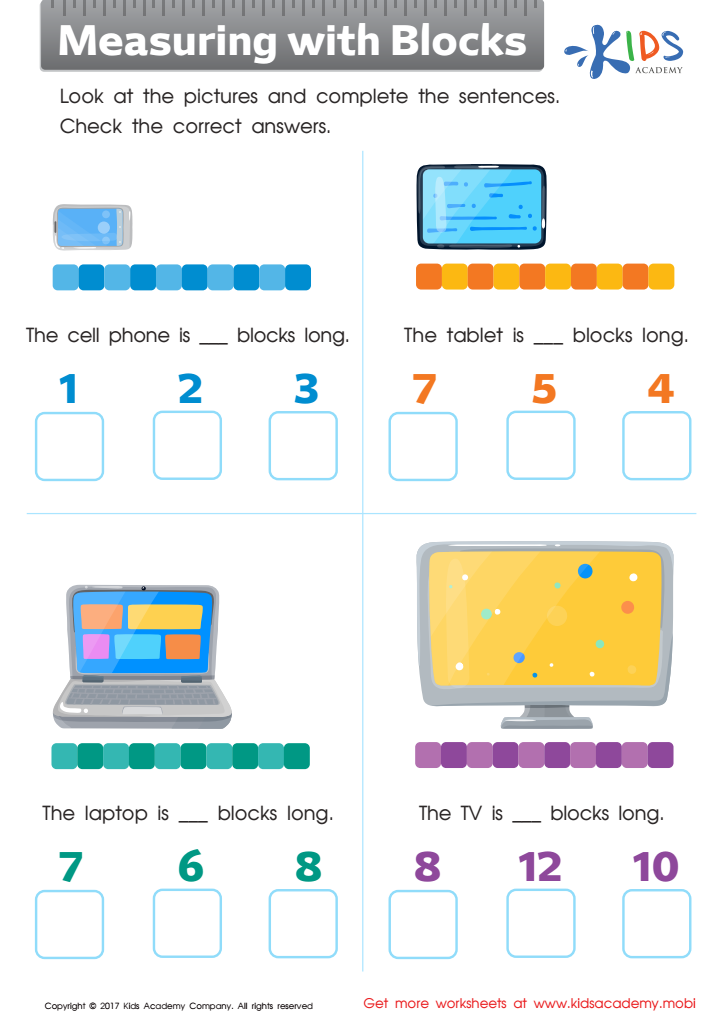
Measuring with Blocks Worksheet
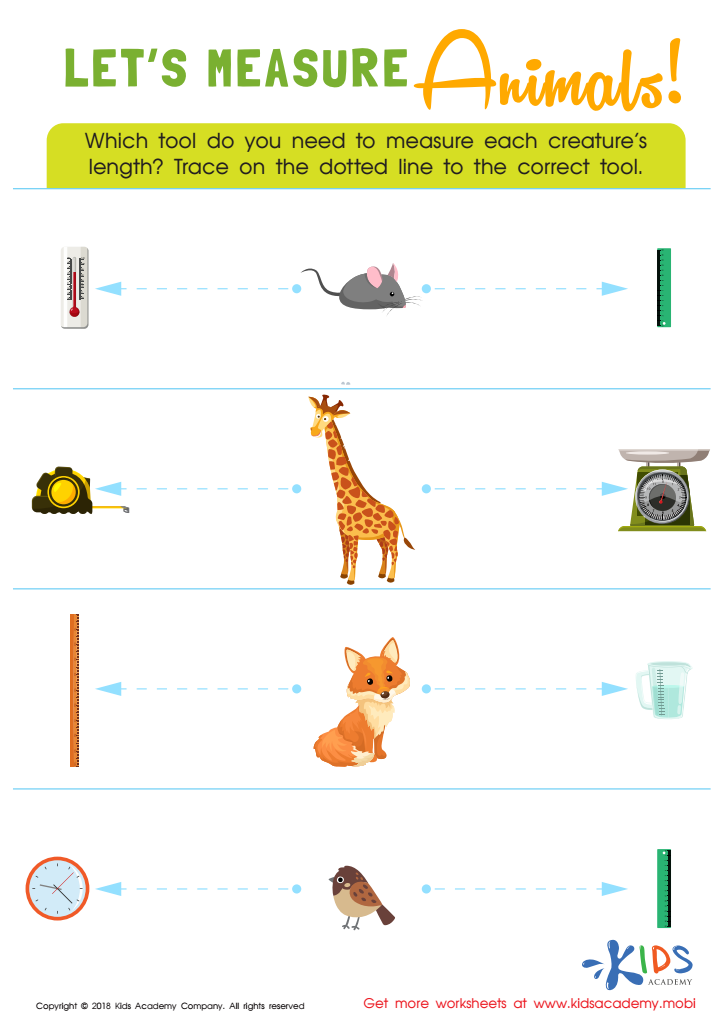
Let's Measure Animals! Worksheet








Parents and teachers should prioritize the concept of comparing lengths for children ages 7-9 because it lays the foundation for essential mathematical skills and critical thinking. At this age, children are naturally curious and eager to explore their environment, making it an ideal time to engage them in hands-on measurement activities. Understanding how to compare lengths helps children develop spatial awareness and a sense of scale, which are crucial for problem-solving in both academic settings and everyday life.
Engaging with measurement can enhance children's cognitive development, encouraging them to hypothesize, measure, and validate their findings through practical exercises. Additionally, learning to compare lengths fosters collaboration and communication skills as children often work together on measurement tasks, discussing their observations and reasoning.
Moreover, in today's world, mastery of basic measurement concepts is pivotal for success in more complex subjects like science and engineering. By fostering a strong foundation in comparing lengths, parents and teachers can help children build confidence in their abilities, nurtures their love for learning, and prepares them for future challenges—all while having fun exploring the world around them! This foundational skill is crucial not just academically, but personally and socially as well.