Number comprehension Easy Word Problems Worksheets for Ages 7-9
4 filtered results
-
From - To
Enhance your child's mathematical skills with our "Number Comprehension Easy Word Problems Worksheets for Ages 7-9." Perfectly designed for young learners, these engaging worksheets help kids master basic math concepts through fun, real-life scenarios. Each worksheet focuses on strengthening number comprehension, ensuring students develop a solid foundation in addition, subtraction, and basic problem-solving. The age-appropriate tasks not only build confidence but also foster critical thinking and analytical skills. Ideal for both classroom use and home practice, our worksheets make learning math enjoyable and effective. Give your child the tools they need to succeed in math with these fantastic worksheets.
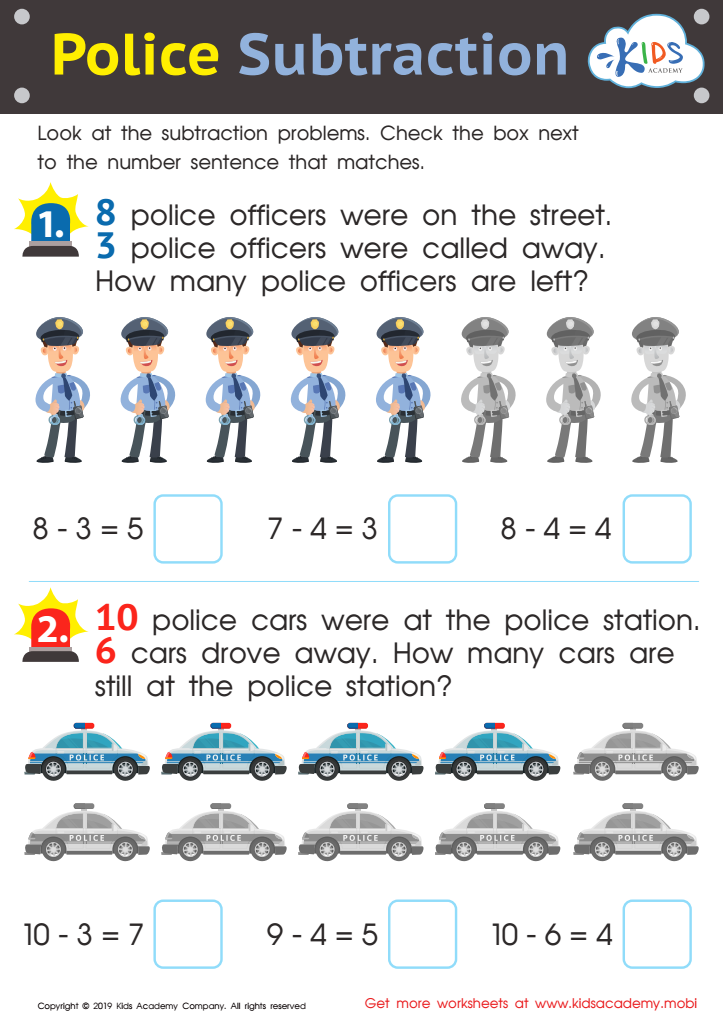
Police Subtraction Worksheet
 Assign to My Students
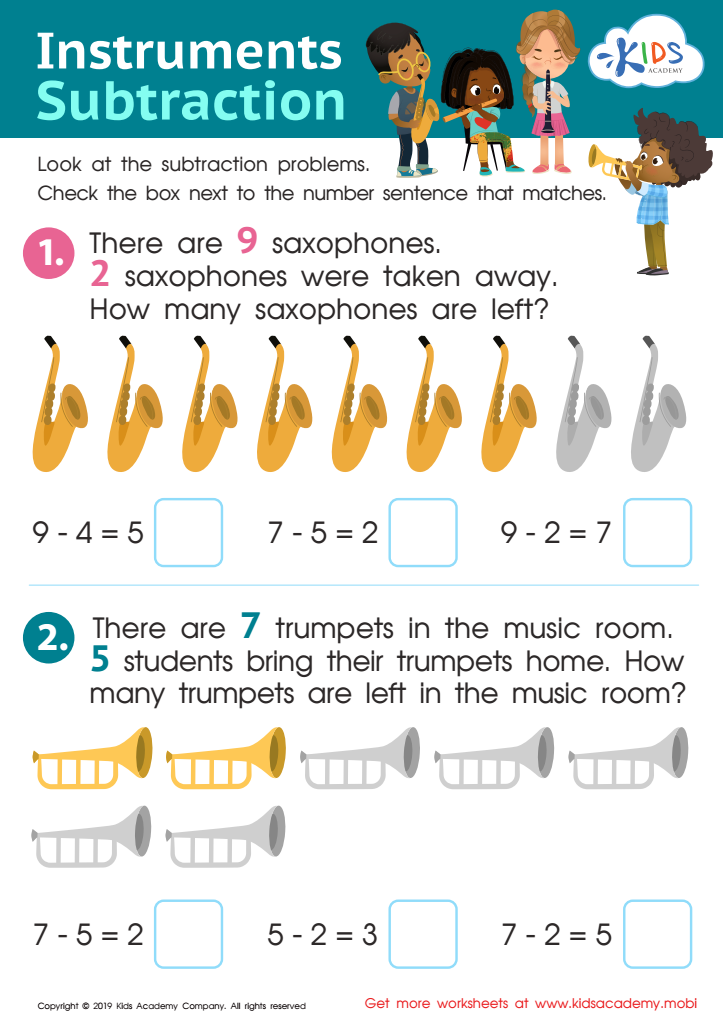
Instrument Subtraction Worksheet
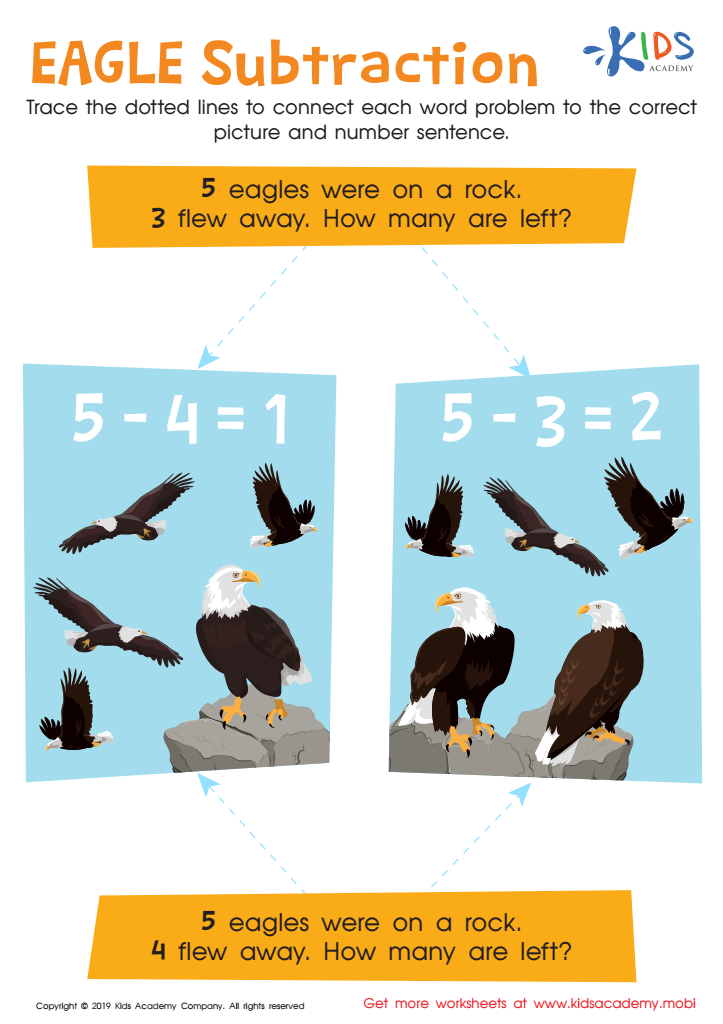
Eagle Subtraction Worksheet
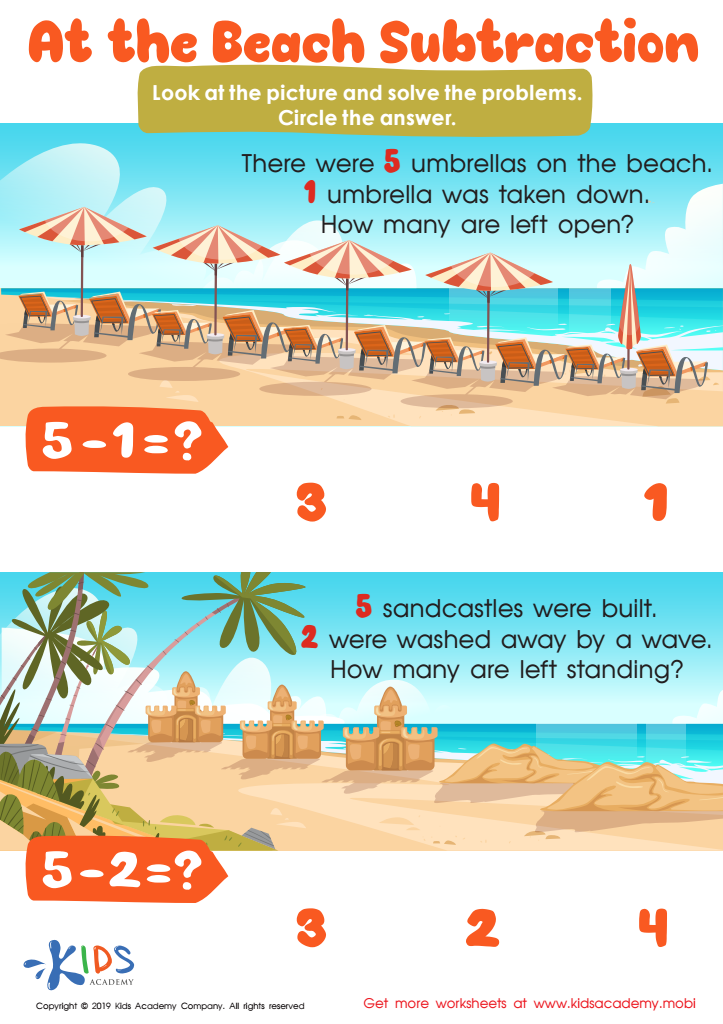
At the Beach Subtraction Worksheet







.jpg)
Understanding number comprehension and engaging with easy word problems are foundational for children aged 7-9. During these formative years, children are developing crucial cognitive skills that will influence their future learning. Easy word problems are especially beneficial as they bridge the gap between abstract numbers and real-world contexts, making math both relatable and practical.
When parents and teachers emphasize number comprehension, they help children build a strong mathematical foundation. This ensures that kids are not just memorizing facts but are also understanding concepts. For example, if a child can comprehend what 25 minus 10 means in terms of objects or scenarios they are familiar with, they grasp the notion of subtraction meaningfully.
Moreover, solving word problems enhances critical thinking and problem-solving skills. It teaches children to break down complex situations into manageable parts, a skill that transcends math and is valuable across all areas of learning and life. Working on easy word problems can also foster perseverance and confidence, as students experience success in deciphering and solving problems.
In summary, number comprehension and easy word problems are essential for cognitive development, making math understandable and applicable, and building skills that are vital for academic and real-life success. Parents and teachers should therefore prioritize them to nurture well-rounded, confident, and competent young learners.








