Problem-Solving Skills Easy Chess Worksheets for 7-Year-Olds
4 filtered results
Difficulty Level
Grade
Age
-
From - To
Subject
Activity
Standards
Introduce your 7-year-old to the engaging world of chess with our Easy Chess Worksheets designed to enhance problem-solving skills. Each worksheet is tailored to young learners, blending fun with learning to develop critical thinking and strategic planning. These activities are perfect for beginners, fostering a love for the game while introducing essential problem-solving techniques. Our carefully crafted exercises encourage kids to analyze situations, anticipate opponents' moves, and make thoughtful decisions. Give your child the gift of cognitive growth and increased focus with these printable, easy-to-understand chess worksheets, specifically created for young minds eager to learn.
Favorites
With answer key
Interactive
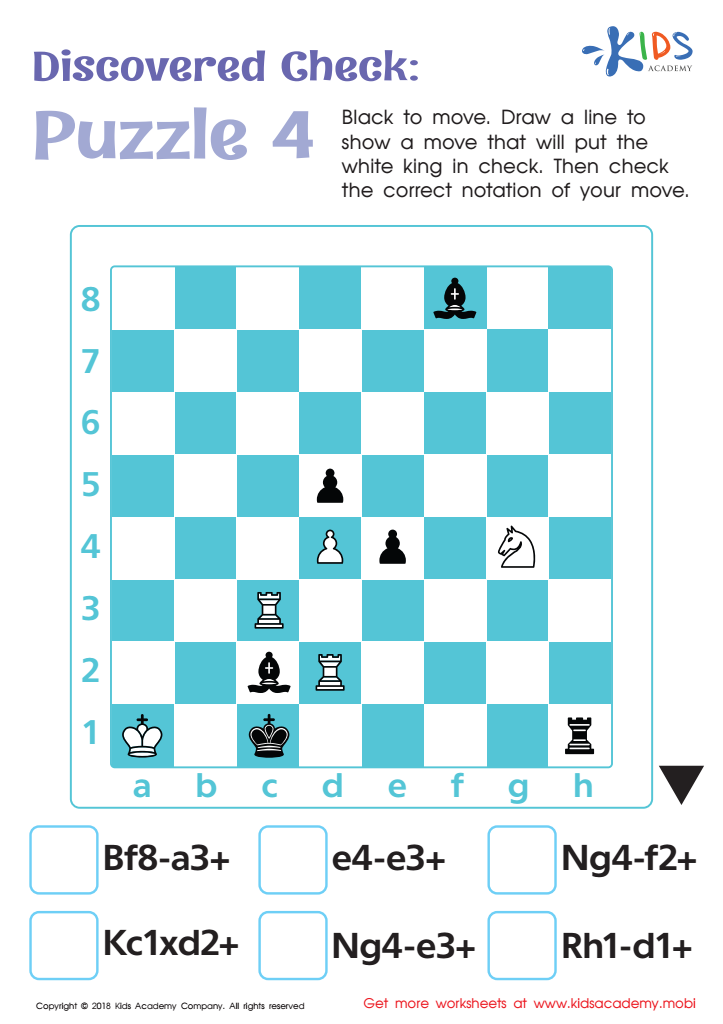
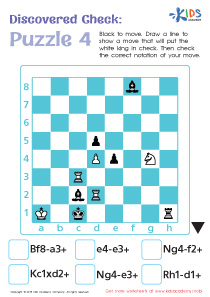
Discovered Check: Puzzle 4 Worksheet
Let your child test their chess skills with this easy worksheet. Have them take control of the black pieces and try to put the white king in checkmate. Ask them to draw a line from their chess piece to the white king, showing the move they'll make, then check the correct answer.
Discovered Check: Puzzle 4 Worksheet
Worksheet

Discovered Check: Puzzle 2 Worksheet
This worksheet exercise will stimulate your child's thinking and let them show off their chess skills. Ask them to use the white pieces and draw a line, pointing to the move that will put the black king in checkmate. Then they should check the correct option. Challenge your child and help them learn more about chess with this fun and educative activity.
Discovered Check: Puzzle 2 Worksheet
Worksheet
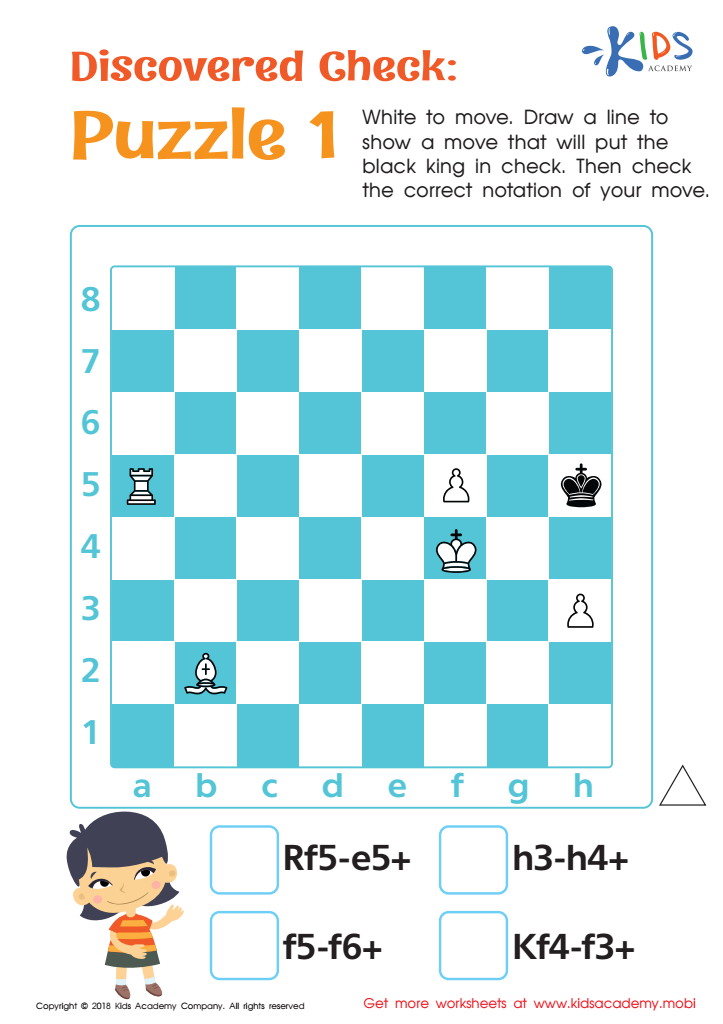
Discovered Check: Puzzle 1 Worksheet
Chess is an excellent way to engage your kids' brains and strengthen thinking skills. This worksheet is ideal for inspiring and growing their interest in the game. Have your child take the white pieces and move them to checkmate the black king. Compare their move against the provided notations to check accuracy.
Discovered Check: Puzzle 1 Worksheet
Worksheet
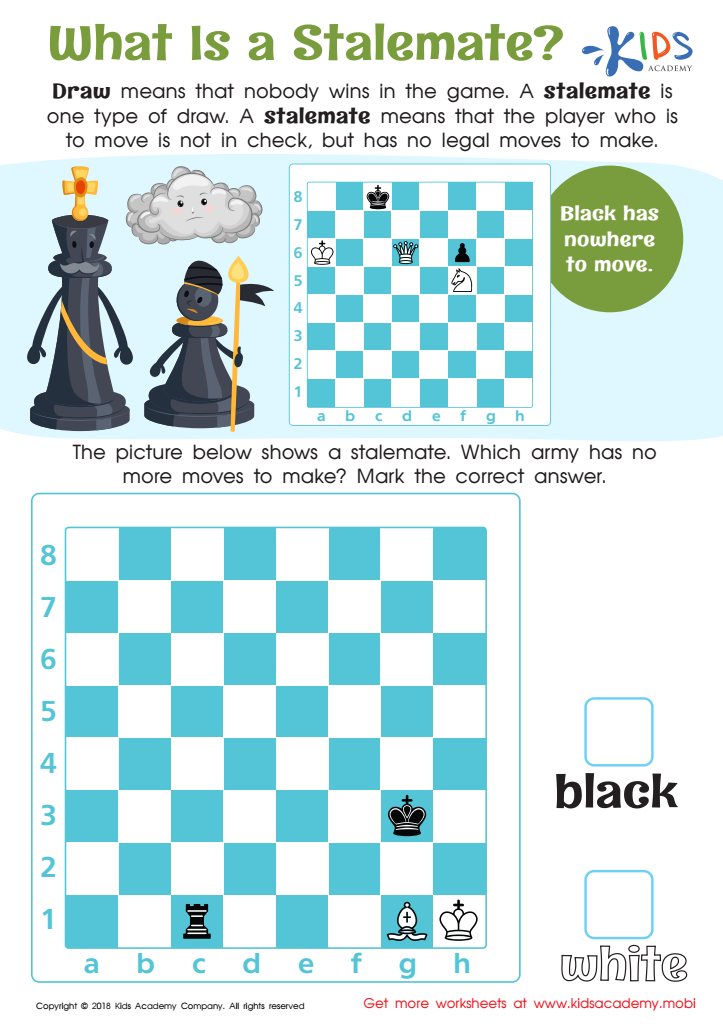
What Is a Stalemate? Worksheet
Chess is an ideal way to develop logic, strategizing, problem-solving and more! Even kids can learn it. With this worksheet, children can learn about draws and stalemates. Sample boards will help them decide which team, black or white, is at a stalemate.
 Assign to My Students
What Is a Stalemate? Worksheet
Worksheet
Join Kids Academy for Free
Who is primarily going to use this learning content?








Problem-solving skills are essential for the comprehensive development of children, and "Easy Chess" provides a unique and effective way to enhance these skills in 7-year-olds. Chess encourages strategic thinking, foresight, and patience, making it an excellent tool for mental growth. By learning to play chess, children master the art of anticipating consequences and planning several moves ahead. This is not just about winning the game but about understanding and employing critical thinking strategies that transfer to real-life situations.
For parents and teachers, fostering problem-solving skills through chess can improve a child's academic performance. Studies have shown that engagement in chess activities correlates with higher scores in subjects like math and language arts since the game requires numerical calculations, reading comprehension, and improved memory. Additionally, chess can teach valuable social skills, such as taking turns, handling wins and losses gracefully, and respecting the opponent, all of which contribute to a child's emotional intelligence.
Moreover, "Easy Chess" ensures that the game is accessible and enjoyable, reducing the intimidation that might come with more complex levels of play. By adapting the classic game for a younger audience, it creates an inviting environment where children can discover the joys of learning and cognitive challenges, laying a strong foundation for future intellectual pursuits.