Shape Recognition Easy 2D Shapes Worksheets for 7-Year-Olds
4 filtered results
-
From - To
Discover "Shape Recognition Easy 2D Shapes Worksheets for 7-Year-Olds," designed to make learning fun and interactive. Our expertly crafted worksheets help children identify, classify, and draw basic 2D shapes like squares, rectangles, circles, and triangles. Ideal for early graders, these activities enhance spatial awareness and boost early math skills. Engaging exercises and vibrant illustrations keep young learners motivated. Suitable for home or classroom use, these resources lay a strong foundation in geometry, making complex concepts more approachable. Download now to give your child a head start in math with practical and enjoyable shape recognition practice.
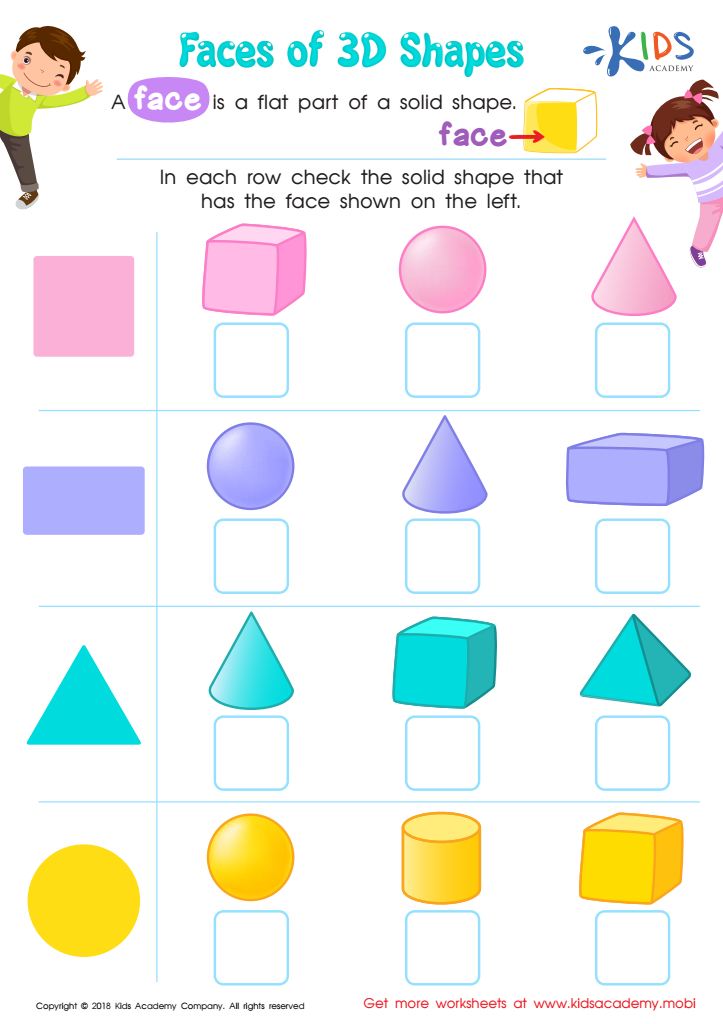
Faces of 3D Shapes Worksheet
 Assign to My Students











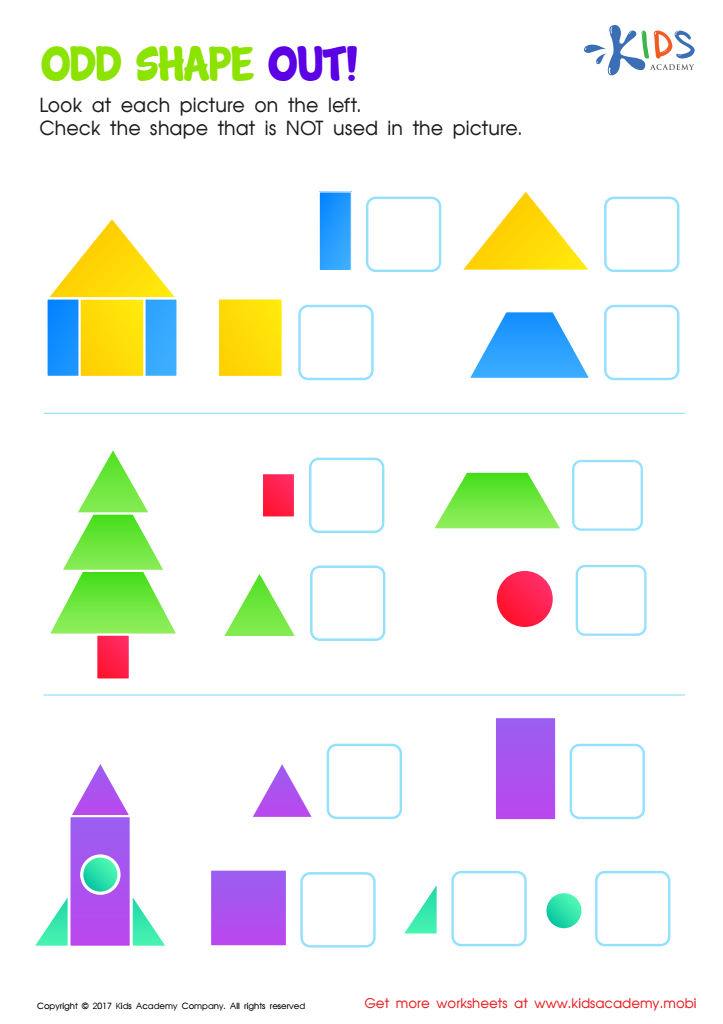
Odd Shape Out Worksheet for Grade 1
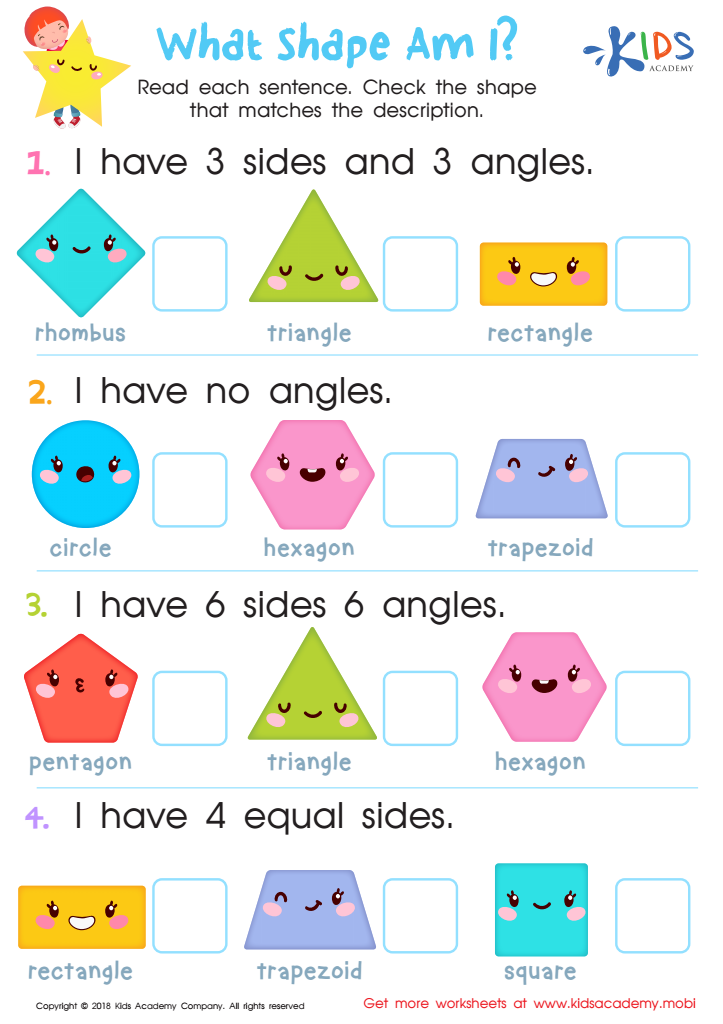
What Shape Am I? Worksheet
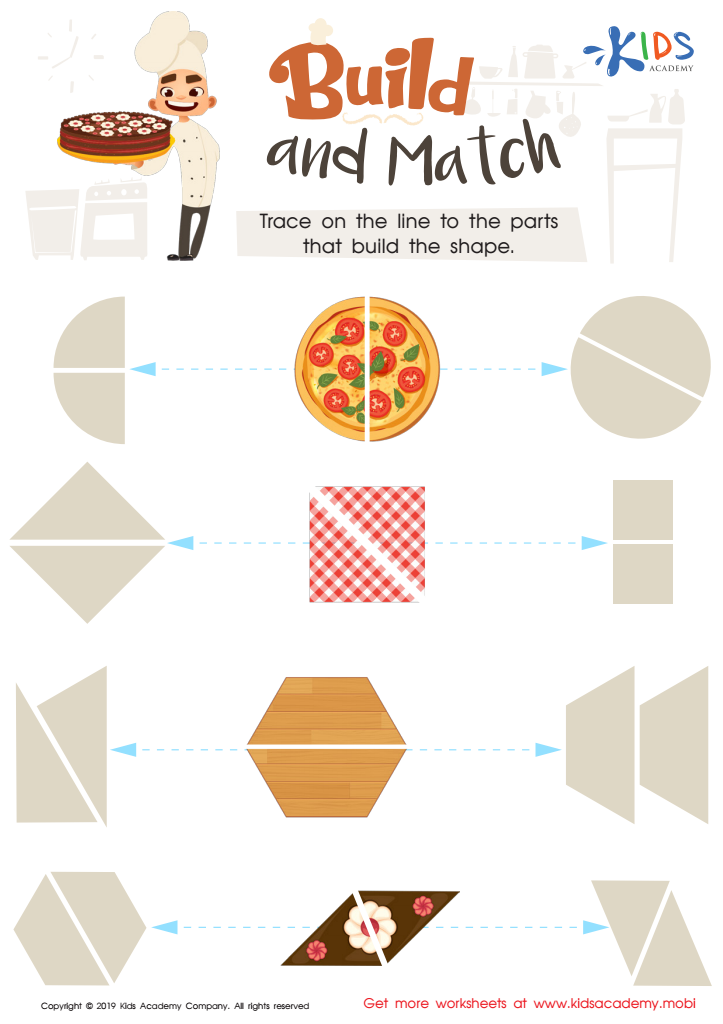
Build and Match Worksheet








Shape recognition is a fundamental skill that serves as a building block in young children's cognitive development, particularly for 7-year-olds. Both parents and teachers should prioritize teaching easy 2D shapes to kids for several reasons.
First, recognizing and understanding shapes enhances spatial awareness, an essential skill for problem-solving and navigation in their environment. It helps children better understand dimensions and how objects relate to one another in space.
Second, shape recognition lays the groundwork for learning more complex math concepts. Recognizing basic 2D shapes like circles, squares, and triangles serves as an introduction to geometry. This foundational knowledge is crucial as it underpins more advanced mathematical learning, such as understanding symmetry, area, and measurement.
Third, improved shape recognition skills also benefit children's literacy and language development. Familiarity with shapes aids in letter recognition, as many alphabets are built from basic shapes. Understanding these fundamental shapes allows children to more easily identify and differentiate between letters and numbers, facilitating reading and writing proficiency.
Finally, working with shapes also nurtures fine motor skills through activities like drawing, cutting, and matching, fostering hand-eye coordination. For these reasons, parents and teachers should consider shape recognition not just a basic skill, but an integral component of a child's early academic curriculum.