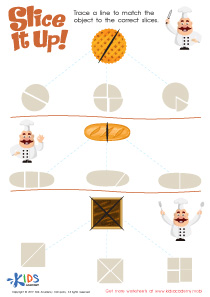
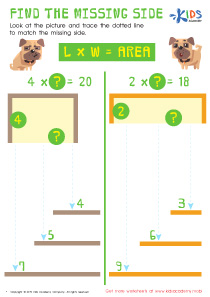
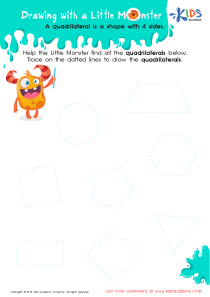
Shape Recognition Easy Fractions of Shapes Worksheets for 7-Year-Olds
5 filtered results
-
From - To
Discover our "Shape Recognition Easy Fractions of Shapes Worksheets" designed specifically for 7-year-olds! These engaging worksheets help young learners master the basics of fractions through fun and familiar shapes. By introducing fractions in a visual and hands-on manner, kids can easily grasp the concept of dividing shapes into equal parts. Each worksheet combines shape recognition with fundamental fraction skills, making math enjoyable and accessible. Perfect for classroom use or at-home practice, these worksheets promote critical thinking and problem-solving abilities. Boost your child's math confidence and understanding with our expertly crafted resources. Start learning today!
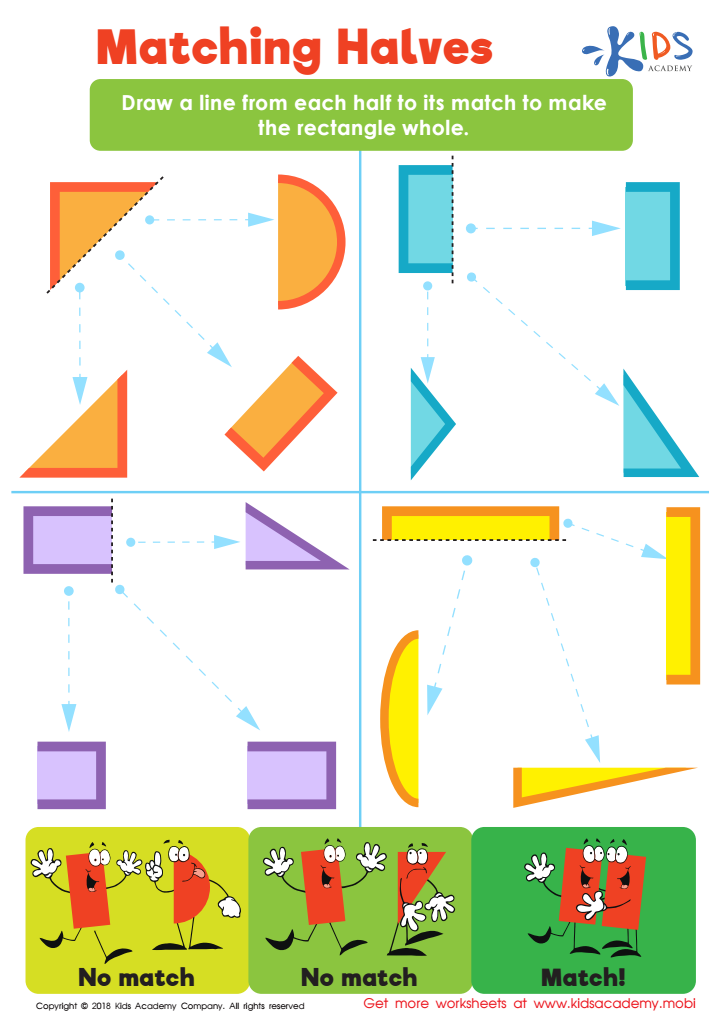
Matching Halves Worksheet
 Assign to My Students
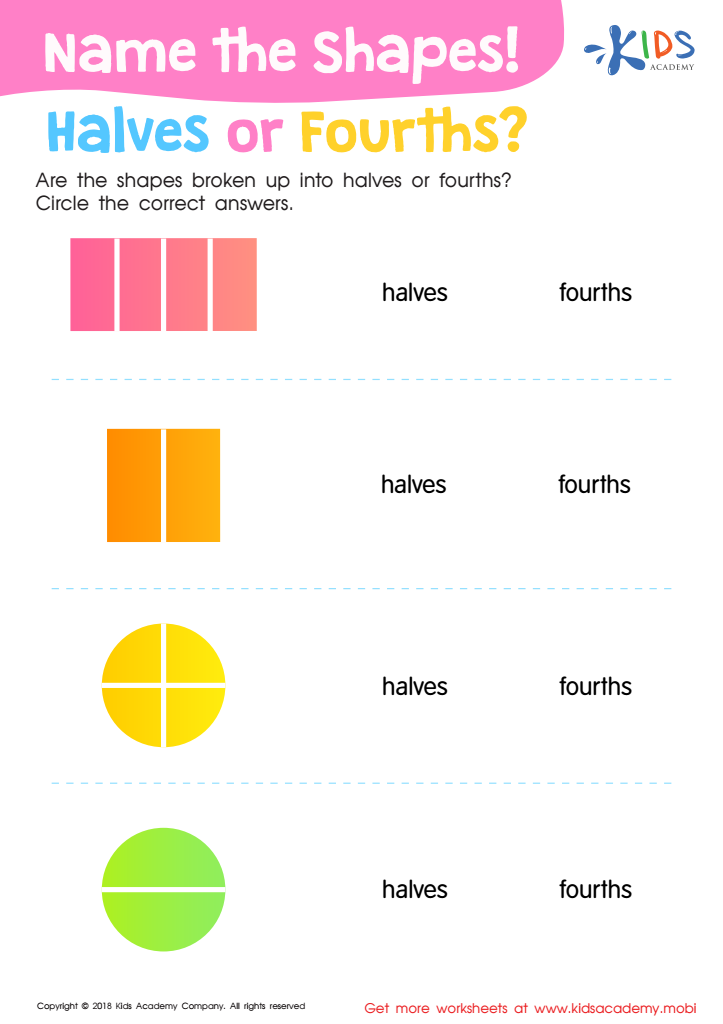
Name the Shapes Halves or Fourths? Worksheet
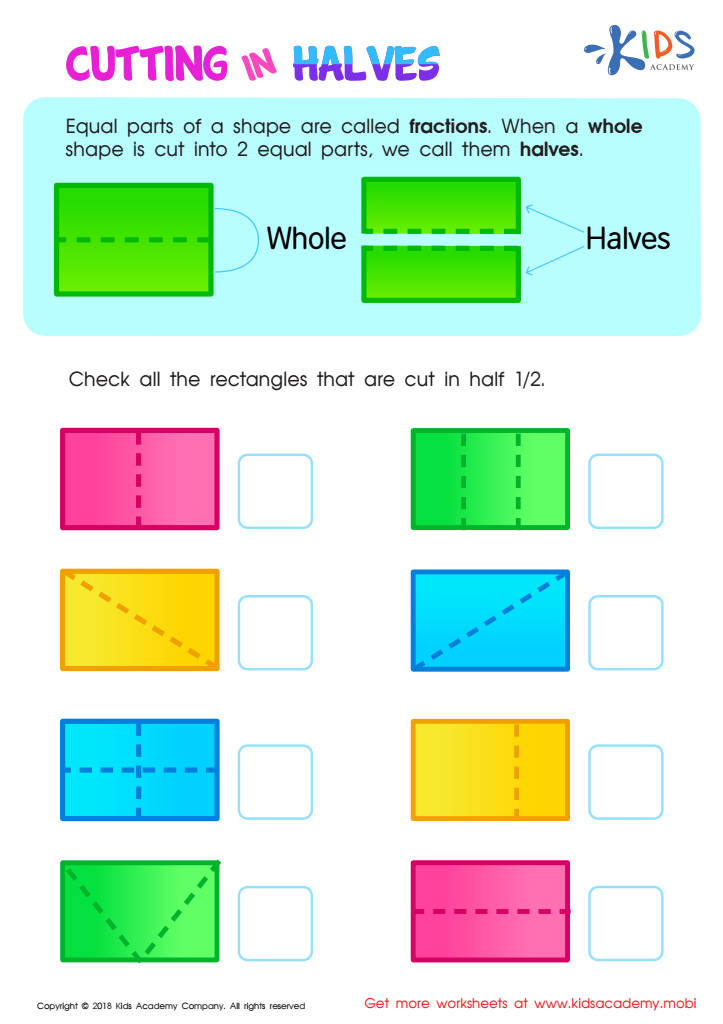
Cutting in Halves Worksheet
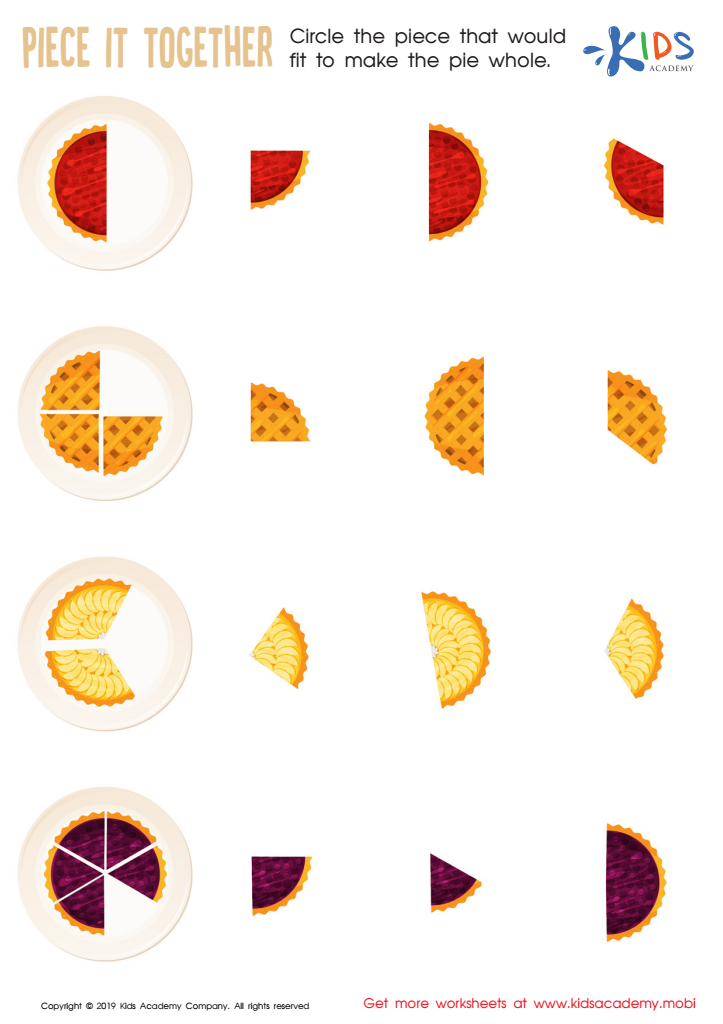
Piece it together Worksheet
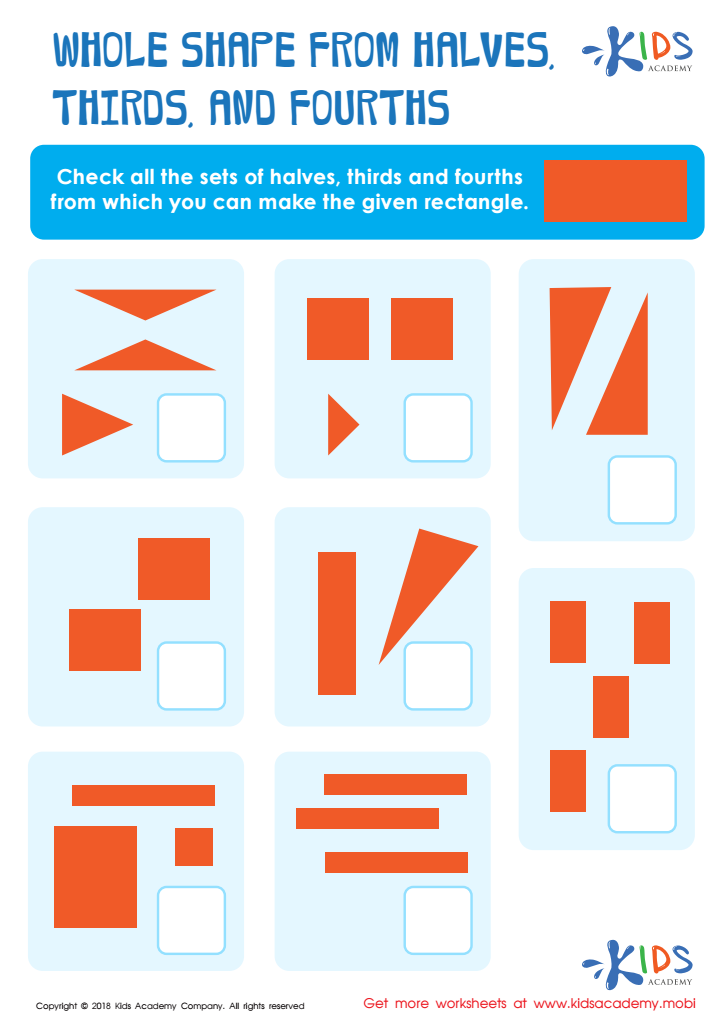
Whole Shape from Halves, Thirds and Fourths Worksheet








Shape recognition and understanding easy fractions of shapes are fundamental skills for 7-year-olds and essential components of early mathematical education. Parents and teachers should prioritize these concepts because they form the building blocks for more advanced math topics and daily life problem-solving abilities.
Firstly, shape recognition enhances a child’s spatial awareness, critical for understanding geometry, measurement, and even subjects outside math like science and art. When children can identify and name different shapes, they cultivate the ability to observe their environment more keenly and make sense of the world around them. These observational skills can contribute to pattern recognition and logical reasoning.
Similarly, introducing fractions using shapes helps young learners grasp the concept of parts of a whole in a visible and tangible manner. Visualizing fractions through divided shapes, like halves or quarters of a circle or square, makes abstract math concepts more concrete and accessible for young minds. This foundational knowledge simplifies future learning about more complex fractions, decimals, and percentages.
Moreover, mastering these early math skills builds confidence in 7-year-olds, fostering a positive attitude towards mathematics. Ensuring children are proficient in recognizing shapes and understanding fractions at an early age sets a robust foundation for their continued academic success and confidence in higher-level math, ultimately contributing to their overall development and cognitive skills.