Data interpretation Easy Measurement Worksheets for 7-Year-Olds
7 filtered results
-
From - To
Discover our engaging "Data Interpretation Easy Measurement Worksheets" designed specifically for 7-year-olds! These worksheets offer a fun and interactive way for young learners to develop essential data interpretation skills through measuring activities and simple data analysis. Featuring colorful visuals and relatable examples, children will explore concepts such as graphs, tables, and measurement units. Our age-appropriate exercises encourage critical thinking and enhance math confidence while aligning with educational standards. Ideal for classroom learning or at-home practice, these worksheets help your child build a strong foundation in understanding measurements and data. Equip your child for academic success with our delightful resources today!
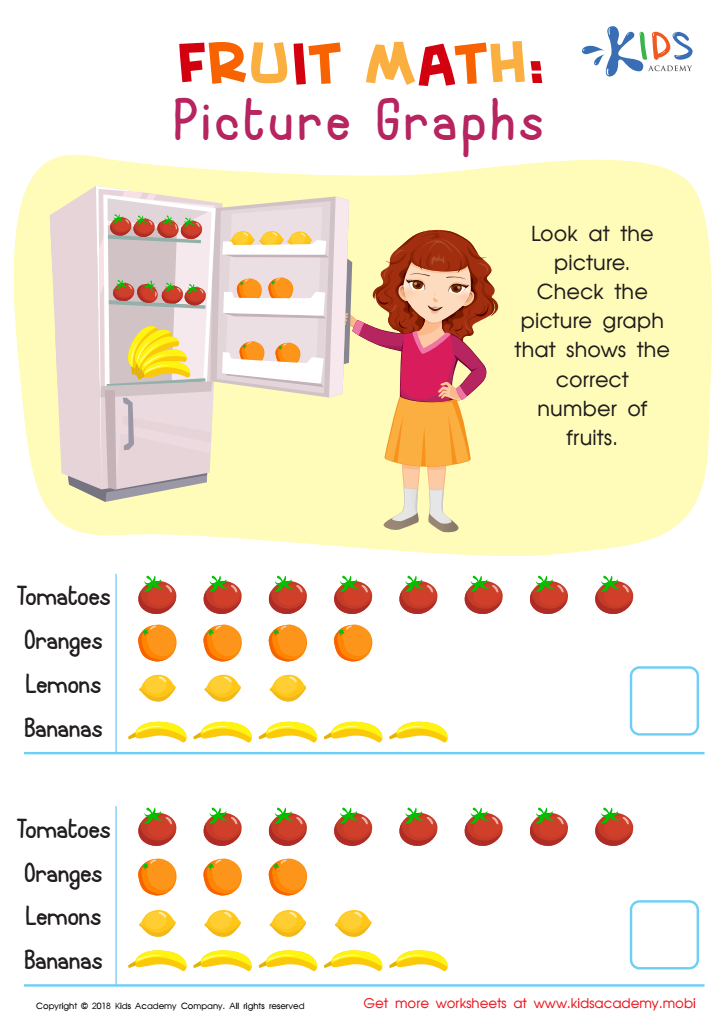
Fruit Math: Picture Graphs Worksheet
 Assign to My Students
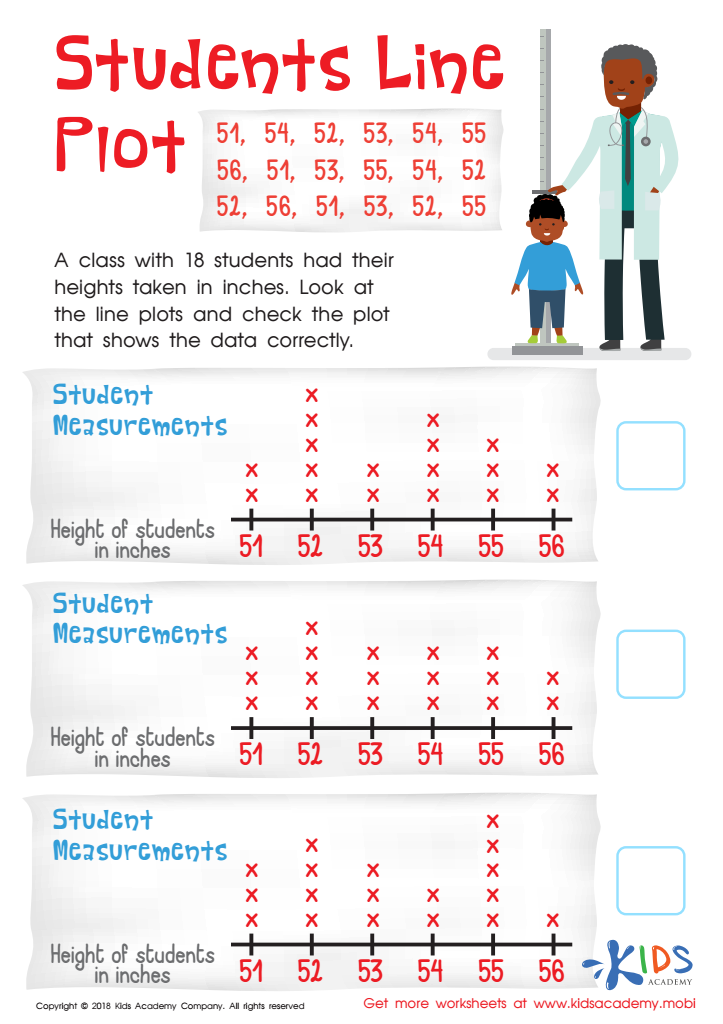
Students Line Plot Worksheet
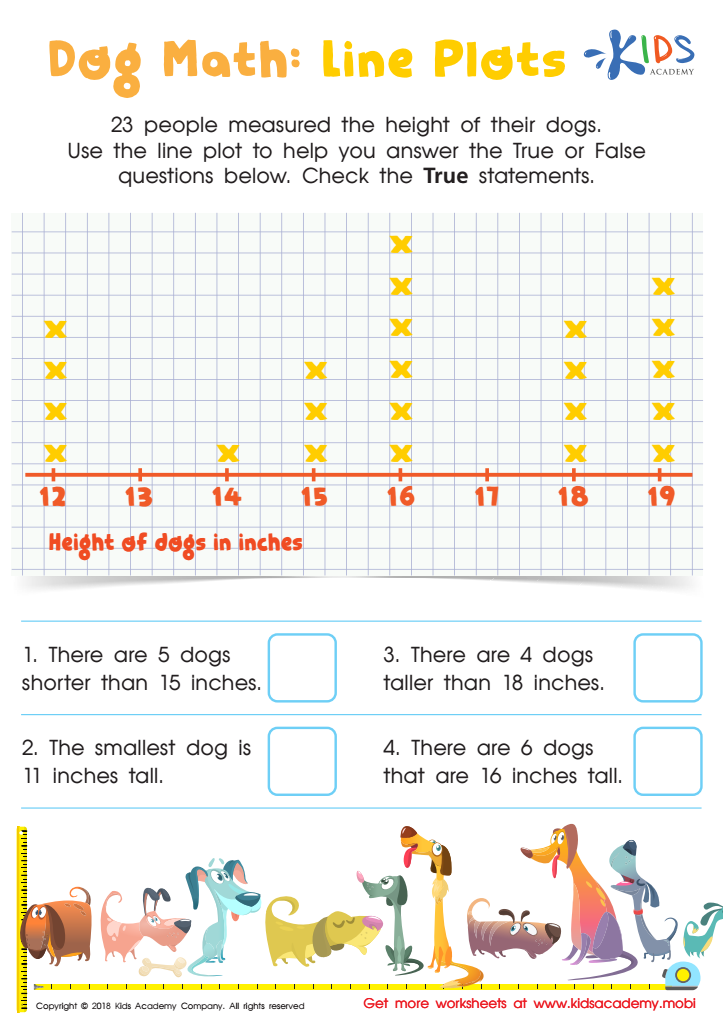
Dog Math: Line Plots Worksheet
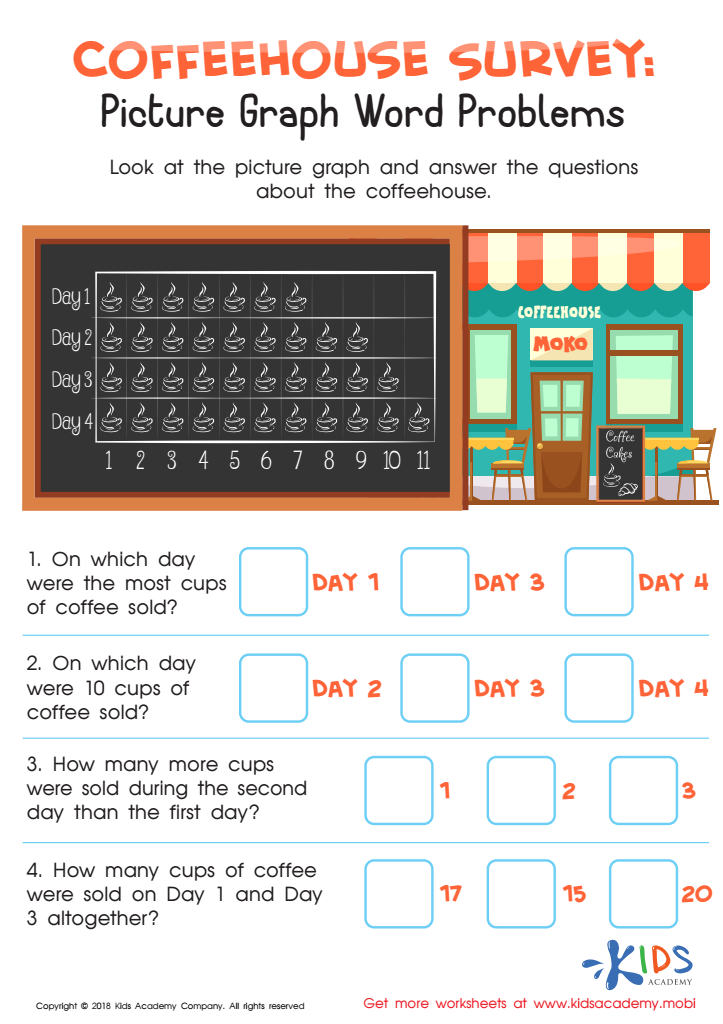
Coffeehouse Survey: Picture Graph Word Problems Worksheet
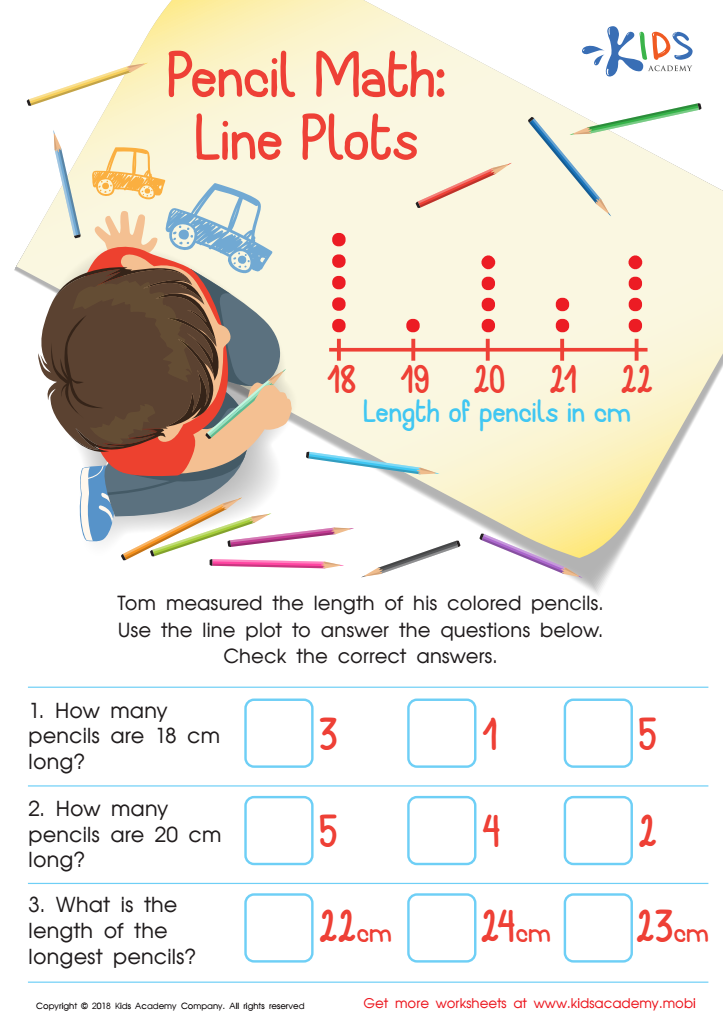
Pencil Math: Line Plots Worksheet
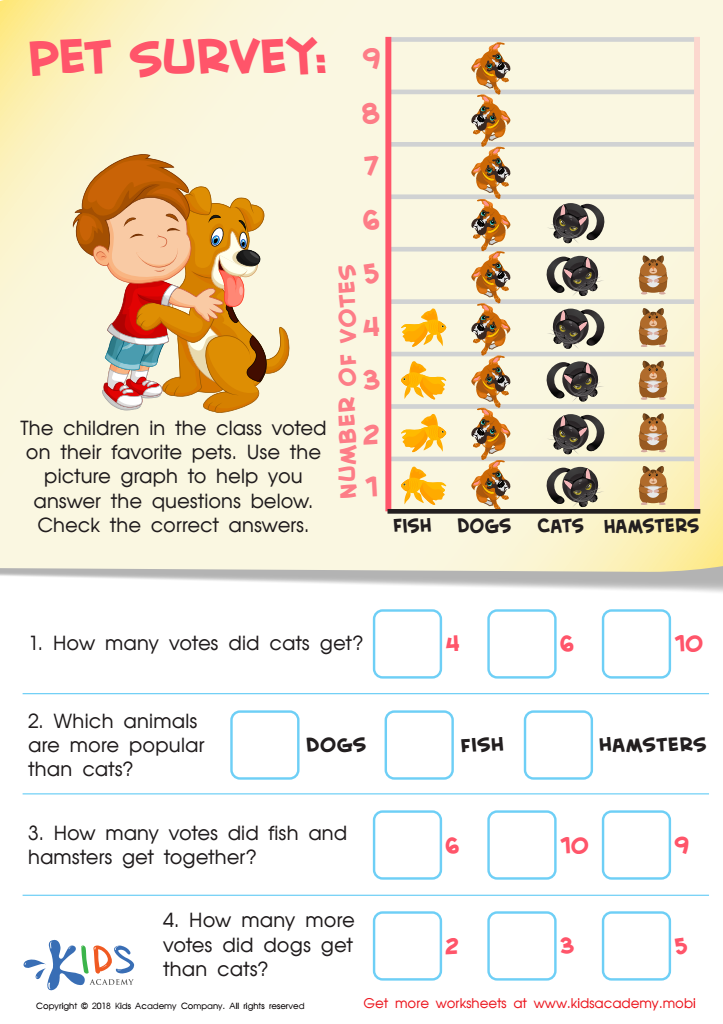
Pet Survey Worksheet
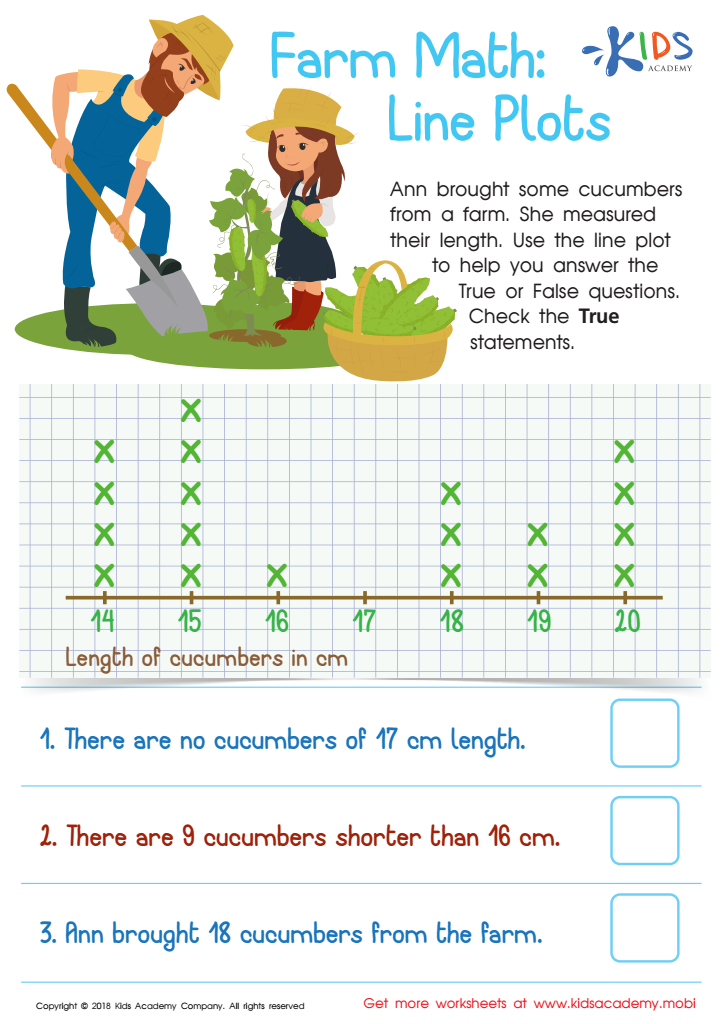
Farm Math: Line Plots Worksheet








Data interpretation and measurement are essential skills that children must develop early in life, especially by the age of seven. Parents and teachers should prioritize these skills because they lay the foundation for critical thinking and analytical abilities. By learning to gather, organize, and interpret data, children become proficient in making sense of the information they encounter daily.
At this age, children are naturally curious, and engaging them in data interpretation through fun, relatable activities – like measuring ingredients in a recipe or tallying their sports scores – promotes an active learning environment. It encourages them to explore concepts such as quantity, comparison, and trends in a hands-on manner, supporting better retention of knowledge.
Moreover, understanding measurement helps children in various subjects, including math and science, by enhancing their understanding of concepts like length, time, and weight. Development of these skills also fosters confidence as children learn to make decisions based on the data they analyze.
Ultimately, a solid grasp of data interpretation and easy measurement helps children become informed citizens. It promotes informed decision-making and improves problem-solving skills, equipping them for future academic challenges and everyday life. Emphasizing these skills now can lead to lifelong benefits.








