
Time reading skills Easy Time Worksheets for 7-Year-Olds
3 filtered results
Difficulty Level
Grade
Age
-
From - To
Subject
Activity
Standards
Help your 7-year-old master the art of telling time with our Easy Time Worksheets! Designed specifically for young learners, these engaging and educational sheets will teach your child how to read both digital and analog clocks, understand hours and minutes, and differentiate between AM and PM. Each worksheet is crafted with fun activities that combine visuals and practice problems to reinforce time-reading skills in an enjoyable way. Perfect for home or classroom use, our worksheets offer a structured approach to ensure your child gains confidence in managing time effectively. Get started today and watch your child thrive!
Favorites
With answer key
Interactive
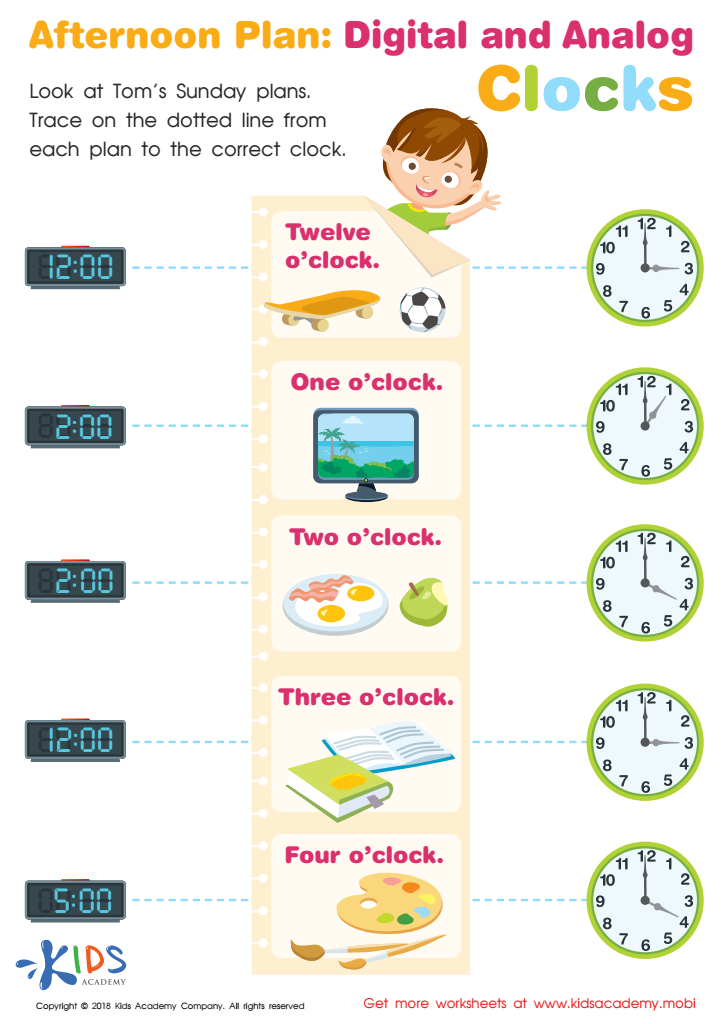
Afternoon Plan: Digital and Analog Clocks Worksheet
Tom's got Sunday plans and your kids can use this worksheet to help them learn how to tell the time. With tracing dotted lines from plans to the correct clock, they'll gain the skills to accurately convert digital time to analog. It'll be a great way to get them better at telling the time.
 Assign to My Students
Afternoon Plan: Digital and Analog Clocks Worksheet
Worksheet
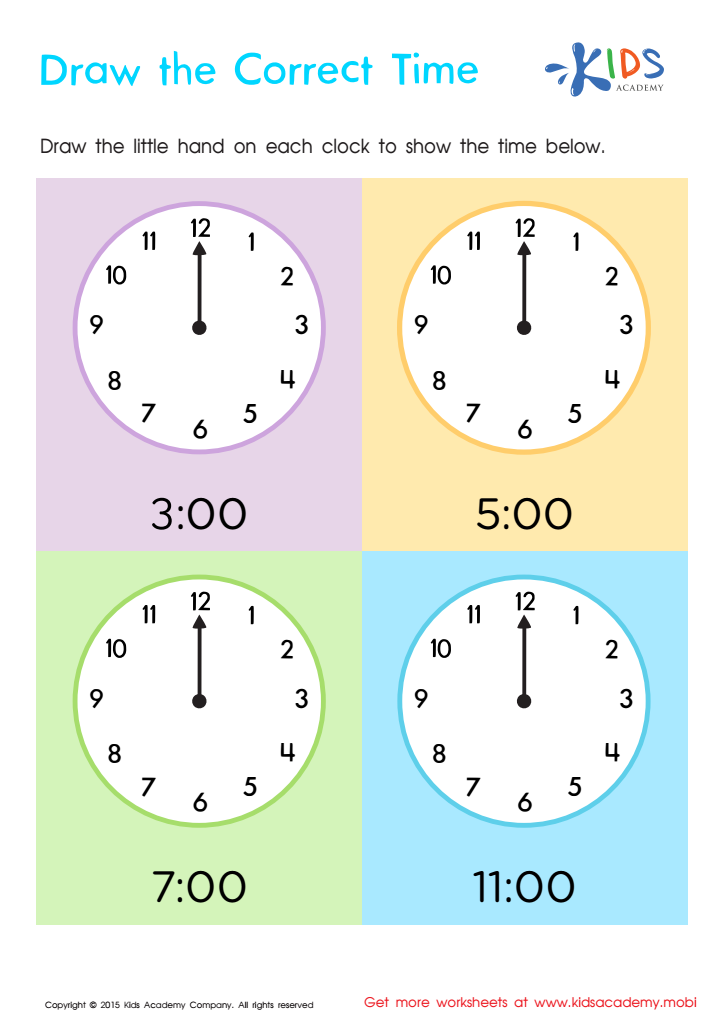
Telling The Time Worksheet: Part 1
Practice telling the time with Kids Academy. Our worksheets make it fun for kindergarteners to learn about clocks and reading the time. Find our free math worksheets on telling the time and draw the little hand on the clock faces to show the time. Let's learn together!
Telling The Time Worksheet: Part 1
Worksheet
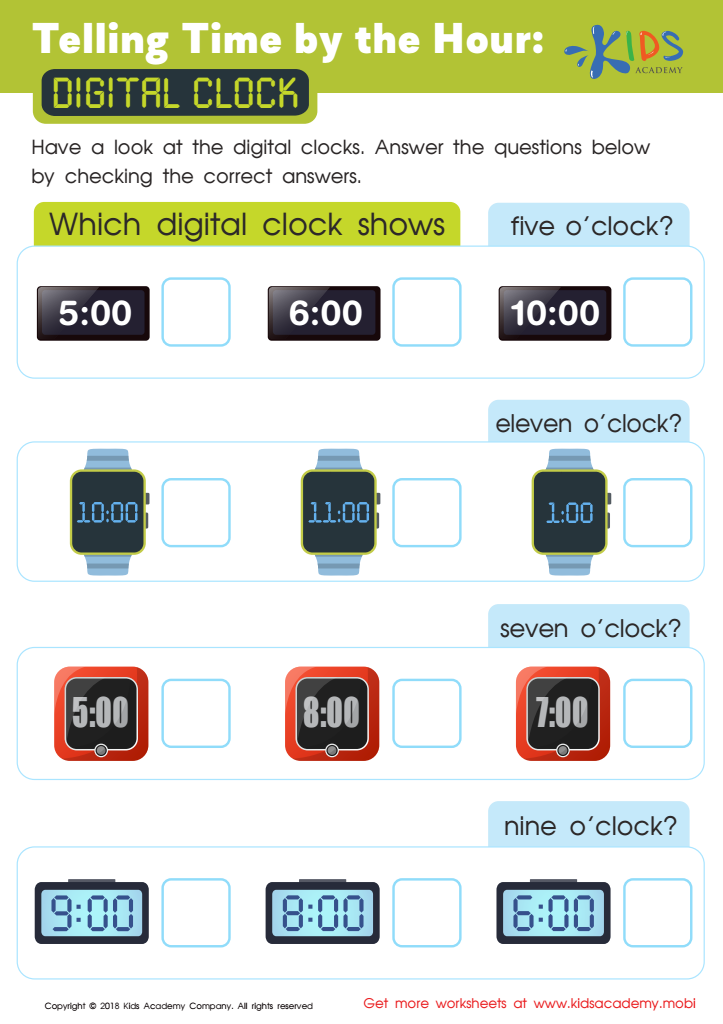
Telling Time by the Hour: Digital Clock Worksheet
Introduce your students to digital clocks. This worksheet will help them become familiar with them. Guide them through answering the questions - they're simple and stimulating. Encourage their young minds to explore the digital clocks in the exercise.
Telling Time by the Hour: Digital Clock Worksheet
Worksheet
Join Kids Academy for Free
Who is primarily going to use this learning content?







.jpg)
Developing reading skills in 7-year-olds is crucial for their academic and personal growth, and both parents and teachers play a pivotal role in nurturing this ability. At this age, children transition from learning to read to reading to learn, which means that their reading skills directly impact their understanding of more complex subjects like science, social studies, and math. Proficiency in reading enhances their vocabulary, comprehension, and critical thinking skills, which are essential for overall cognitive development.
For parents, investing time in their child's reading routine not only strengthens the bond with their child but also provides them with an opportunity to model positive reading behaviors. Reading together, discussing stories, and asking questions can spark a child's curiosity and love for learning.
Teachers, on the other hand, have the expertise and structured environment to implement effective reading strategies, such as guided reading sessions, literacy centers, and interactive read-alouds. These methods can cater to different learning styles and address specific literacy challenges. Furthermore, when parents and teachers collaborate and communicate regularly about a child's progress, it ensures a consistent and supportive approach, making learning to read an enjoyable and shared adventure, rather than a solitary task.
Encouraging strong reading skills at this age sets a solid foundation for future academic success and a lifelong love of reading.








