Understanding life cycles Easy Worksheets for Ages 8-9
3 filtered results
-
From - To
Explore the fascinating world of life cycles with our engaging worksheets designed for ages 8-9! These easy-to-follow resources provide young learners with a comprehensive understanding of various life cycles, from insects to plants. Each worksheet encourages critical thinking, creativity, and knowledge retention through fun activities, including coloring, matching, and diagram labeling. Perfect for enhancing science lessons or for independent practice at home, our materials support hands-on learning and help students grasp essential concepts in a playful manner. Dive into the life cycles of living organisms and ignite a passion for biology with our child-friendly worksheets today!
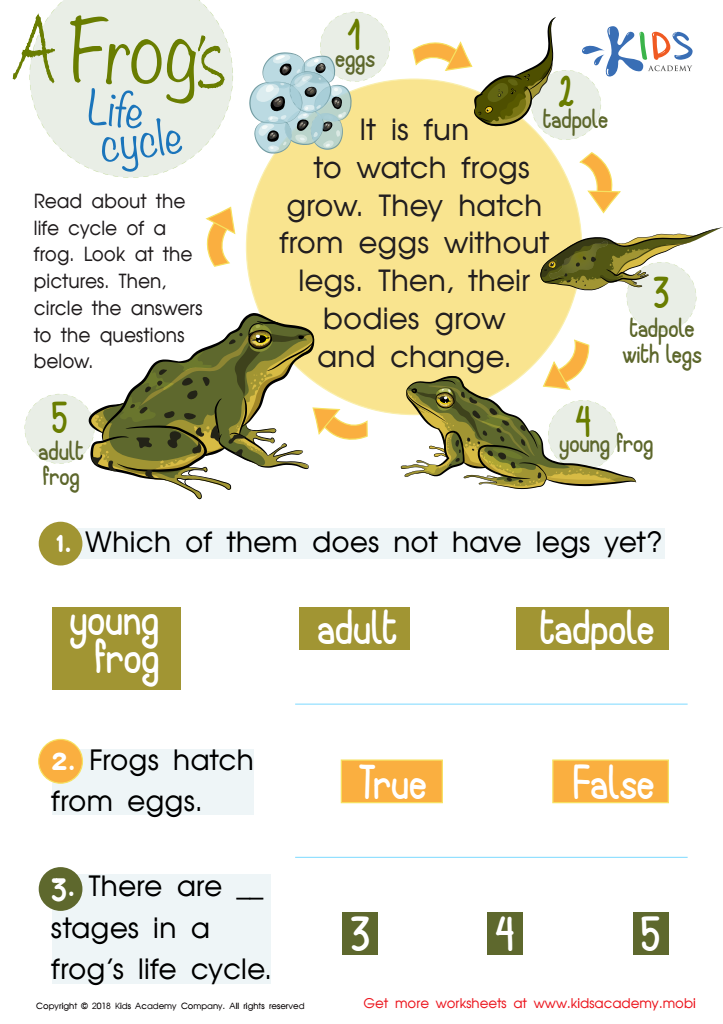
A Frog’s Life Cycle Worksheet
 Assign to My Students
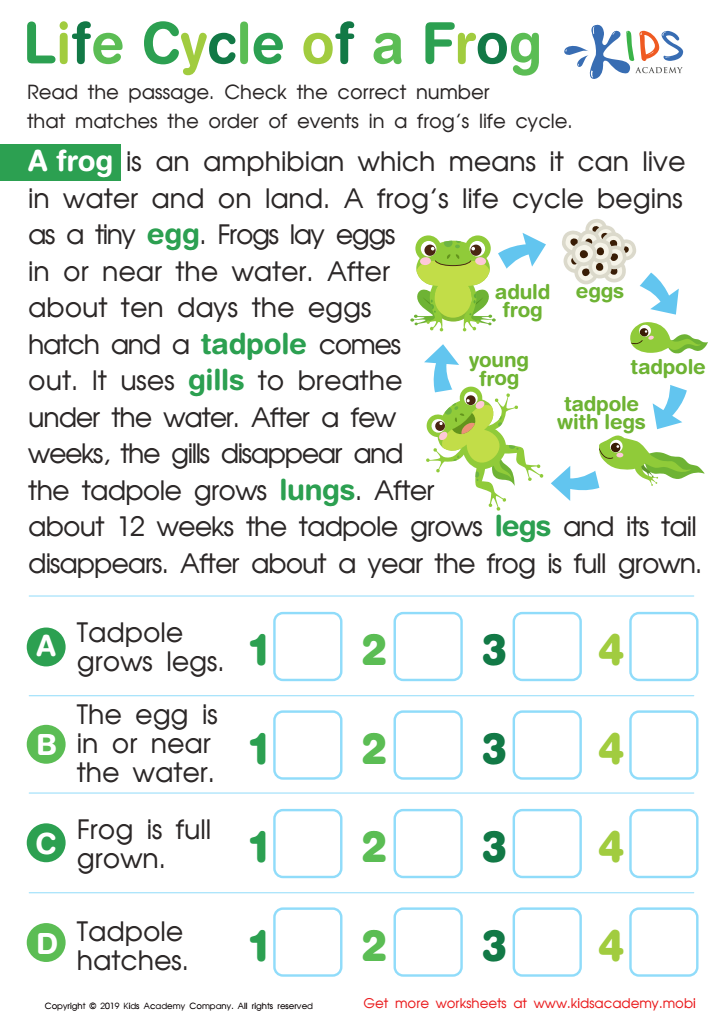
Life Cycle of a Frog Worksheet
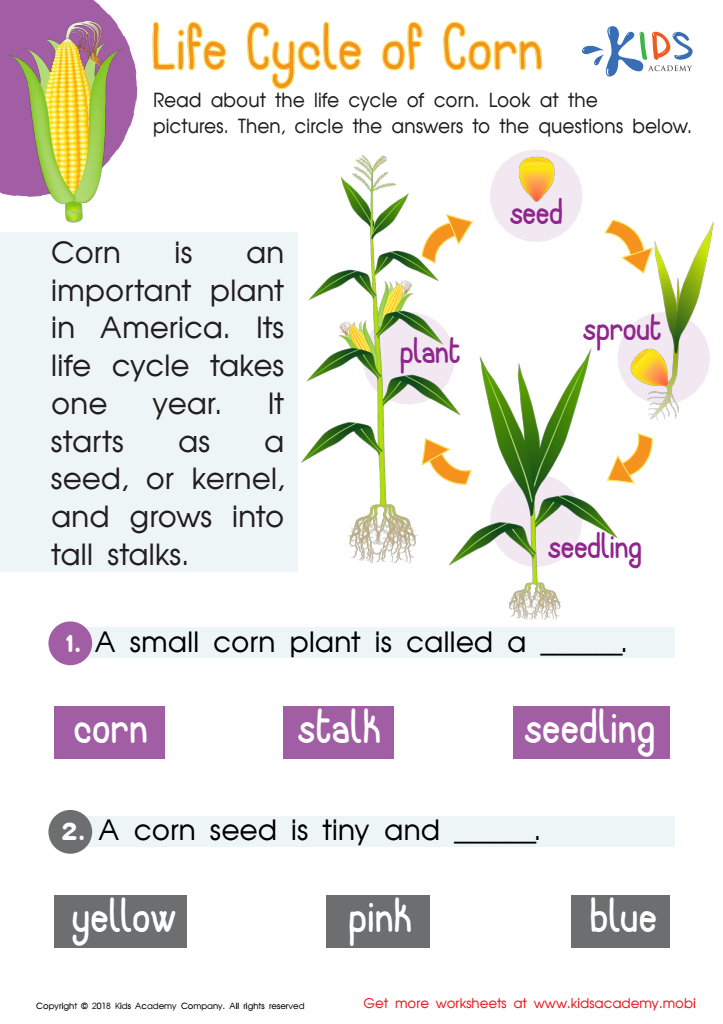
Life Cycle of Corn Worksheet



.jpg)



Understanding life cycles is crucial for children aged 8-9, as it brings numerous benefits that resonate with both parents and teachers. Firstly, exploring life cycles helps children grasp the concept of growth and change, encouraging them to appreciate the natural world. This understanding fosters a sense of curiosity and wonder about living organisms—from plants to animals—cultivating future scientists and environmental stewards.
Moreover, learning about life cycles supports critical thinking and observational skills. When children engage in hands-on activities, like observing butterflies from caterpillars to adults, they learn to ask questions, make predictions, and examine outcomes. This scientific inquiry is fundamental to their education.
Additionally, understanding life cycles is essential for promoting empathy. Recognizing the stages of life in different creatures helps children appreciate the interconnectedness of all living things.
From a practical standpoint, teachers can incorporate interactive lessons and storytelling, enhancing engagement. Parents can reinforce these lessons at home through nature walks, gardening projects, or books. By nurturing this understanding, both parents and teachers cultivate well-rounded, environmentally conscious individuals, equipped to make informed decisions as caretakers of the planet. This knowledge lays the foundation for a generation that respects and values nature’s delicate balance.








