Color recognition Easy Math Worksheets for Ages 8-9
5 filtered results
-
From - To
Enhance your child’s learning with our "Color Recognition Easy Math Worksheets for Ages 8-9." Carefully designed to blend fun and education, these worksheets help children master essential math skills through engaging color-based activities. Kids can effortlessly learn addition, subtraction, patterns, and more while enjoying vibrant visuals that make learning more enjoyable. Perfect for reinforcing classroom lessons at home, our worksheets are suitable for all learners and aim to build a solid foundation in math concepts. Encourage creativity and critical thinking as your child continues their academic journey with our comprehensive, easy-to-use math resources.
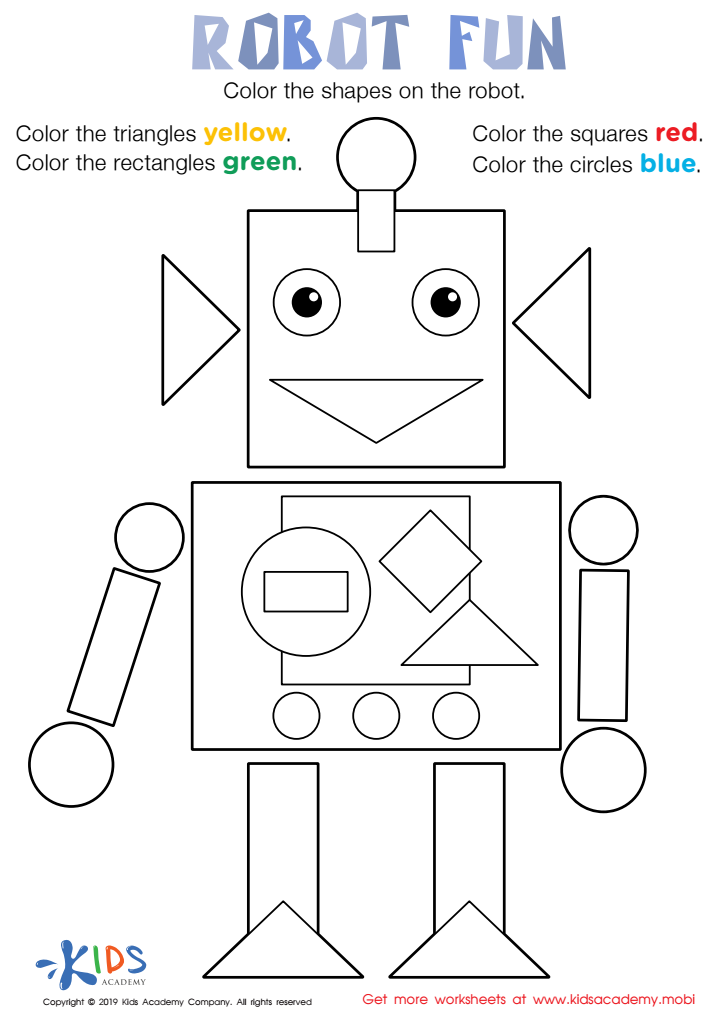
Robot Fun Worksheet
 Assign to My Students
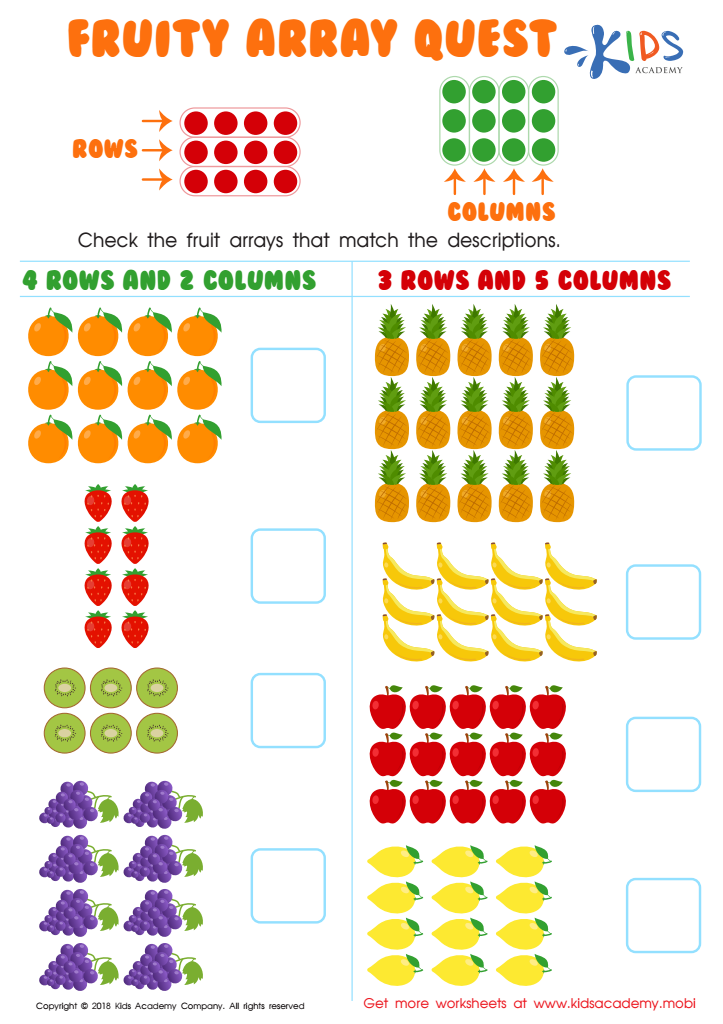
Fruity Array Quest Worksheet
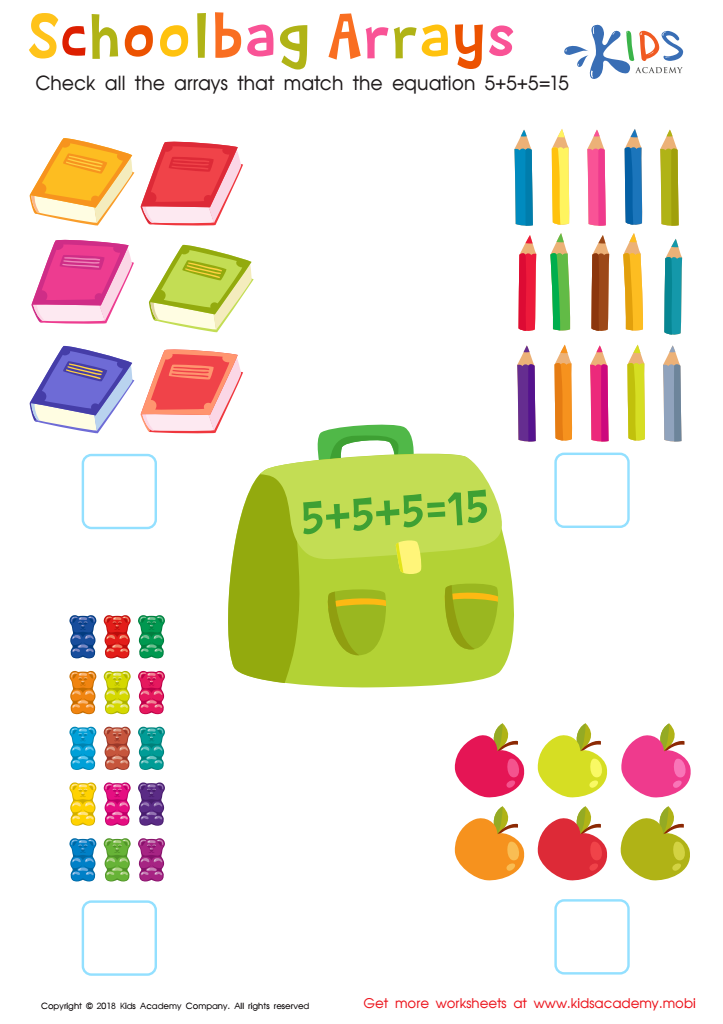
Schoolbag Arrays Worksheet
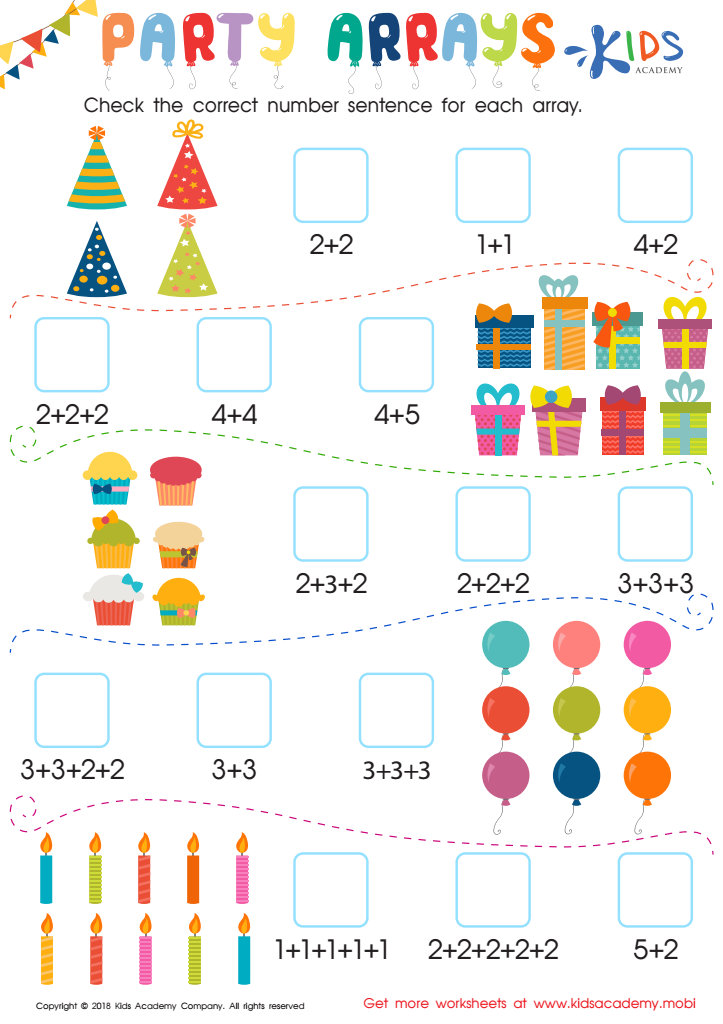
Party Arrays Worksheet
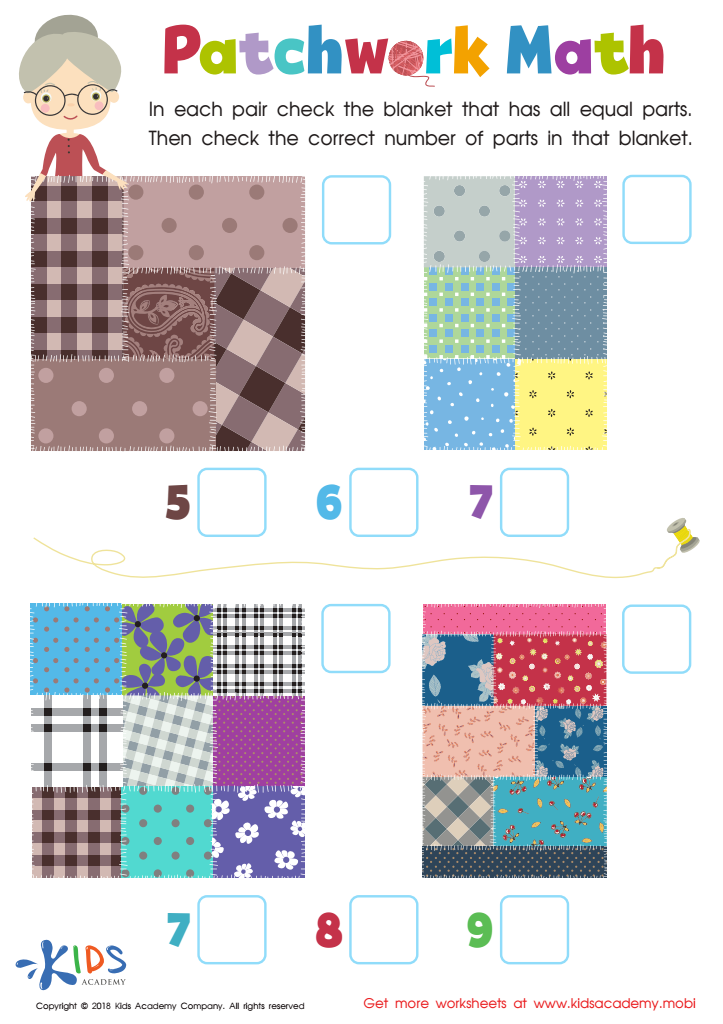
Patchwork Math Worksheet








Color recognition and easy math skills for children aged 8-9 are foundational to their cognitive development and academic success. These critical abilities are not just for sorting or calculating; they form the basis for a range of learning experiences, including problem-solving, logical reasoning, and even emotional development.
Parents and teachers should care about color recognition because it enhances language skills, allowing children to describe and categorize their environment accurately. Recognizing colors also improves memory and attention to detail. Children who can identify colors can better organize their thoughts and understand complex ideas, which is crucial for subjects that require sorting, structuring, and pattern recognition.
Easy math skills, such as basic addition, subtraction, multiplication, and division, are equally essential. Mastery of these concepts at an early age builds confidence and sets the stage for more advanced mathematics. These skills are used in everyday life, from stating time to calculating change, making them indispensable.
Combining color recognition with math games engages children, making learning enjoyable and practical. For example, assigning colors to numbers or using colored objects for counting can make abstract concepts tangible, aiding memory retention, and making learning fun.
In conclusion, focusing on these skills supports well-rounded development, turning everyday learning moments into a solid foundation for future success in school and life.








