Understanding patterns Easy Multiplication Worksheets for Ages 8-9
4 filtered results
-
From - To
Boost your child’s math skills with our "Understanding Patterns: Easy Multiplication Worksheets for Ages 8-9." Designed by experts, these engaging and colorful worksheets help young learners recognize and apply multiplication patterns, making math fun and accessible. Tailored specifically for 8-9-year-olds, each worksheet focuses on building foundational skills through pattern recognition and problem-solving activities. Perfect for home practice, these worksheets foster confidence and proficiency in multiplication, ensuring your child stays ahead in their math journey. Visit us today to download and give your child the advantage they deserve in mastering multiplication.
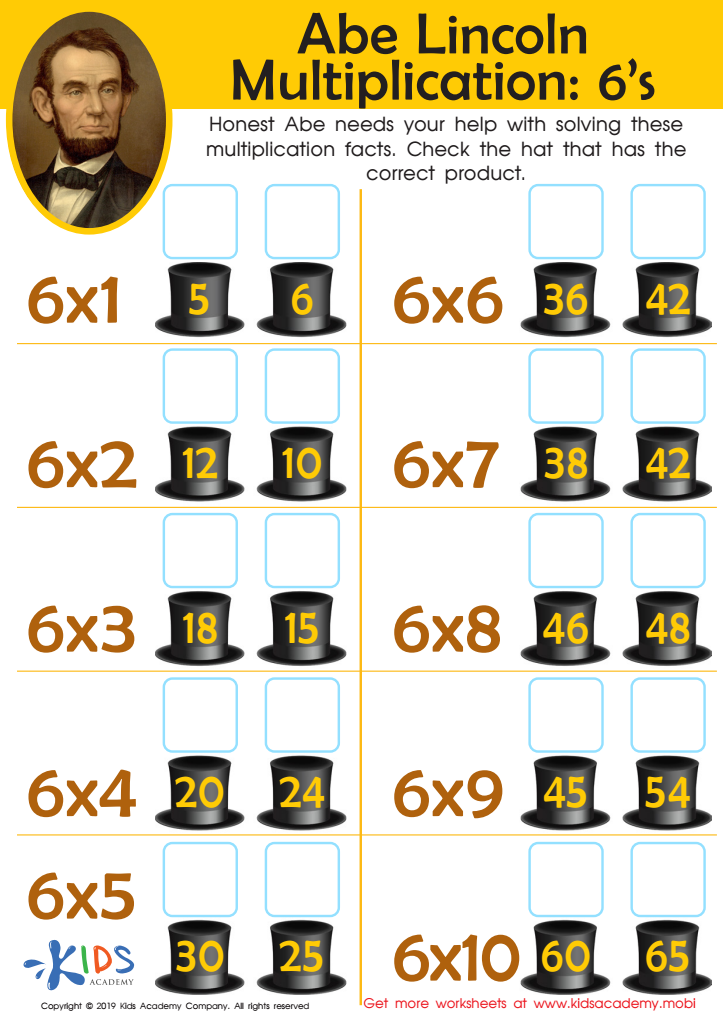
Abe Lincoln Multiplication: 6’s Worksheet
 Assign to My Students
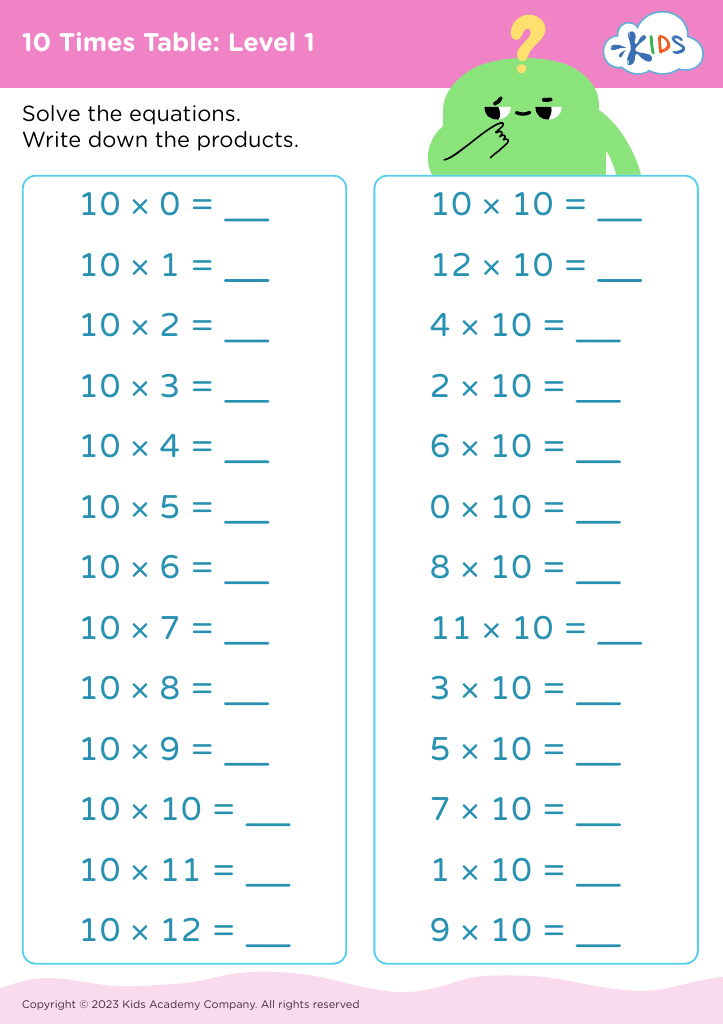
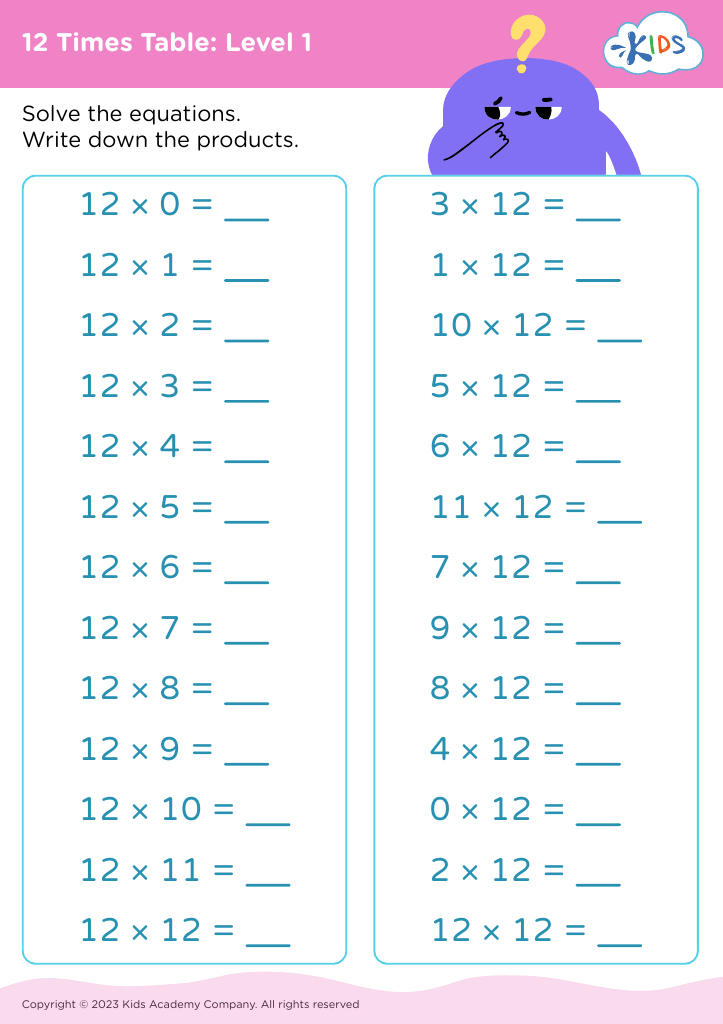
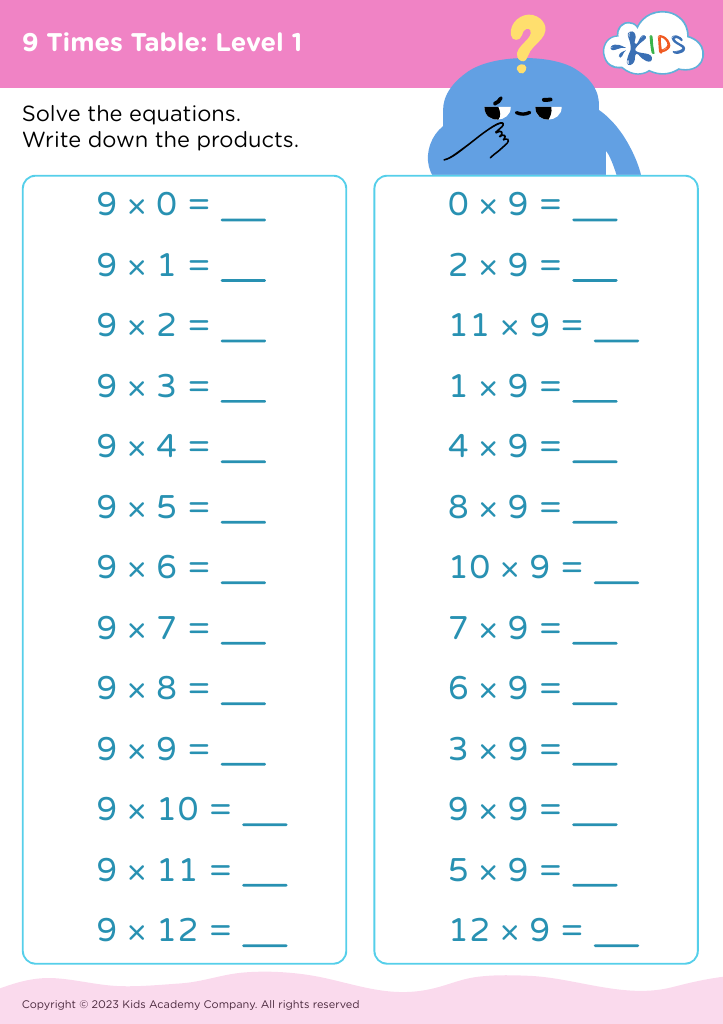








Understanding patterns and easy multiplication for ages 8-9 is crucial for several reasons. Firstly, grasping patterns helps children develop critical thinking skills by teaching them to recognize relationships and make predictions. This foundational skill extends beyond mathematics, influencing problem-solving abilities and logical reasoning in everyday life.
Easy multiplication acts as a gateway to more complex mathematical concepts. Mastering multiplication at an early age aids in building confidence, making it easier for children to tackle advanced topics like division, fractions, and algebra later on. It ensures they are not intimidated by more challenging problems as they progress in their education.
Moreover, practical applications of multiplication are everywhere—calculating the total number of items in multiple groups, determining time intervals, or even understanding cost assessments. These everyday math skills improve a child's ability to manage personal tasks and finances in the future.
For parents and teachers, focusing on these areas fosters a supportive learning environment. Encouraging early understanding of patterns and multiplication not only enhances academic performance but also nurtures a child's curiosity and love for learning. This foundational competence sets the stage for lifelong educational and personal success, making it an investment well worth the effort.








