Understanding life cycles Easy Reading Comprehension Worksheets for Ages 8-9
3 filtered results
-
From - To
Help your child master the marvels of life cycles with our Easy Reading Comprehension Worksheets for Ages 8-9. These engaging worksheets from Kids Academy are designed to make learning about the life cycles of various organisms both fun and educational. Each worksheet offers simple texts, vivid illustrations, and guided questions tailored to enhance vocabulary and critical thinking. Ideal for improving reading comprehension skills at home or in the classroom, these printable worksheets offer a hands-on approach to understanding the stages of growth and development in nature. Nurture your young learner’s curiosity and knowledge today!
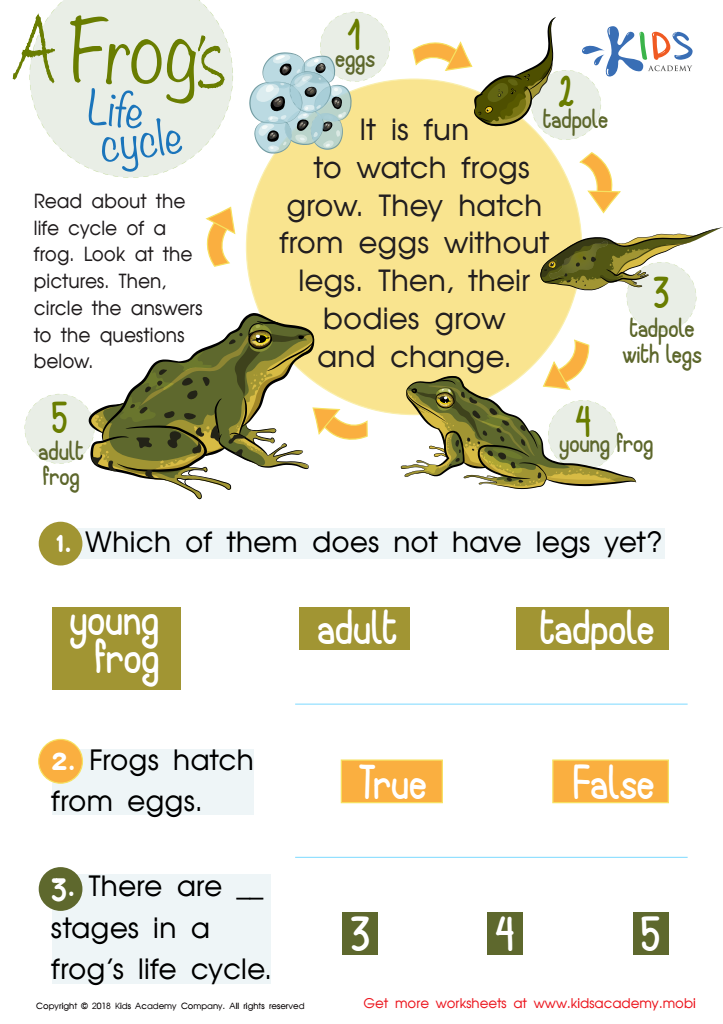
A Frog’s Life Cycle Worksheet
 Assign to My Students
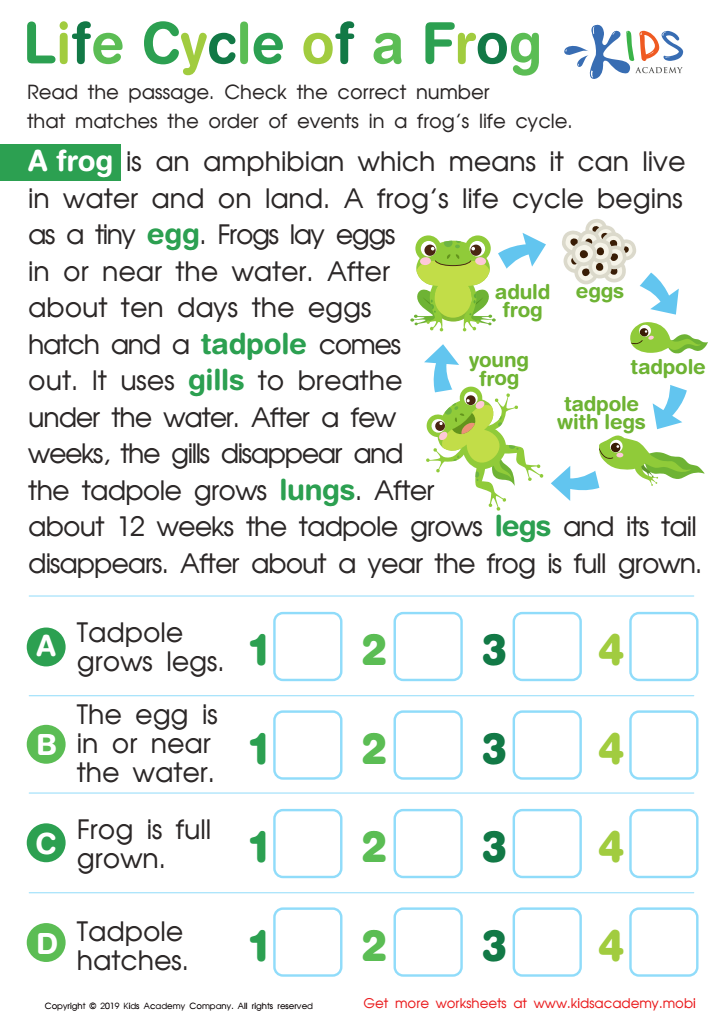
Life Cycle of a Frog Worksheet
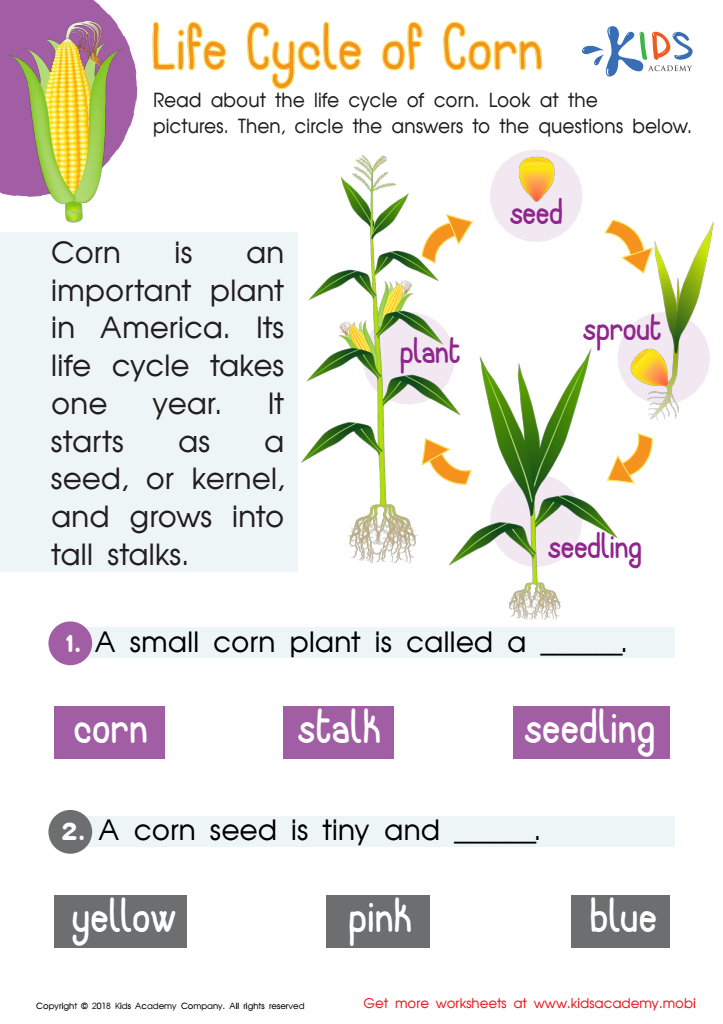
Life Cycle of Corn Worksheet








Understanding life cycles is important for children ages 8-9 because it helps them grasp the world around them in a structured way. Life cycles explain the stages of development in plants, animals, and even humans, highlighting birth, growth, reproduction, and death. When children understand these processes, they learn to respect nature and develop empathy for all forms of life. This sets the foundation for scientific thinking by teaching young minds about patterns and sequences.
For parents and teachers, incorporating life cycles into a child's learning aids in developing critical thinking and observational skills. When children study how a caterpillar transforms into a butterfly, they're not just memorizing facts; they’re understanding change and growth. These lessons can lead to a deeper appreciation for nature and can inspire a lifelong interest in science.
Moreover, easy reading comprehension materials on life cycles can support literacy development by making science topics engaging and accessible. These resources can also provide a link to real-life learning opportunities, such as observing life cycles in gardens or pets. This hands-on engagement makes learning more memorable and fun, encouraging a child's curiosity and making them active participants in their education.