
Color Identification Easy Worksheets for 8-Year-Olds
3 filtered results
Difficulty Level
Grade
Age
-
From - To
Subject
Activity
Standards
Discover our engaging "Color Identification Easy Worksheets for 8-Year-Olds" designed to enhance your child's understanding of colors through fun and interactive activities. These worksheets provide a variety of exercises that encourage children to recognize, name, and categorize different colors. Ideal for home or classroom use, these resources promote creativity and cognitive skills while making learning enjoyable. Colorful illustrations capture attention, ensuring kids stay focused and motivated. Whether your child is practicing with crayons or picking colors for their art projects, our worksheets make mastering color identification a breeze. Download and print today to support your child's learning journey!
Favorites
With answer key
Interactive
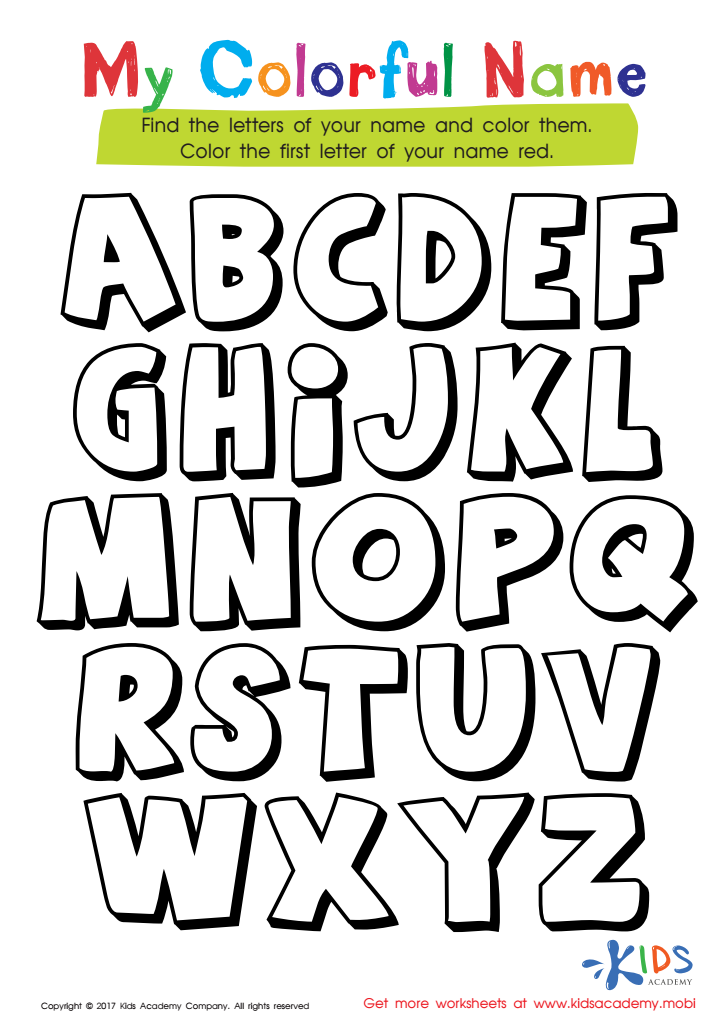
My Colorful Name Worksheet
Writing their names is a milestone for children. With this worksheet, they recall the letters in their name and color the letters one at a time. Spelling and alphabet order are reinforced as they find each letter. Use this fun printable to help kids learn to write their names!
Download (PDF)
 Assign to My Students
Assign to My Students
My Colorful Name Worksheet
Worksheet
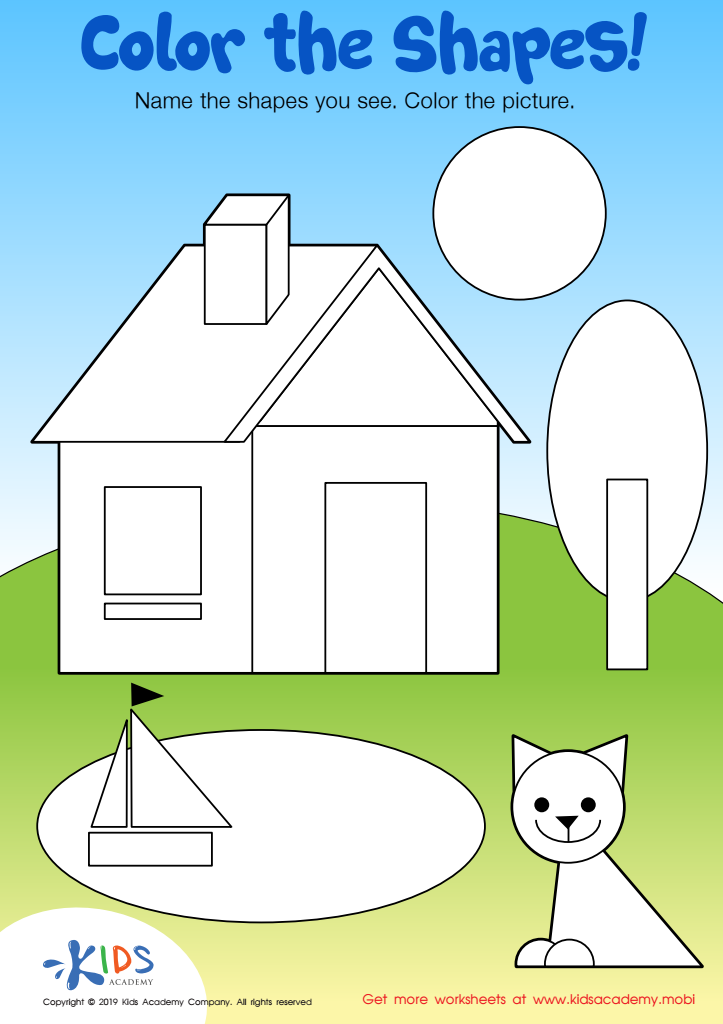
Color the Shapes Worksheet
Help your student master shape identification with this fun worksheet. Ask them to name the shapes in the picture, then color it! Ask questions like "How many squares do you see?" and "How many triangles?" to extend the learning. Identify squares, circles, triangles and rectangles with this enjoyable coloring page.
Download (PDF)
Assign to My Students
Assign to My Students
Color the Shapes Worksheet
Worksheet
Join Kids Academy for Free
Who is primarily going to use this learning content?


.jpg)





Color identification is a foundational skill that lays the groundwork for various aspects of a child's development. For parents and teachers, understanding this concept is essential for several reasons.
Firstly, color recognition enhances a child's cognitive skills. By learning colors, children engage in critical thinking and memory exercises, which sharpen their mental acuity. Identifying colors also aids in language development. When children express what they see, it enriches their vocabulary and fosters communication skills.
Secondly, color identification contributes to emotional and social growth. Colors often convey feelings and can stimulate creativity in artistic pursuits. For instance, using specific colors in drawings can help children express their emotions and experiences, facilitating better emotional understanding.
Furthermore, colors play a significant role in daily life and learning. Identifying colors can enhance tasks such as sorting, categorizing, and even basic math as children learn to compare and contrast different shades.
Lastly, active engagement in color identification can strengthen the parent-child or teacher-student connection, providing meaningful opportunities for interaction and collaboration. Therefore, fostering color identification in young children is beneficial not only for their academic journey but also for growing their self-awareness and interpersonal skills.








