Counting skills Easy Addition Worksheets for 8-Year-Olds
5 filtered results
-
From - To
Enhance your 8-year-old’s math proficiency with our Counting Skills Easy Addition Worksheets. Designed to make learning engaging and fun, these worksheets use colorful illustrations and relatable scenarios to build strong addition skills. Setting the foundation for advanced mathematical concepts, the exercises boost counting abilities and develop problem-solving techniques. Suitable for home or classroom settings, each worksheet is tailored to simplify learning, ensuring young students achieve confidence and accuracy in their calculations. Help your child master addition effortlessly while enjoying a rewarding educational experience with our expertly crafted resources. Explore more today and see the difference!
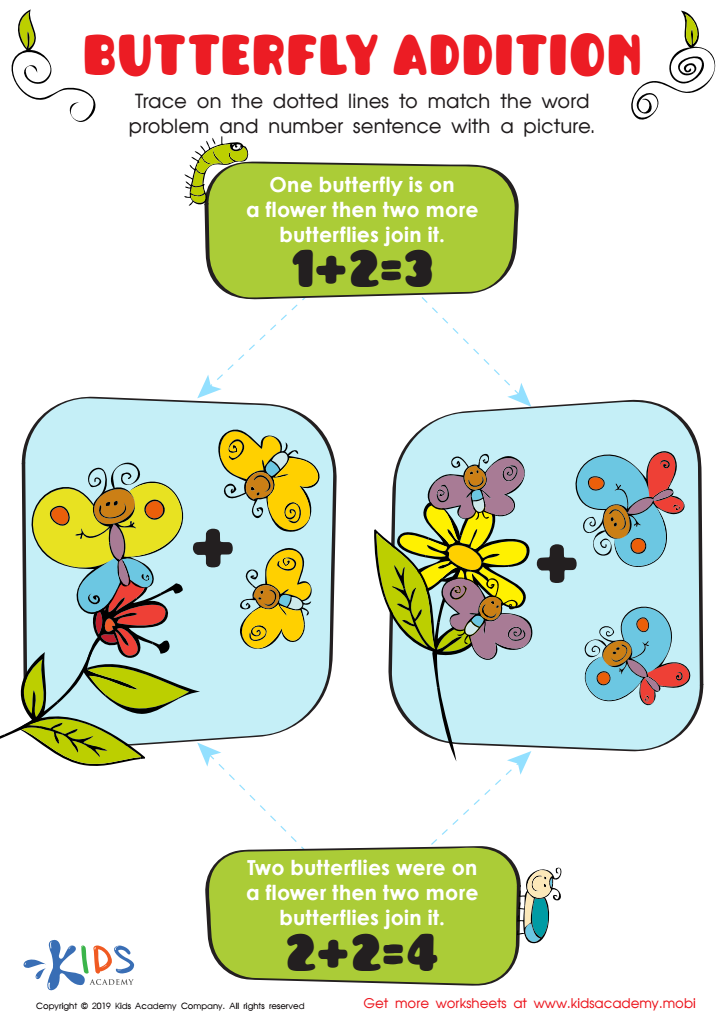
Butterfly Addition Worksheet
 Assign to My Students
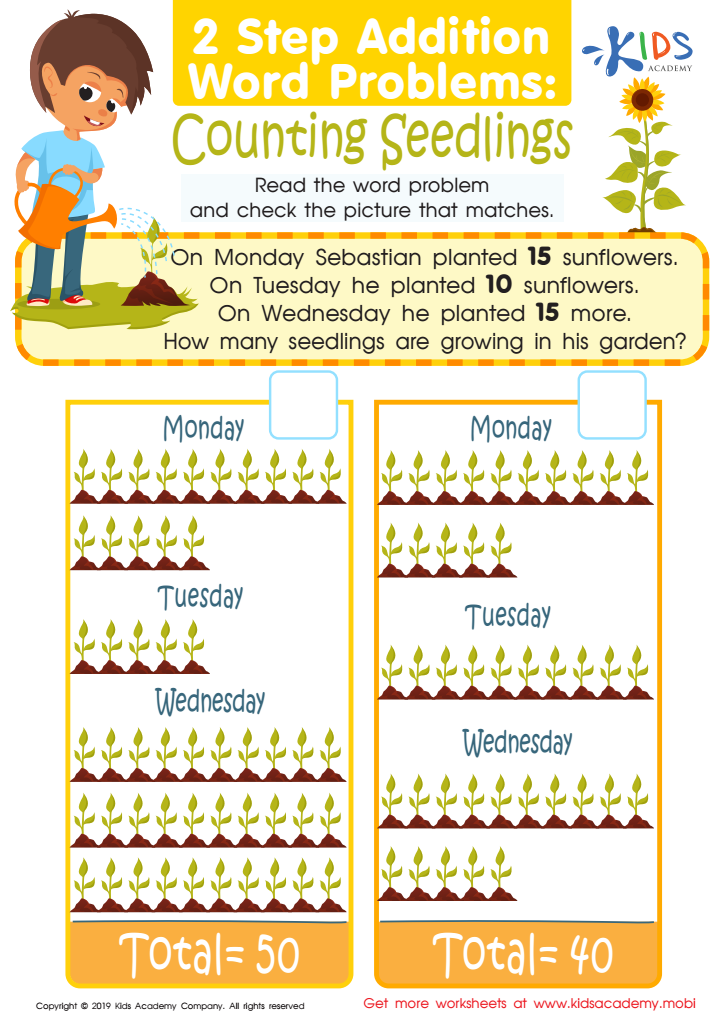
Counting Seedlings Worksheet
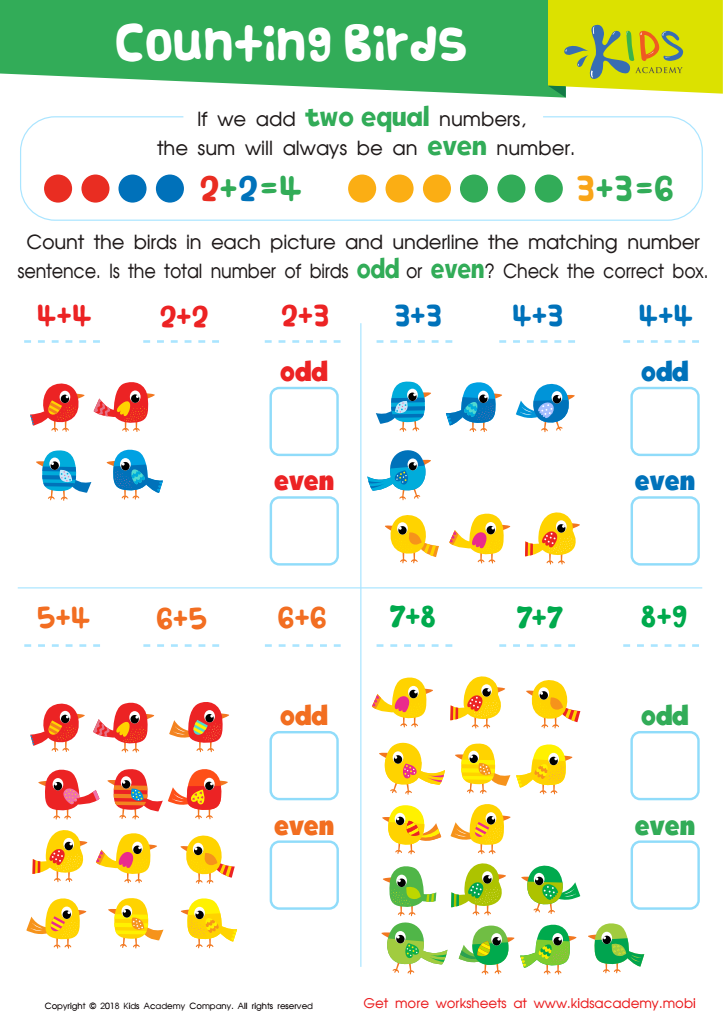
Counting Birds Worksheet
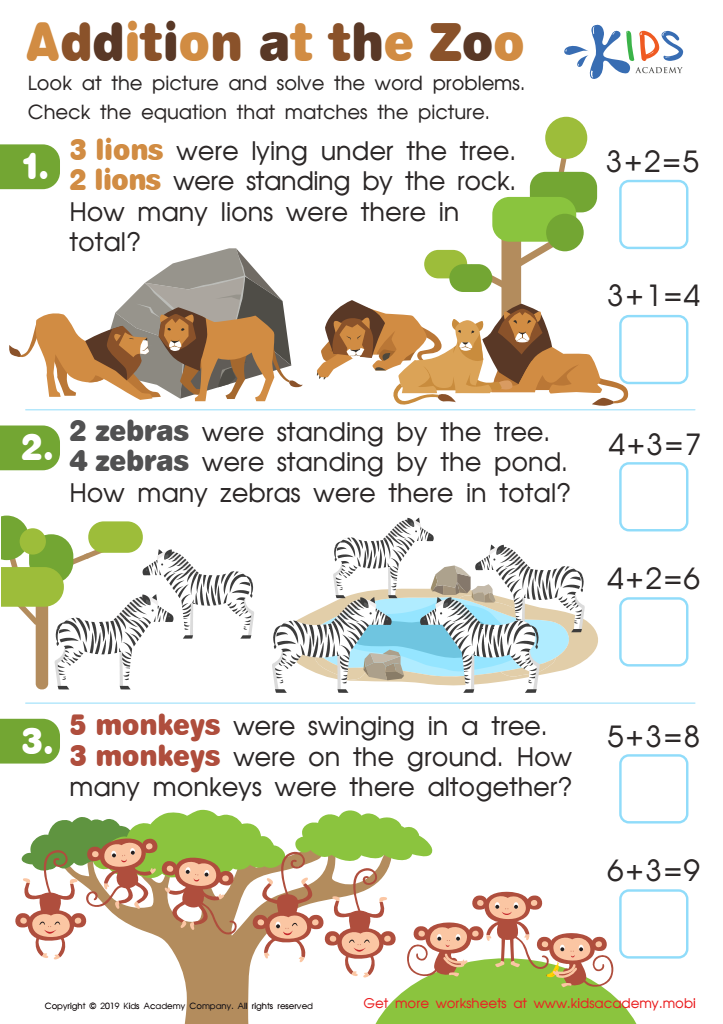
Addition at the Zoo Worksheet

Aircraft Carrier Picture Graphs Worksheet








Counting skills and easy addition form the foundation of mathematical understanding for 8-year-olds, serving as critical building blocks for future learning. Parents and teachers should care about these skills because they underpin a child's ability to solve more complex mathematical problems later in life. Developing proficiency in counting and simple addition helps young learners gain confidence and fosters a positive attitude towards math, reducing anxiety related to the subject.
At this age, children are also honing their cognitive abilities, including memory and problem-solving. Mastering basic math skills can improve their overall intellectual growth and adaptability. Knowledge of counting and addition is not limited to classroom exercises; it translates to everyday activities like measuring ingredients in recipes, handling money, and understanding time.
Moreover, early mastery of these skills supports the development of logical thinking and the ability to recognize patterns. When children can confidently count and add, they better understand the world around them. By showing keen interest and providing encouragement through games, hands-on activities, and regular practice, parents and teachers can create an engaging learning environment that promotes mathematical literacy and lifelong learning.
By ensuring that children build strong counting and simple addition skills, parents and teachers set the stage for academic success, increased self-esteem, and real-world competence.








