Understanding fractions Easy Fractions of Shapes Worksheets for 8-Year-Olds
11 filtered results
-
From - To
Welcome to our "Understanding Fractions: Easy Fractions of Shapes Worksheets" page designed for 8-year-olds! These engaging worksheets make learning fractions fun and accessible, allowing young learners to explore the concept of fractions through interactive shape activities. Students will gain confidence in identifying, dividing, and recognizing different fractions within familiar shapes such as circles, squares, and rectangles. Our thoughtfully crafted exercises promote hands-on learning, enhancing critical thinking skills while simplifying complex ideas. With colorful visuals and step-by-step instructions, these worksheets are perfect for both classroom and home use, nurturing a strong foundation in mathematical understanding. Start exploring the world of fractions today!
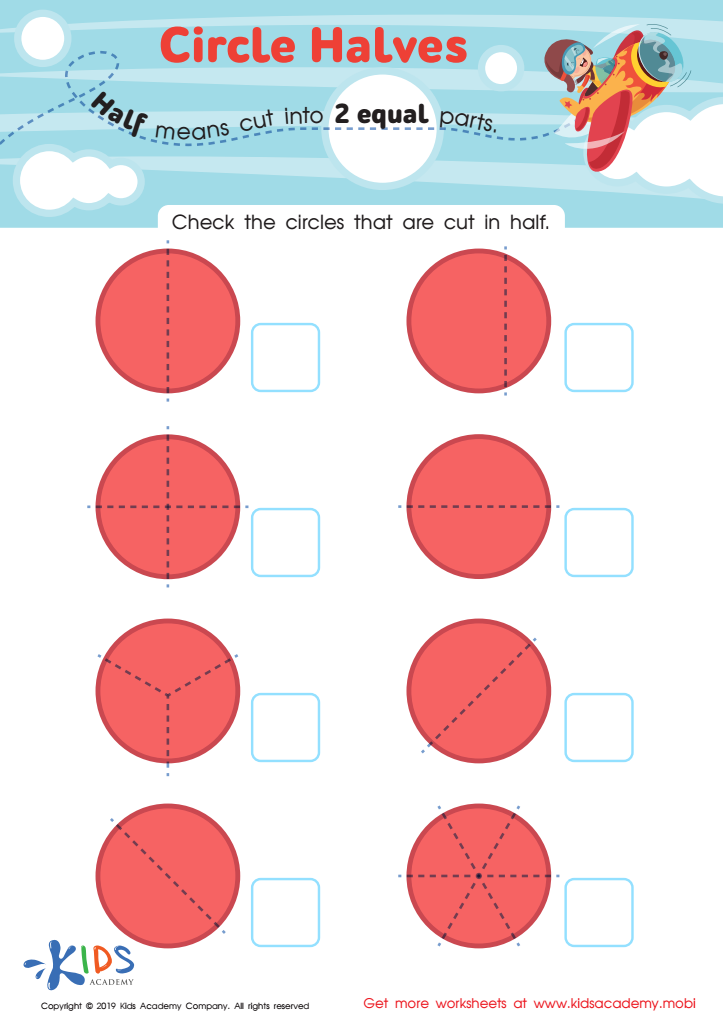
Circle Halves Worksheet
 Assign to My Students
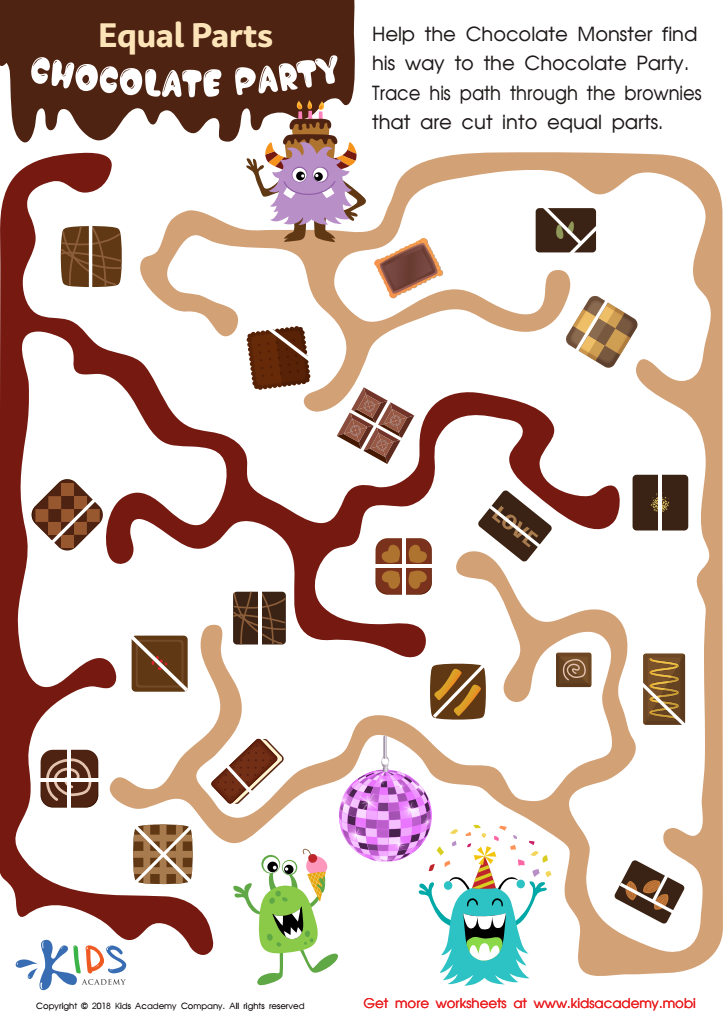
Equal Parts: Chocolate Party Worksheet
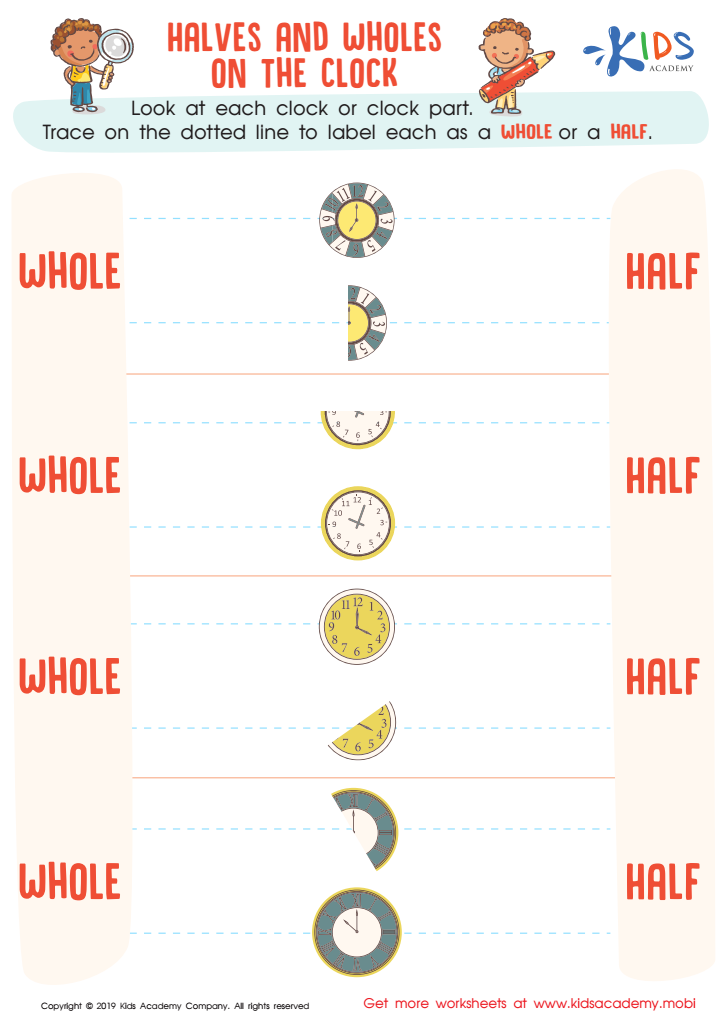
Halves and Wholes on the Clock Worksheet
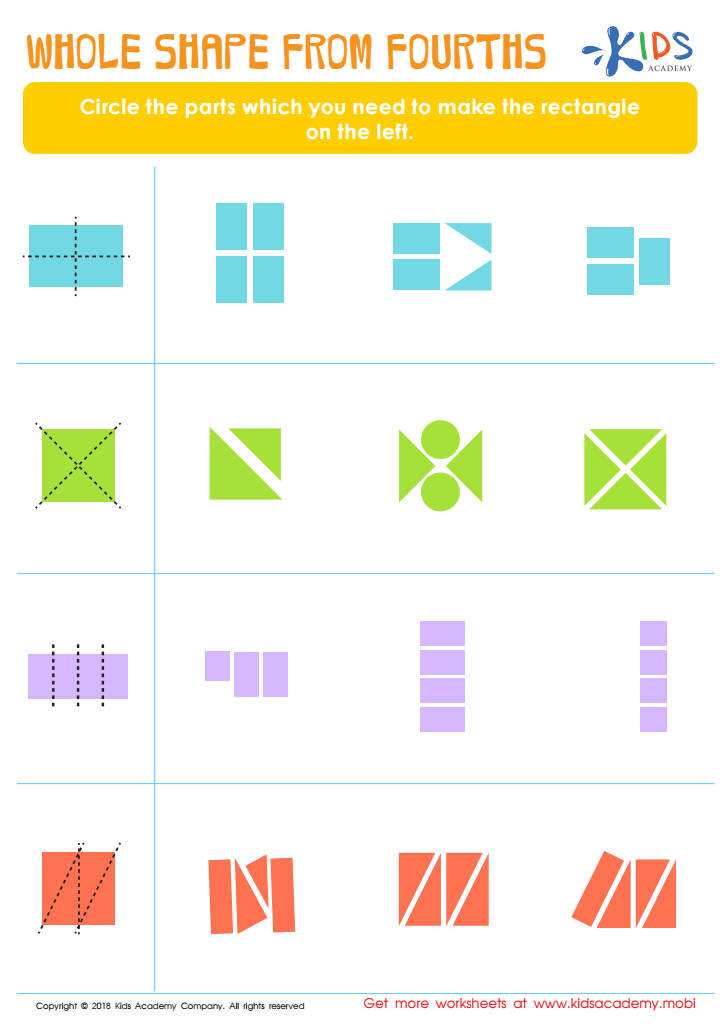
Whole Shape from Fourths Worksheet
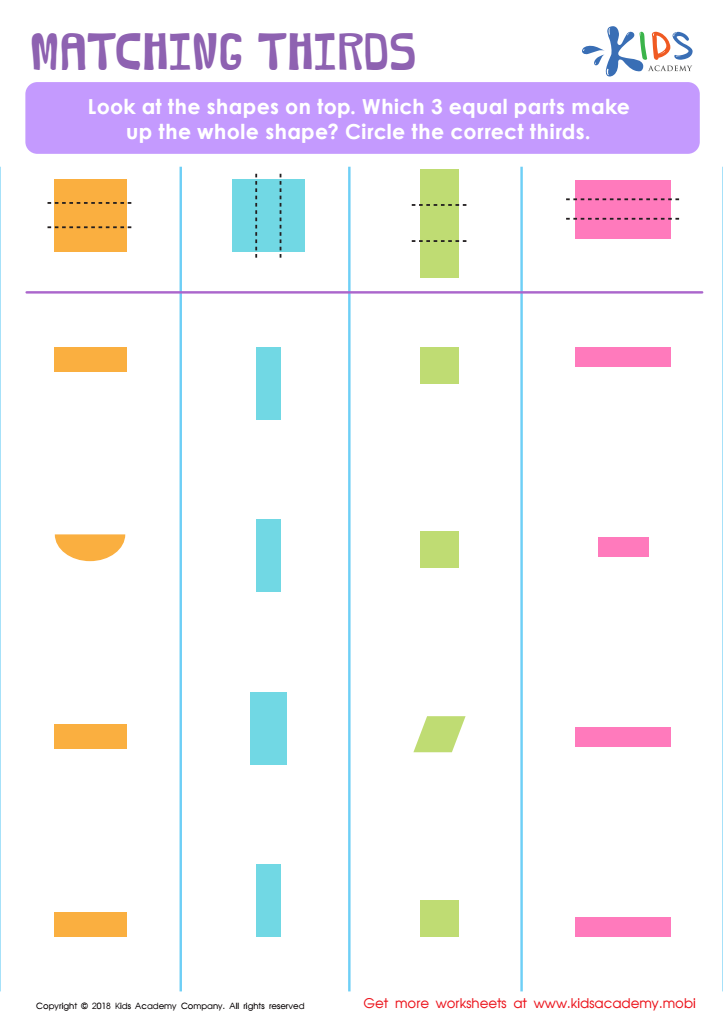
Matching Thirds Worksheet
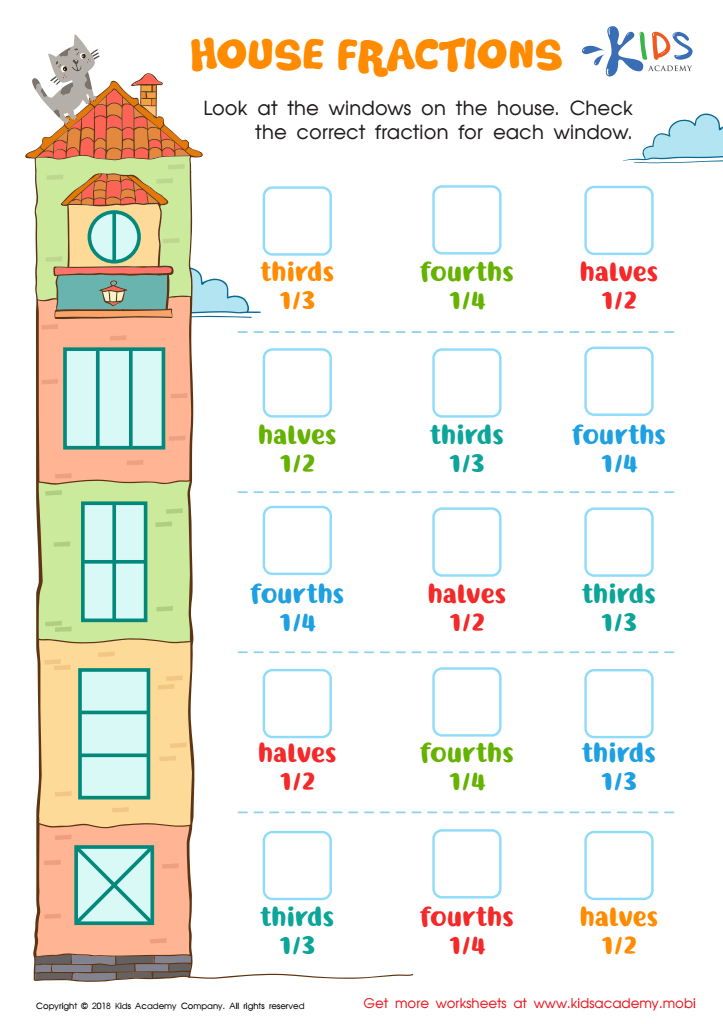
House Fractions Worksheet
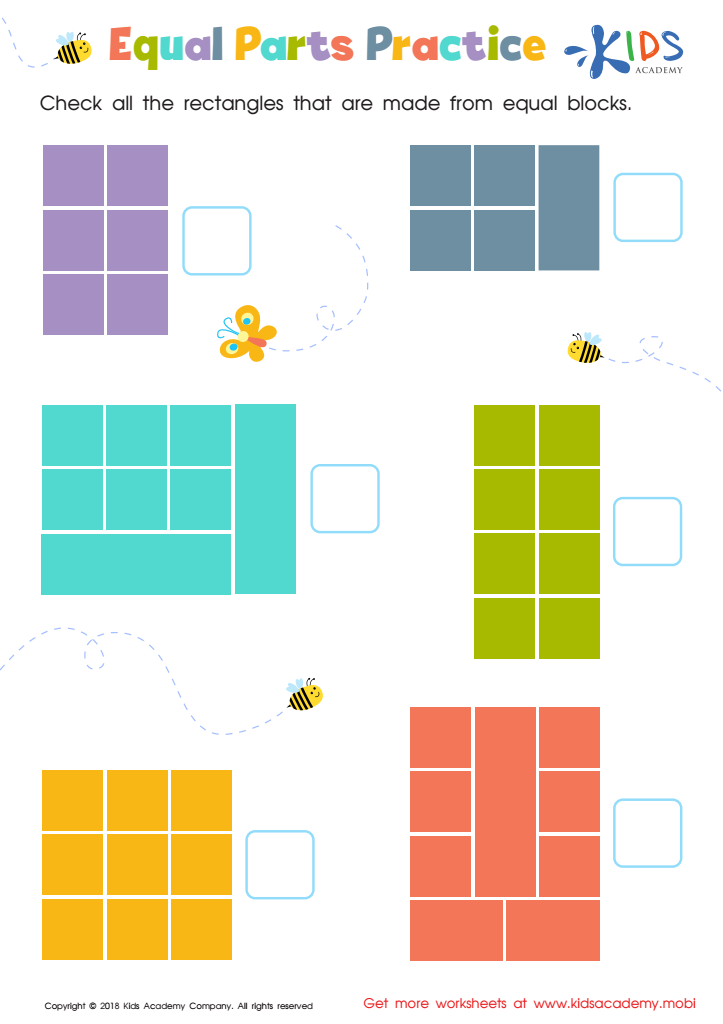
Equal Parts Practice Worksheet
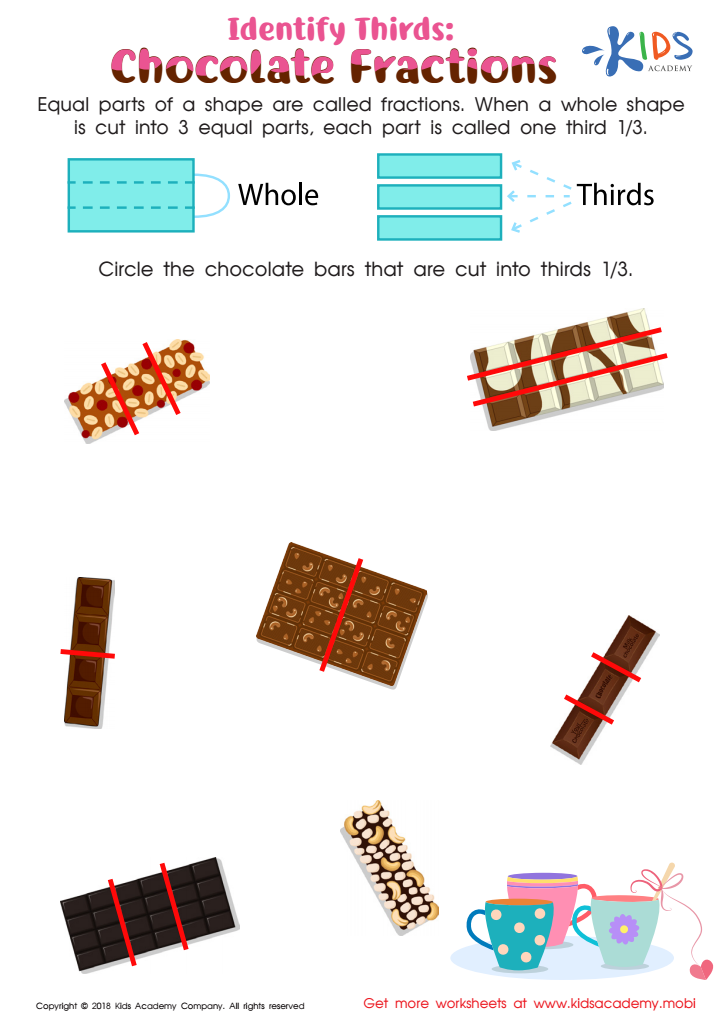
Identify Thirds: Chocolate Fractions Worksheet
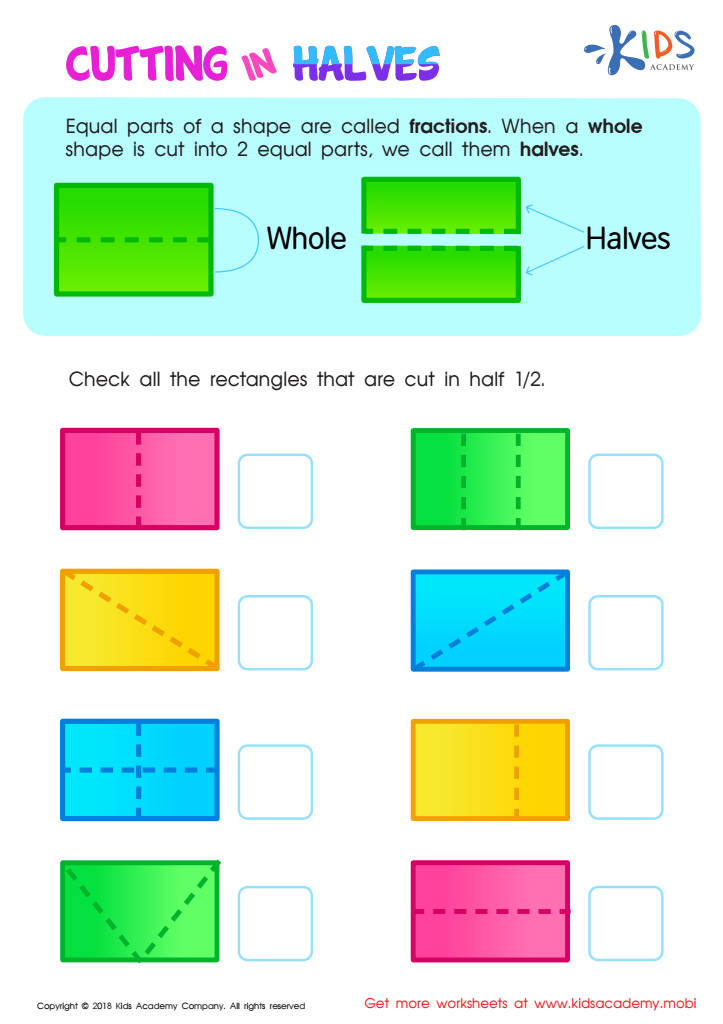
Cutting in Halves Worksheet
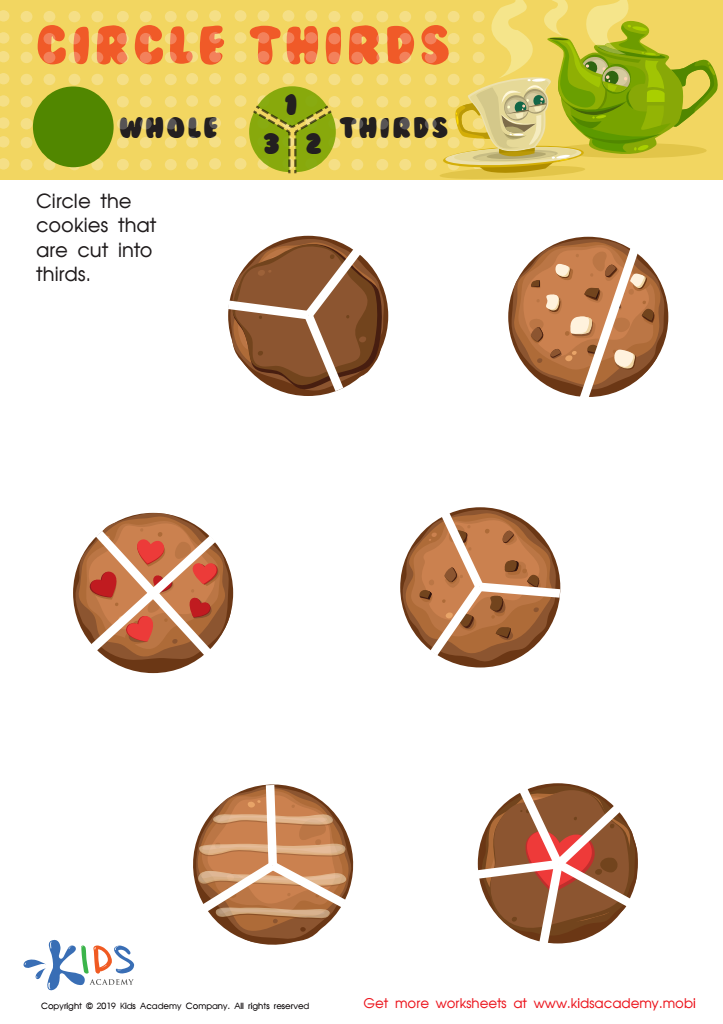
Circle Thirds Worksheet
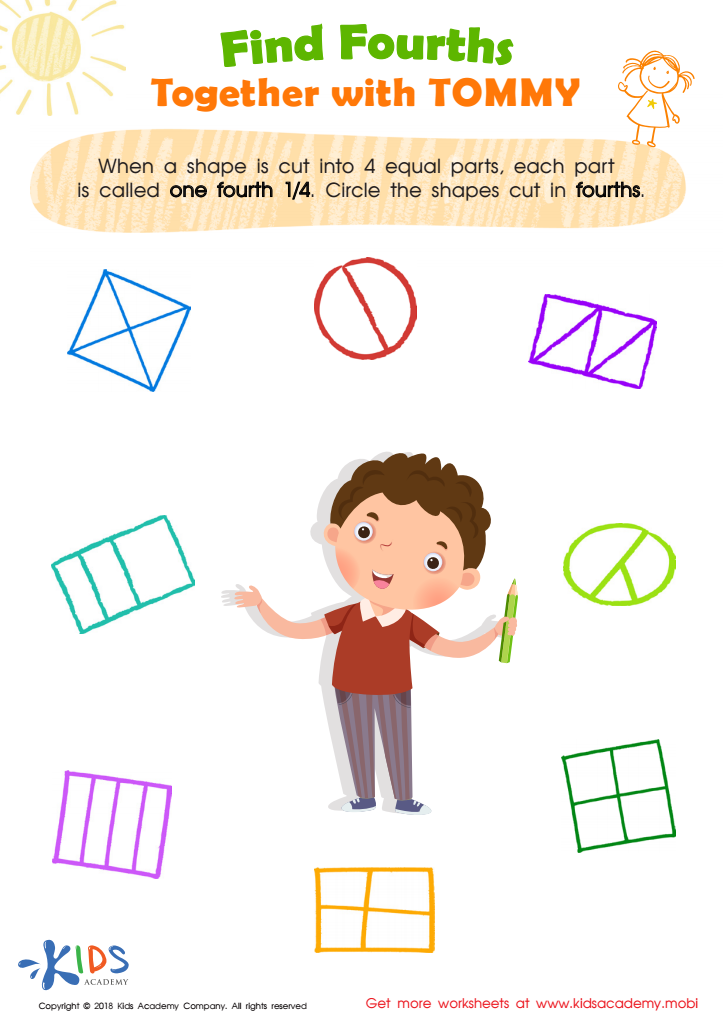
Find Fourths Together with Tommy Worksheet








Understanding fractions, particularly easy fractions of shapes, is crucial for 8-year-olds as it lays the foundation for their mathematical literacy. At this age, children are developing their ability to recognize relationships between quantities and start thinking abstractly. Teaching them fractions through shapes engages visual learning and helps them comprehend complex concepts more easily.
Fractions are not just numbers; they represent parts of a whole. When children learn about fractions in the context of shapes, they can grasp the idea of division and partitioning in a tangible way. This knowledge is essential for daily life situations, such as cooking, sharing, and measuring.
Furthermore, a solid understanding of fractions supports advanced mathematical skills later on, such as adding and subtracting fractions, decimals, and ratios. This foundational skill is necessary for subjects like math, science, and even art.
By prioritizing an understanding of fractions through shapes, parents and teachers can foster critical thinking and problem-solving skills. Encouraging children to explore and visualize fractions develops their confidence in math, making it less daunting as they advance in their education. Investing time in this area ensures children are well-equipped for future learning.