Multiplication practice Easy Science Worksheets for 8-Year-Olds
5 filtered results
Difficulty Level
Grade
Age
-
From - To
Subject
Activity
Standards
Enhance your 8-year-old's math skills with our engaging Multiplication Practice Easy Science Worksheets! Designed specifically for young learners, these worksheets integrate foundational multiplication concepts with captivating science themes. Perfect for reinforcing math fluency, our resources encourage kids to explore multiplication in fun and interactive ways, fostering a love for both math and science. Each worksheet is thoughtfully crafted to boost confidence and understanding through progressive skill-building exercises that cater to different learning styles. Explore our collection today to make learning multiplication enjoyable, while inspiring curiosity about the world around them! Unlock your child’s potential with our easy-to-use worksheets!
Favorites
With answer key
Interactive
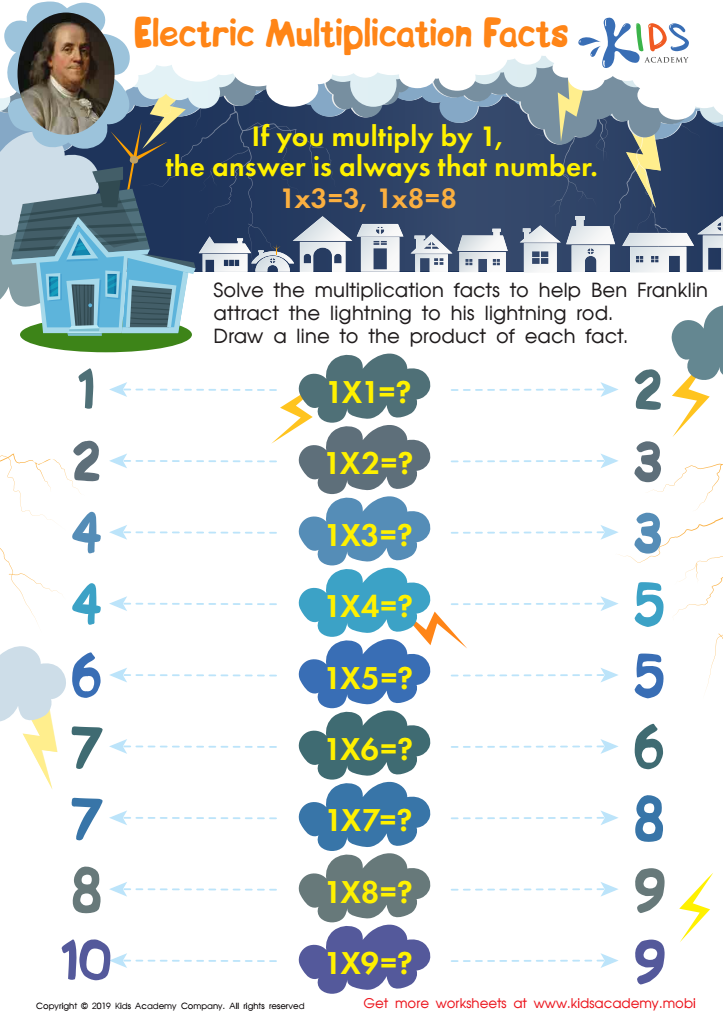
Electric Multiplication Facts Worksheet
Assisting your kids with math homework has no limits. After mastering addition and subtraction, the next step is multiplication. Initially, it can be intimidating. However, with the right tips and worksheets like this one, they'll see it's not so tricky. Show them how multiplying by 1 keeps the number the same. Use the tracing sheet to help them work through multiplication facts.
 Assign to My Students
Electric Multiplication Facts Worksheet
Worksheet
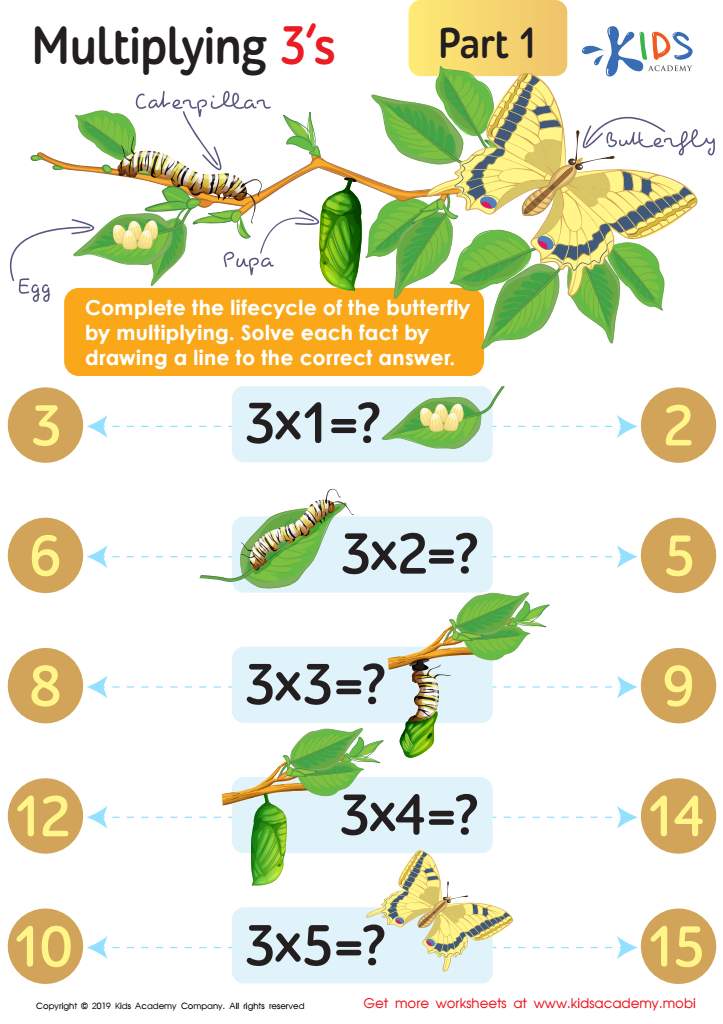
Multiplying 3’s Part 1 Worksheet
Once an egg, then a caterpillar, then a cocoon, then a beautiful butterfly: the lifecycle of the butterfly! Complete the worksheet with your kids and help them draw the lines to get the correct answers for each fact. Let them explore the fascinating transformation of this creature!
Multiplying 3’s Part 1 Worksheet
Worksheet
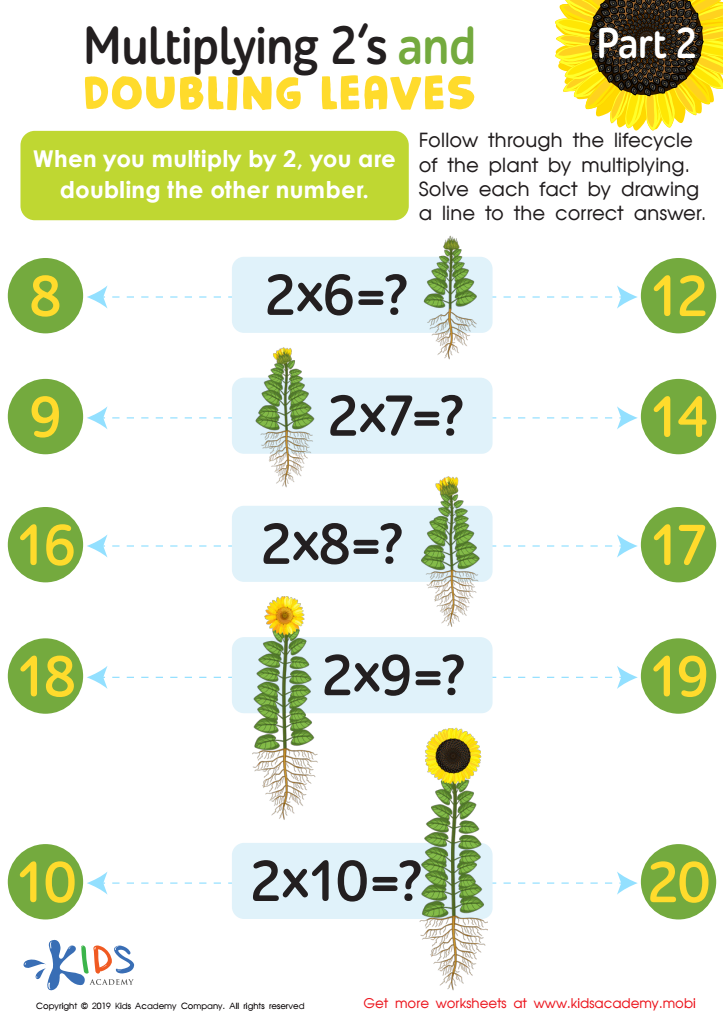
Multiplying 2’s and Doubling Leaves Part 2 Worksheet
Help your students master multiplication with these simple tips. Double the number for multiplying by 2 and use this interactive tracing sheet for solving each fact. Plus, it's colorful making it fun for your students to learn.
Multiplying 2’s and Doubling Leaves Part 2 Worksheet
Worksheet
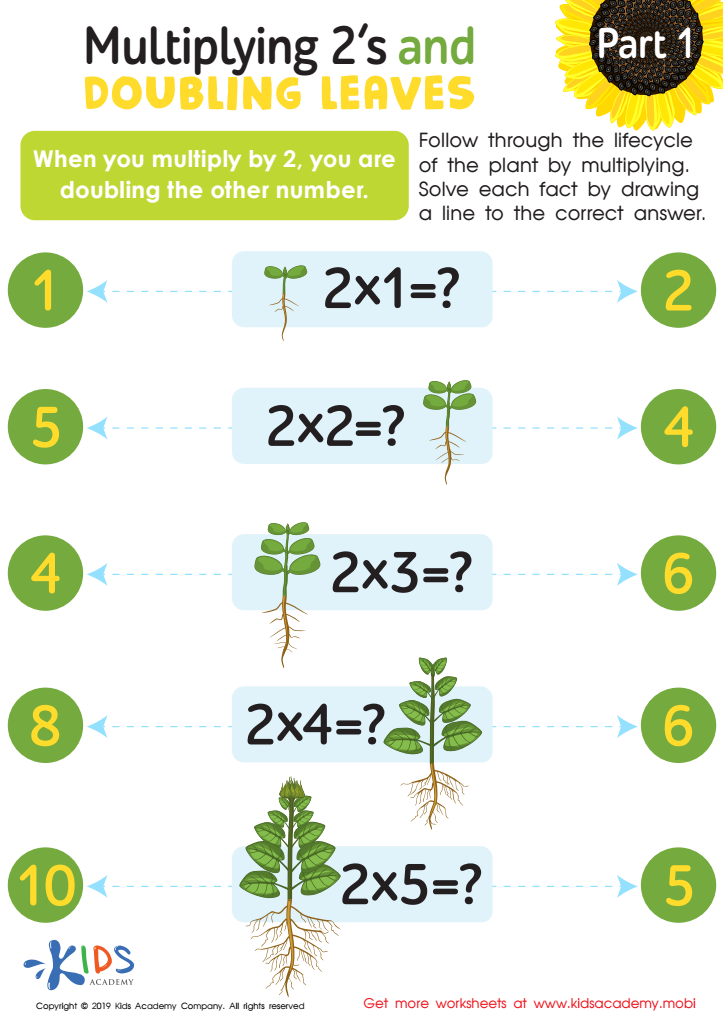
Multiplying 2’s and Doubling Leaves Part 1 Worksheet
If your students still struggle with multiplication, use this worksheet to help them master it. For multiplying by 2, double the original number. Give them this tracing sheet; they'll solve each fact by drawing a line to the right answer. This worksheet will help them learn multiplication tricks and tips.
Multiplying 2’s and Doubling Leaves Part 1 Worksheet
Worksheet
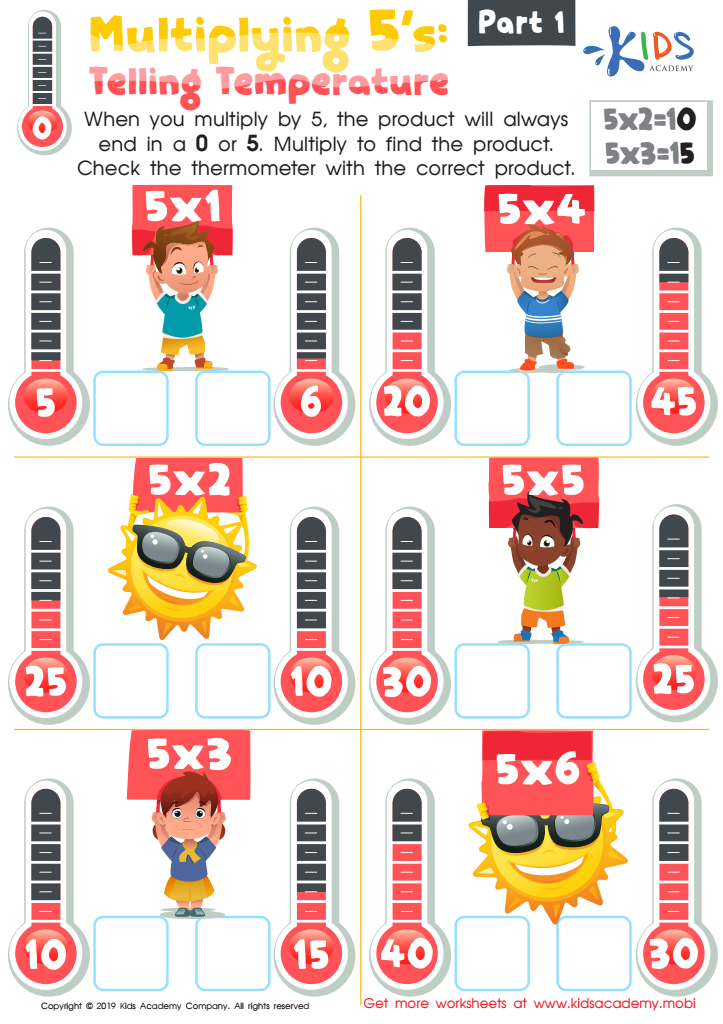
Multiplying 5’s: Telling Temperature Worksheet
To help your child learn their times tables, here's two tips. When multiplying by 10s, the product always ends in a 0. When multiplying by 5s, the product will end in either 0 or 5. Have a look at the problems in this worksheet, help them find the product and check the thermometer to verify the answer.
Multiplying 5’s: Telling Temperature Worksheet
Worksheet
Join Kids Academy for Free
Who is primarily going to use this learning content?








Parents and teachers should care about multiplication practice, especially for 8-year-olds, because foundational math skills are crucial for overall academic success and problem-solving abilities. At this age, children are refining their understanding of numbers and beginning to tackle more complex arithmetic, making multiplication a key concept in their mathematical journey.
Multiplication practice not only reinforces basic operations but also develops critical thinking skills and enhances cognitive development. Engaging with multiplication through fun and interactive methods, such as science-based activities, can make the learning process enjoyable. For example, using real-life science concepts like measuring ingredients or calculating distances provides practical applications for multiplication, making it relatable and engaging for young learners.
Moreover, mastering multiplication sets a solid groundwork for future mathematical concepts, including division, fractions, and algebra. Early proficiency can lead to increased confidence, reducing math anxiety in later years. Regular practice encourages persistence and discipline, valuable traits both in academics and beyond. Thus, prioritizing multiplication practice within a scientific context supports holistic development and can cultivate a lifelong love for learning in children, making it an essential focus for parents and teachers alike.