
Color Identification Easy Worksheets for 9-Year-Olds
3 filtered results
Difficulty Level
Grade
Age
-
From - To
Subject
Activity
Standards
Explore our engaging Color Identification Easy Worksheets designed for 9-year-olds to enhance their color recognition skills. Perfectly tailored to their learning capabilities, these fun and educational worksheets help children identify and differentiate various colors through interactive activities. Foster creativity with vibrant illustrations and exciting exercises that make learning enjoyable. Ideal for home or classroom use, these worksheets not only boost visual perception but also encourage critical thinking and cognitive development. Download now to support your child's educational journey with age-appropriate and easy-to-use resources. Brighten their learning experience today!
Favorites
With answer key
Interactive
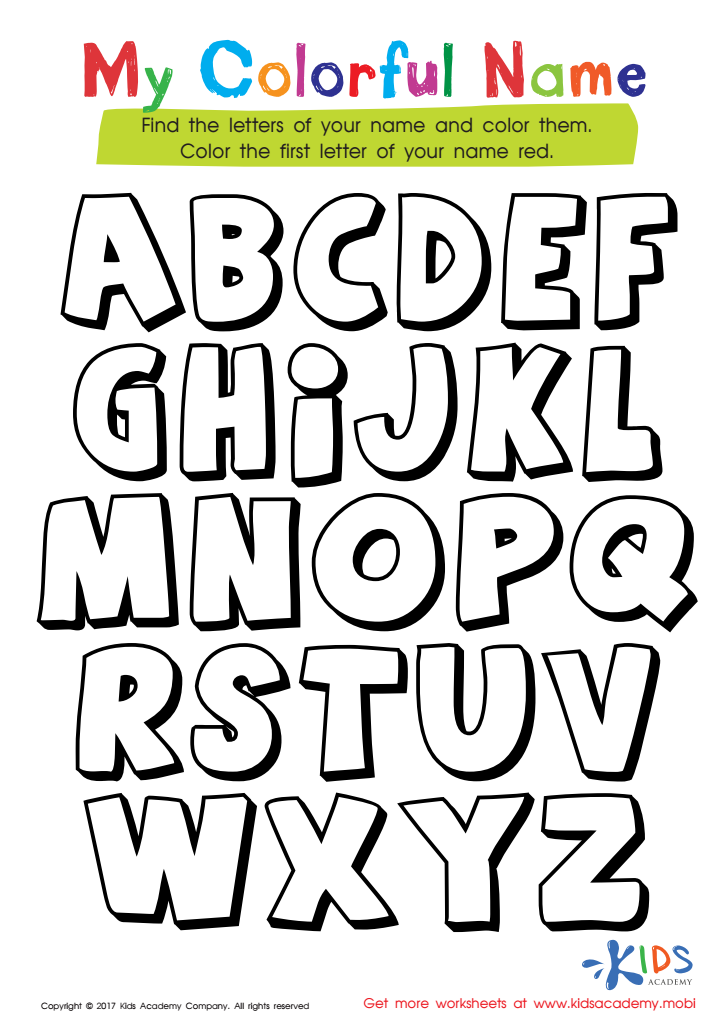
My Colorful Name Worksheet
Writing their names is a milestone for children. With this worksheet, they recall the letters in their name and color the letters one at a time. Spelling and alphabet order are reinforced as they find each letter. Use this fun printable to help kids learn to write their names!
Download (PDF)
 Assign to My Students
Assign to My Students
My Colorful Name Worksheet
Worksheet
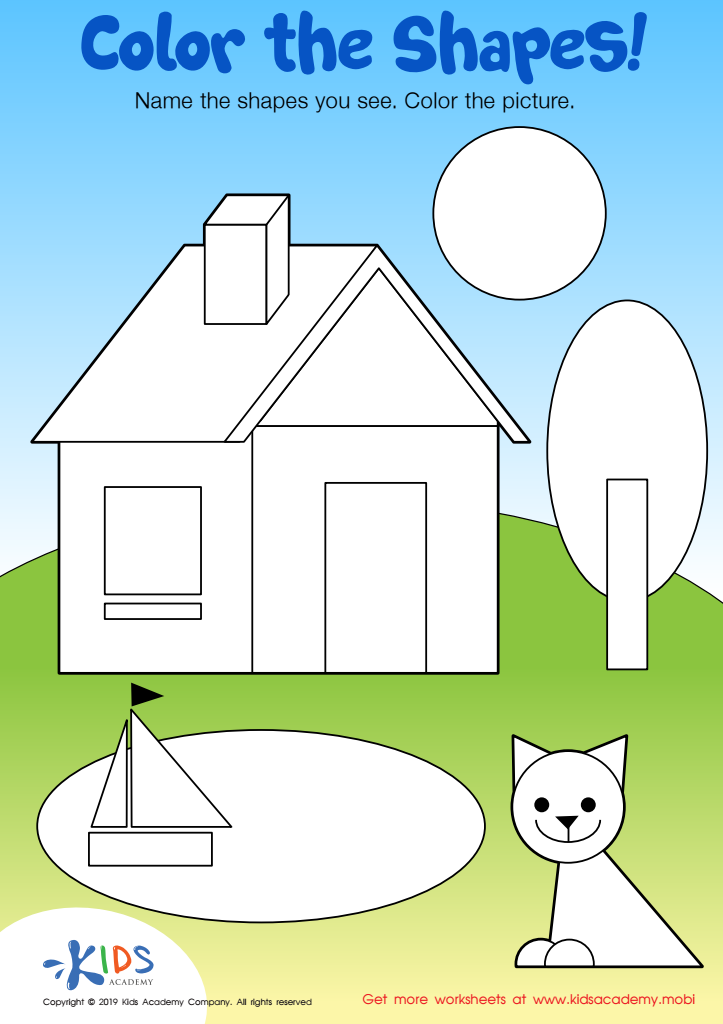
Color the Shapes Worksheet
Help your student master shape identification with this fun worksheet. Ask them to name the shapes in the picture, then color it! Ask questions like "How many squares do you see?" and "How many triangles?" to extend the learning. Identify squares, circles, triangles and rectangles with this enjoyable coloring page.
Download (PDF)
Assign to My Students
Assign to My Students
Color the Shapes Worksheet
Worksheet
Join Kids Academy for Free
Who is primarily going to use this learning content?






Color identification is a vital developmental milestone for 9-year-olds, significantly impacting both cognitive and social skills. For parents and teachers, fostering this ability is crucial as it intersects with various aspects of a child's learning and everyday interactions.
Firstly, color recognition is foundational for visual literacy, helping children interpret and navigate their environments. It's essential not only for basic tasks such as reading maps and graphs but also in art and science where understanding and distinguishing colors can indicate the grasp of complex concepts such as data interpretation or chemical reactions.
Additionally, mastering colors aids in language development. Being able to describe objects using accurate color terms enhances descriptive language skills, promoting better communication and vocabulary expansion. It's a key skill for reading and writing proficiency, catalyzing more substantial academic achievement.
Socially, being adept in color identification fosters inclusivity among peers. Children use colors ubiquitously in collaborative activities and games. Knowing color names helps in following instructions and understanding rules, facilitating harmonious and more engaging playtime experiences.
Lastly, recognizing colors is essential for safety. It enables children to identify important information, such as traffic lights and coded emergency signals.
Thus, prioritizing color identification not only supports immediate learning and interactions but establishes a foundation for future academic and personal growth.








