Understanding patterns Easy Worksheets for 9-Year-Olds
5 filtered results
-
From - To
Welcome to our "Understanding Patterns Easy Worksheets" designed specifically for 9-year-olds! This collection of engaging worksheets promotes essential math skills by helping children identify, create, and extend various types of patterns. Through fun and interactive activities, students will strengthen their understanding of sequences in numbers, shapes, colors, and more. These worksheets are perfect for at-home learning or classroom use, offering a variety of challenges to suit different learning styles. Watch your child develop critical reasoning skills while enjoying the process of discovering patterns in everyday life. Dive in and make learning fun with our easy-to-use resources!
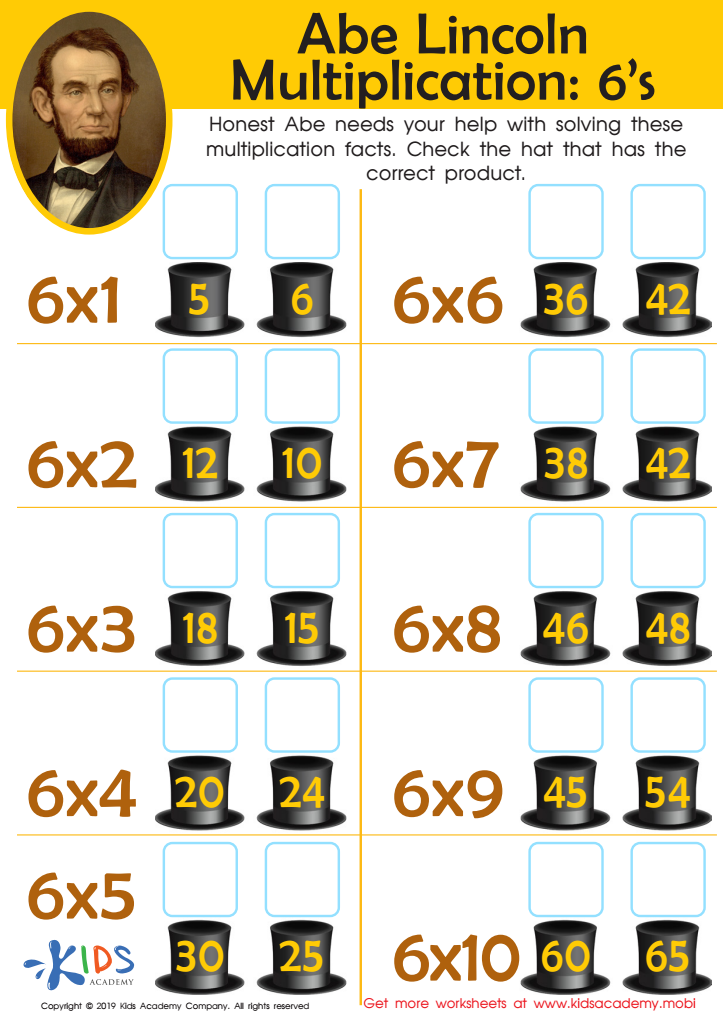
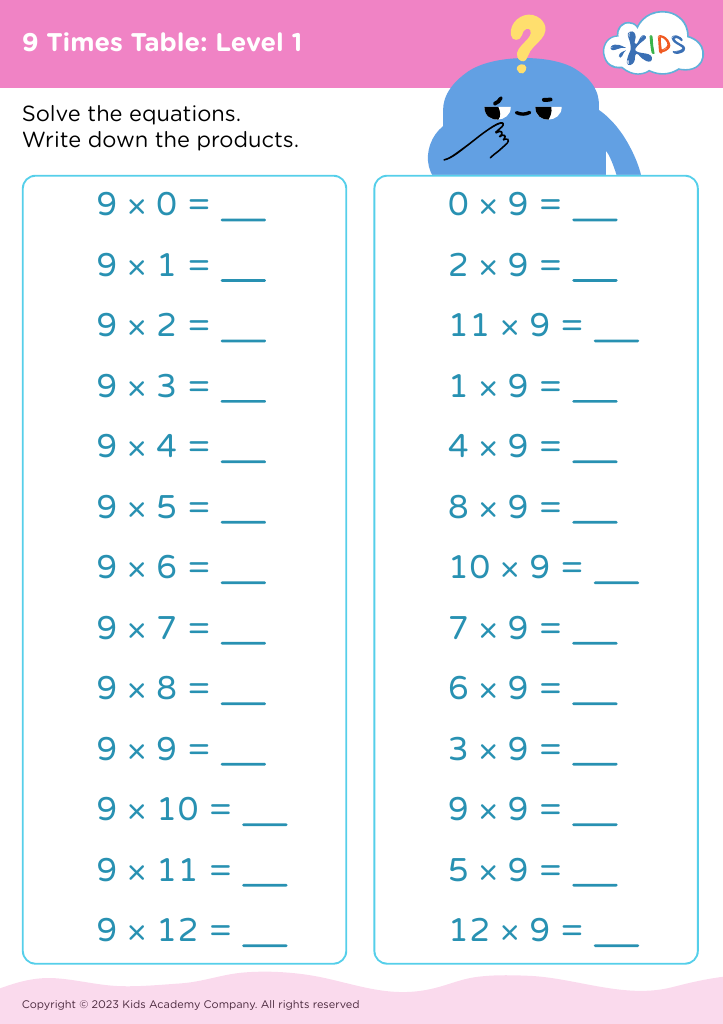
Abe Lincoln Multiplication: 6’s Worksheet
 Assign to My Students







Understanding patterns is crucial for 9-year-olds because it lays the foundation for mathematical reasoning and problem-solving skills. When children recognize patterns in numbers, shapes, or even in their daily routines, they start to make connections between different concepts. This ability helps them predict outcomes and see the relationships between various elements, which is essential in math and science.
For parents and teachers, encouraging children to understand patterns can enhance their confidence and enthusiasm for learning. Using everyday examples, like the days of the week, seasonal changes, or patterns in nature, makes learning relatable and fun. When kids can spot patterns, they develop critical thinking skills and learn to approach problems systematically.
Moreover, understanding patterns boosts cognitive development and prepares children for more complex concepts in the future, including algebra, coding, and logical reasoning. It fosters creativity as children begin to see how different elements interlink in music, art, and even storytelling.
In essence, helping children grasp the concept of patterns equips them with essential life skills, making it vital for parents and teachers to prioritize this important area of learning.








