Shape Recognition Easy 2D Shapes Worksheets for 9-Year-Olds
3 filtered results
-
From - To
Enhance your 9-year-old's learning with our engaging Shape Recognition Easy 2D Shapes Worksheets! These printable worksheets are designed to help children identify and understand various 2D shapes in an enjoyable way. Featuring colorful illustrations and interactive activities, they make learning fun while building essential math skills. Your child will explore shapes like circles, squares, triangles, and rectangles through a variety of exercises that spark creativity and boost confidence. Perfect for home or classroom use, these worksheets promote independent learning and reinforce key concepts. Start your young learner's journey into geometry today with our user-friendly and effective resources!
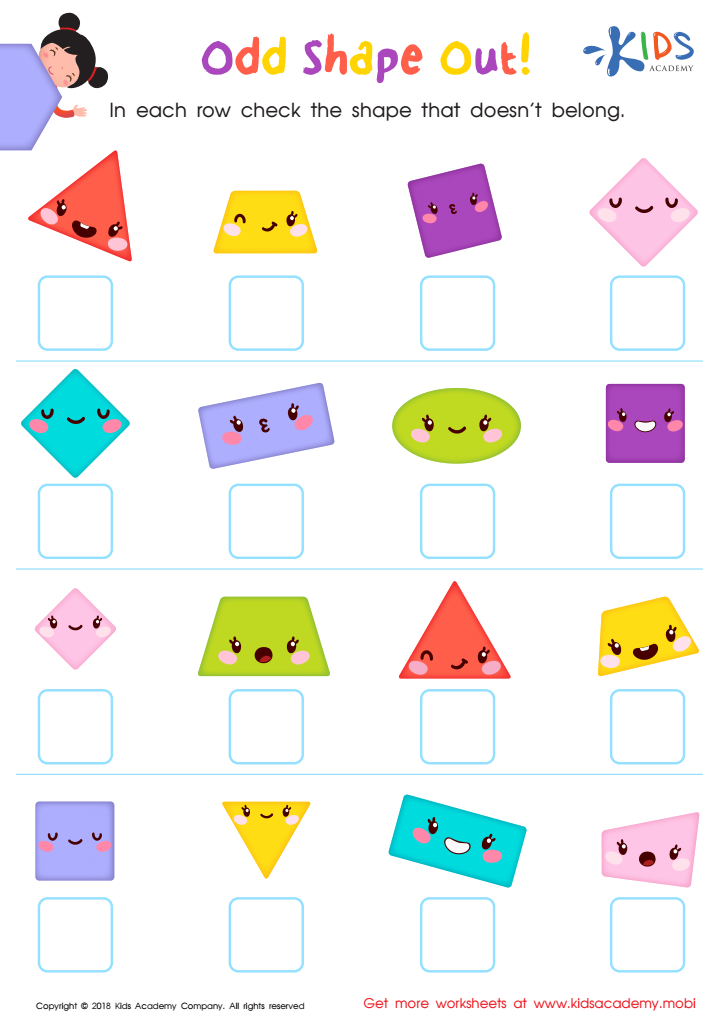
Odd Shape Out Worksheet for Grade 3
 Assign to My Students











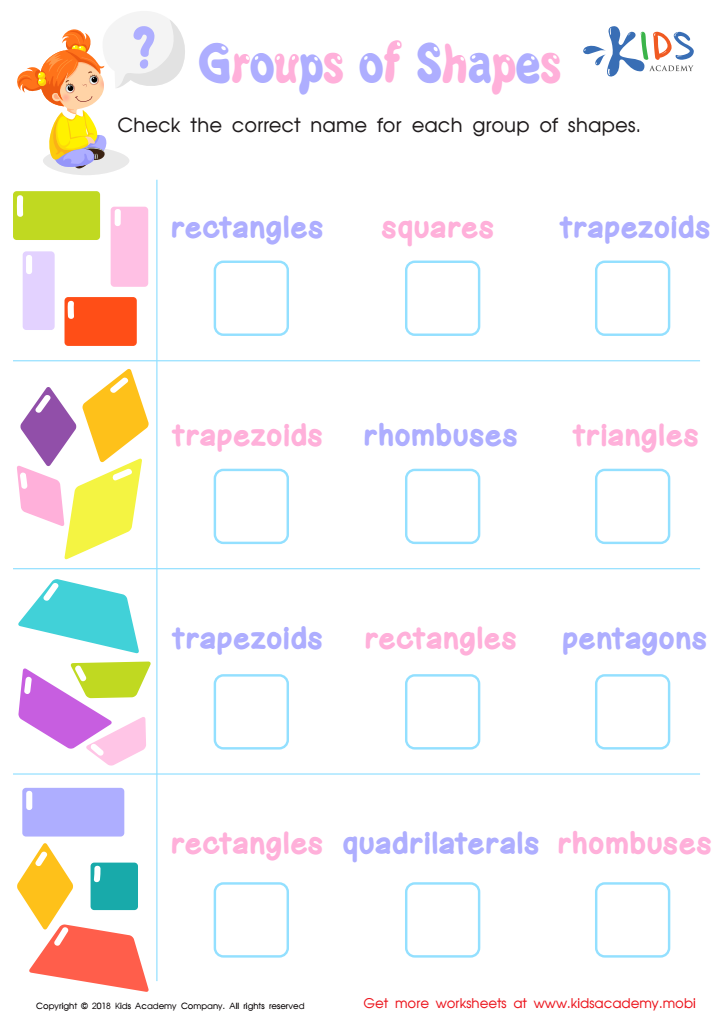
Groups of Shapes Worksheet
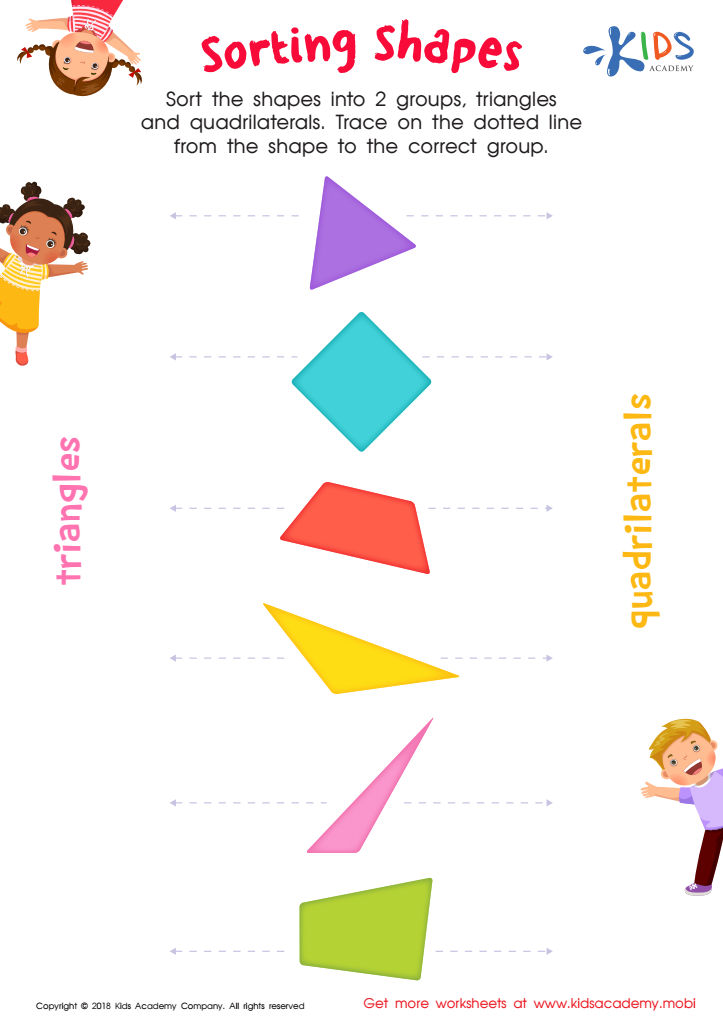
Sorting Shapes Worksheet








Shape recognition, particularly for easy 2D shapes, is a fundamental skill that parents and teachers should prioritize for 9-year-olds. At this age, children are increasingly developing critical thinking and problem-solving abilities. Understanding shapes lays the groundwork for more complex mathematical concepts. Recognizing basic 2D shapes like circles, squares, triangles, and rectangles enables children to form spatial awareness—a skill crucial not only in math but also in everyday situations, like recognizing patterns or navigating spaces.
Additionally, shape recognition plays a pivotal role in fostering creativity and artistic expression. Children often encounter shapes in art projects and design, which enhances their ability to conceptualize and execute creative ideas. Moreover, this foundational knowledge aids in real-life applications, such as identifying objects in their environment, enhancing vocabulary, and improving observation skills.
Engaging children in shape recognition activities—through games, puzzles, and interactive exercises—promotes engagement and reinforces learning. It can also enhance fine motor skills as they cut out or construct shapes. By prioritizing shape recognition, parents and teachers can cultivate a well-rounded educational foundation, preparing children for advanced topics in geometry and other STEM-related fields down the road.