Sequencing Skills Easy Grade 1 Worksheets
3 filtered results
Difficulty Level
Grade
Age
-
From - To
Subject
Activity
Standards
Discover our engaging Sequencing Skills worksheets designed specifically for Grade 1 students! These easy-to-use printable resources help young learners develop essential sequencing skills through fun activities. By using visuals and interactive tasks, children can easily understand the concept of order and improve their reading comprehension. Our worksheets cover a variety of topics, enabling the application of sequencing in everyday scenarios, stories, and events. Perfect for classroom or home use, these materials foster critical thinking and boost confidence as students arrange and organize sequences. Download our Sequencing Skills worksheets today and support your child's learning journey in an enjoyable and effective way!
Favorites
With answer key
Interactive
Itsy Bitsy Spider and Me Worksheet
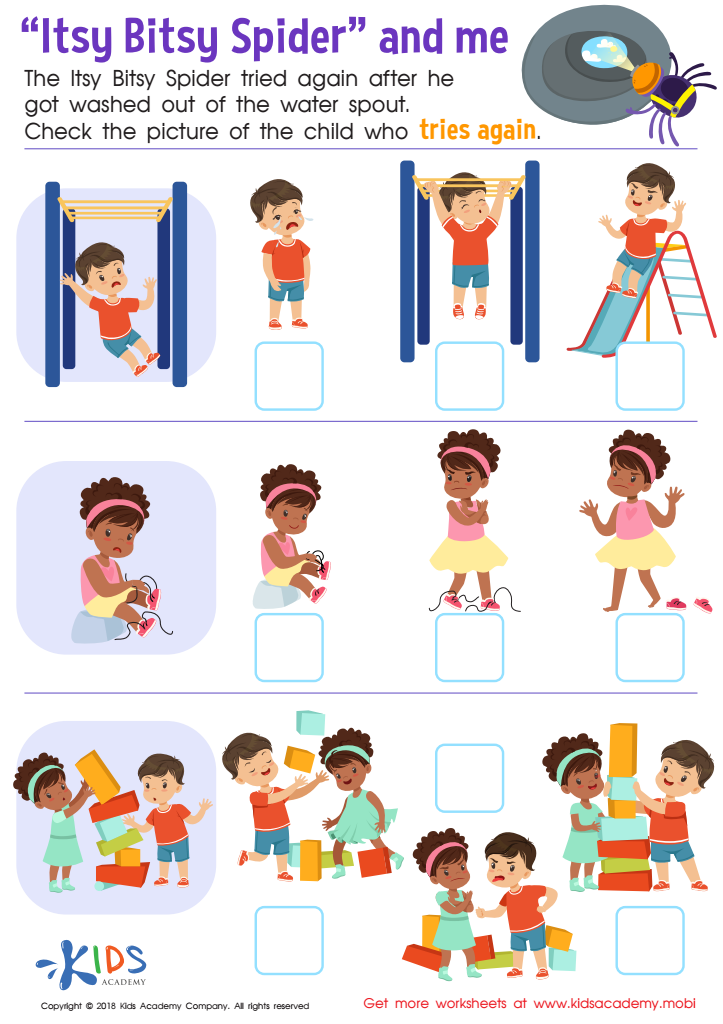
Ensure your child's success - teach them determination and perseverance! Introduce them to the Itsy-Bitsy spider and this fun worksheet. It shows kids working hard and teaches them to 'try again.' Have them identify scenes and check the box for those who succeeded.
 Assign to My Students
Itsy Bitsy Spider and Me Worksheet
Worksheet
Life Cycle of a Horse Worksheet
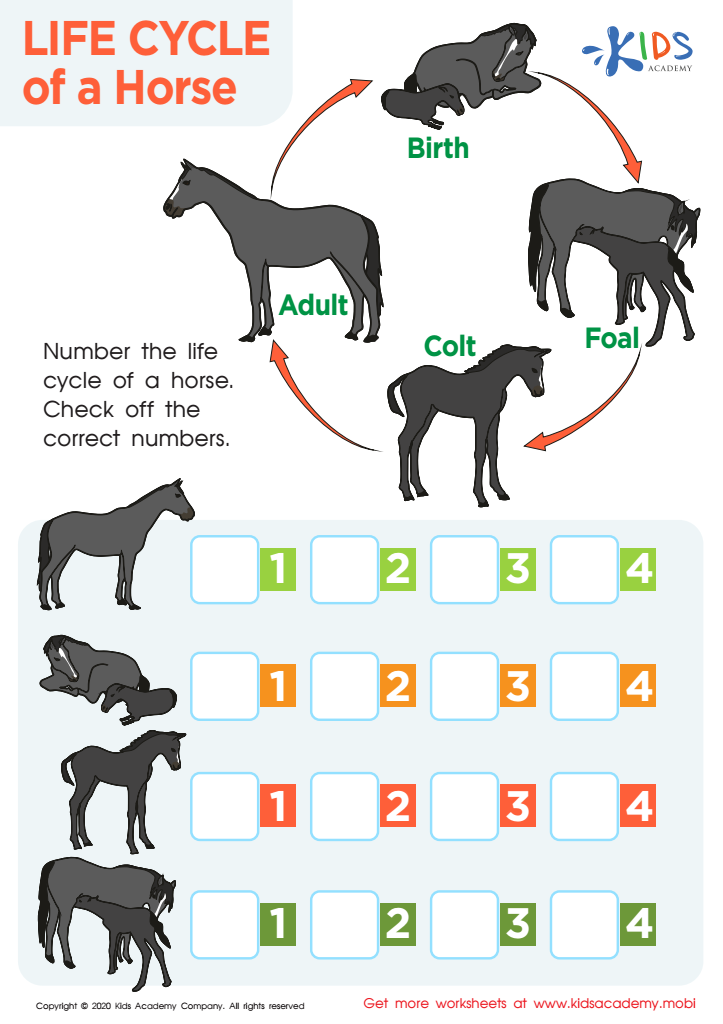
Kids Academy's science worksheet on horses' lifecycles offers an engaging way for kids to learn! They'll study the diagram and label each stage of life, from birth to adulthood, and then number the pictures to mark the correct sequence. Fun and educational - a perfect way to get your kids learning!
Life Cycle of a Horse Worksheet
Worksheet
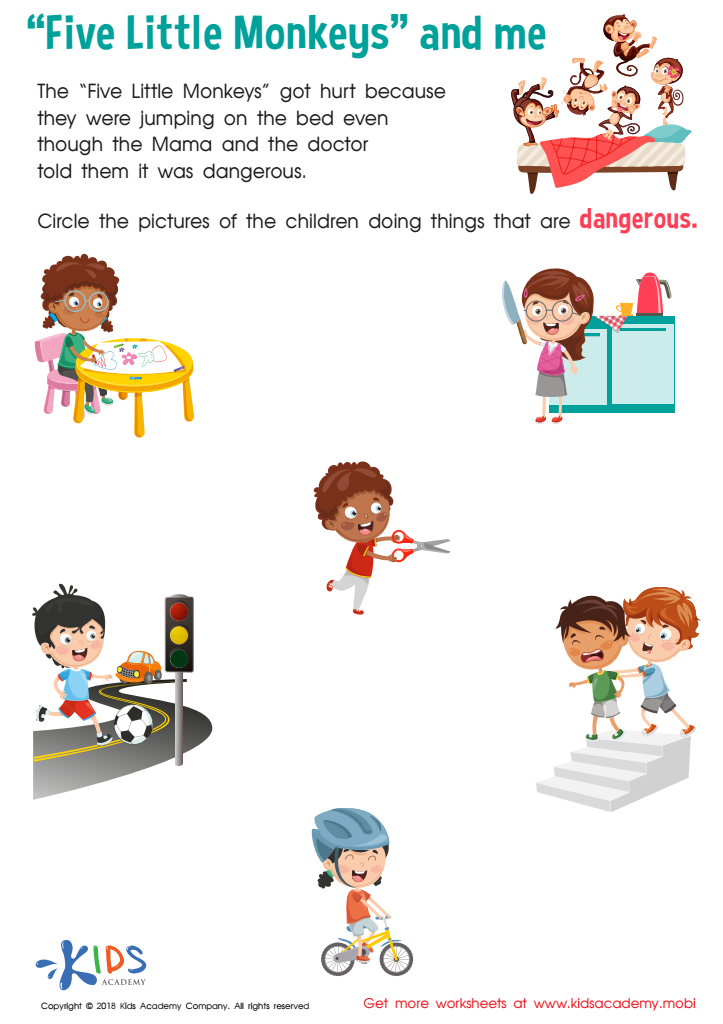
Five Little Monkeys and Me Worksheet
This free PDF worksheet provides preschoolers an understanding of danger and appropriate play. It allows them to recognize dangerous situations and why they can be risky, granting kids perspective from both parents and teachers. It's a fun, safe way to help them internalize what's dangerous and what's not.
Five Little Monkeys and Me Worksheet
Worksheet
Join Kids Academy for Free
Who is primarily going to use this learning content?







Sequencing skills are foundational for young learners, making them critical for grade 1 students. Understanding the order of events empowers children to comprehend stories, follow instructions, and engage in problem-solving. As parents and teachers, fostering these skills can significantly enhance a child's literacy and cognitive development.
When children learn to sequence events, they develop stronger reading comprehension. They can better identify main ideas, draw connections between events, and predict outcomes, which all contribute to a richer understanding of narratives. Sequencing also promotes logical thinking, as students learn to evaluate the relationships between actions or ideas.
Moreover, sequencing skills extend beyond reading. In subjects like math or science, understanding sequences is crucial for grasping concepts such as time, patterns, and processes. Practicing sequencing through storytelling, everyday activities, or educational games fosters critical thinking and creativity.
Additionally, nurturing these skills can boost a child's confidence. Mastery in sequencing translates to improved communication and expression, enabling children to articulate their thoughts more clearly. In summary, prioritizing sequencing skills in grade 1 equips children with essential tools for academic success and lifelong learning. Parents and teachers play an influential role in this development, making it imperative they engage in targeted support and activities.