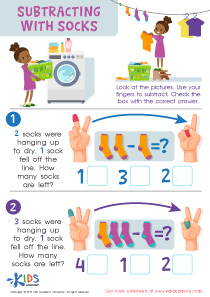
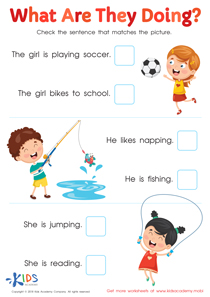
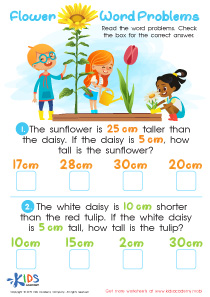
Number comprehension Easy Grade 1 Addition and Subtraction Word Problems Worksheets
4 filtered results
-
From - To
Introduce your first graders to the world of basic arithmetic with our "Number Comprehension Easy Grade 1 Addition and Subtraction Word Problems Worksheets". Specially designed for young minds, these worksheets use engaging word problems to reinforce foundational math skills. With a focus on both addition and subtraction, children will build confidence as they master number comprehension in a fun, stress-free environment. Bright colors and relatable scenarios make learning enjoyable, ensuring that kids stay motivated. Perfect for in-class activities or at-home practice, these worksheets are an essential resource for every budding mathematician. Adventure into math today and watch your child's skills soar!
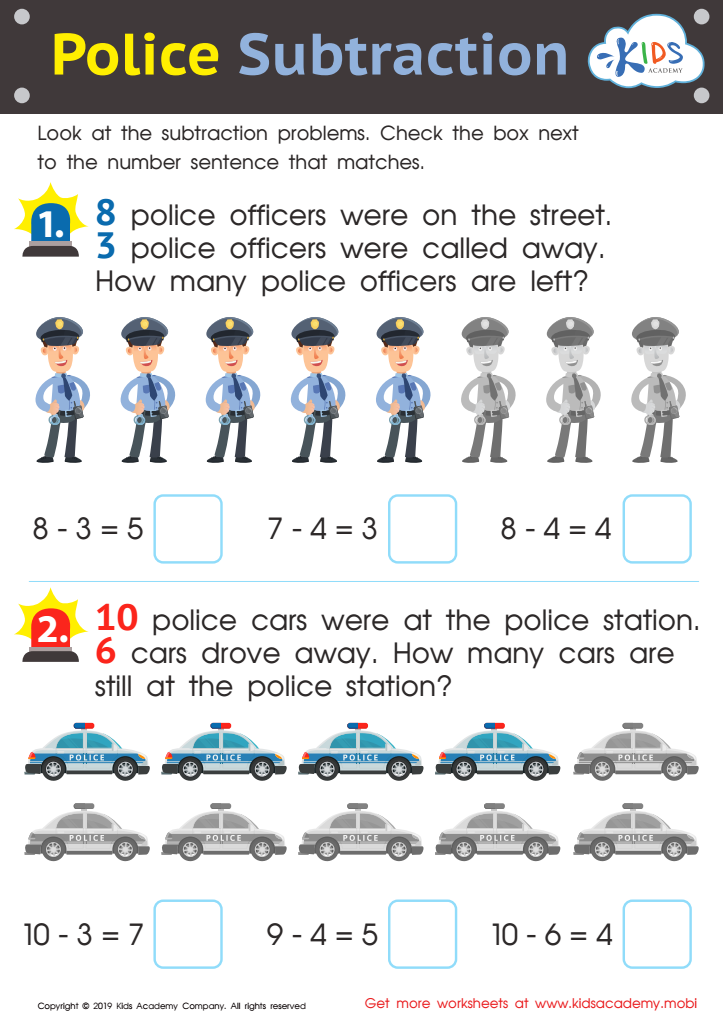
Police Subtraction Worksheet
 Assign to My Students
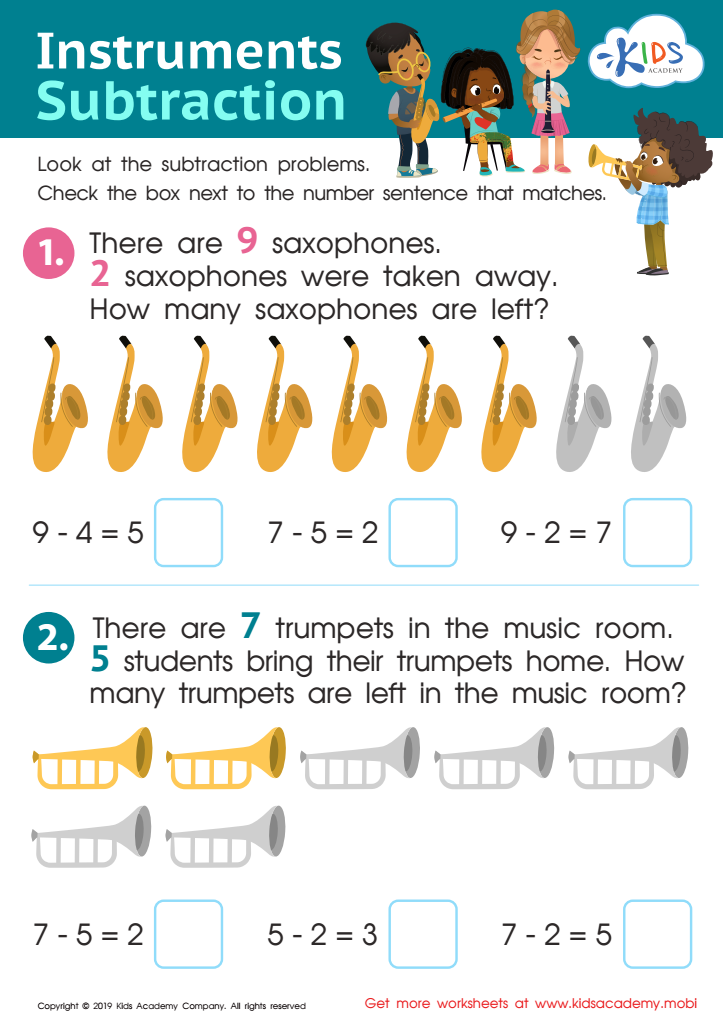
Instrument Subtraction Worksheet
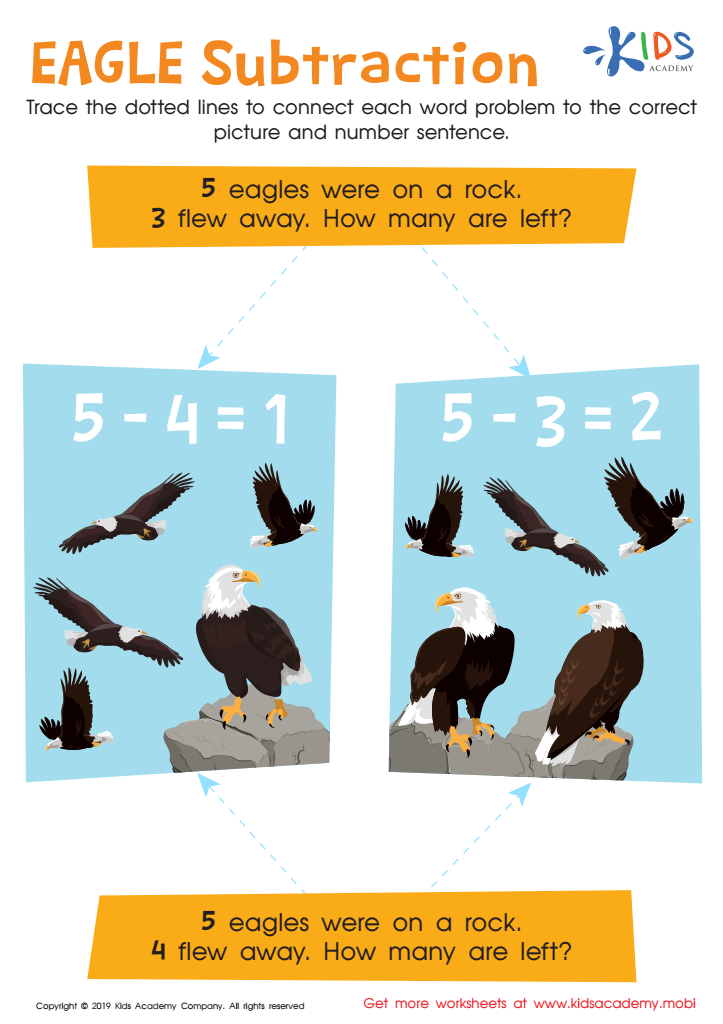
Eagle Subtraction Worksheet
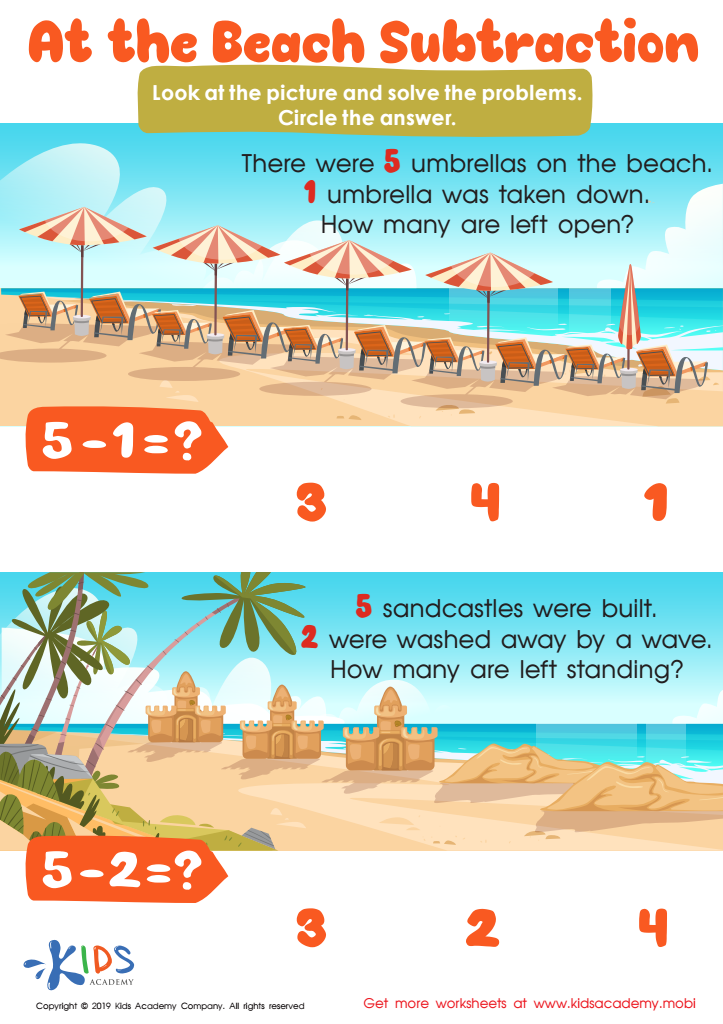
At the Beach Subtraction Worksheet








Parents and teachers should prioritize number comprehension and basic grade 1 addition and subtraction word problems because these foundational skills form the bedrock of a child's mathematical journey. Proficiency in understanding and solving simple arithmetic problems not only boosts a child’s confidence in math but also fosters critical problem-solving skills that are essential in everyday life.
When young learners grasp basic addition and subtraction, it helps them to make sense of numbers and their relationships. This foundational knowledge supports their ability to tackle more complex mathematical concepts as they progress through their education. Word problems, in particular, are crucial because they present mathematics in a context that students can relate to. This context helps children see the practical applications of math, making it more relevant and engaging.
Moreover, developing number comprehension at an early age can enhance a child's logical thinking and decision-making abilities. By encouraging students to articulate their reasoning processes, teachers and parents can identify and address misconceptions early on, ensuring a strong mathematical foundation.
Investing time in these basic skills sets students up for long-term academic success and helps cultivate a positive attitude towards math, overcoming fear and building resilience. This early intervention ultimately supports broader educational goals and lifelong learning.