Basic Addition Easy Grade 1 Math Worksheets
4 filtered results
Difficulty Level
Grade
Age
-
From - To
Subject
Activity
Standards
Discover our "Basic Addition Easy Grade 1 Math Worksheets" at Kids Academy! Perfect for young learners, these engaging worksheets help first graders master foundational addition skills. Each worksheet features vibrant visuals and simple math problems crafted to enhance number recognition, counting, and early computation abilities. Designed to make learning fun and stress-free, our worksheets build confidence and lay the groundwork for future math success. Ideal for classroom and home use, these resources empower children to progress at their own pace. Download now and watch your child's arithmetic skills flourish! Visit our website for a world of educational adventures.
Favorites
With answer key
Interactive
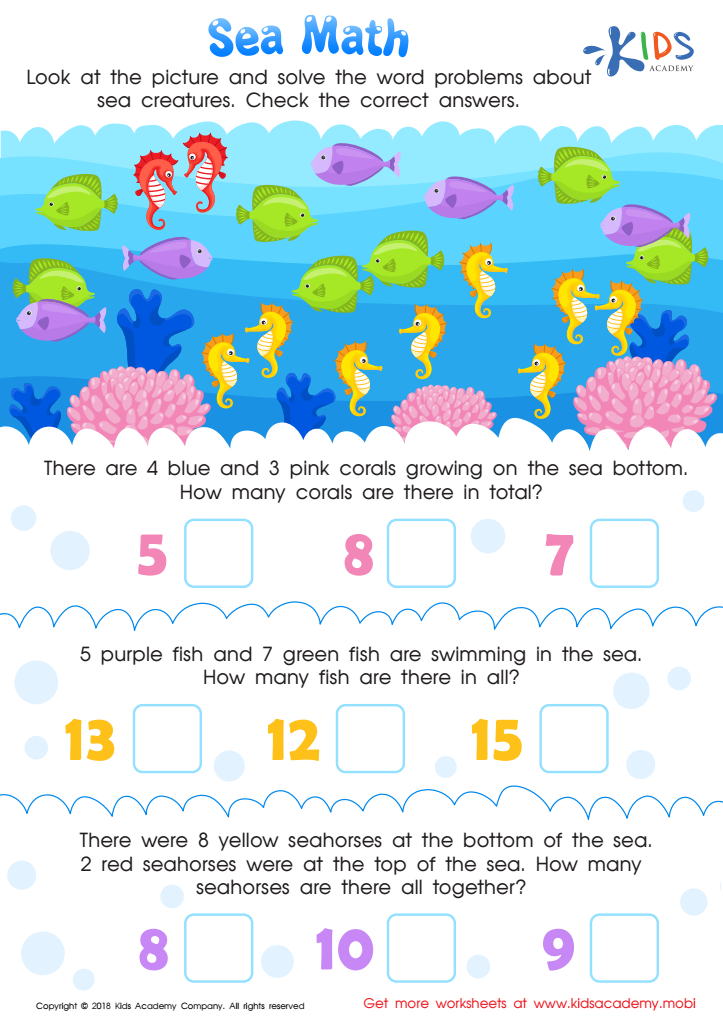
Sea Math Worksheet
Dive into an ocean of addition with this fun math worksheet! Help your little mathematician count and add colorful coral and fish. Point out phrases like "in total" or "all together" as a reminder to use addition. Watch them add to find the answer and check the boxes to finish!
 Assign to My Students
Sea Math Worksheet
Worksheet
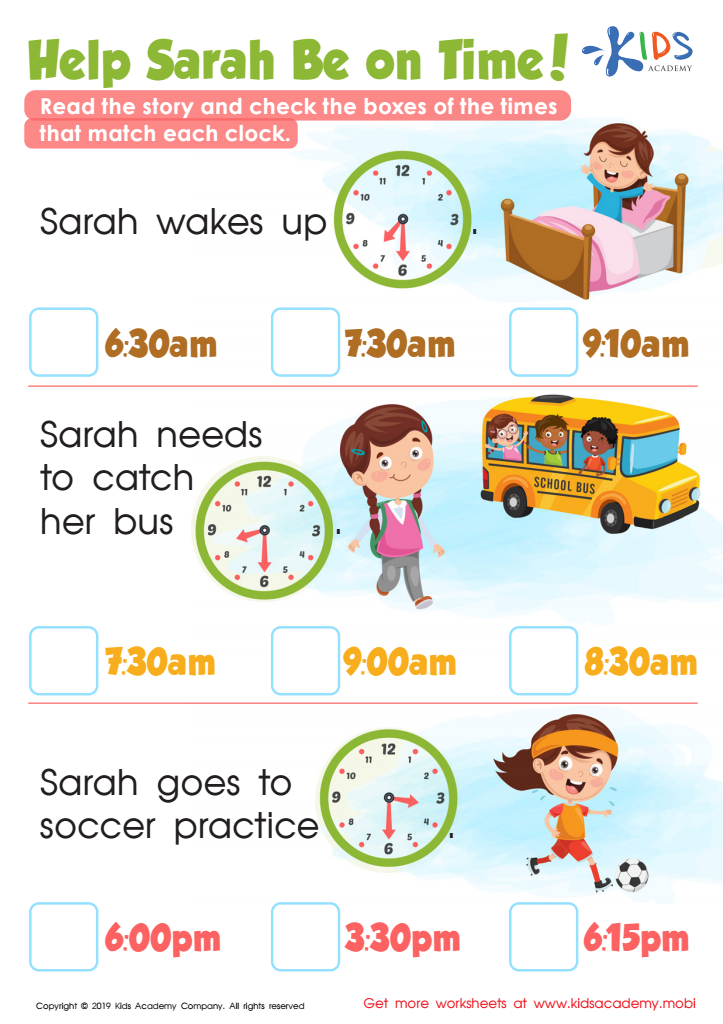
Help Sarah Be on Time! Worksheet
Humans are social creatures and need to be punctual for things to run smoothly. For instance, a meeting with a friend requires a time to be agreed upon. Ask your kids what else needs to be punctual. Then, show them the worksheet and read the accompanying story. Get them to match clocks with the correct times.
Help Sarah Be on Time! Worksheet
Worksheet
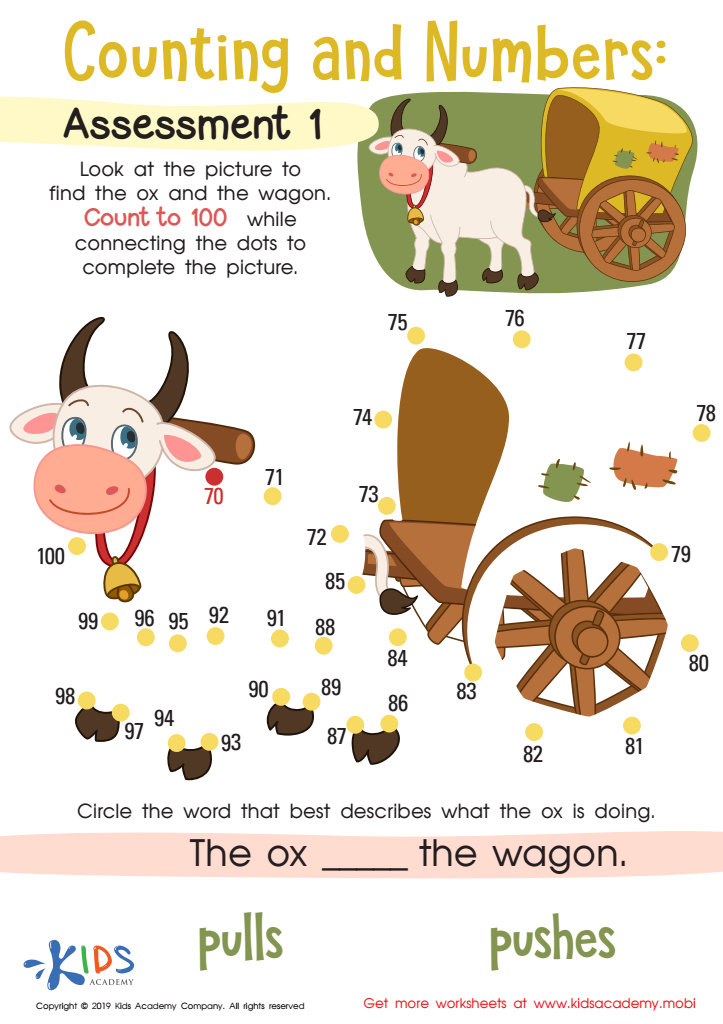
Counting and Numbers: Assessment 1 Worksheet
Let your kids use the picture as a guide and count from 70 to 100 to complete an ox pulling a wagon. As a comprehension check, have them answer the related question using words from the word bank. This dot-to-dot worksheet is a great way to assess their number reasoning and counting forward skills.
Counting and Numbers: Assessment 1 Worksheet
Worksheet
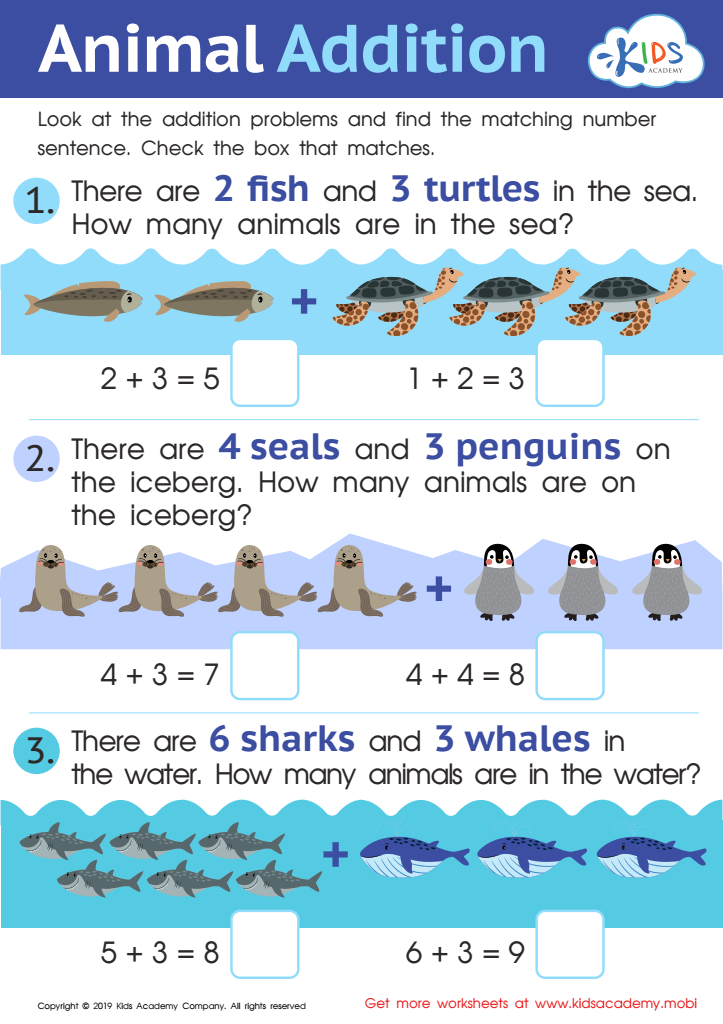
Animal Addition Worksheet
Get your kids learning addition and subtraction with this fun worksheet! Show them that solving equations can be enjoyable and help them match number sentences to the correct boxes. By doing this together, you'll create a positive learning experience that your kids won't forget.
Animal Addition Worksheet
Worksheet
Join Kids Academy for Free
Who is primarily going to use this learning content?





Understanding basic addition in Grade 1 is crucial for a child's educational development, laying the groundwork for future mathematical concepts. Parents and teachers should prioritize this because it equips children with fundamental skills necessary for daily life applications, such as counting money, telling time, and measuring ingredients in recipes. Early mastery of basic addition promotes confidence and a positive attitude toward math, creating a strong foundation for more complex arithmetic processes like subtraction, multiplication, and division.
Moreover, learning addition helps to develop cognitive abilities, such as problem-solving, critical thinking, and logical reasoning. These skills extend beyond math, enhancing comprehension and performance in other subjects.
Basic addition also fosters mental math capabilities, encouraging children to perform calculations quickly and accurately without relying solely on tools such as calculators or fingers, which can be cumbersome. Additionally, engaging in math activities and exercises supports fine motor skills and hand-eye coordination when children write numbers and solve problems.
Overall, proficiency in basic addition leads to greater academic success, especially as math becomes progressively intricate in higher grades. By ensuring children are comfortable with addition early on, parents and teachers can help to build a robust educational foundation that supports continuous learning and intellectual growth.