Shape identification Easy Grade 1 Math Worksheets
3 filtered results
-
From - To
Introduce young learners to the world of shapes with our "Shape Identification Easy Grade 1 Math Worksheets." Perfect for first graders, these engaging and colorful worksheets help children recognize and name various shapes, including circles, squares, triangles, and rectangles. Each activity is designed to develop visual-spatial skills while making learning fun and interactive. With a focus on easy and achievable tasks, these worksheets build a solid foundation in geometry and boost confidence in math. Download today to support your child's educational journey with playful and effective practice they will enjoy. Transform shape learning into an enjoyable adventure!
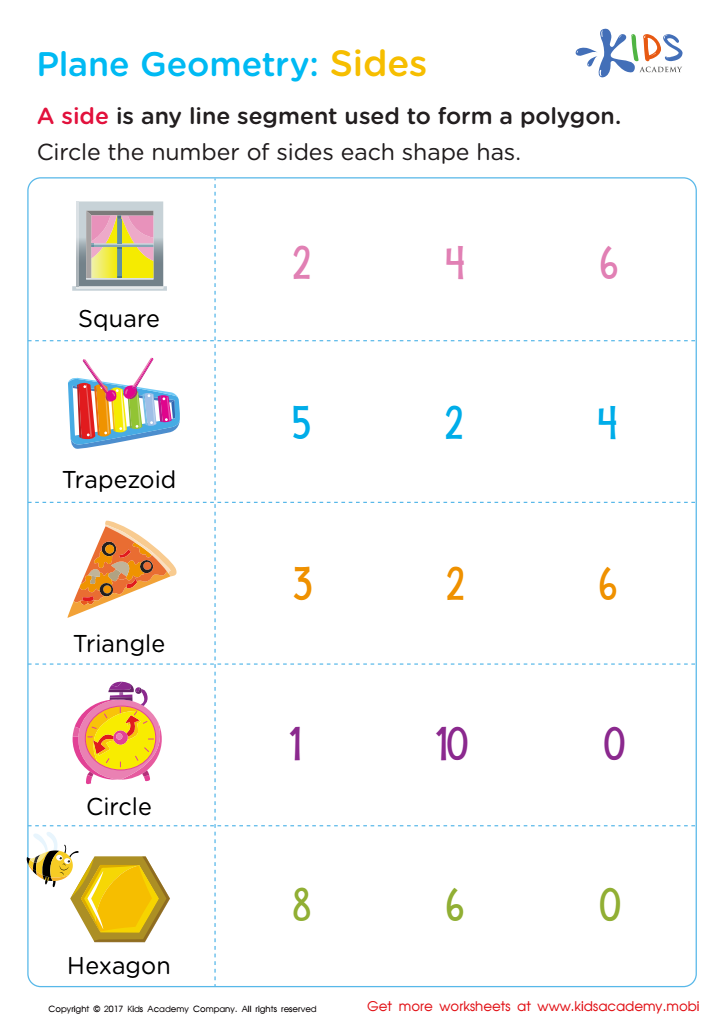
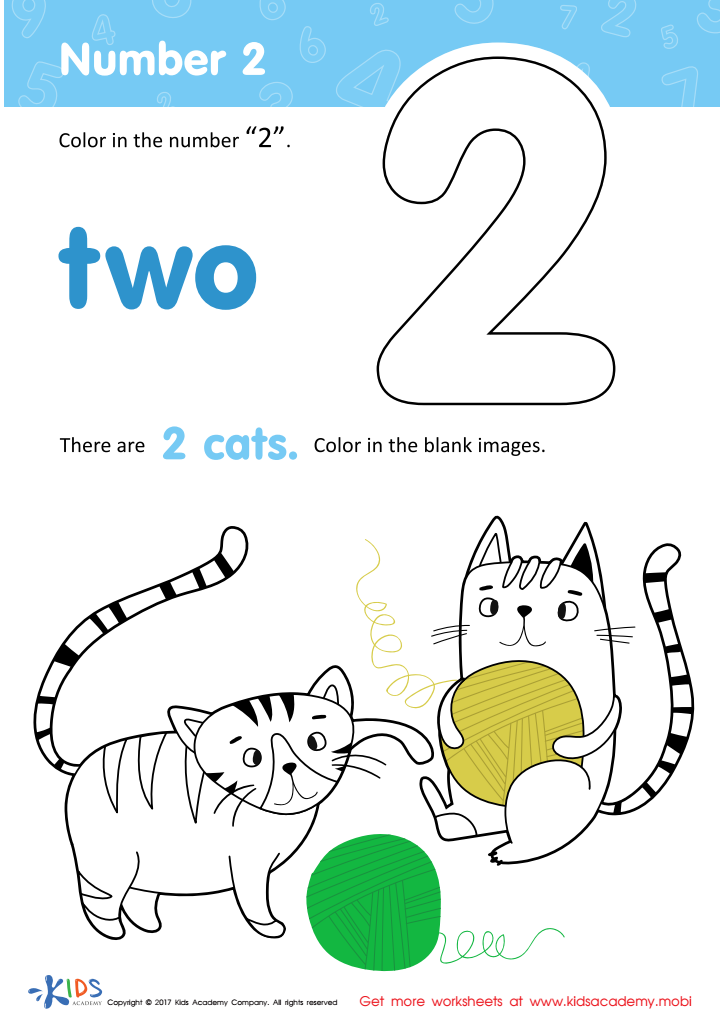
Number 2 Printable
 Assign to My Students
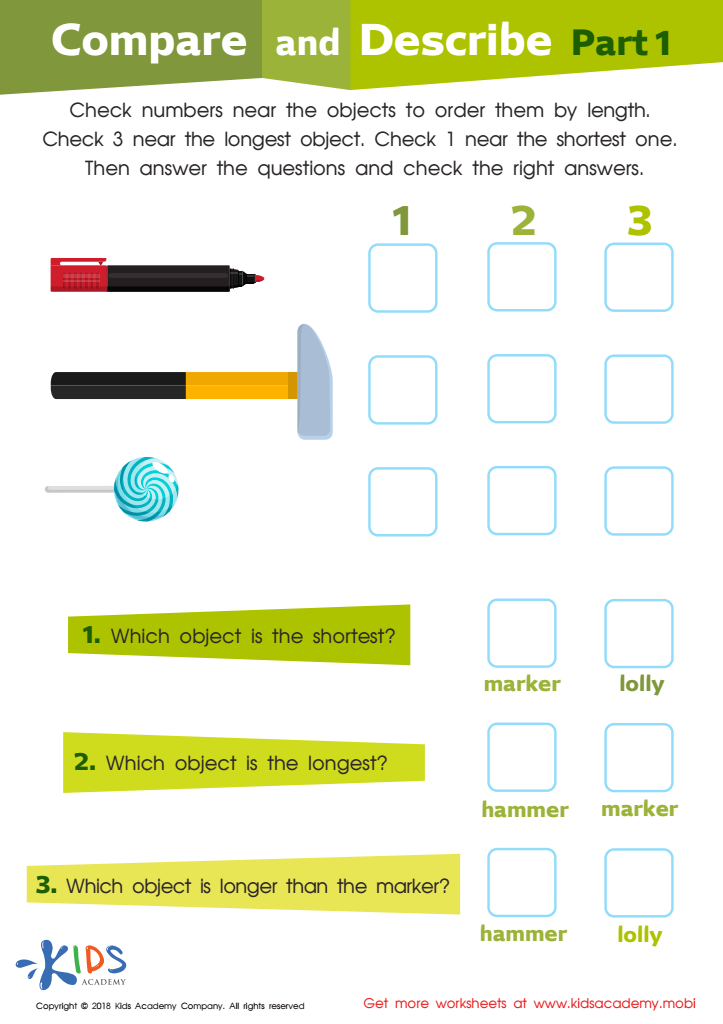
Compare and Describe: Part 1 Worksheet








Shape identification is a foundational aspect of early mathematical education for Grade 1 students that parents and teachers should prioritize. Firstly, recognizing shapes helps young learners enhance their visual-spatial intelligence, which is the ability to understand and remember the spatial relations among objects. This skill is critical not only in mathematics but also in subjects like science and art.
Moreover, shape identification lays the groundwork for more advanced geometric concepts. By identifying shapes, children learn to recognize the attributes of different geometric figures, which is essential when they advance to more complex topics like area, volume, and symmetry. This understanding is already mentioned in curricular standards and serves as a prerequisite for higher mathematical problem-solving.
Early experience with shapes also supports language development, as children learn new vocabulary words like "circle," "square," and "triangle." Naming shapes, discussing their properties, and relating them to real-world objects aid in bringing abstract concepts into children's concrete learning experiences. It fosters observational skills, critical thinking, and analytic abilities, as children begin to categorize and differentiate between different shapes.
Parents and teachers support a child's cognitive and academic growth by focusing on shape identification. It’s not merely about recognizing shapes; it's about nurturing a skill set that is crucial for their future learning endeavors and everyday problem-solving skills.