Animal recognition Easy Kindergarten Worksheets
5 filtered results
-
From - To
Introduce your little learner to the magical world of animals with our "Animal Recognition Easy Kindergarten Worksheets." These fun and engaging worksheets are expertly crafted to provide young children with a foundational understanding of animal names and characteristics. Designed with vibrant illustrations and simple exercises, these worksheets make learning a joyful and interactive experience. Perfect for curious minds, they help refine observation and cognitive skills, supporting early developmental milestones. With a variety of activities, children can effortlessly distinguish different animals while having fun. Make early learning an adventure with our easy-to-use animal recognition printables!
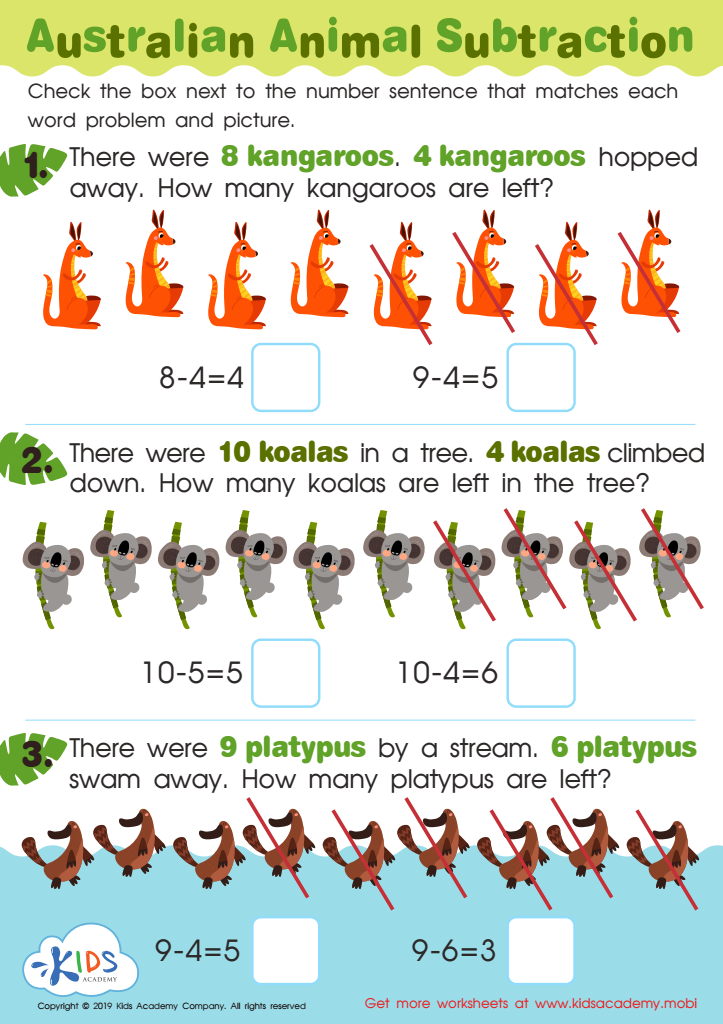
Australian Animal Subtraction Worksheet
 Assign to My Students
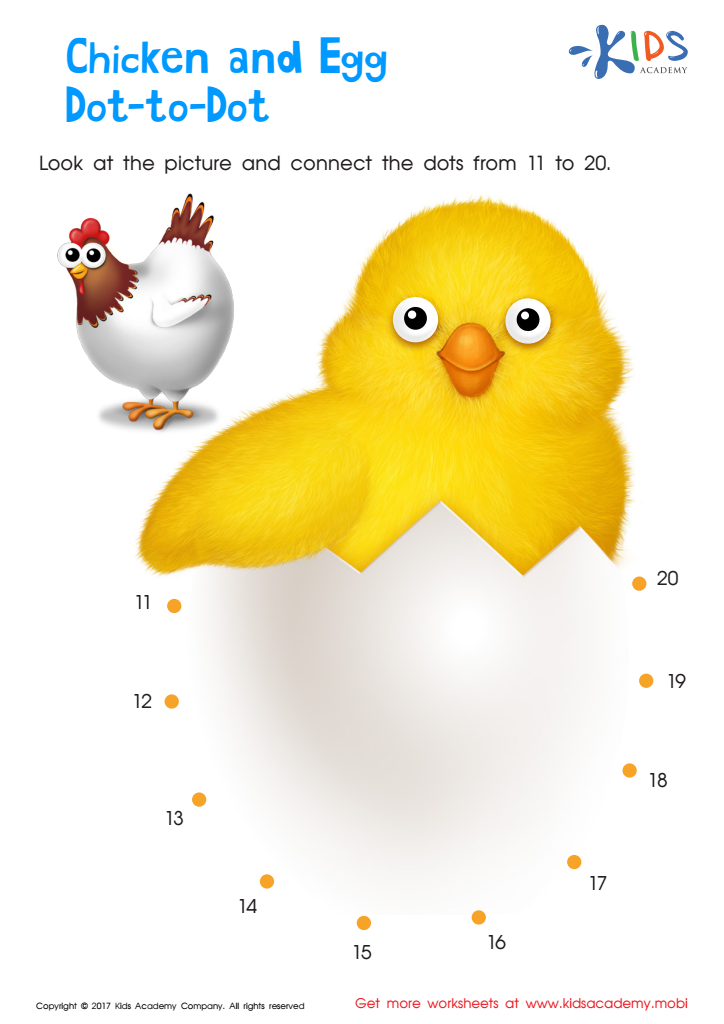
Ordering 11–20: Chicken & Egg Dot–to–dot Worksheet
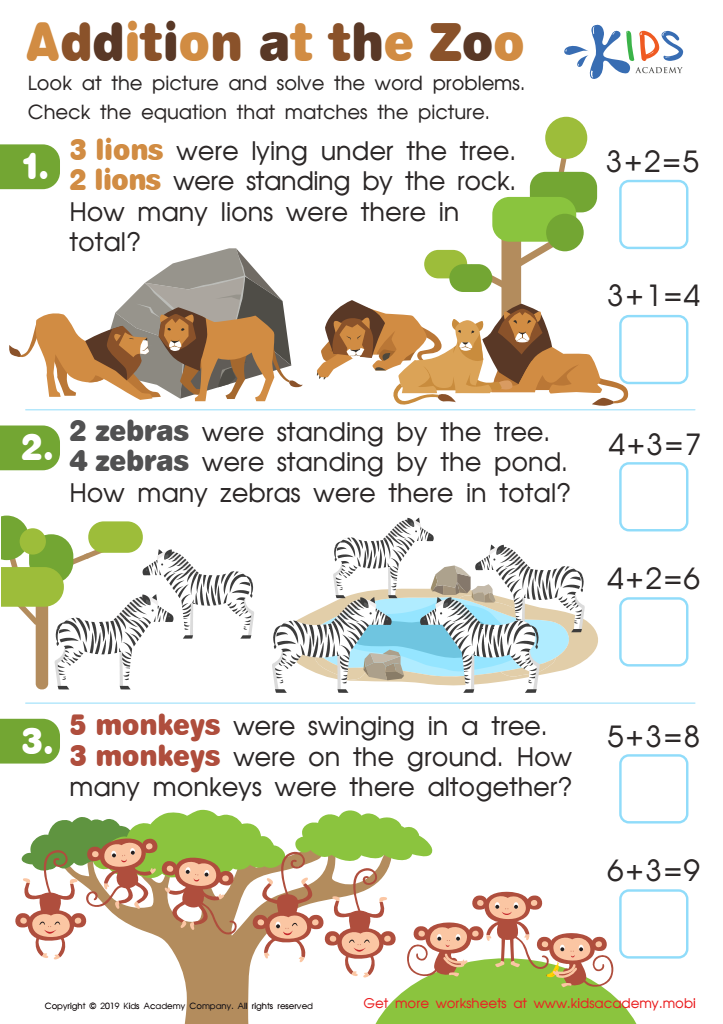
Addition at the Zoo Worksheet
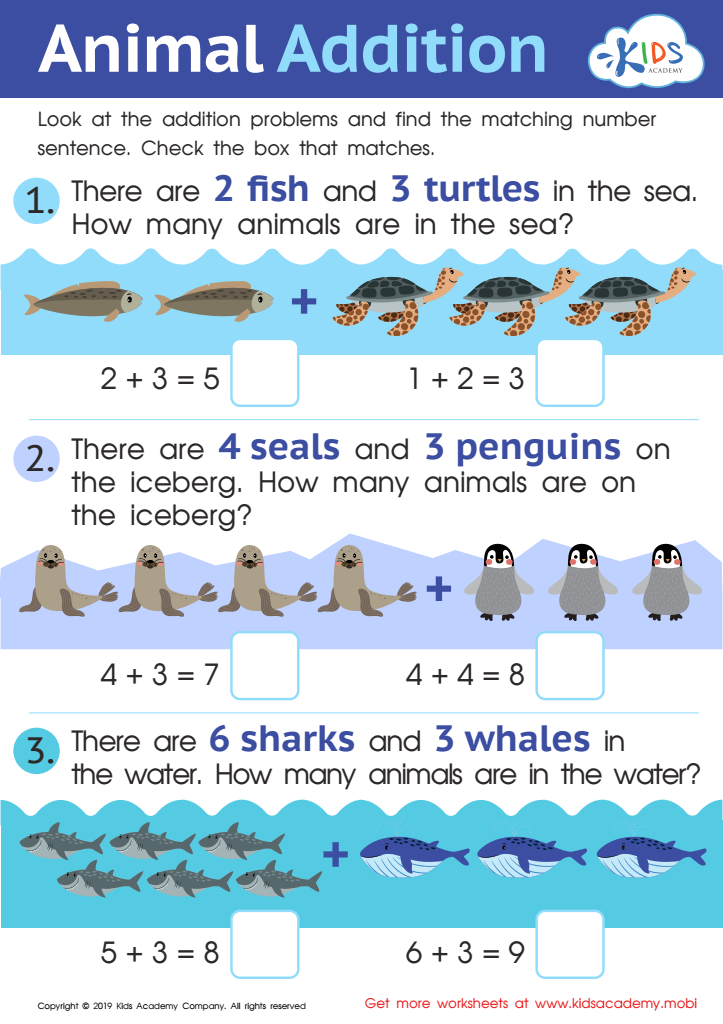
Animal Addition Worksheet
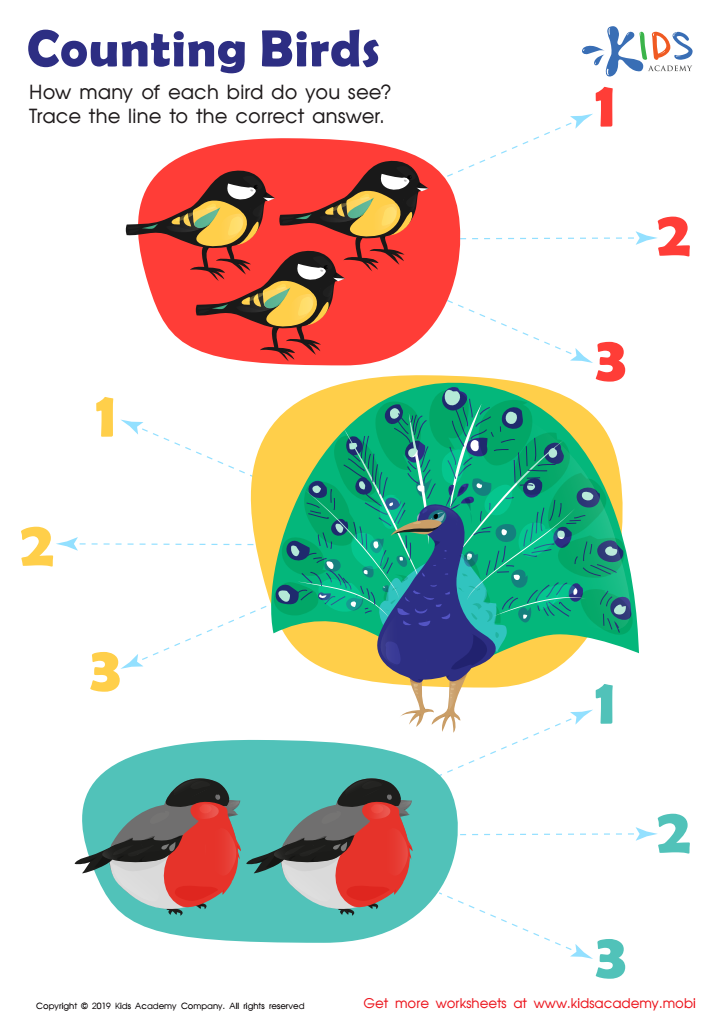
Counting Birds Worksheet








Animal recognition is a fundamental aspect of early childhood education that fosters cognitive, emotional, and social development. For parents and teachers, integrating animal recognition in kindergarten brings several benefits that merit attention.
First, learning to identify animals enhances cognitive skills. It engages children's memory and auditory processing as they link animal names to images and sounds. This foundational skill can spur curiosity, promoting further learning about animal habitats, behaviors, and characteristics.
Secondly, animal recognition encourages language development. Discussing animals helps broaden vocabulary, comprehension, and verbal expression. Children learn new words by associating them with pictures and actions, making language learning more interactive and enjoyable.
Emotionally, animals often elicit feelings of warmth and empathy. This connection can be used to teach kindness, responsibility, and compassion. Understanding the concept of caring for animals can later translate to interpersonal empathy and respect for others.
Socially, animals serve as a common interest, helping children bond and interact positively. Group activities related to animals can foster teamwork, communication, and cooperative learning among peers.
Lastly, recognizing animals aligns with broader educational standards and curricular goals, laying a strong empirical and experiential foundation. As such, both parents and teachers should prioritize animal recognition at this critical developmental juncture.