Fine Motor Skills Easy Kindergarten Numbers Worksheets - Page 2
26 filtered results
-
From - To
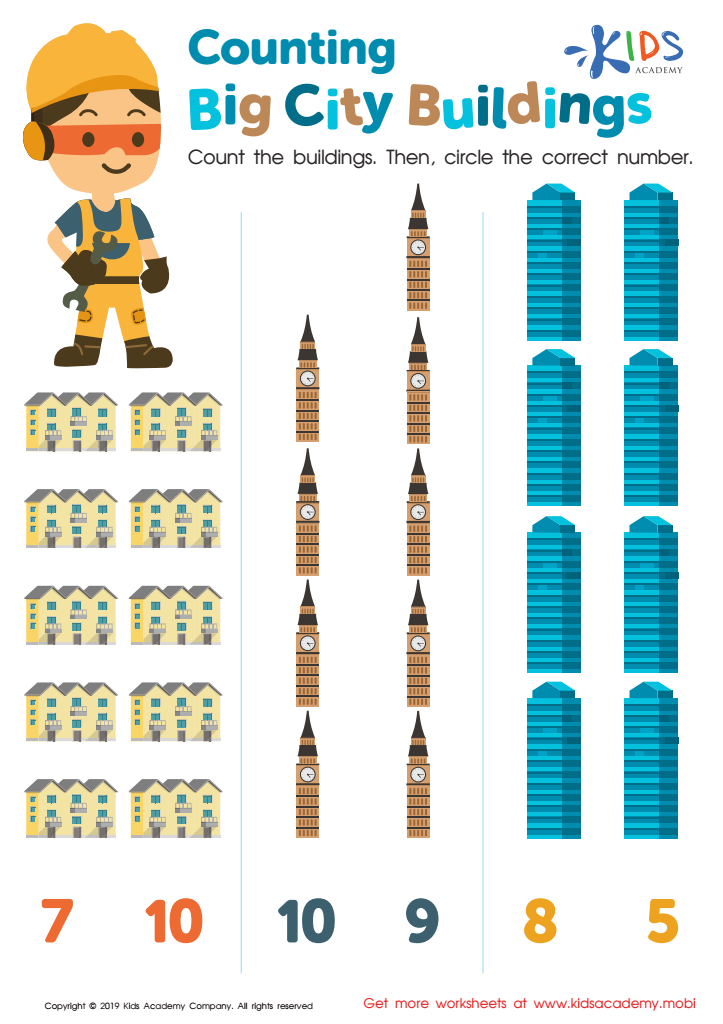
Counting Big City Buildings Worksheet
 Assign to My Students

Night Sky Numbers Worksheet








Fine motor skills are crucial for young children as they form the foundation for many essential life skills and academic pursuits. Fine motor skills involve the coordination of small muscles, particularly those in the hands and fingers, with the eyes and cognitive brain functions. In kindergarten, these skills are developed through activities such as coloring, cutting with scissors, and numbers-related tasks, which all require precise hand movements and control.
Caring about fine motor skills, especially when teaching kindergarten numbers, is essential for several reasons. First, strong fine motor abilities enable children to manipulate objects and perform tasks efficiently, paving the way for more advanced skills like writing. Numbers activities in kindergarten often require children to trace, count, or manipulate small items, which helps to build both their mathematical understanding and their motor coordination.
When teachers and parents focus on developing fine motor skills through engaging numbers activities, children gain confidence and proficiency in handling tools like pencils and markers. This not only aids in academic success but also promotes independence in daily tasks such as buttoning clothes or tying shoelaces. By prioritizing fine motor skill development, educators and parents set children up for smoother transitions into more complex academic work and everyday activities.