Understanding patterns Easy Worksheets
7 filtered results
-
From - To
Discover a fun and effective way to help young learners master patterns with our "Understanding Patterns Easy Worksheets." Designed for early grade students, these printable worksheets enhance critical thinking and problem-solving skills through engaging activities. Students will explore various patterns involving shapes, colors, and numbers, helping to establish a solid foundation in early math concepts. Colorful illustrations and simple instructions make learning enjoyable and accessible. Perfect for classroom use or at-home practice, our worksheets ensure that children can recognize and create patterns with confidence. Make pattern recognition effortless and exciting for your child with our expertly crafted worksheets.
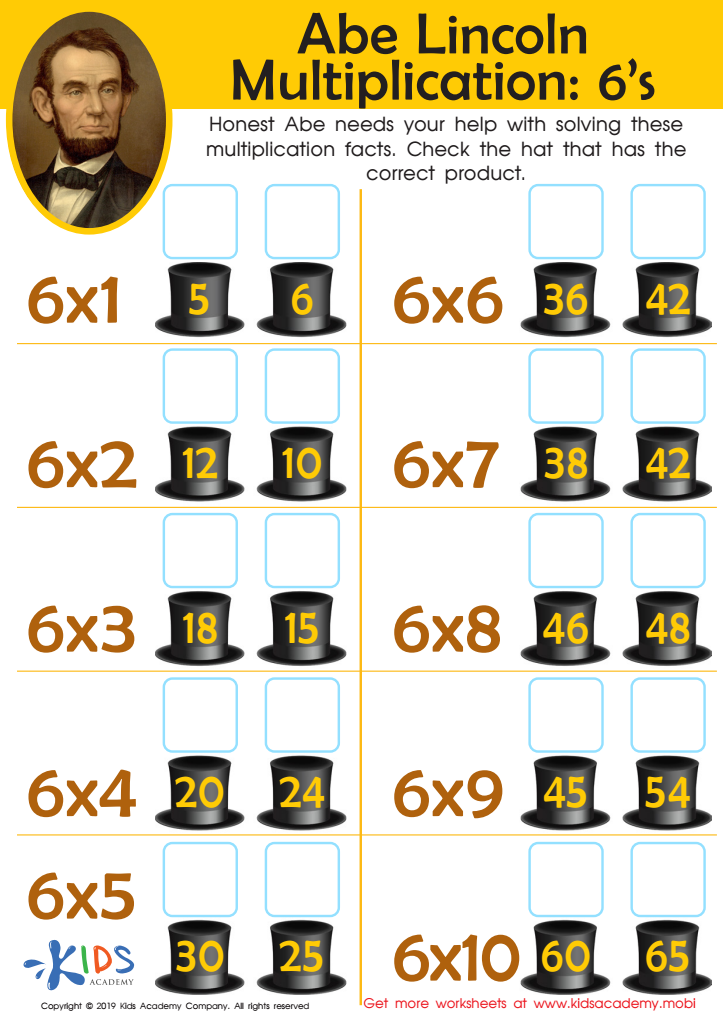
Abe Lincoln Multiplication: 6’s Worksheet
 Assign to My Students
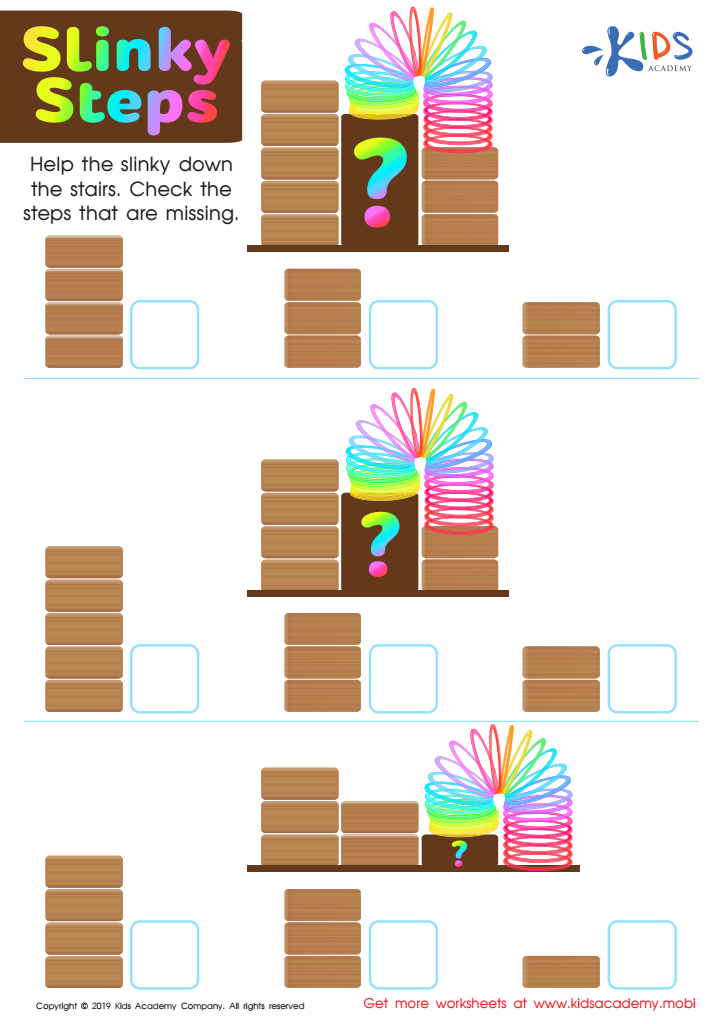
Slinky Steps Worksheet
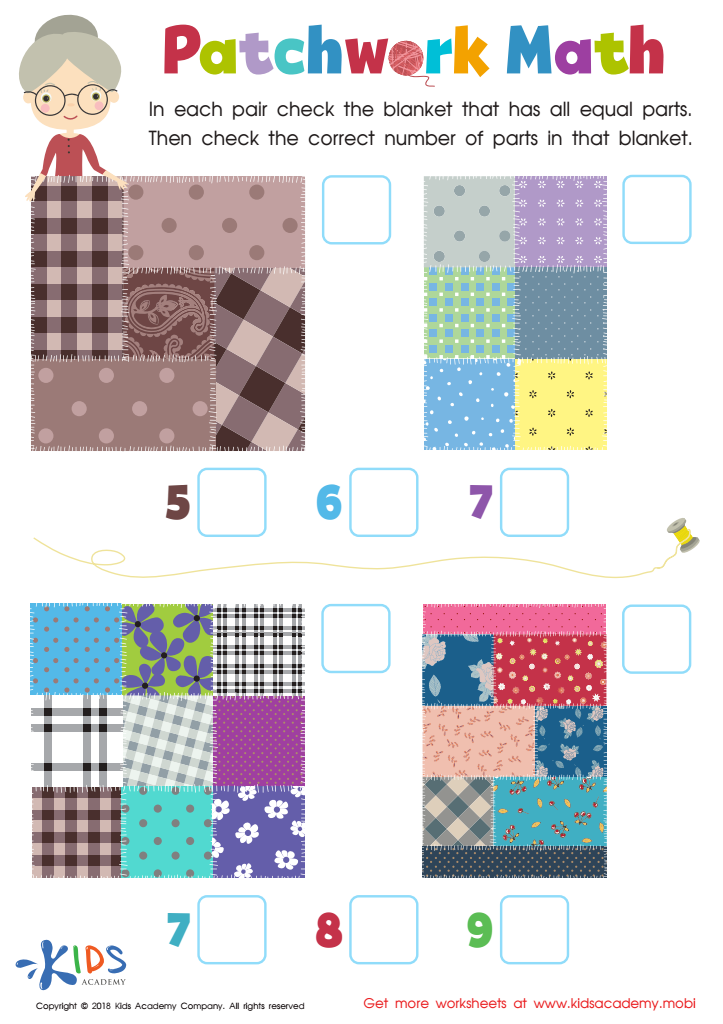
Patchwork Math Worksheet
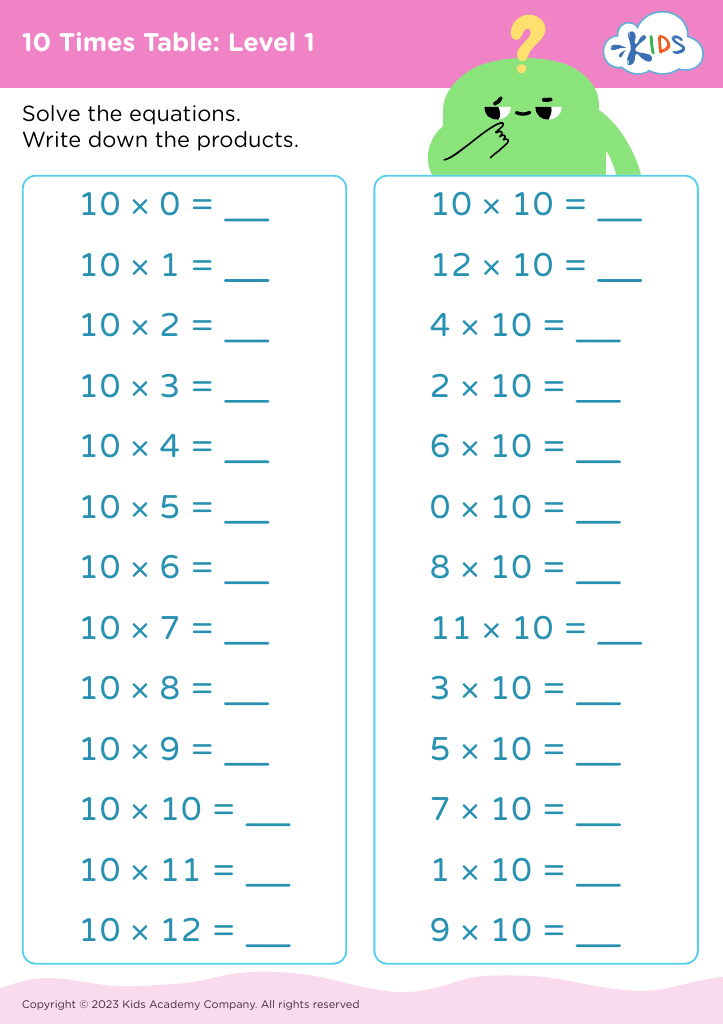
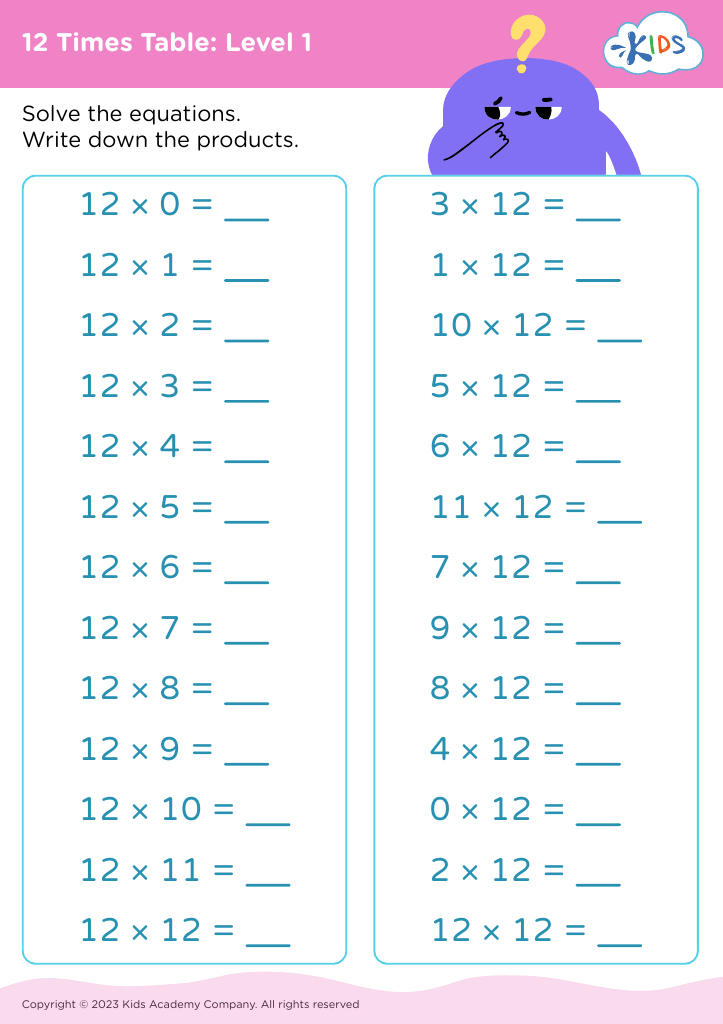
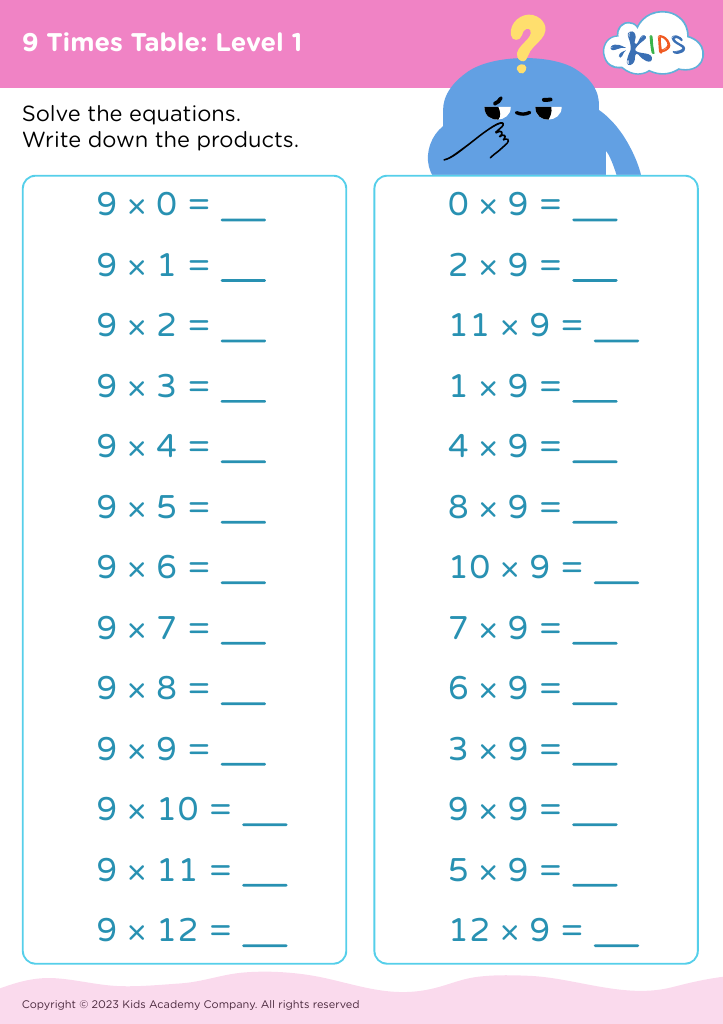





Understanding patterns is fundamental for a child’s cognitive development and serves as a building block for more complex skills. Patterns help children recognize order and predictability in a seemingly chaotic world, leading to improved critical thinking and problem-solving abilities. For instance, when children learn to identify patterns in numbers or shapes, they develop foundational skills necessary for mathematics, including addition, multiplication, and understanding sequences.
Moreover, recognizing patterns plays a crucial role in language acquisition. Repetition and patterns in words and sentences help children understand grammar and sentence structure, enhancing their reading and communication skills.
On a broader level, pattern recognition is also a key component in scientific thinking. It enables children to make observations, form hypotheses, and see connections between concepts. This is particularly important as they progress in subjects like science, technology, engineering, and math (STEM).
For teachers, introducing patterns in early grades with playful activities and exercises can foster a child’s love for learning and exploration. Parents who engage their children in pattern-related activities like sorting games, puzzles, and rhythm exercises at home, contribute to this essential aspect of their cognitive development.
Understanding and recognizing patterns is not just about math or science; it helps children make sense of the world, develop organized thinking, and prepares them for a lifetime of learning.








