
Understanding Quantities Easy Worksheets
6 filtered results
Difficulty Level
Grade
Age
-
From - To
Subject
Activity
Standards
Unlock your child's potential with our "Understanding Quantities Easy Worksheets"! Designed for early learners, these engaging worksheets help children grasp fundamental math concepts such as counting, comparison, and quantity recognition. Through colorful visuals and interactive activities, students will develop their skills in recognizing numbers and understanding quantity relationships in an enjoyable way. Perfect for home or classroom practice, these worksheets make learning fun and accessible. Encourage your child's confidence in math while enhancing their critical thinking skills. Explore our diverse range of worksheets today and watch your little ones flourish in their understanding of quantities! Get started now!
Favorites
With answer key
Interactive
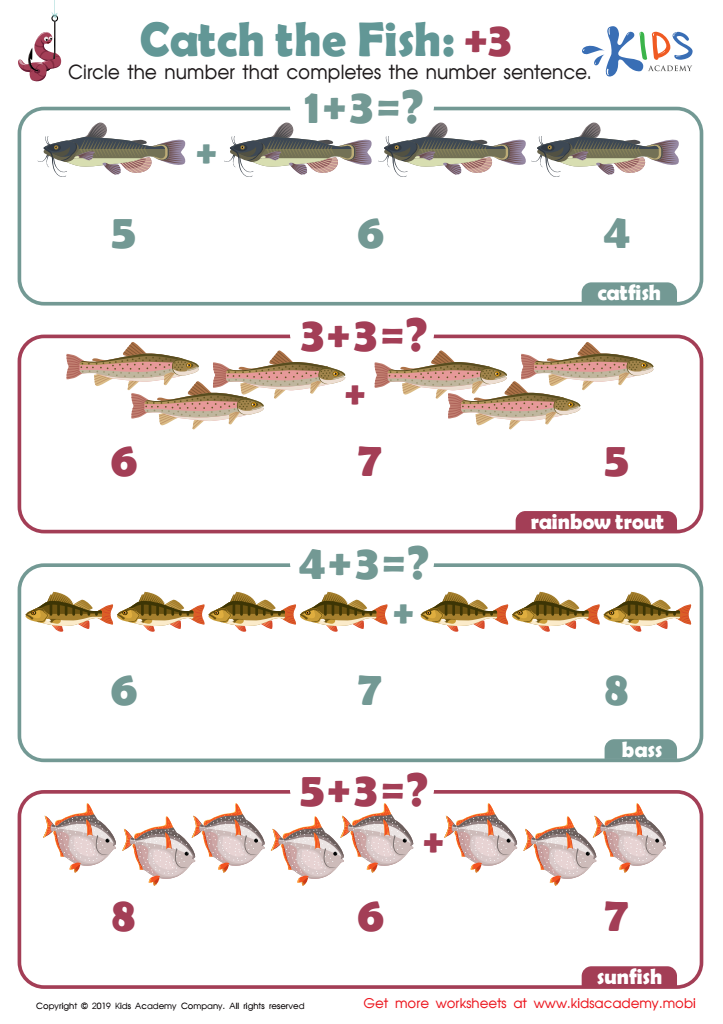
Catch the Fish: +3 Worksheet
Math may be tricky for your child, with all the numbers and calculations. This worksheet can help them brush up. Ask them to identify the objects in the picture, then count them and help them circle the right number to complete the sentence. It's a simple and effective way to improve math skills.
 Assign to My Students
Catch the Fish: +3 Worksheet
Worksheet
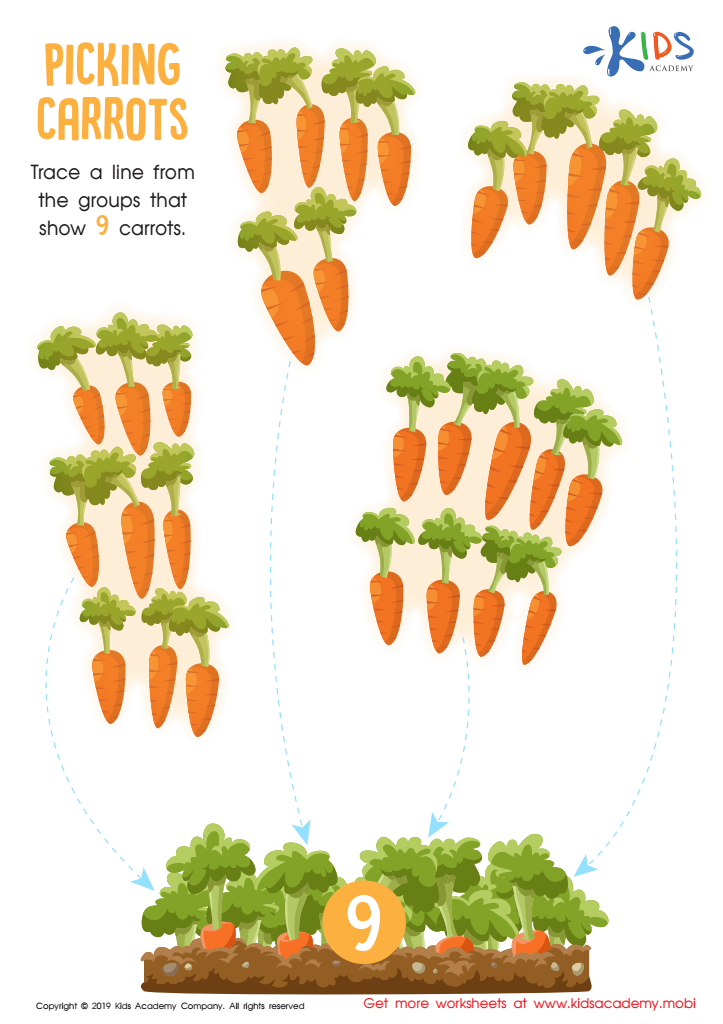
Picking Carrots Worksheet
Do your kids know what carrots are? They're nutritious veggies we should eat. Look at the worksheet with them; can they spot the carrots? It's an exercise to practice counting. Show them how to count all the carrots in the groups and trace the line to the groups with 9 carrots.
Picking Carrots Worksheet
Worksheet
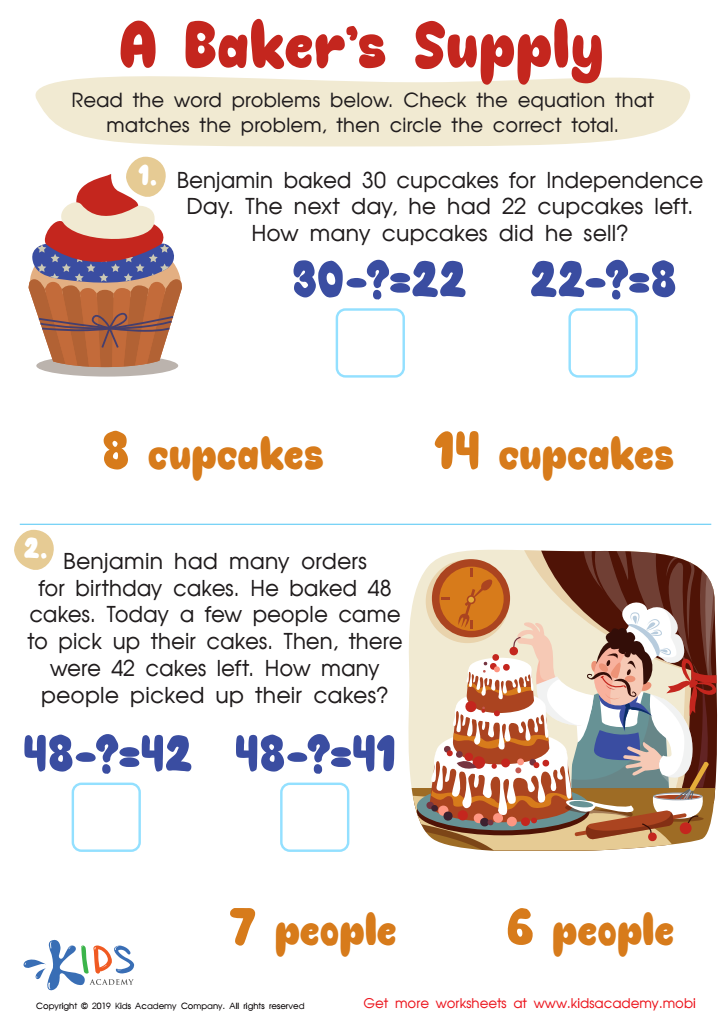
A Baker's Supply Worksheet
A visit to the baker's shop is thrilling! Your kids will love it! From scrumptious goodies to the mouthwatering aroma, it's a magical experience. Ask your kids what they're most eager to see and do. Now, read the word problems in this worksheet to them. Help them choose the correct answer for each problem and circle the correct total.
A Baker's Supply Worksheet
Worksheet
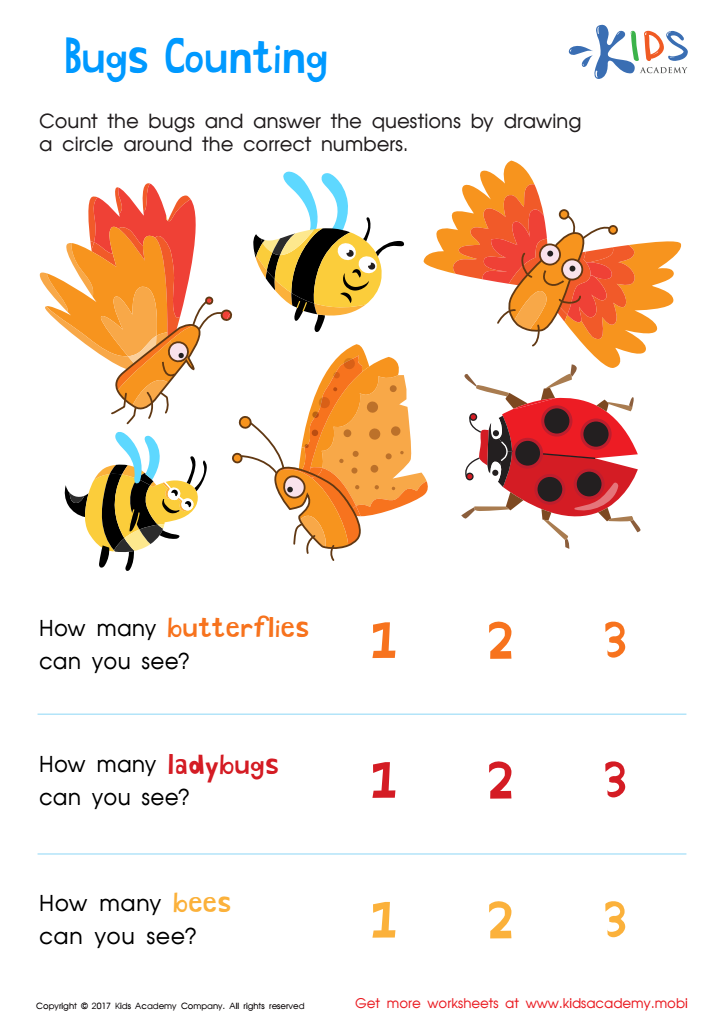
Bugs Counting Worksheet
Filled with bright reds, yellows, and oranges, your child will love solving these fun bug-related math problems.
Bugs Counting Worksheet
Worksheet
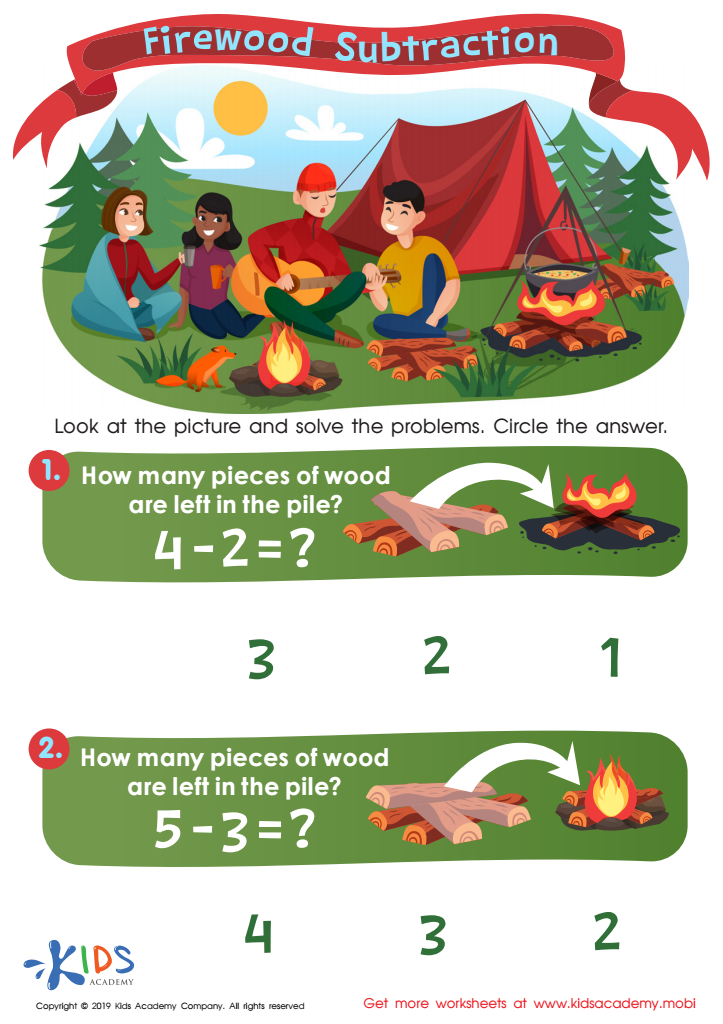
Firewood Subtraction Worksheet
Guide your students to show that math can be fun! If your kindergartners need help with addition and subtraction, the simple problems in this worksheet are ideal. Ask them to look at the two pictures and find the correct answers. Help them check their work to build their confidence in math.
Firewood Subtraction Worksheet
Worksheet
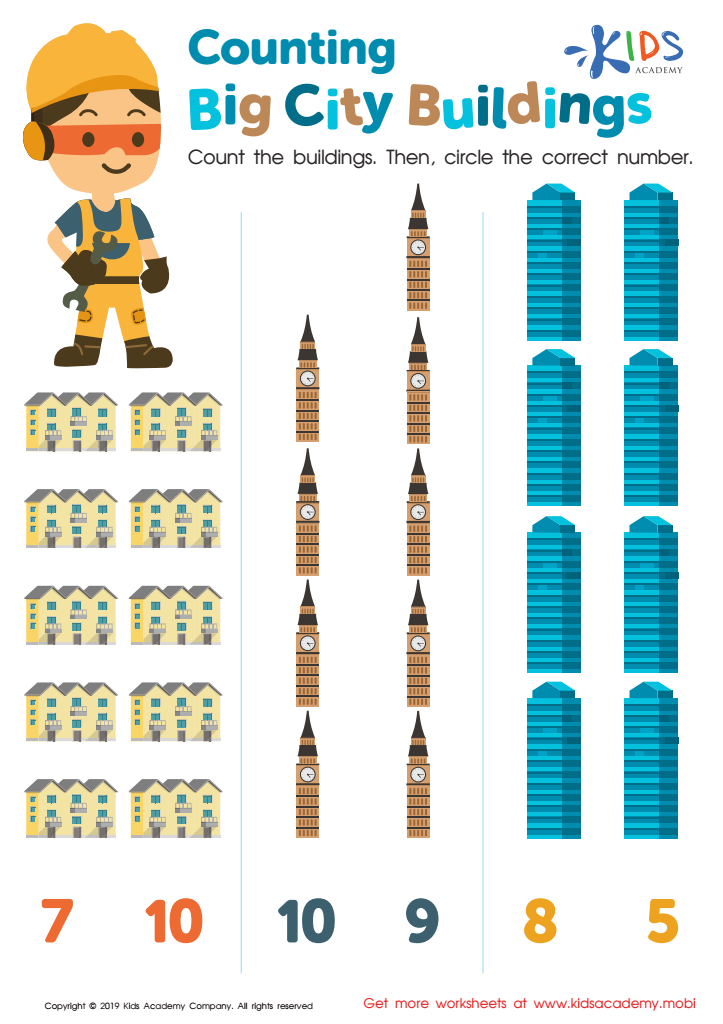
Counting Big City Buildings Worksheet
Test your child's counting skills! Ask them to count as high as they can and use the worksheet to brush up on any areas that need improvement. There are 3 sets of buildings in the picture; help your kids count them and circle the correct number. Mastering the art of counting is essential for advancing in math and solving equations, so take this opportunity to ensure your kids are ready!
Counting Big City Buildings Worksheet
Worksheet
Join Kids Academy for Free
Who is primarily going to use this learning content?





.jpg)

Understanding quantities is a fundamental skill that significantly impacts a child’s overall development and future academic success, making it a critical focus for parents and teachers. First, mastering this concept aids in building foundational math skills, enabling children to grasp basic operations like addition and subtraction. These skills not only are essential in mathematics but also in everyday situations—such as measuring ingredients in cooking or understanding distances.
Moreover, a solid grasp of quantities enhances logical thinking and problem-solving abilities. By encouraging children to explore and represent quantities through hands-on activities, such as counting objects or comparing sizes, educators and caregivers can foster curiosity and critical thinking.
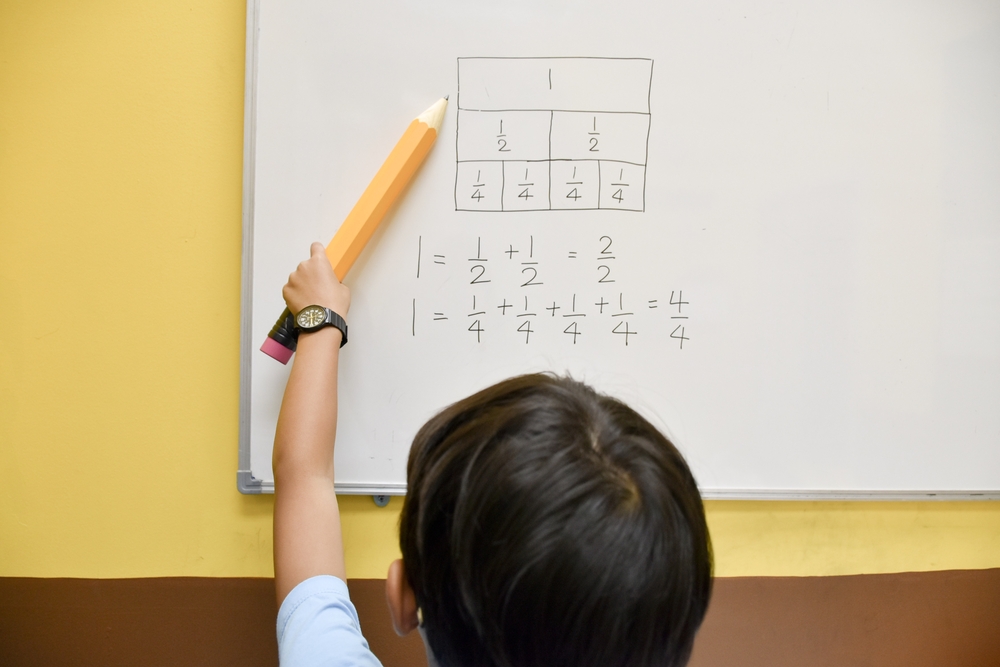
Additionally, understanding quantities lays the groundwork for more advanced mathematical concepts, including fractions, volume, and percentages. This early comprehension can help alleviate math anxiety in later years when more complex mathematics becomes necessary.
Lastly, recognizing the significance of quantities contributes to a child’s ability to communicate effectively. Learning to express observations about quantities in organized ways encourages language development, enabling children to explain their thought processes and reasoning clearly. In summary, investing time in teaching children about quantities enriches their early learning experiences, setting them on a positively enriched path for future growth.








