Understanding Sequences Easy Numbers Worksheets
3 filtered results
-
From - To
Our "Understanding Sequences Easy Numbers Worksheets" are perfect for young learners eager to grasp the foundational concepts of number sequences in a fun and engaging way. Designed for early grade students, these worksheets use colorful illustrations and simple exercises to guide children through the basics of number patterns, fostering crucial math skills. With step-by-step progression, kids will build confidence as they practice recognizing and predicting sequences. Ideal for classroom or at-home practice, these resources make learning enjoyable, laying the groundwork for future math success. Start your child's journey toward mathematical mastery today with our expertly crafted worksheets!
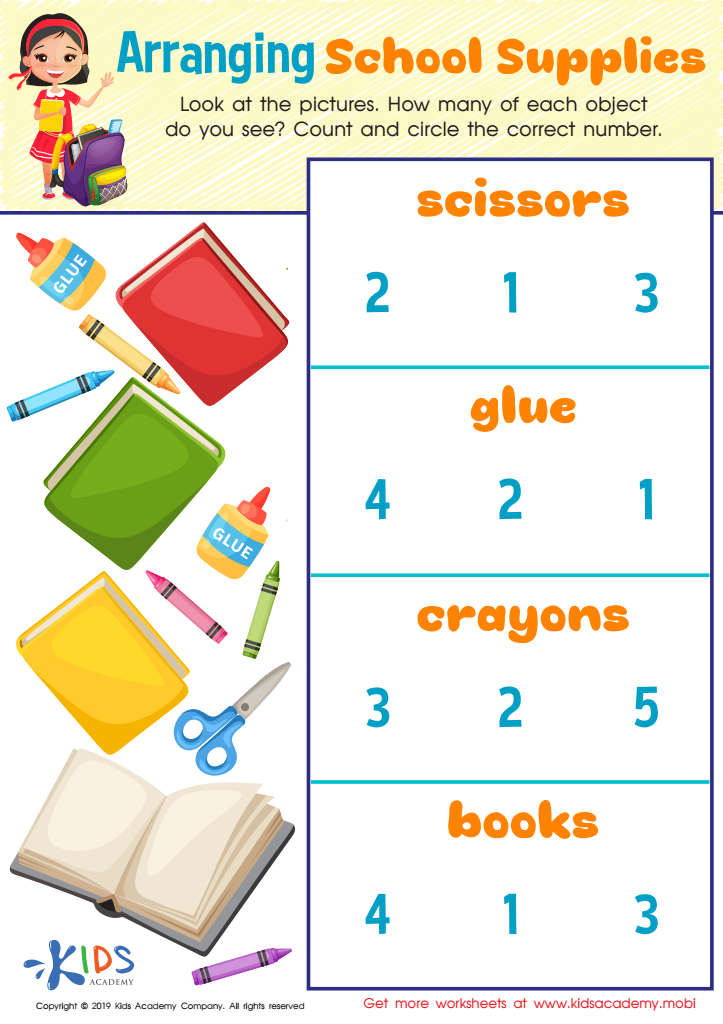
Arranging School Supplies Worksheet
 Assign to My Students
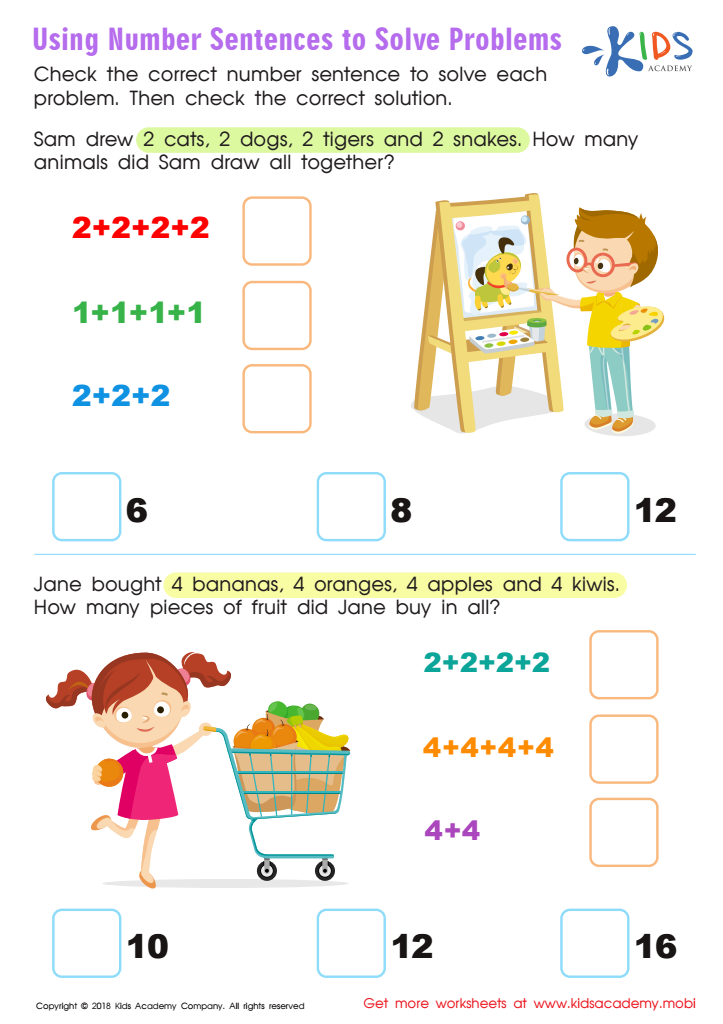
Using Number Sentences to Solve Problems Worksheet
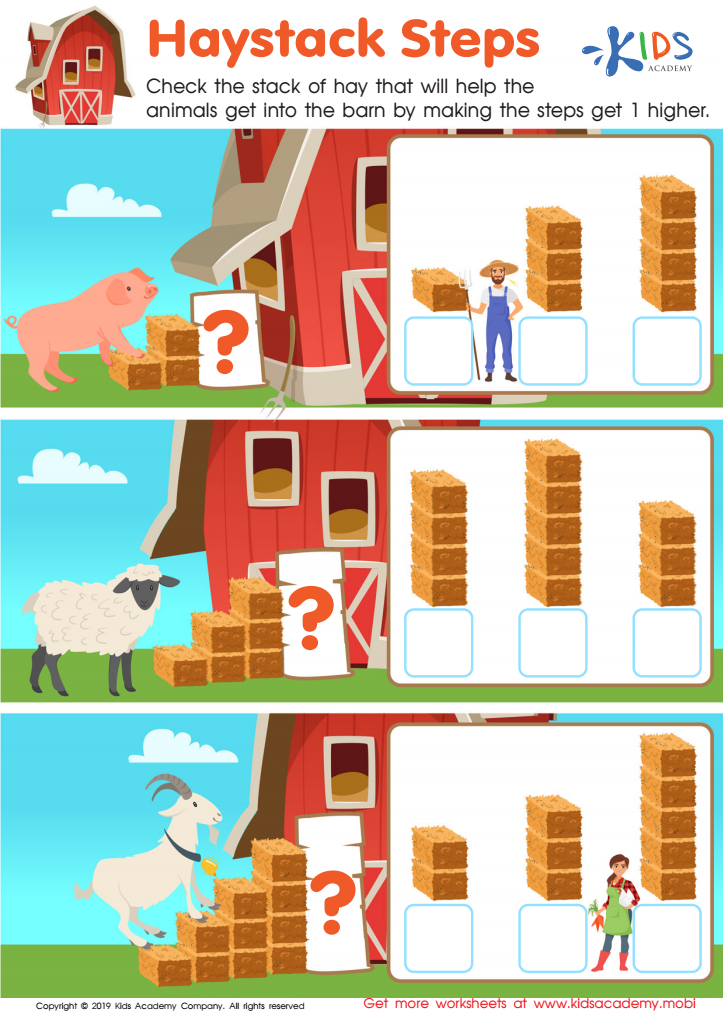
Haystack Steps Worksheet





%20(1).jpg)


Understanding sequences and pattern recognition is fundamental for early childhood development in both mathematics and critical thinking skills. Parents and teachers should prioritize teaching this concept for several compelling reasons.
First, sequences provide the groundwork for number sense, helping children grasp the order and relationship between numbers. This knowledge is crucial not only for arithmetic but also for understanding more advanced mathematical concepts later on, such as functions, algebra, and calculus. For example, recognizing a simple sequence like 2, 4, 6, 8 helps children understand even numbers and skip counting, both of which are staples of more complex math problems.
Moreover, the ability to recognize and predict patterns aids in problem-solving and logical thinking. When children discern sequences, they learn to anticipate what comes next, a skill that enhances their ability to tackle real-world problems systematically.
Additionally, engaging with sequences improves memory and concentration. When children repeatedly engage with numbers in an ordered fashion, they enhance their short-term and long-term memory capacities, aiding all their academic endeavors.
Lastly, building confidence is an often overlooked but essential aspect. Mastering sequences early on gives children a sense of achievement, encouraging a positive attitude toward learning. Therefore, cultivating an early familiarity with easy numerical sequences sets a solid foundation for lifelong learning and cognitive development.








