Comparing heights Easy Math Worksheets
3 filtered results
-
From - To
Discover a fun and engaging way to introduce your child to basic measurement concepts with our "Comparing Heights Easy Math Worksheets." Designed for early learners, these printable worksheets help children develop essential math skills through interactive activities that compare the heights of different objects. Perfect for preschool and kindergarten students, these worksheets feature colorful illustrations and simple exercises that make learning enjoyable and effective. Boost your child's confidence in math by helping them understand concepts like "taller" and "shorter." Download our easy-to-use comparing heights worksheets today and watch your young learner grow in skills and confidence!
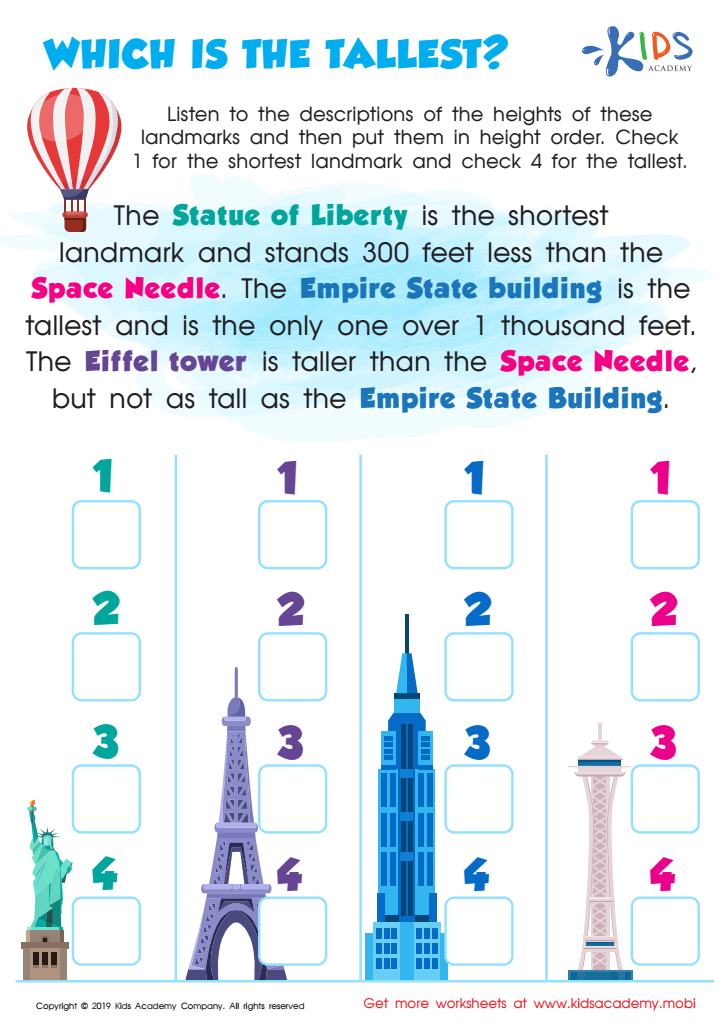
Which is the Tallest? Worksheet
 Assign to My Students
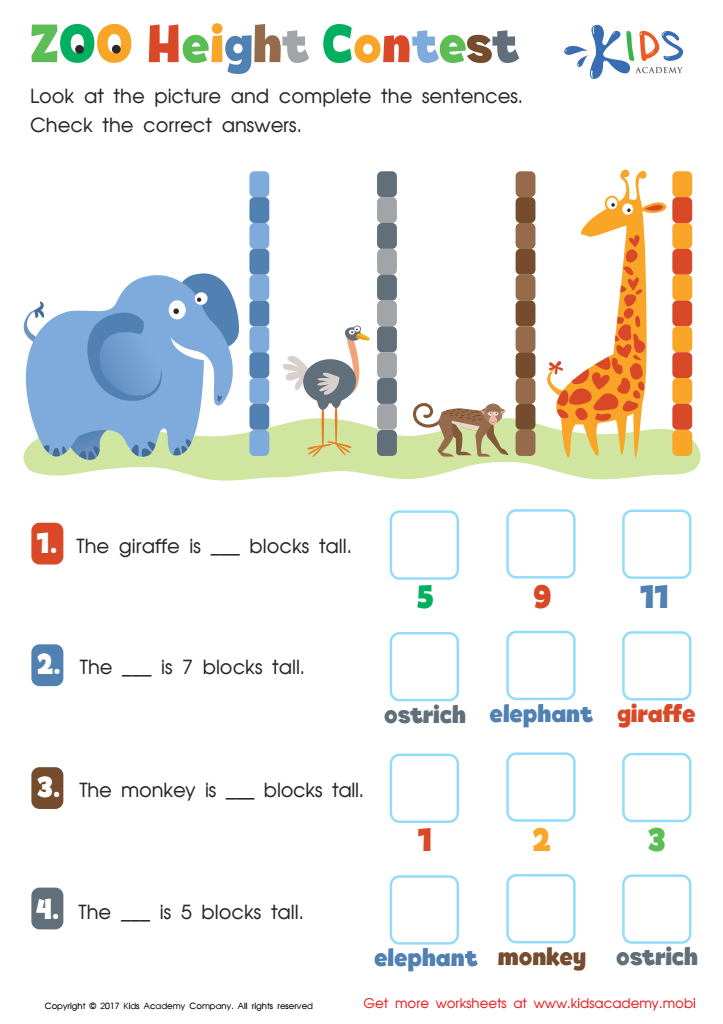
Zoo Height Contest Worksheet
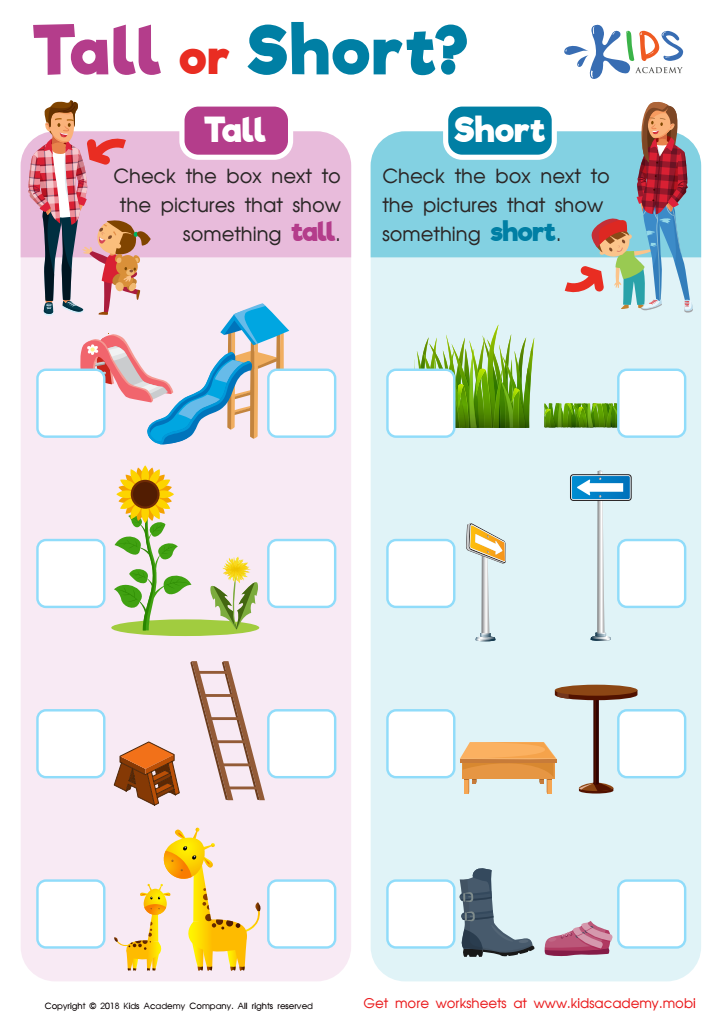
Tall or Short? Worksheet







Teaching children to compare heights is an foundational math skill and integral to their cognitive development. Parents and teachers should prioritize this concept as it nurtures critical thinking and reasoning abilities in young students. By comparing heights, kids learn to observe, analyze, and form conclusions, which are essential components of problem-solving.
First, comparing heights introduces basic measurement concepts. Children become familiar with terms such as "taller," "shorter," and "equal," and start to understand the idea of quantifiable attributes. This early exposure lays the groundwork for more advanced math topics, including geometry and data analysis.
Additionally, the hands-on activities involved in comparing heights foster engagement and interaction among students. Activities like measuring themselves or everyday objects make math tangible and relevant to their daily lives. Such practical experiences can ignite their curiosity and enthusiasm for learning in general.
Lastly, height comparison encourages social and language skills as children often work in pairs or groups, discussing their observations and learning collaboratively. This promotes teamwork and communication, reinforcing the notion that learning is a shared and enjoyable process.
In essence, comparing heights goes beyond just math; it supports a holistic developmental process that encompasses cognitive, social, and linguistic growth.








