Counting skills Easy Math Worksheets - Page 4
89 filtered results
-
From - To
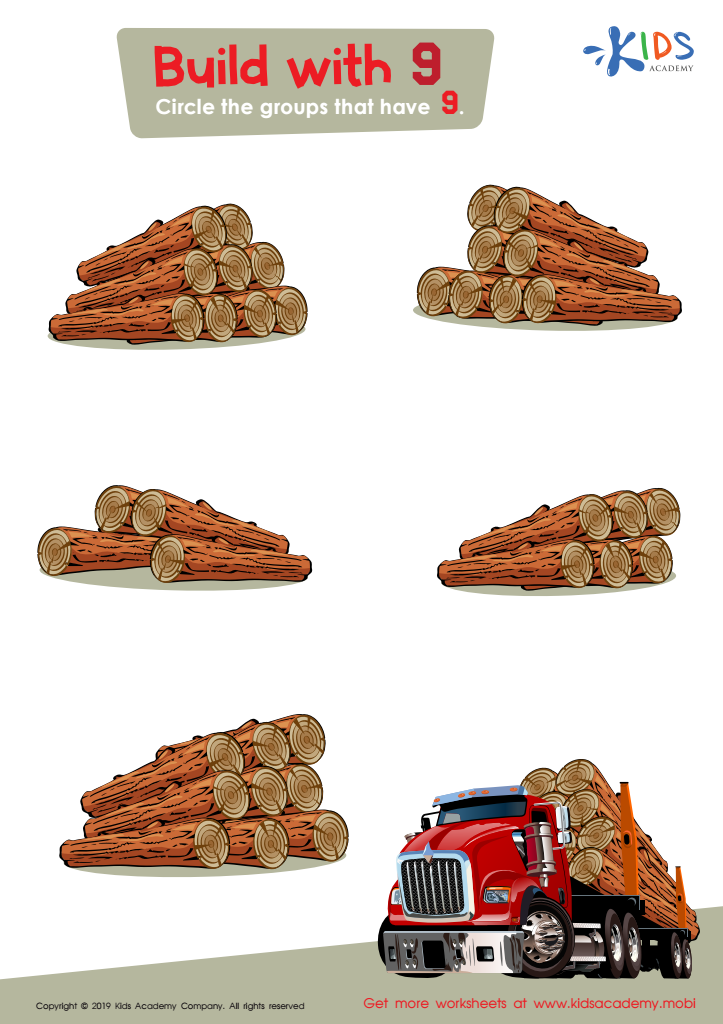
Build with 9 Worksheet
 Assign to My Students

Aircraft Carrier Picture Graphs Worksheet
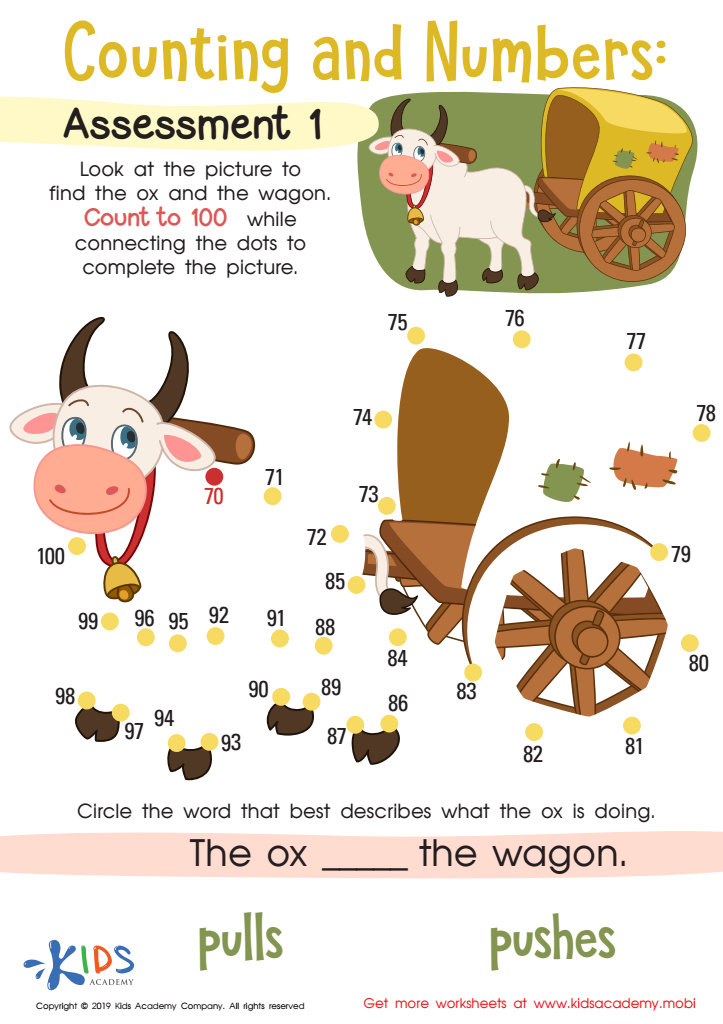
Counting and Numbers: Assessment 1 Worksheet
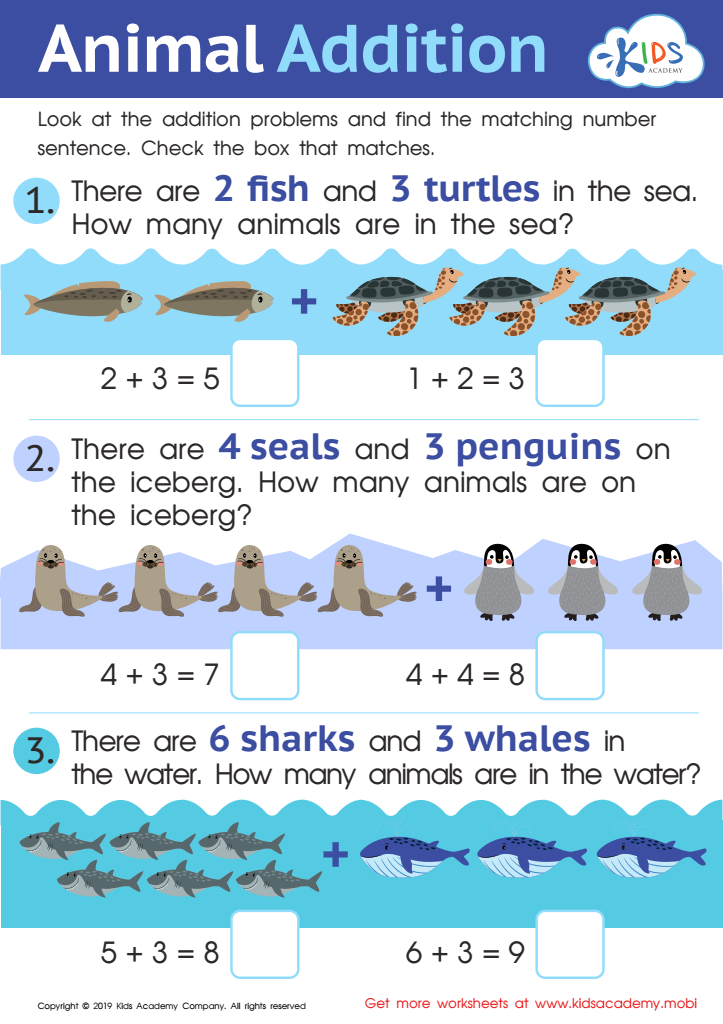
Animal Addition Worksheet
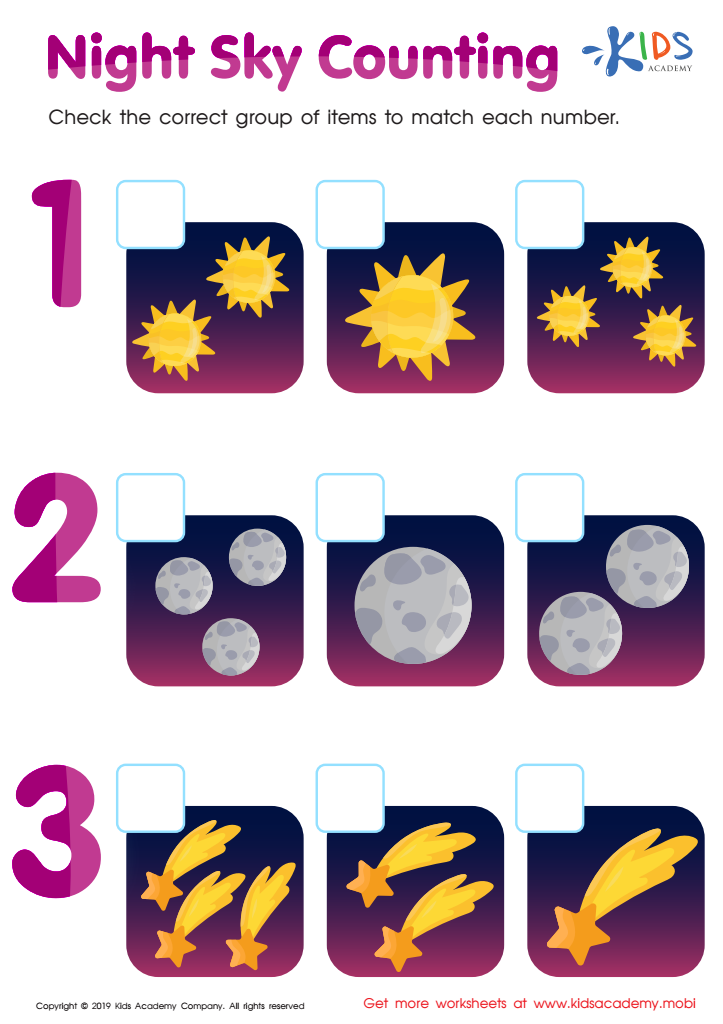
Night Sky Counting Worksheet
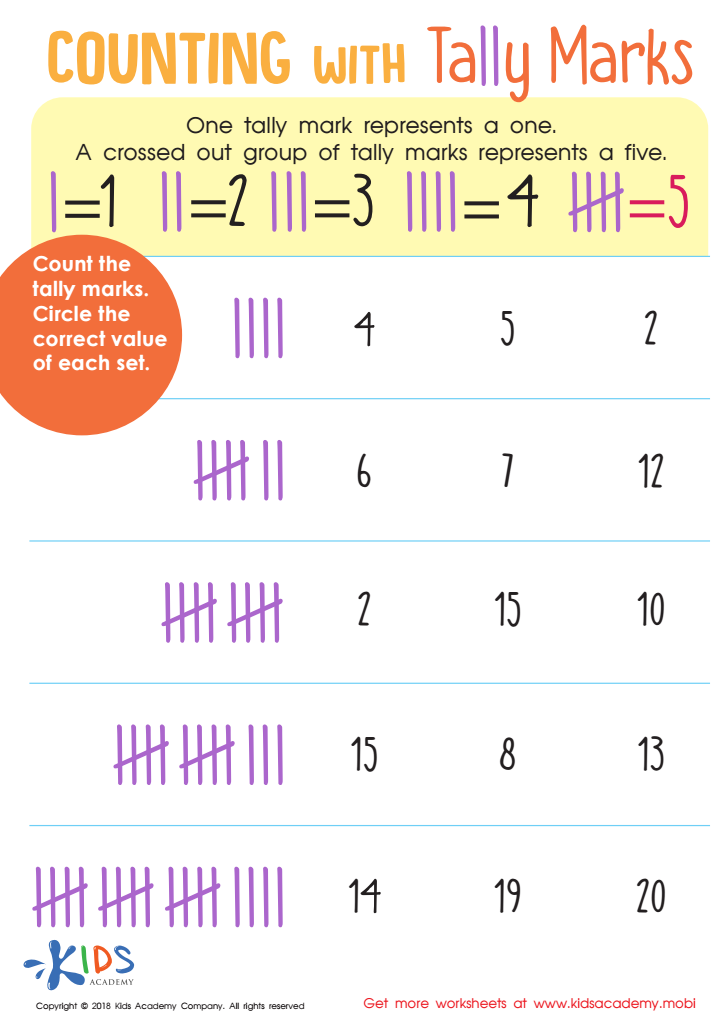
Counting with Tally Marks Worksheet
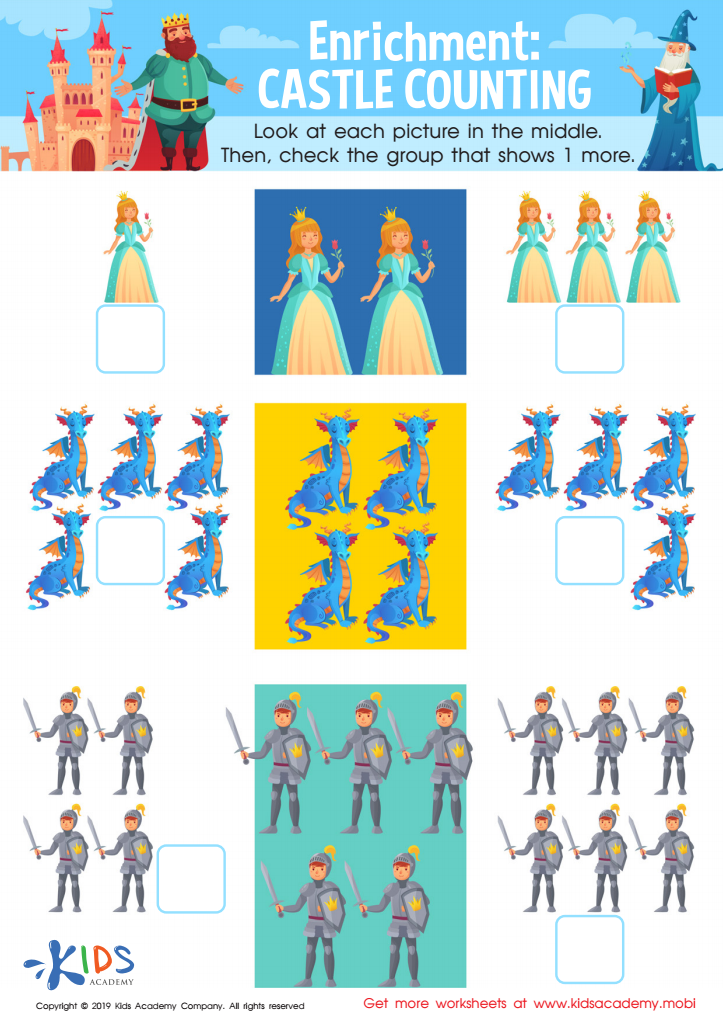
Enrichment: Castle Counting Worksheet
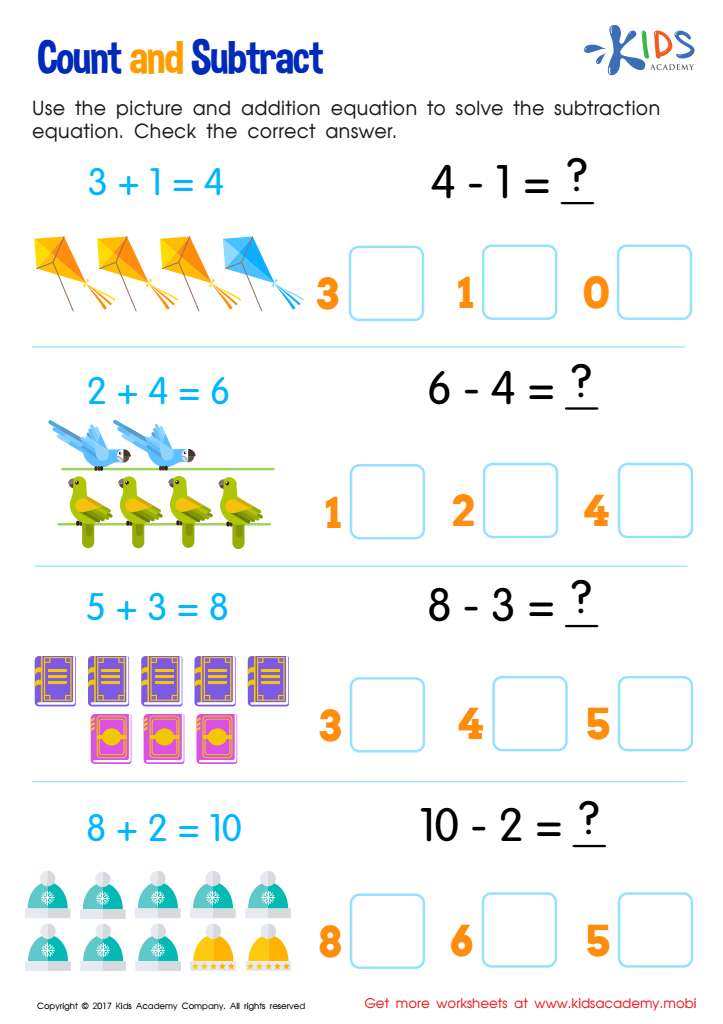
Count and Subtract Worksheet
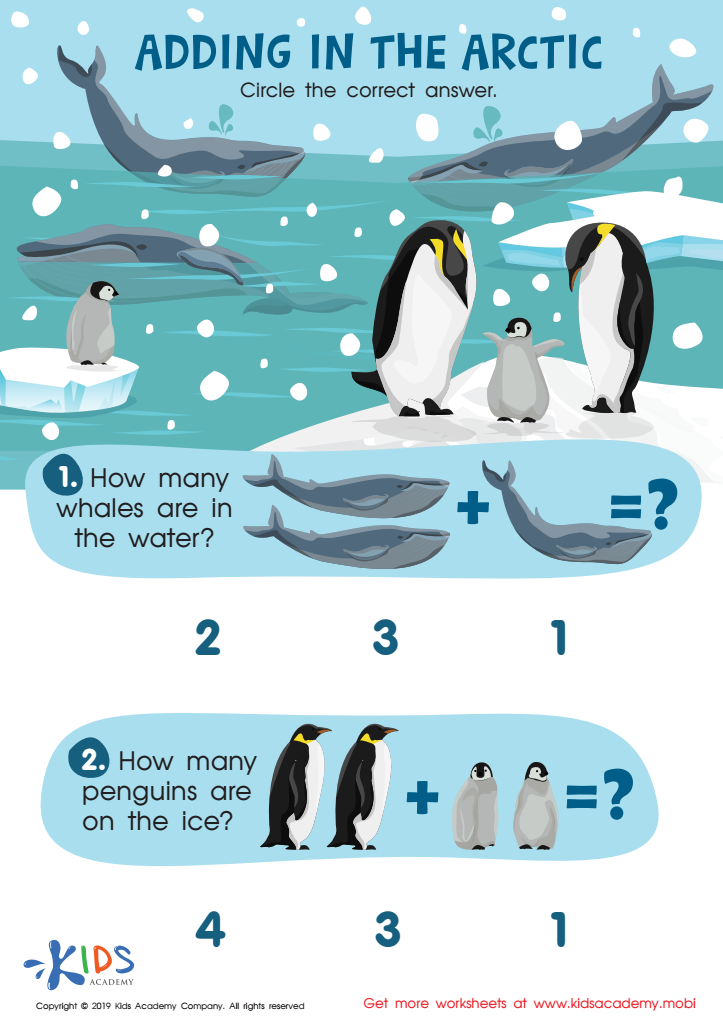
Adding in the Arctic Worksheet
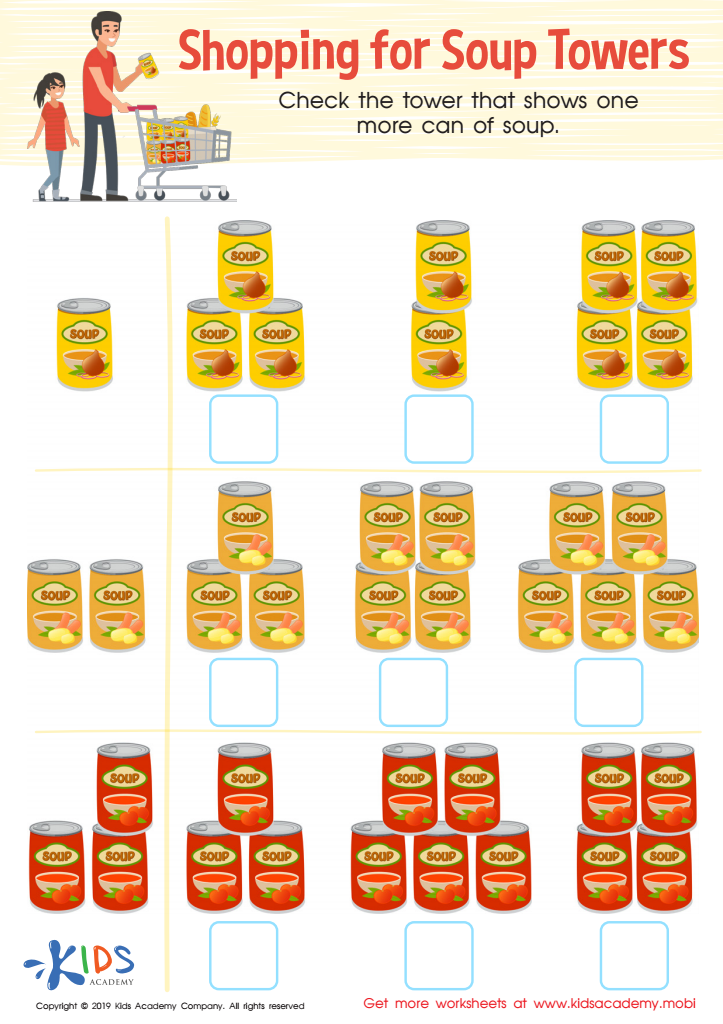
Soup Towers Worksheet
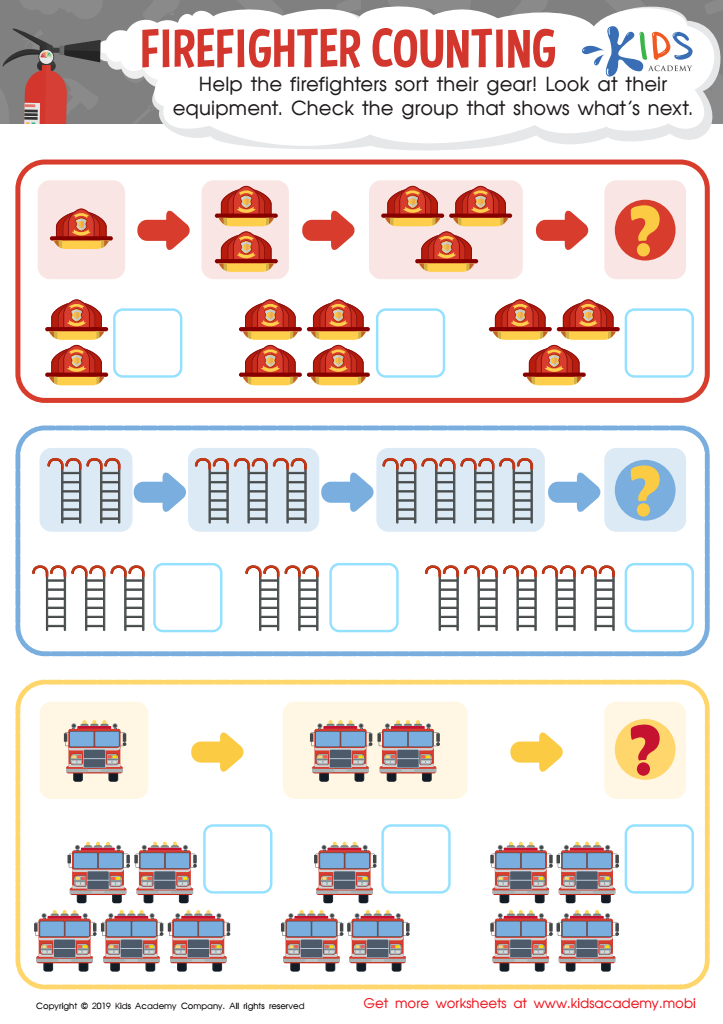
Firefighter Counting Worksheet
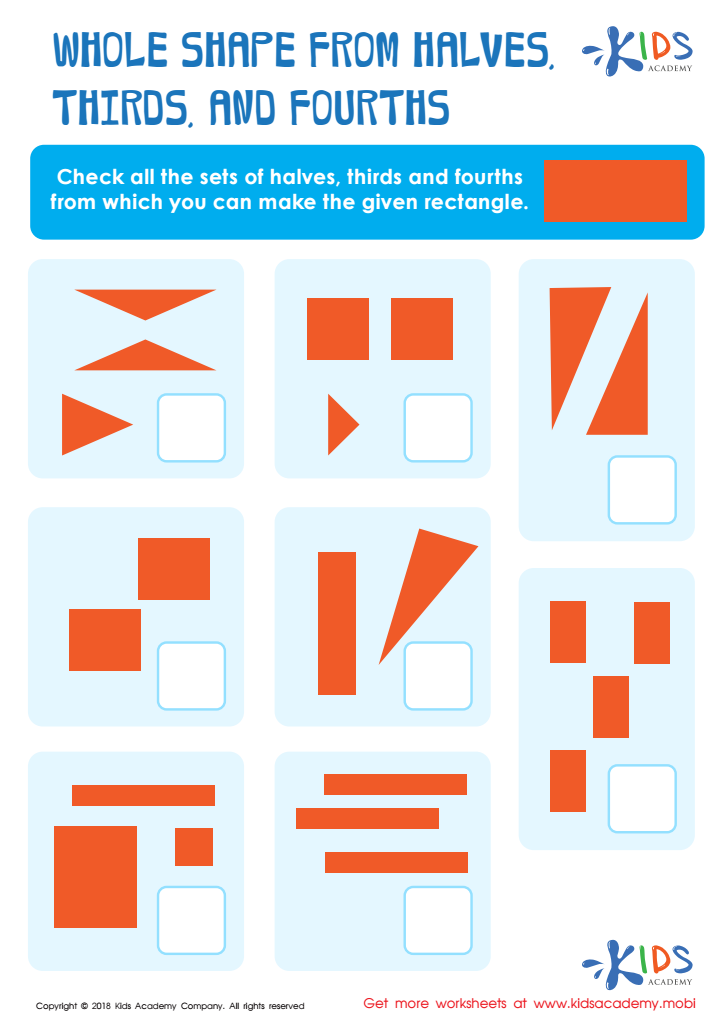
Whole Shape from Halves, Thirds and Fourths Worksheet
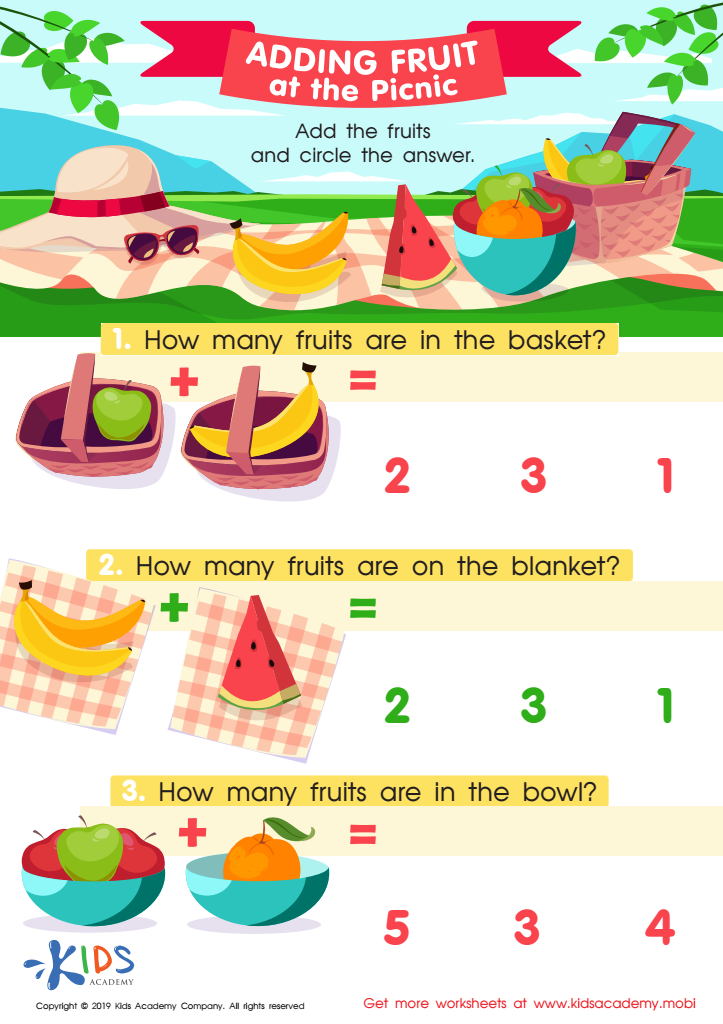
Adding Fruit at the Picnic Worksheet
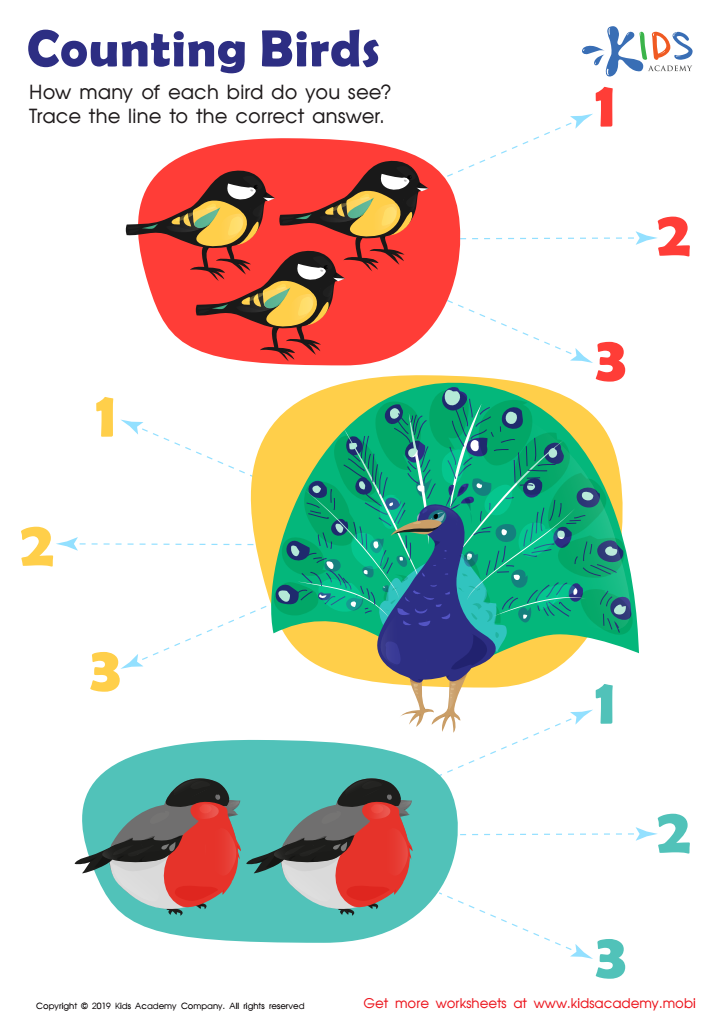
Counting Birds Worksheet
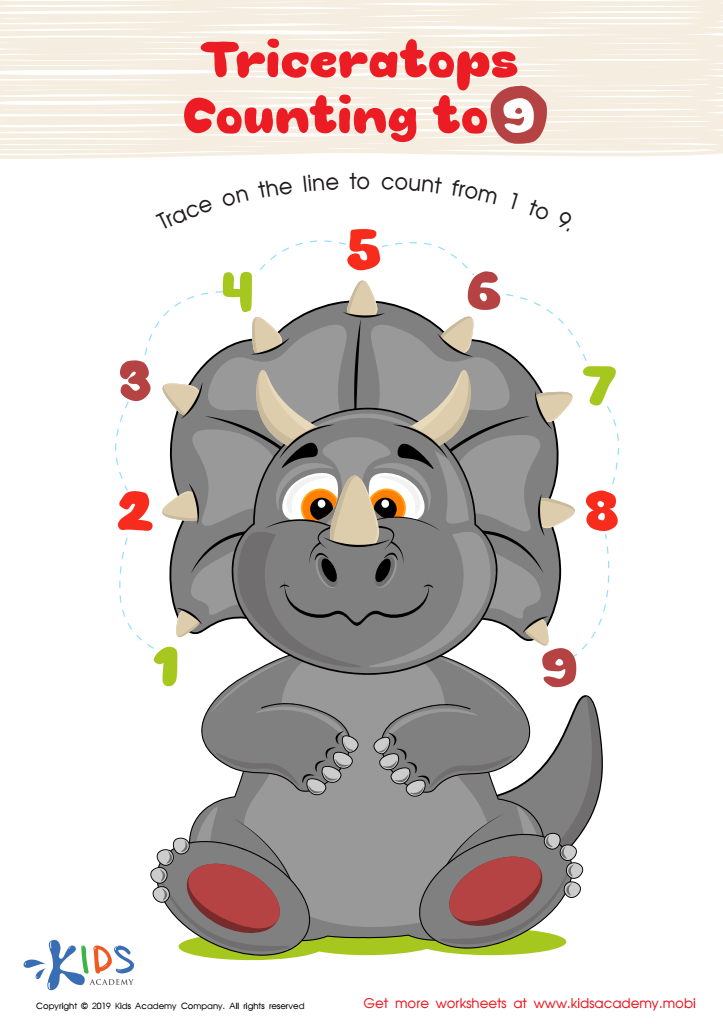
Triceratops Counting to 9 Worksheet
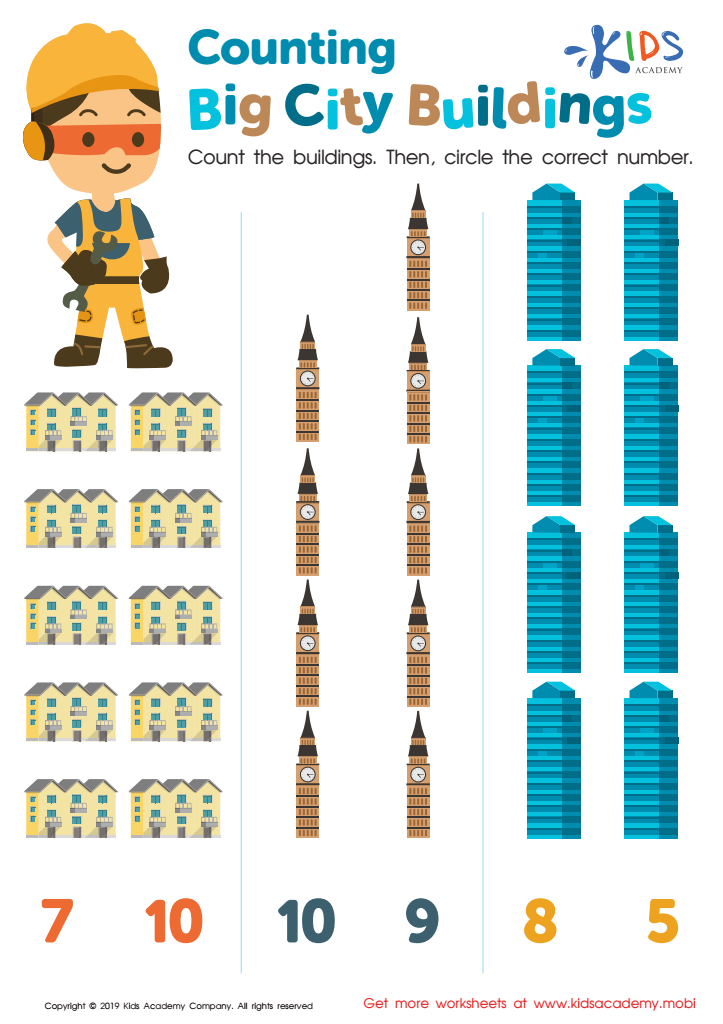
Counting Big City Buildings Worksheet

Night Sky Numbers Worksheet






Counting skills form the foundation for understanding mathematics and are crucial in early childhood education. Parents and teachers should prioritize the development of these skills as they promote critical cognitive abilities necessary for everyday problem-solving and mathematical understanding.
Counting facilitates number recognition, which helps children identify and differentiate numbers in various contexts. It enhances concepts of quantity, enabling them to assess amounts accurately. When children engage in counting activities, they practice one-to-one correspondence, promoting precision in their mathematical reasoning.
Furthermore, mastering counting skills fosters confidence in children, allowing them to engage actively with mathematical concepts as they progress in their education. Early proficiency in counting sets the stage for future learning, as it intertwines with addition, subtraction, and more complex operations.
Parents can reinforce counting through simple, fun activities like counting fruits during shopping trips or using everyday objects for counting exercises at home. Meanwhile, teachers can incorporate counting games and interactive lessons to keep students engaged.
Additionally, strong counting skills may predict later academic success. By emphasizing counting in both home and school environments, parents and educators can work together to create a robust foundation that nourishes children's love for learning and paves the way for their mathematical journey.








