Understanding patterns Easy Multiplication Worksheets
4 filtered results
-
From - To
Unlock the secrets of multiplication with our "Understanding Patterns Easy Multiplication Worksheets." Designed for early learners, these engaging worksheets help students grasp the fundamentals of multiplication through patterns. By recognizing relationships between numbers, children can develop essential skills that make computations easier and more intuitive. Our resources provide a variety of fun and interactive activities that motivate students to practice and reinforce their understanding of multiplication concepts. Perfect for classrooms or at-home learning, these worksheets foster a positive math experience while building confidence in young mathematicians. Help your child master multiplication patterns today for a solid math foundation!
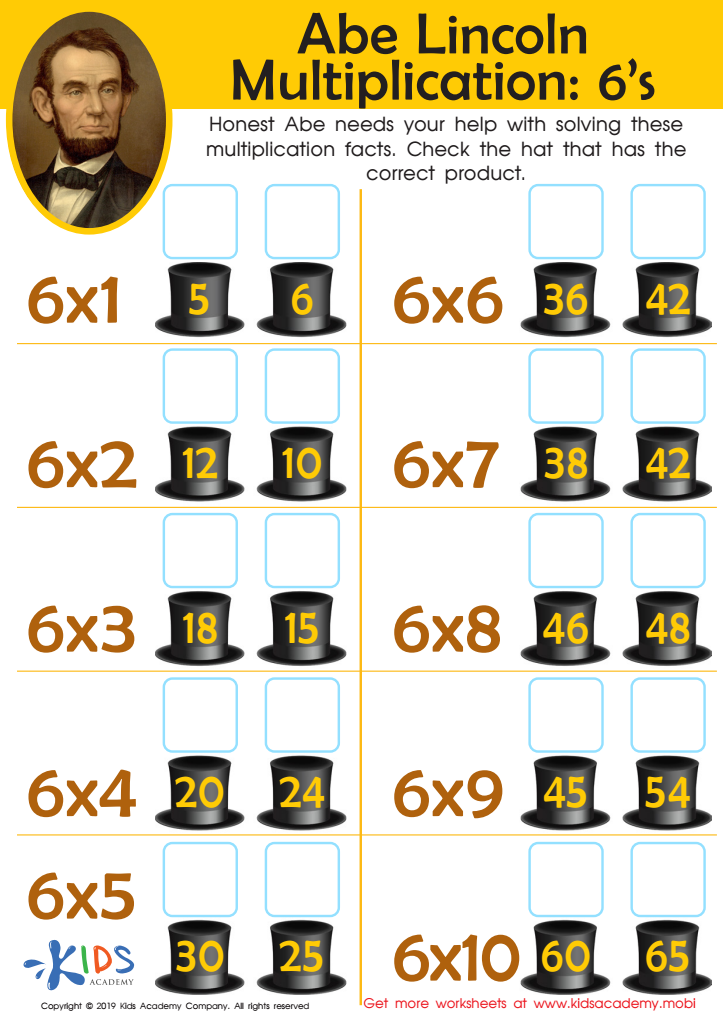
Abe Lincoln Multiplication: 6’s Worksheet
 Assign to My Students
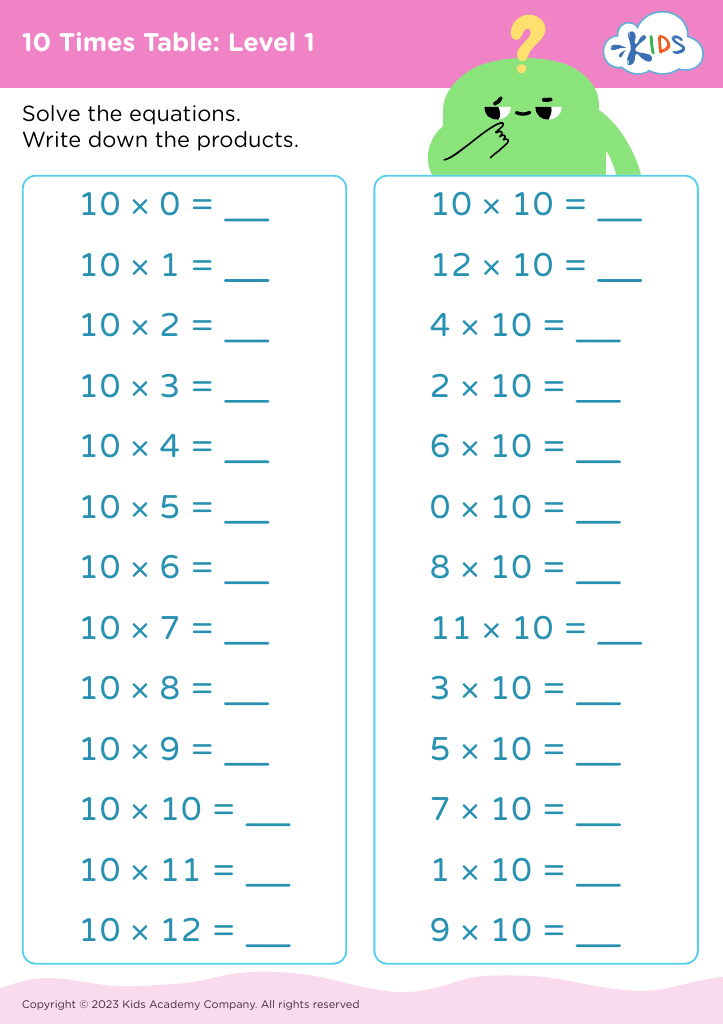
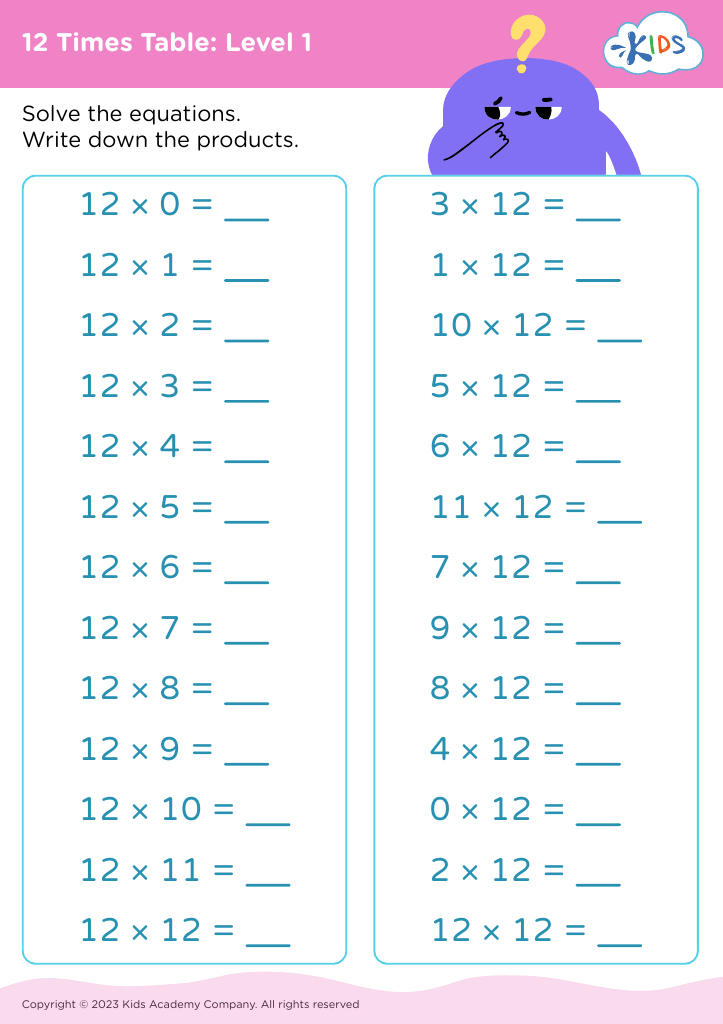
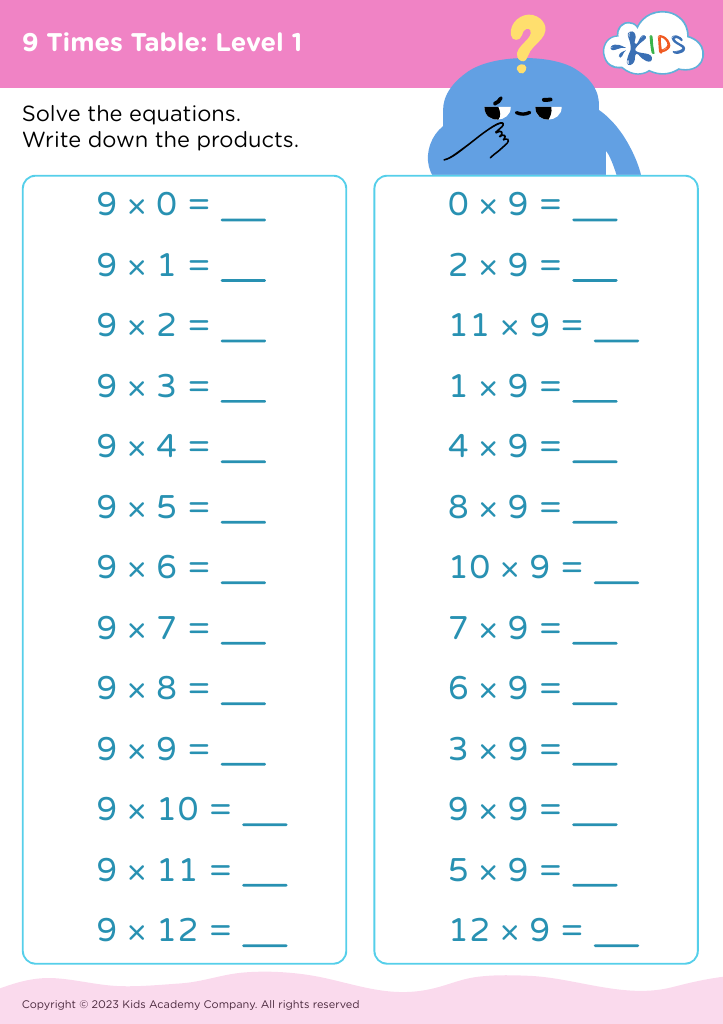







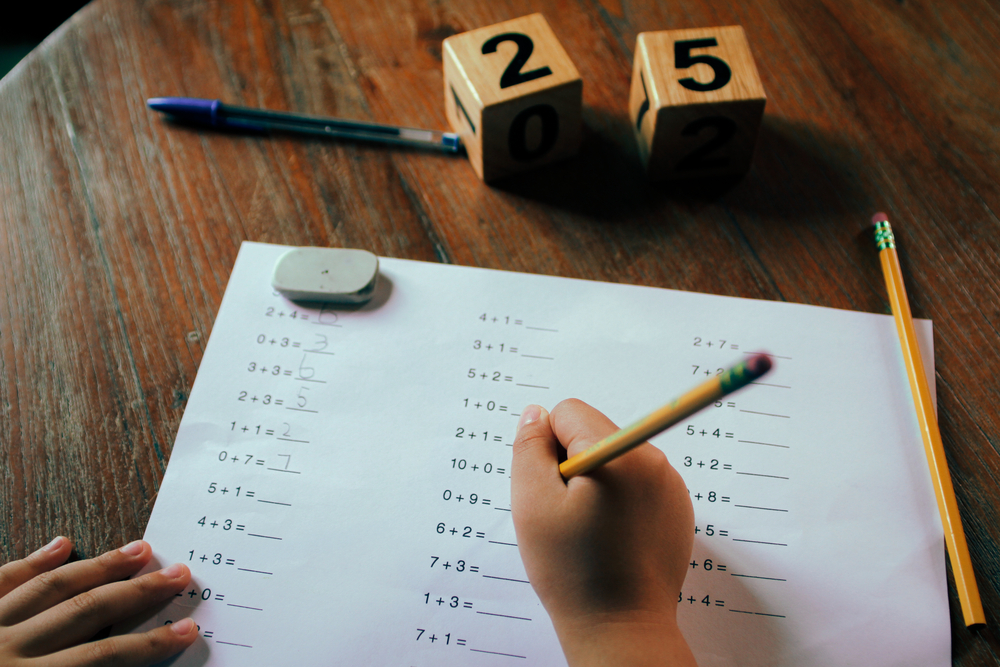
Understanding patterns in multiplication is crucial for both parents and teachers as it lays the foundation for mathematical reasoning and problem-solving. When students learn to recognize and utilize patterns, they can simplify complex calculations and enhance their computation skills. For example, knowing that multiplying by 10 simply involves adding a zero can significantly bolster a child's confidence and speed when performing multiplication tasks.
Moreover, mastering multiplication patterns helps students make connections between numbers, fostering a deeper understanding of the number system as a whole. Recognizing patterns like the commutative property (e.g., 4 × 5 is the same as 5 × 4) allows children to approach problems flexibly, developing critical thinking skills necessary for more advanced mathematical concepts.
Additionally, when parents and teachers emphasize the importance of patterns, they support children's engagement and interest in math. This can be a gateway to more complex mathematical ideas, such as algebra, where patterns become even more significant.
Ultimately, focusing on understanding patterns in multiplication forms a vital part of a child's mathematical foundation, enabling them to perform competently in school and apply math skills in real-life situations, thereby promoting success in their educational journey and beyond.








