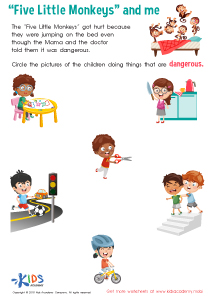
Cognitive Development Easy Reading Comprehension Worksheets
4 filtered results
-
From - To
Discover engaging Cognitive Development Easy Reading Comprehension Worksheets designed to enhance young learners' understanding and critical thinking skills. These worksheets cater to various reading levels, ensuring children grasp essential cognitive concepts through fun, interactive activities. Aimed at fostering a love for reading, our resources help students improve comprehension, vocabulary, and analytical abilities. Each worksheet presents age-appropriate texts and questions that challenge children to think deeply, make connections, and express their thoughts. Perfect for teachers and parents alike, these worksheets support educational growth while making reading enjoyable. Enhance your child's cognitive skills today with our thoughtfully crafted reading comprehension resources!
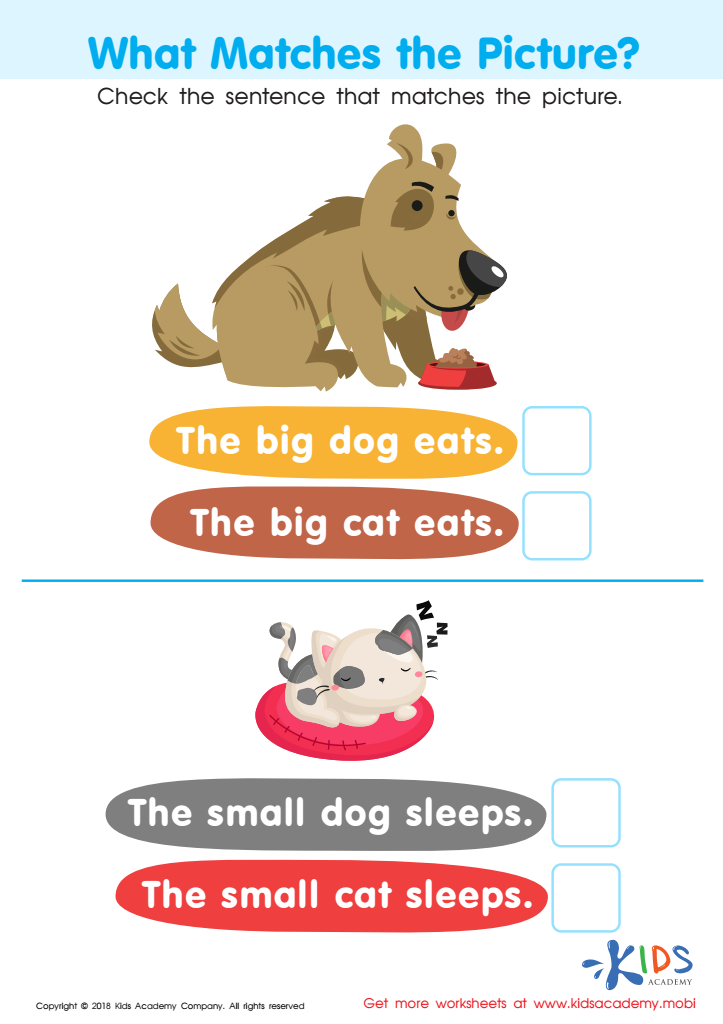
What Matches the Picture? Worksheet
 Assign to My Students
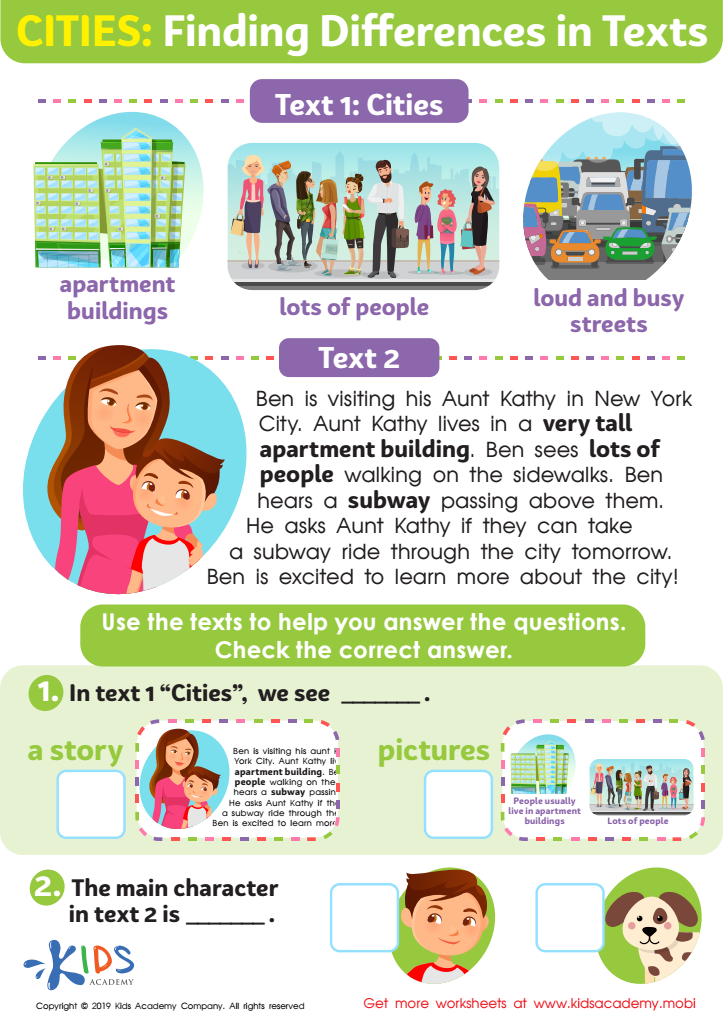
Cities: Finding Differences Worksheet
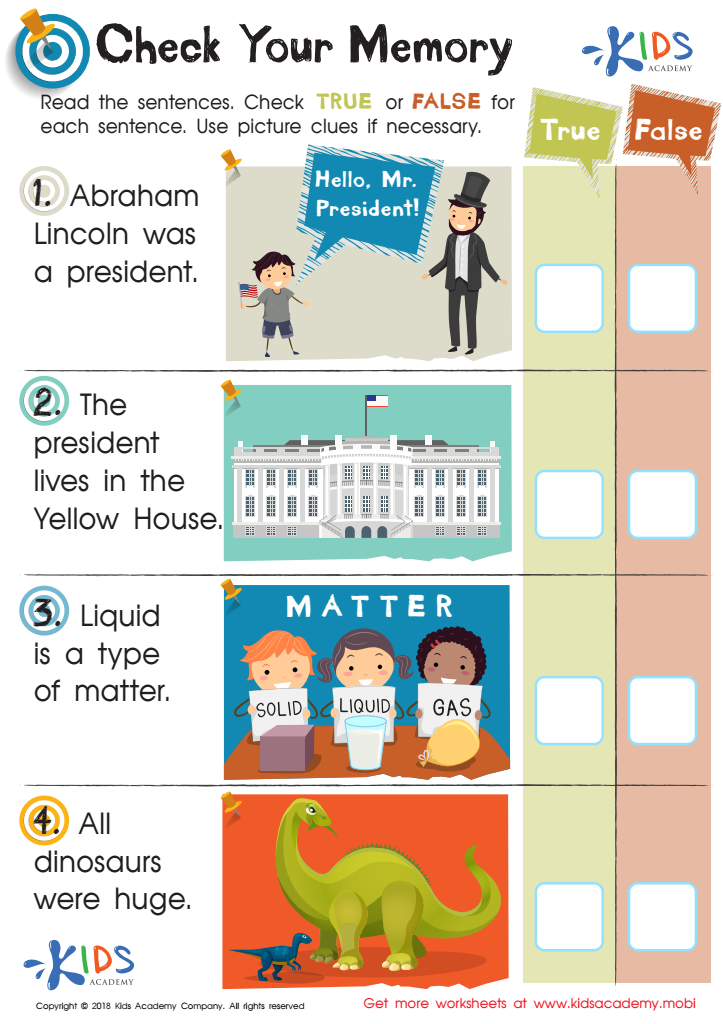
Check Memory Worksheet
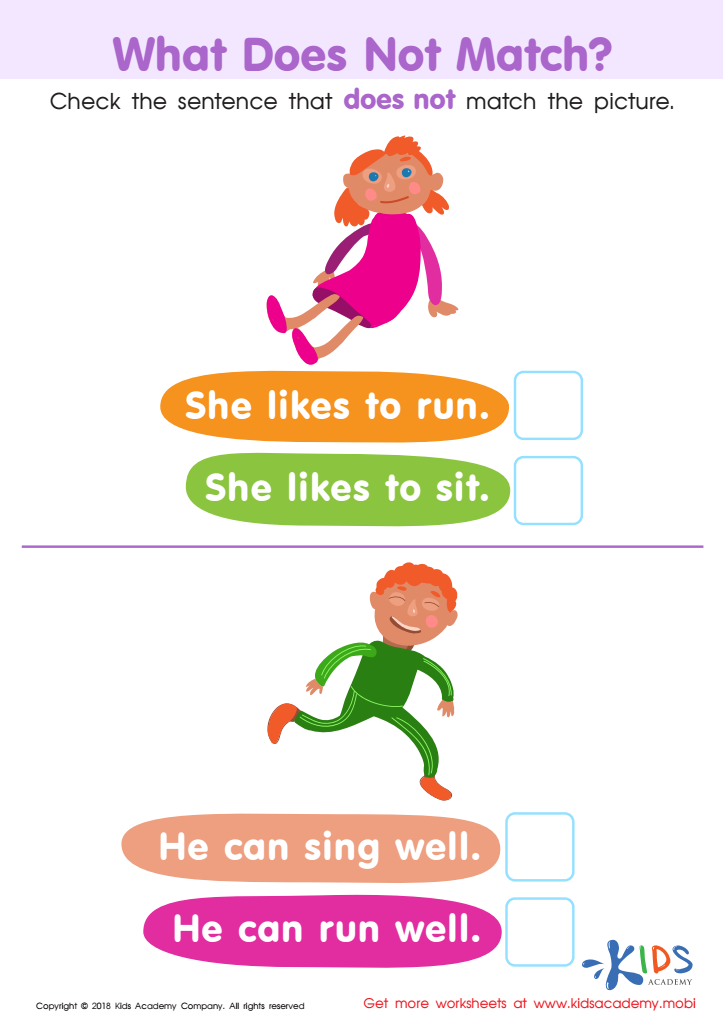
What Does Not Match? Worksheet








Cognitive development is crucial in early childhood as it lays the foundation for a child's future learning and overall growth. Parents and teachers should care about reading comprehension because it not only improves literacy skills but also enhances critical thinking and problem-solving abilities. As children learn to understand and interpret texts, they develop the ability to analyze information, draw conclusions, and make connections between ideas.
Good reading comprehension skills lead to better academic performance across all subjects. When children can understand what they read, they are more likely to engage with the material and excel in their studies. Additionally, reading has social-emotional benefits; it can help children understand diverse perspectives and develop empathy.
Teachers and parents play a vital role in promoting these skills through activities such as reading aloud, discussing stories, and asking open-ended questions. By fostering a love for reading and ensuring children comprehend what they read, they set students up for lifelong success. Ultimately, caring about cognitive development and reading comprehension lays the groundwork for children to become knowledgeable, confident, and thoughtful individuals.