Understanding life cycles Easy Reading Comprehension Worksheets
3 filtered results
Difficulty Level
Grade
Age
-
From - To
Subject
Activity
Standards
Explore the fascinating world of life cycles with our "Understanding Life Cycles Easy Reading Comprehension Worksheets." Designed for early learners, these engaging worksheets help kids grasp the concept of life cycles across various plants and animals. Each activity includes simple passages and questions that enhance reading skills while promoting critical thinking. Perfect for classroom or home use, these worksheets make learning about the transformative stages of life both fun and effective. Support your child's literacy development and scientific knowledge with our interactive resources, packed with illustrations and clear explanations. Dive into the wonders of life cycles today!
Favorites
With answer key
Interactive
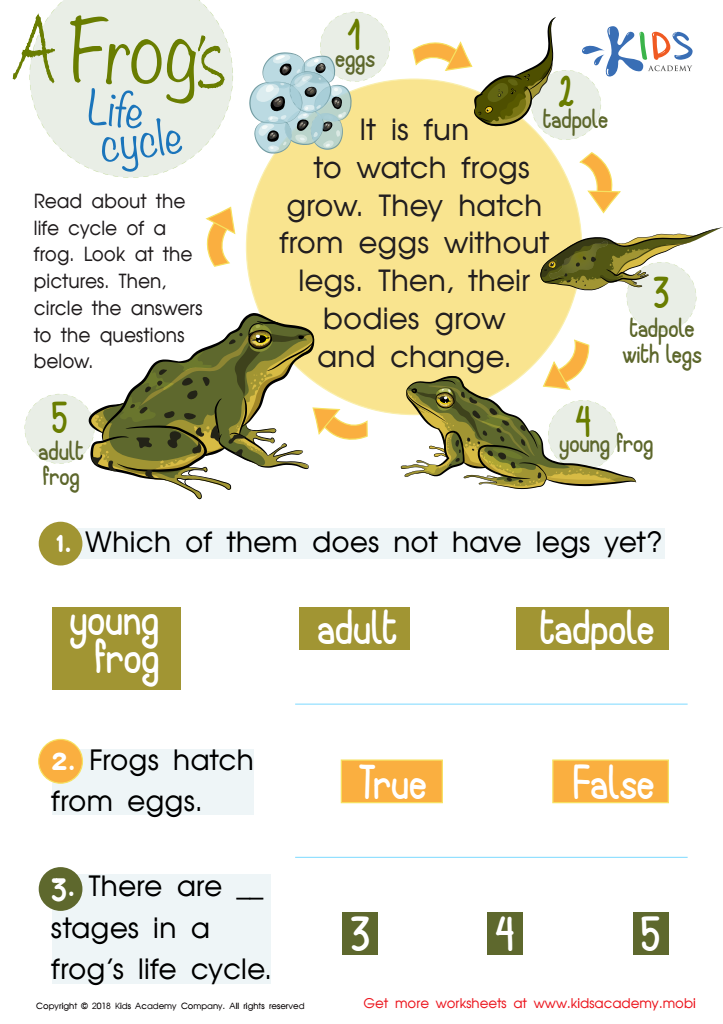
A Frog’s Life Cycle Worksheet
Encourage your kids to learn about frogs! Ask them to tell you some features, then read and discuss the text that explains the frog's life cycle. Show them the pictures to help them visualize it. Finish by helping them answer the questions at the bottom of the worksheet.
 Assign to My Students
A Frog’s Life Cycle Worksheet
Worksheet
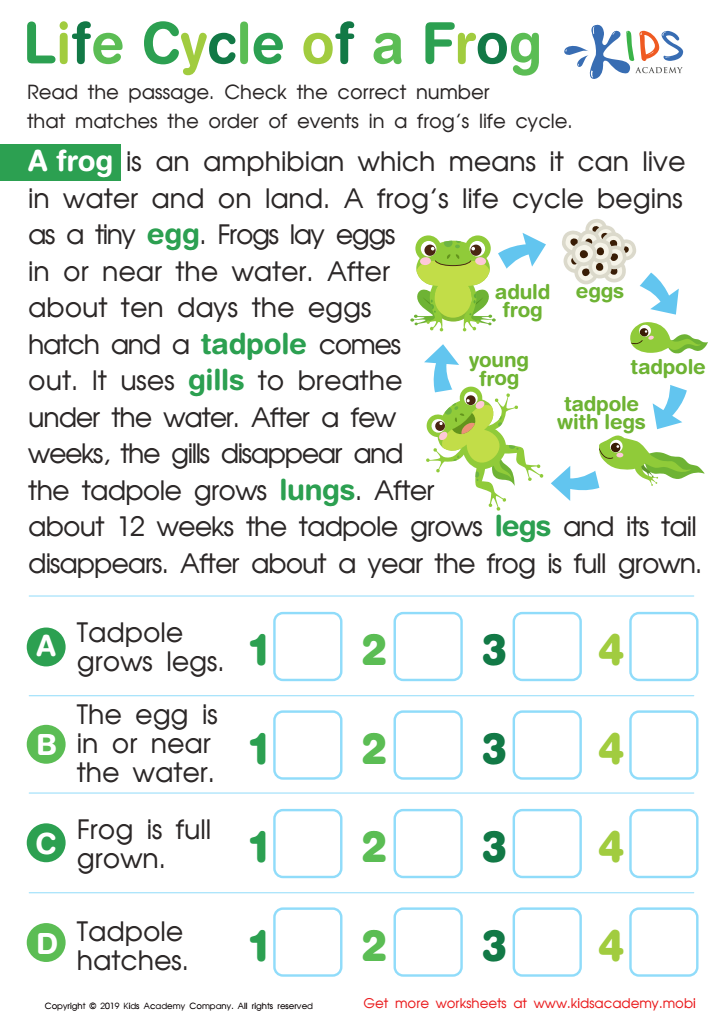
Life Cycle of a Frog Worksheet
Teach your kids to read and open their eyes to new knowledge. Frogs have fascinating life cycles. Show them the worksheet with pictures and guide them as they read the passage about it. Encourage them to check the number that matches the frog's life cycle order.
Life Cycle of a Frog Worksheet
Worksheet
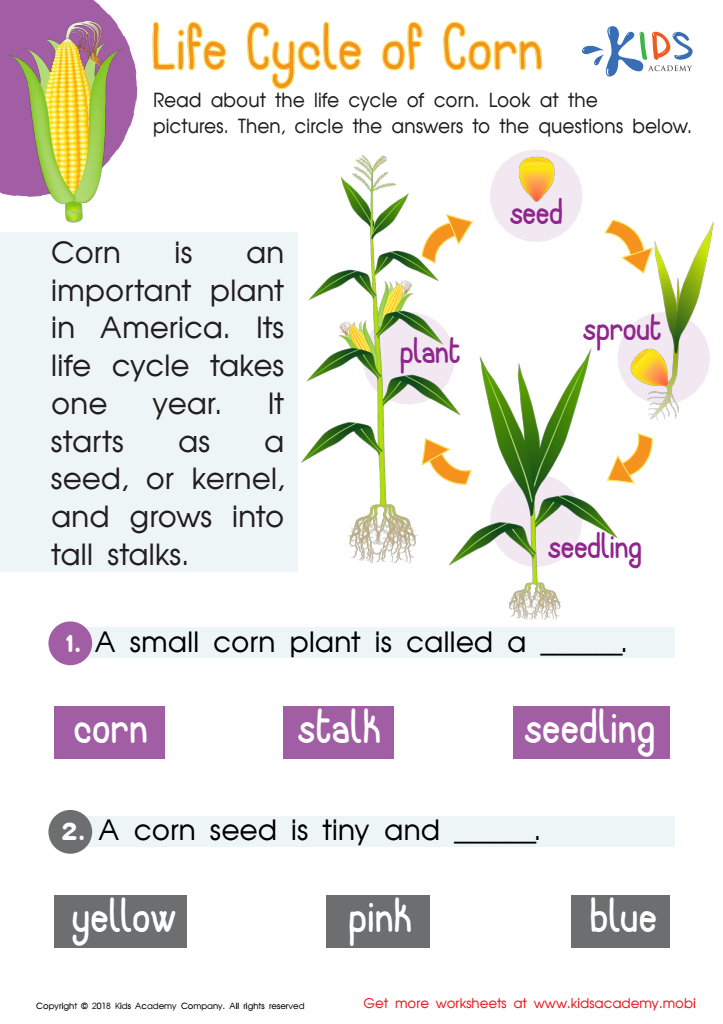
Life Cycle of Corn Worksheet
Help your kids learn about corn! Ask them what foods it's used to make. Read this worksheet and look at the pictures to learn the life cycle of corn. Then, have them circle the answers to the questions at the bottom. Corn is an important crop for farmers, used to make many foods we eat today.
Life Cycle of Corn Worksheet
Worksheet
Join Kids Academy for Free
Who is primarily going to use this learning content?







Understanding life cycles is essential for both parents and teachers working with young children because it lays the foundation for several key learning concepts. First, studying life cycles—such as those of plants, animals, and insects—helps children make sense of the natural world. This understanding fosters curiosity and respect for living things, encouraging them to observe, ask questions, and engage with their environment.
Moreover, life cycles introduce important scientific concepts such as growth, change, and interdependence. Recognizing that living organisms undergo transformations motivates children to think critically and develop problem-solving skills. For instance, when learning about the life cycle of a butterfly, kids can predict what will happen at each stage, enhancing their comprehension and reasoning abilities.
In addition, collaborative activities like gardening or observing animals can strengthen bonds between parents and children or between teachers and students. These shared experiences can promote teamwork, patience, and communication skills.
By caring about and supporting the understanding of life cycles, parents and teachers not only nurture a child’s scientific literacy but also instill a lifelong appreciation for nature, resilience, and growth. This foundational knowledge enriches a child’s education and prepares them for future learning.