Cultural awareness Easy Grade 2 Worksheets
3 filtered results
Difficulty Level
Grade
Age
-
From - To
Subject
Activity
Standards
Explore our engaging Cultural Awareness Easy Grade 2 Worksheets designed to introduce young learners to diverse cultures around the world. These interactive resources promote understanding and respect for different backgrounds, helping students appreciate global diversity. With colorful illustrations and age-appropriate activities, our worksheets encourage kids to explore customs, traditions, and languages, making learning enjoyable and impactful. Ideal for classroom use or at-home learning, these worksheets foster curiosity and empathy in early learners. Equip your second graders with the knowledge and skills to embrace cultural differences while developing critical thinking and communication abilities. Start your journey toward cultural awareness today!
Favorites
With answer key
Interactive
Traditions We Have Worksheet
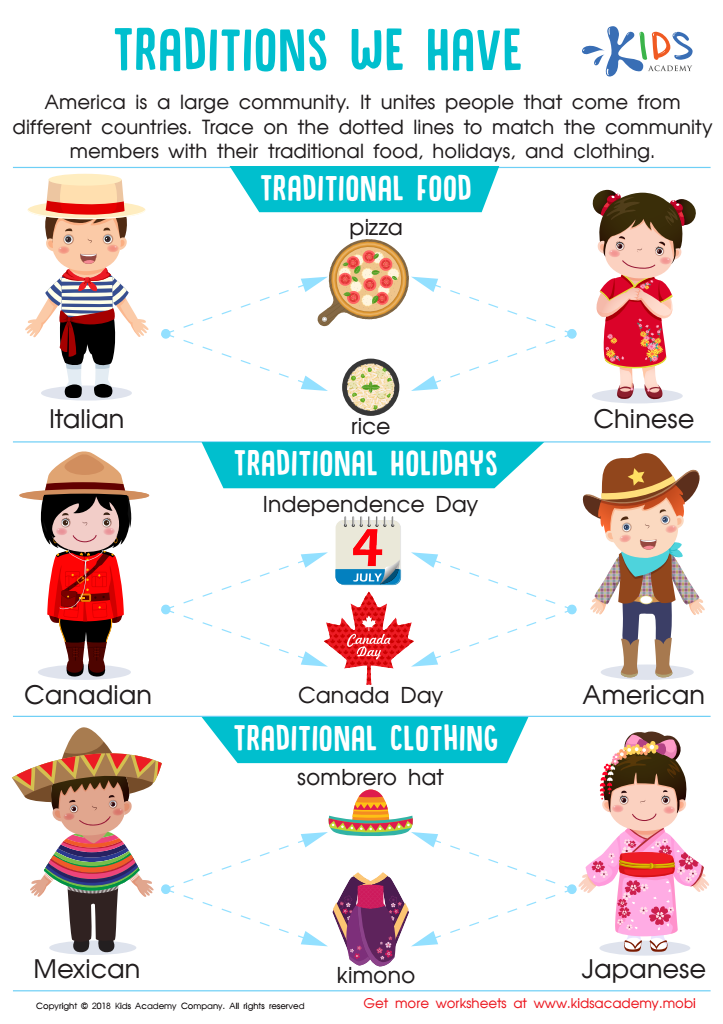
Help your child learn about the world's diverse cultures with this tracing sheet. Trace the dotted lines to match different community members with their traditional holidays, foods and clothing. America is just one of many countries with multiple communities living together - teach your child that everybody has different backgrounds and customs, opening their minds to an even bigger world.
 Assign to My Students
Traditions We Have Worksheet
Worksheet
Special Day Worksheet
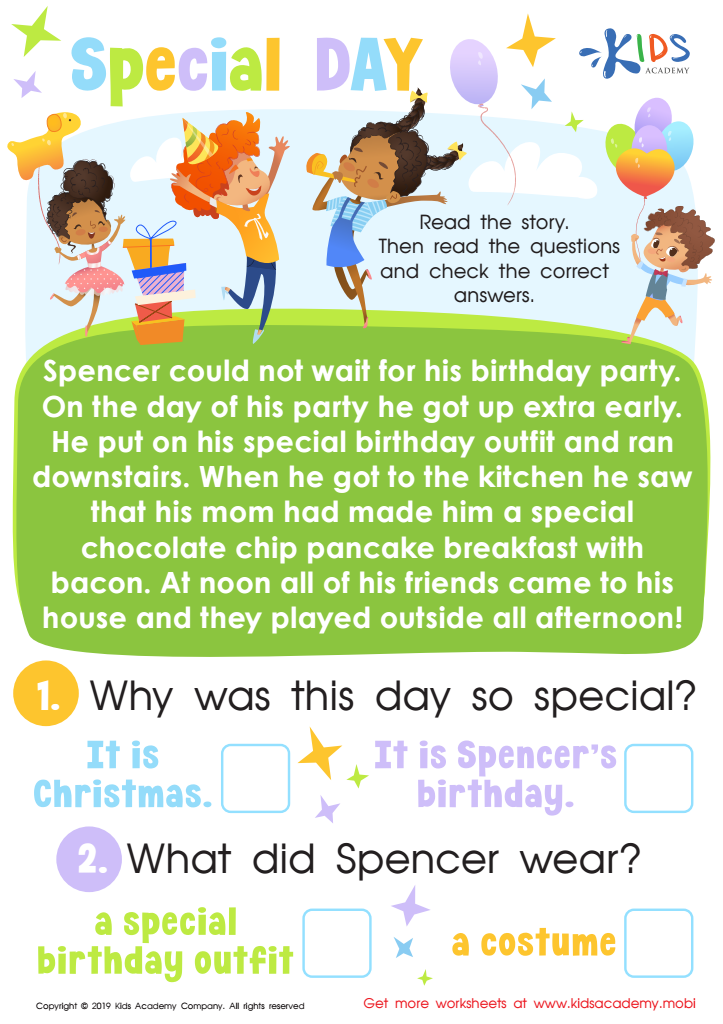
What's your child's favorite day? Let them tell you what makes it special and what they enjoy most. With the worksheet, show them the picture and ask them to identify the day. Read the story aloud, and help them answer the questions and check the right responses.
Special Day Worksheet
Worksheet
Join Kids Academy for Free
Who is primarily going to use this learning content?








Cultural awareness is important for both parents and teachers because it helps children understand and respect the diverse world they live in. When kids learn about different cultures, they discover new ideas, traditions, and ways of life. This knowledge helps them appreciate uniqueness and promotes kindness toward others.
For teachers, cultural awareness is essential in creating a welcoming classroom. When they recognize and celebrate different cultures, all students feel valued and included, which makes learning easier. Kids who feel accepted are more likely to participate and do well in school.
For parents, encouraging cultural awareness at home helps children develop social skills and empathy. When kids learn about other cultures, they become more understanding and less likely to judge others based on differences. This helps create friendships and builds a stronger community.
In addition, cultural awareness aids in reducing stereotypes and prejudice. By teaching children to see people as individuals rather than just members of certain groups, parents and teachers help shape a more peaceful and respectful society. Overall, promoting cultural awareness helps children grow into compassionate, open-minded individuals who can thrive in our rich and varied world.