Color recognition Easy Grade 2 Math Worksheets
5 filtered results
-
From - To
Enhance your second-grade students' learning experience with our Color Recognition Easy Grade 2 Math Worksheets! Designed to improve foundational math skills through engaging color identification activities, these worksheets encourage kids to recognize and differentiate between various colors while solving math problems. Perfect for reinforcing lessons in a fun and interactive way, they also help develop fine motor skills and enhance creativity. Each worksheet is aligned with educational standards, ensuring your students gain confidence in their abilities. Download our printable resources today and watch your students thrive as they master color recognition alongside essential math concepts! образовательных стандартов.
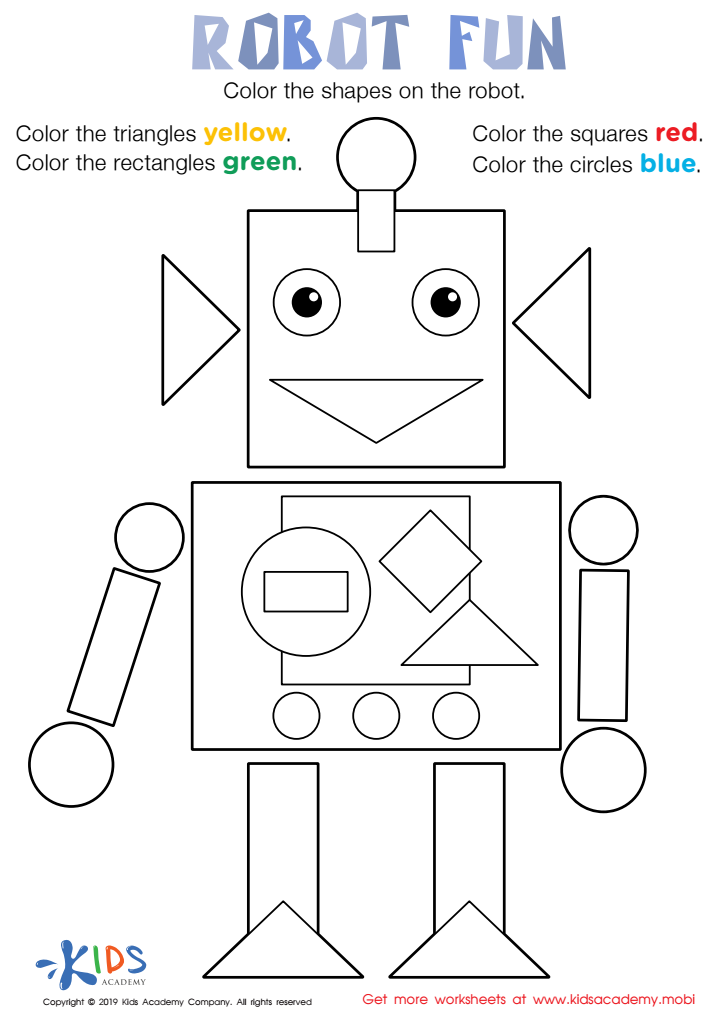
Robot Fun Worksheet
 Assign to My Students
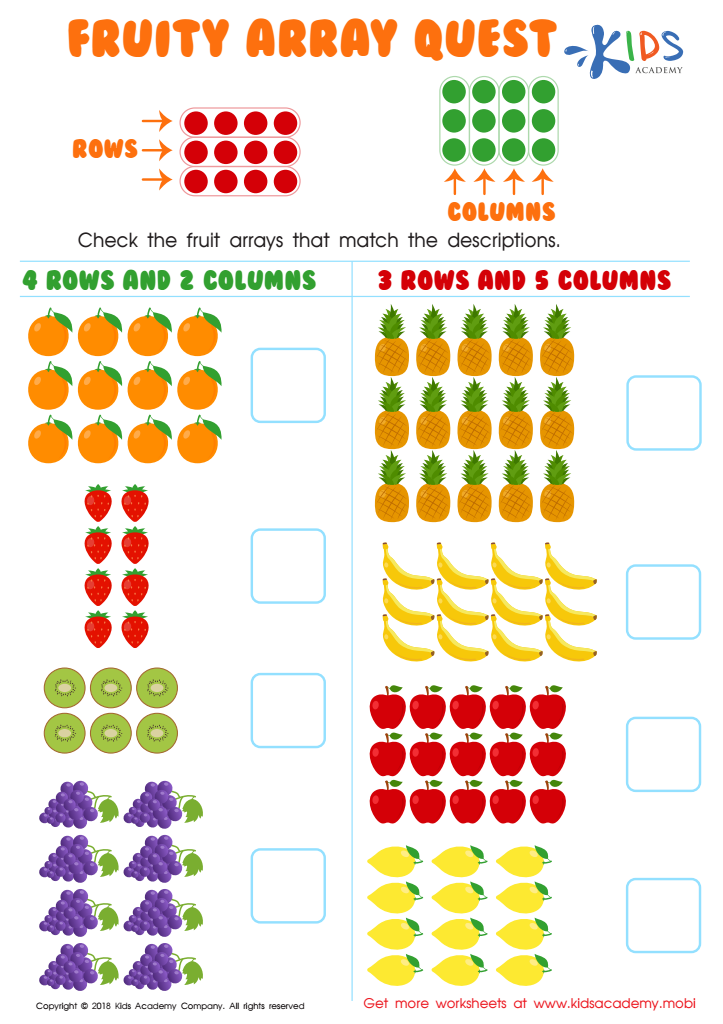
Fruity Array Quest Worksheet
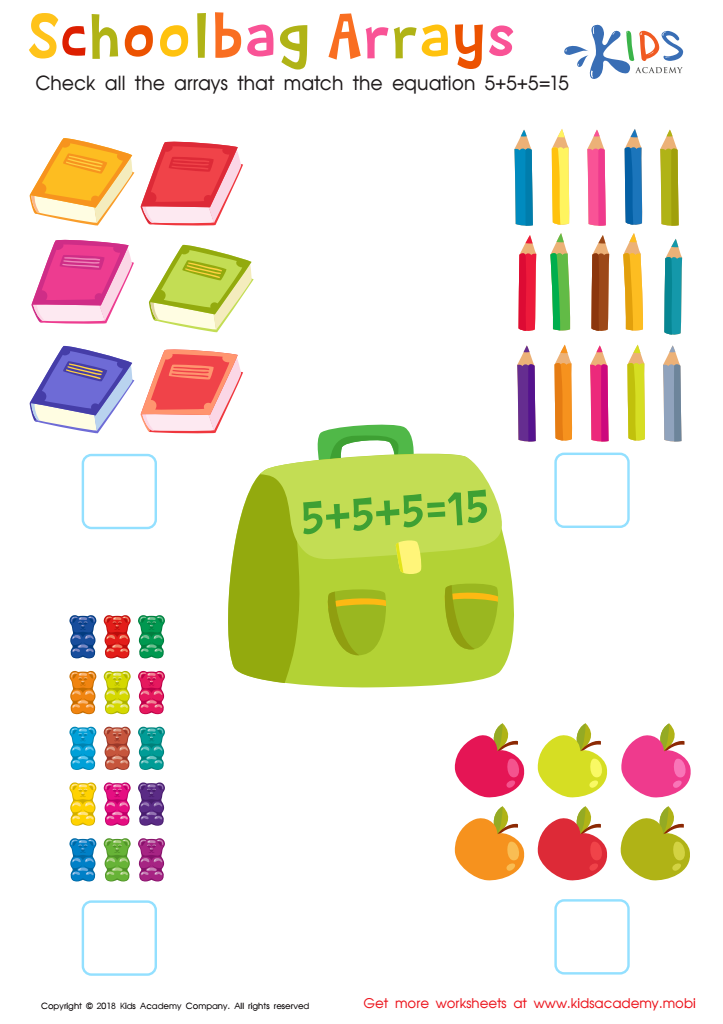
Schoolbag Arrays Worksheet
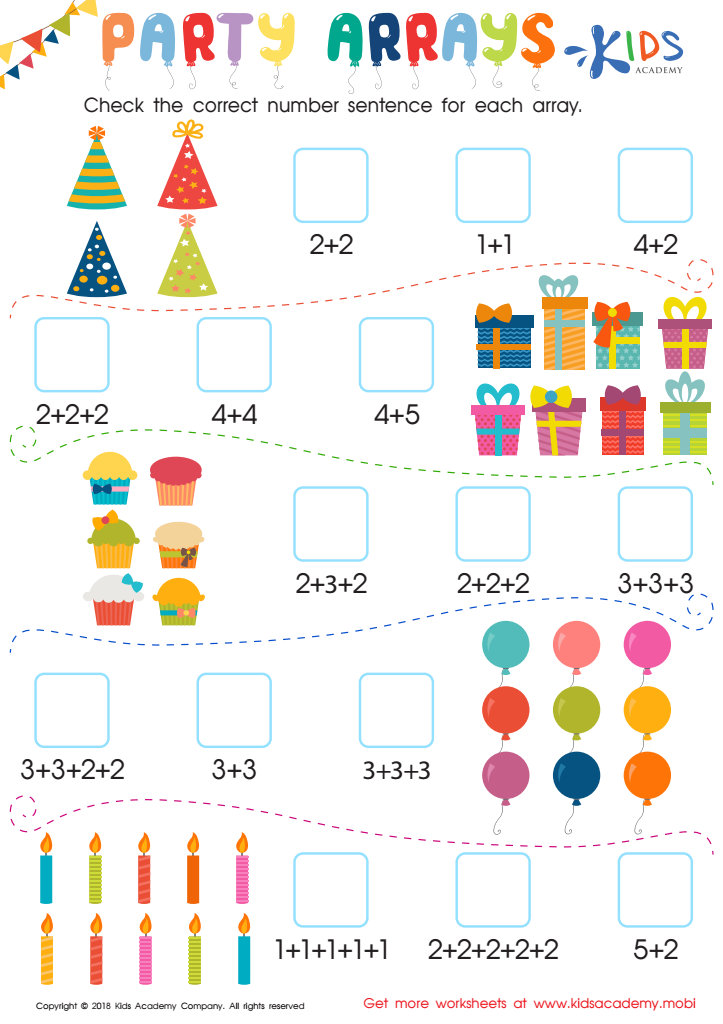
Party Arrays Worksheet
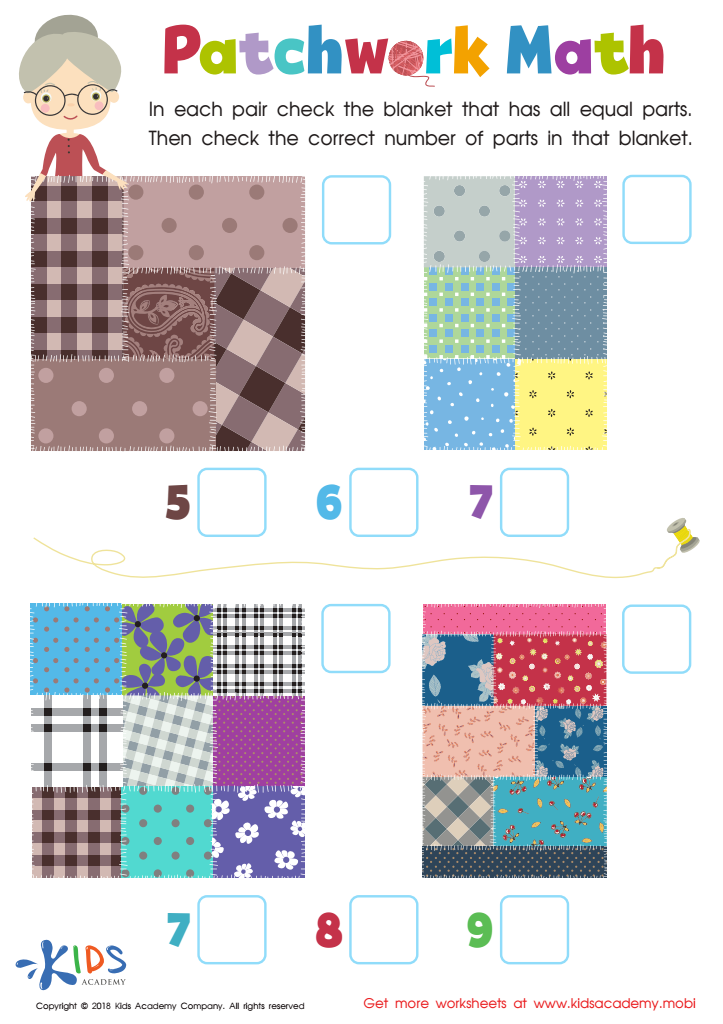
Patchwork Math Worksheet






Color recognition is an essential skill that goes beyond simply identifying hues; it plays a crucial role in early education, specifically in grade 2 math. Understanding colors enhances cognitive development and perceptual skills, enabling children to categorize and differentiate objects. This foundational ability supports their learning process in various subjects, including mathematics.
In math, color recognition aids in teaching concepts like sorting, grouping, and patterning. For instance, using different colors to represent numbers or objects can make abstract mathematical concepts more tangible and engaging. It also fosters visual learning and memory retention, which are vital for problem-solving skills in mathematics.
Moreover, strong grasping of colors can also boost a child's confidence in participating in classroom activities and discussions. Parents and teachers can utilize colorful resources and materials, such as colored counters or manipulatives, to make math lessons more interactive and enjoyable.
Attention to color recognition not only enriches a child's educational experience but also contributes to their overall development, ultimately laying a solid foundation for future academic success. Engaging children with colors in math lessons encourages creativity, enhances focus, and inspires a love for learning, making it important for parents and teachers to prioritize this skill in early education.