Filters

7 filtered results

Clear all filters
Favorites
With answer key
Interactive

7 filtered results

Difficulty Level

Grade


Enhance your Grade 2 students' learning experience with our engaging Fine Motor Skills Math Worksheets. Specifically designed for young learners, these worksheets incorporate fun activities that promote essential fine motor skills while mastering basic math concepts. Students will practice writing numbers, drawing shapes, and completing pattern recognition tasks, all reinforcing crucial mathematical foundations. Ideal for classroom use or at-home practice, our easy-to-use worksheets encourage creativity and precision in movements, making math both enjoyable and educational. Access a variety of colorful, printable worksheets that cater to different learning styles, ensuring your second graders gain confidence as they develop both math proficiency and fine motor abilities!

Check out this FREE Grade 2 Trial Lesson on Math!

Addition with Arrays - Part 1

Favorites
With answer key
Interactive
  • Grade 2
  • Fine Motor Skills
  • Math
  • Easy
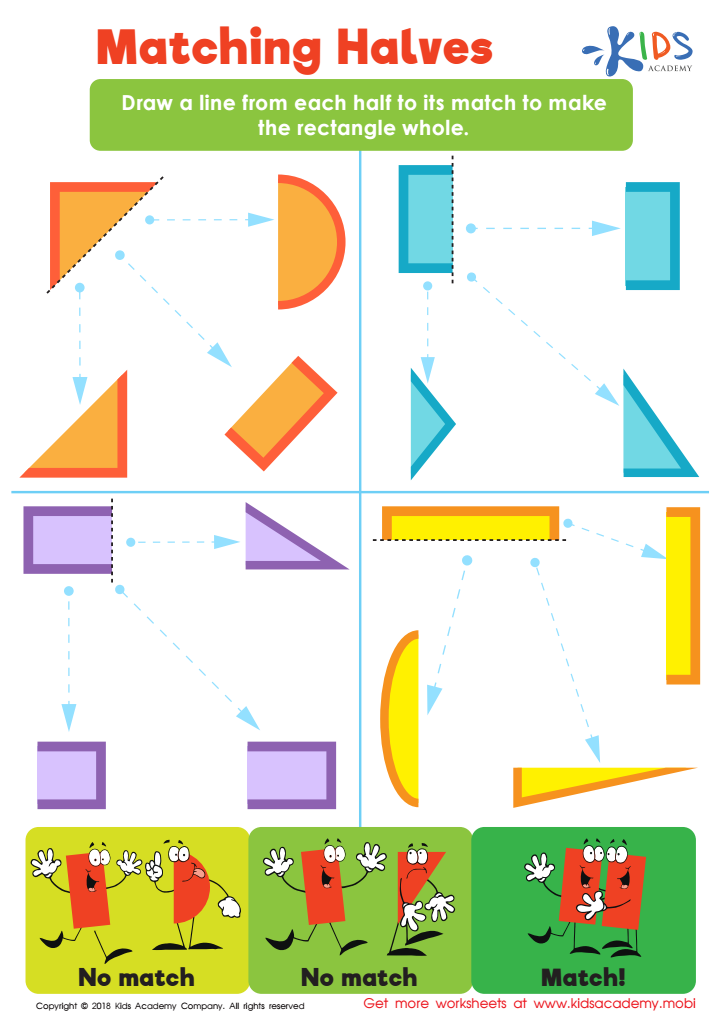
Matching Halves Worksheet

Matching Halves Worksheet

See how your child fares in matching two halves to form a complete rectangle. Provide them with four options, and ask them to draw a line connecting the two correct halves. Put their shape knowledge to the test with this simple worksheet!
Matching Halves Worksheet
Worksheet
Counting Seedlings Worksheet

Counting Seedlings Worksheet

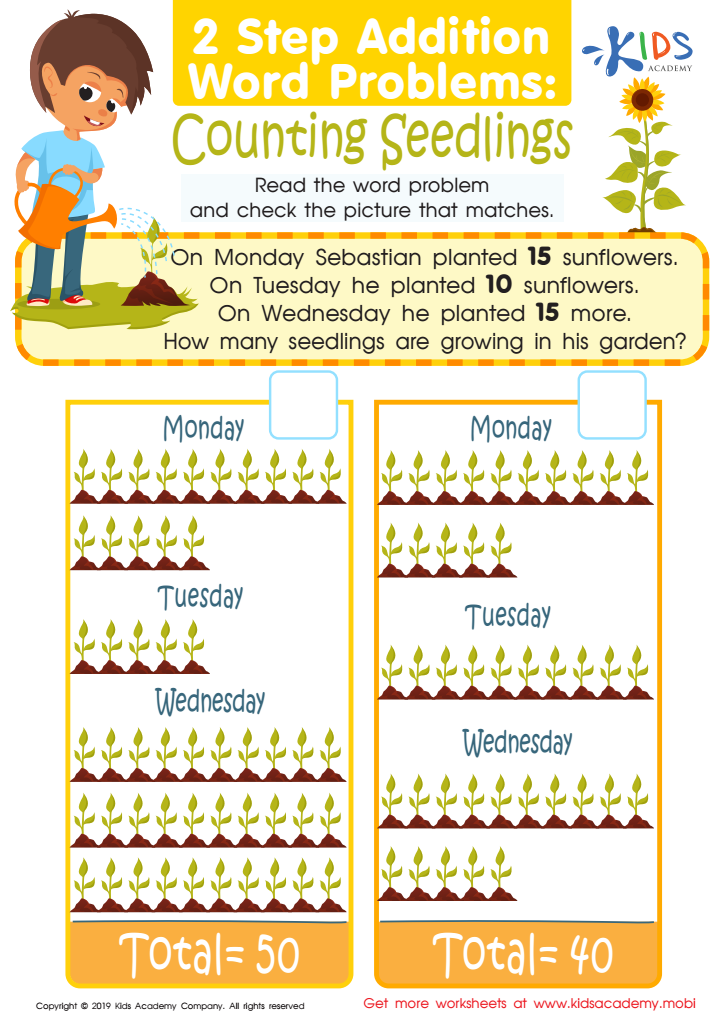
Understanding math word problems is key. Multiple steps can prove challenging - this free worksheet provides one-to-one picture representation to help kids solve multi-step addition word problems. Strengthen addition skills by choosing the matching picture to the answer.
Counting Seedlings Worksheet
Worksheet
Schoolbag Arrays Worksheet
Schoolbag Arrays Worksheet

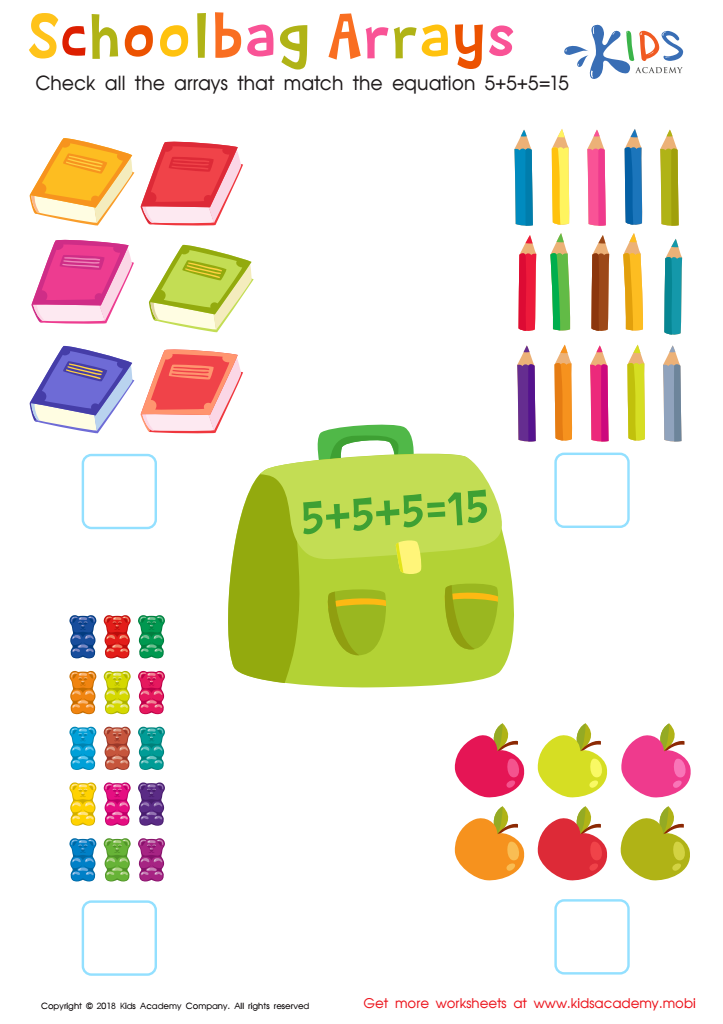
Help your child spot the correct arrays in this worksheet: having them count the items in each and check the boxes for the ones with 15 objects. Ask them to differentiate between rows and columns and explain which ones match the equation 5+5+5=15.
Schoolbag Arrays Worksheet
Worksheet
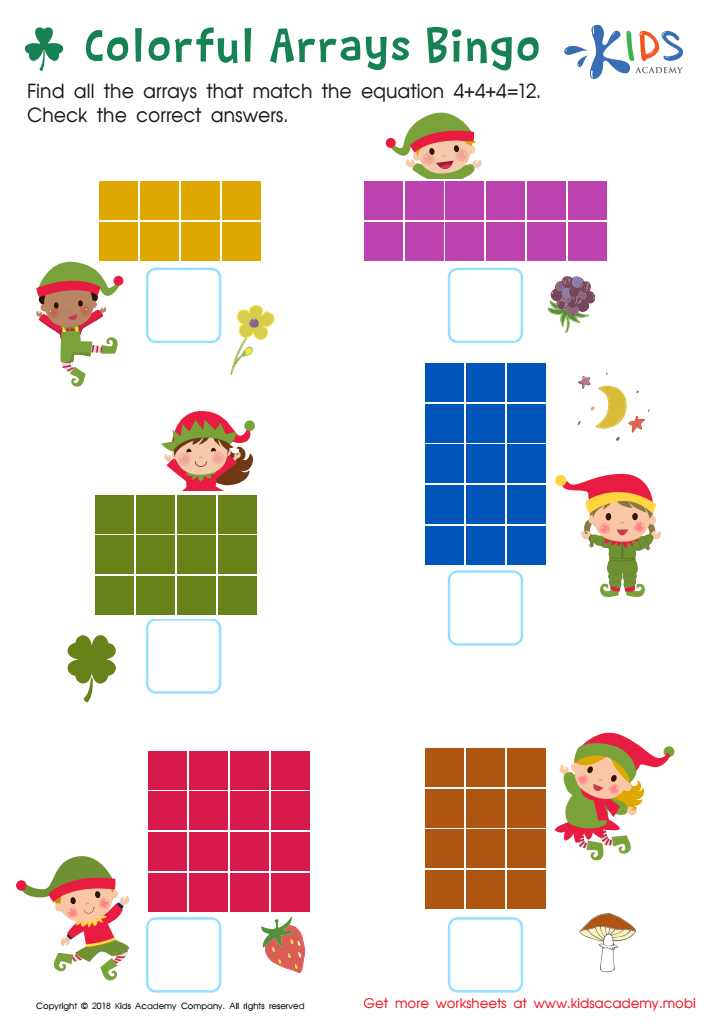
Colorful Arrays Bingo Worksheet

Colorful Arrays Bingo Worksheet

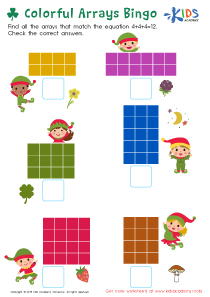
This worksheet stimulates thinking about arrays and how to represent them. Instruct students to count the 6 arrays and find which ones sum up to 12. Ask them to check the answers for accuracy.
Colorful Arrays Bingo Worksheet
Worksheet
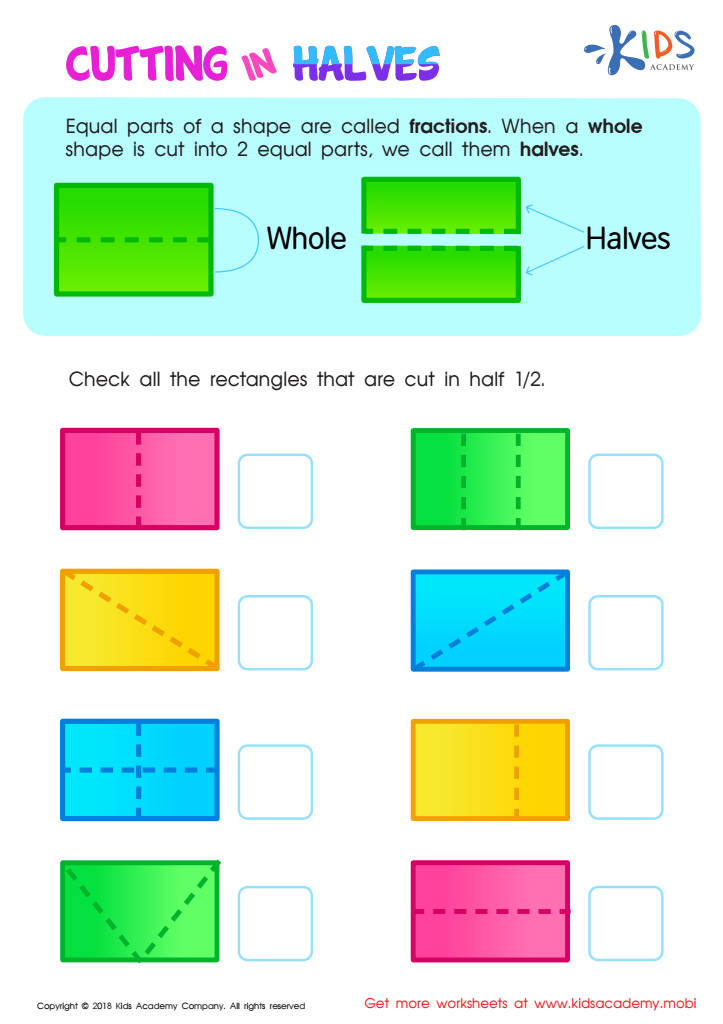
Cutting in Halves Worksheet

Cutting in Halves Worksheet

Show your child how to divide a whole shape, like a square, into smaller pieces to become fractions. Point out when a shape is divided into two equal parts, it's called a half. Look at the worksheet together, and identify all rectangles that are cut in half (½).
Cutting in Halves Worksheet
Worksheet
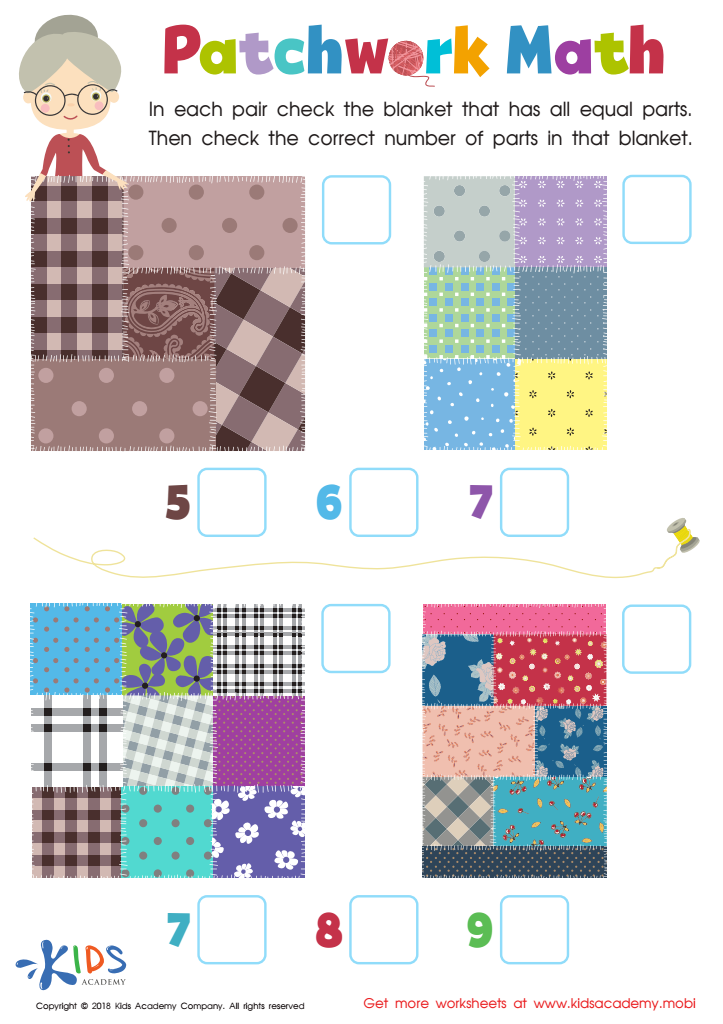
Patchwork Math Worksheet

Patchwork Math Worksheet

Test your children's knowledge with this colorful worksheet. They'll need to identify which of the blanket pairs have been cut in equal parts and count the number of parts. Check the provided options to ensure the correct answer.
Patchwork Math Worksheet
Worksheet
Piece it together Worksheet


Piece it together Worksheet

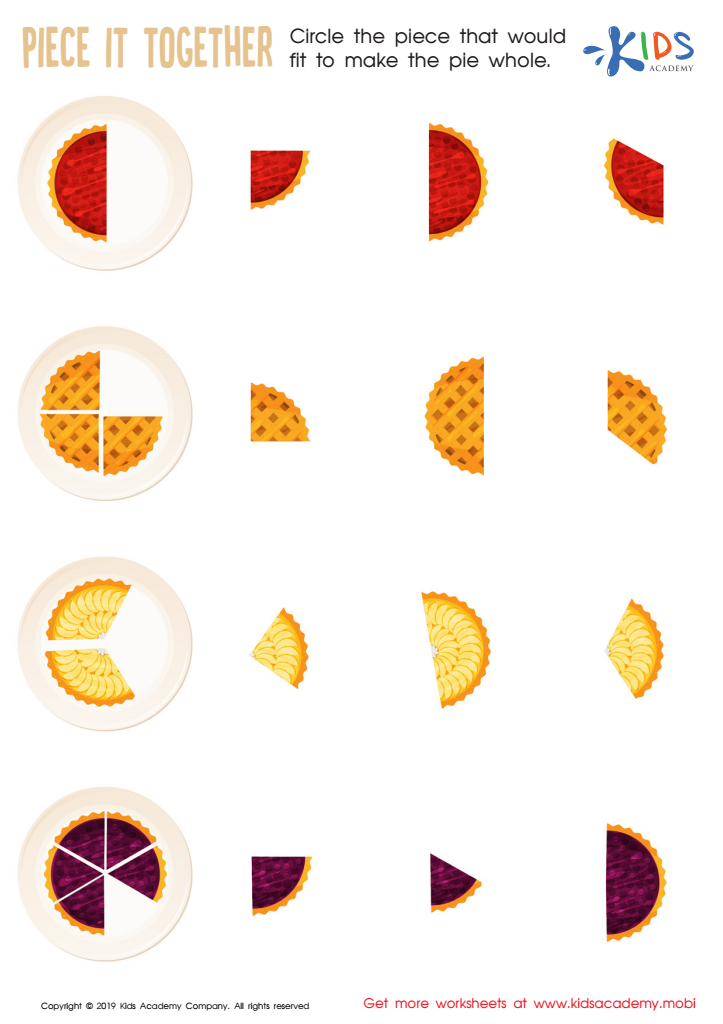
Help your kids learn fractions! Even if they're not eager, teach them as they get older. Teachers will provide enough lessons and homework, but you can go a step further. Look at a worksheet with your kids and help them circle the piece that would make the pie whole.
Piece it together Worksheet
Worksheet


Fine motor skills are crucial for young children, especially in a Grade 2 learning environment where they are developing essential academic skills, including math. These skills encompass the small movements of hands and fingers that enable children to manipulate objects, which is vital for tasks such as writing, drawing, and using classroom tools like scissors and math manipulatives.

When children engage in activities that enhance their fine motor skills, they improve their ability to perform mathematical tasks like counting, measuring, and creating shapes. These practical skills can help make learning math concepts more tangible and engaging. For instance, using blocks or beads in math activities not only complements fine motor development but also reinforces patterns, addition, and subtraction.

Parents and teachers should care about fine motor skills as they directly impact children's confidence and independence in their learning. Strong fine motor skills lead to better handwriting and improved performance during math-related tasks, which can foster a positive attitude toward learning. Furthermore, developing these skills also supports overall cognitive development, laying the groundwork for more complex problem-solving abilities in later grades. Encouraging fine motor activities, such as drawing or crafting, can significantly benefit a child's educational journey in math and beyond.