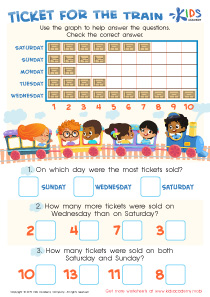
Discover engaging Shape Recognition worksheets specifically designed for Grade 2 math students! Our collection offers a variety of fun, colorful activities that help young learners identify and understand different shapes. Each worksheet is crafted to enhance skills in recognizing circles, squares, triangles, and more, promoting visual learning and critical thinking. Ideal for both classroom and home practice, these worksheets provide step-by-step instructions, making it easy for students to follow along. With a mix of puzzles, matching games, and creative exercises, your child will build confidence and proficiency in shape identification while enjoying the learning process. Start exploring today!

Check out this FREE Grade 2 Trial Lesson on Math!

Counting Faces 3D

Favorites
With answer key
Interactive
  • Grade 2
  • Shape Recognition
  • Math
  • Easy
Matching Halves Worksheet

Matching Halves Worksheet

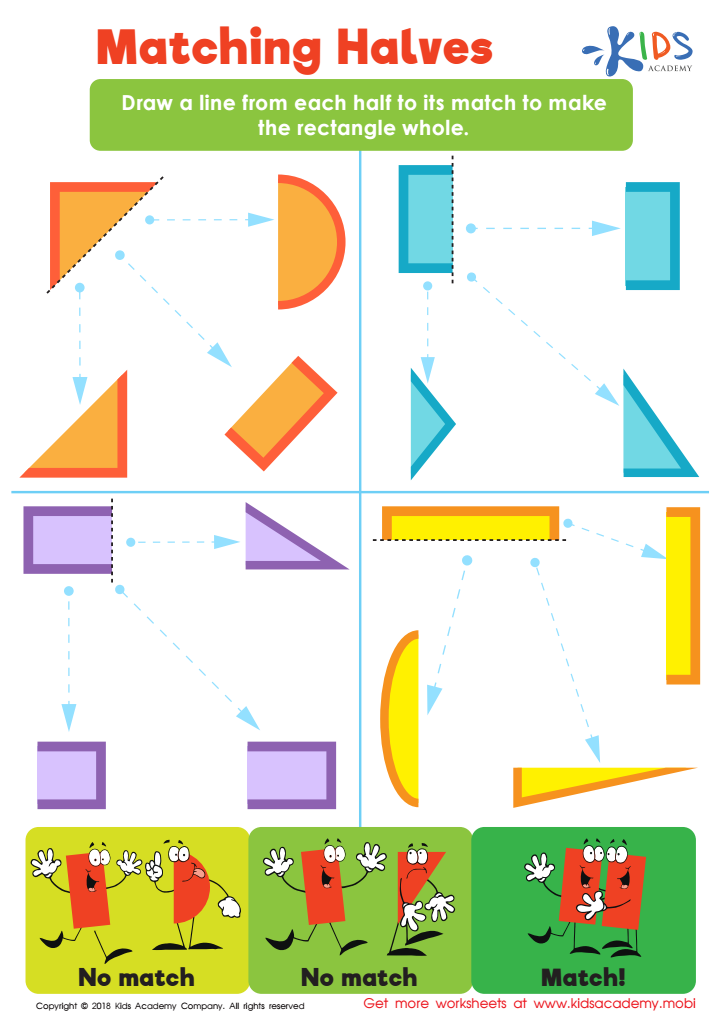
See how your child fares in matching two halves to form a complete rectangle. Provide them with four options, and ask them to draw a line connecting the two correct halves. Put their shape knowledge to the test with this simple worksheet!
Matching Halves Worksheet
Worksheet
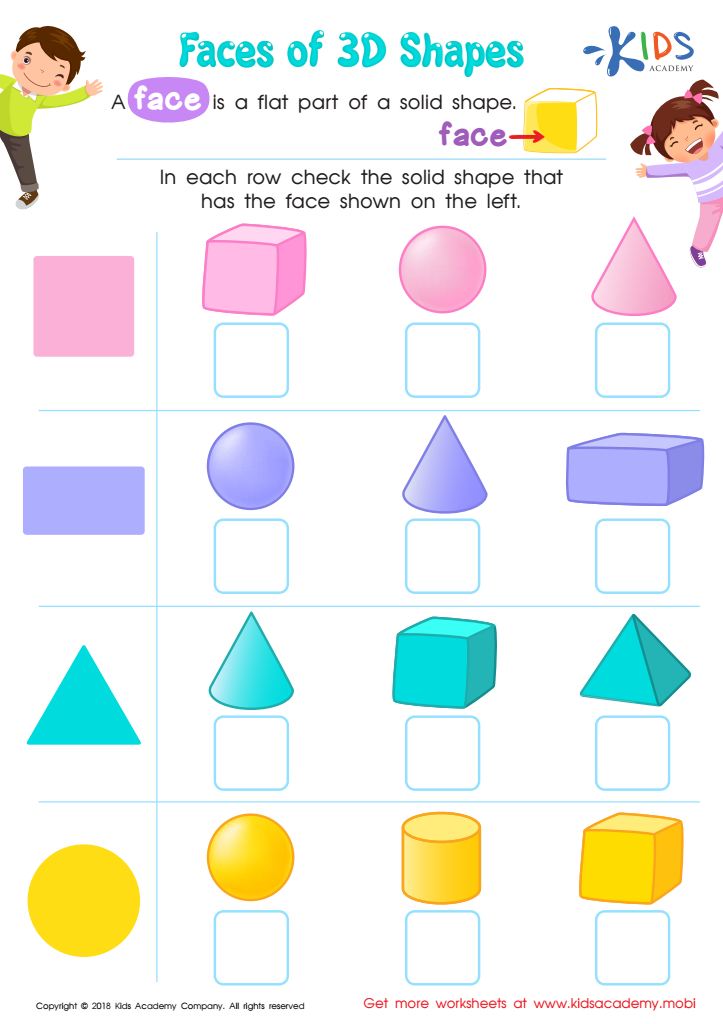
Faces of 3D Shapes Worksheet

Faces of 3D Shapes Worksheet

Point at random body parts and ask your child to name them. Point to their face and ask them to identify it. Use this worksheet to show how "face" doesn't just refer to body parts - it can also mean the flat surface of a solid shape. Check the picture to find the matching solid shape for each face shown.
Faces of 3D Shapes Worksheet
Worksheet
Color the Shapes Worksheet

Color the Shapes Worksheet

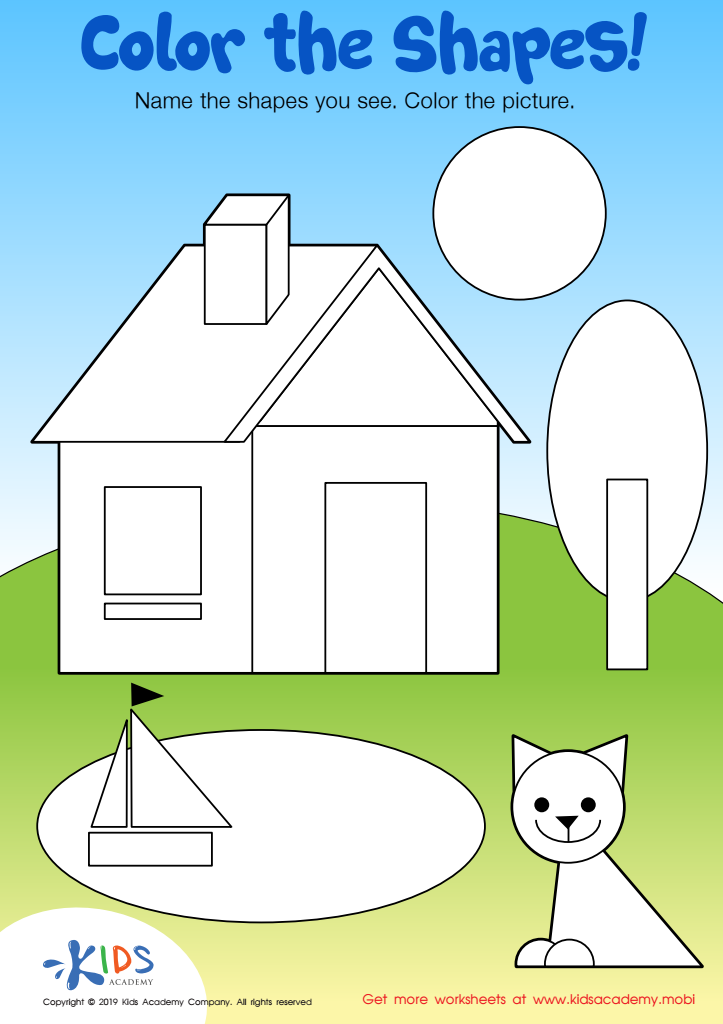
Help your student master shape identification with this fun worksheet. Ask them to name the shapes in the picture, then color it! Ask questions like "How many squares do you see?" and "How many triangles?" to extend the learning. Identify squares, circles, triangles and rectangles with this enjoyable coloring page.
Download (PDF)
Assign to My Students
Color the Shapes Worksheet
Worksheet
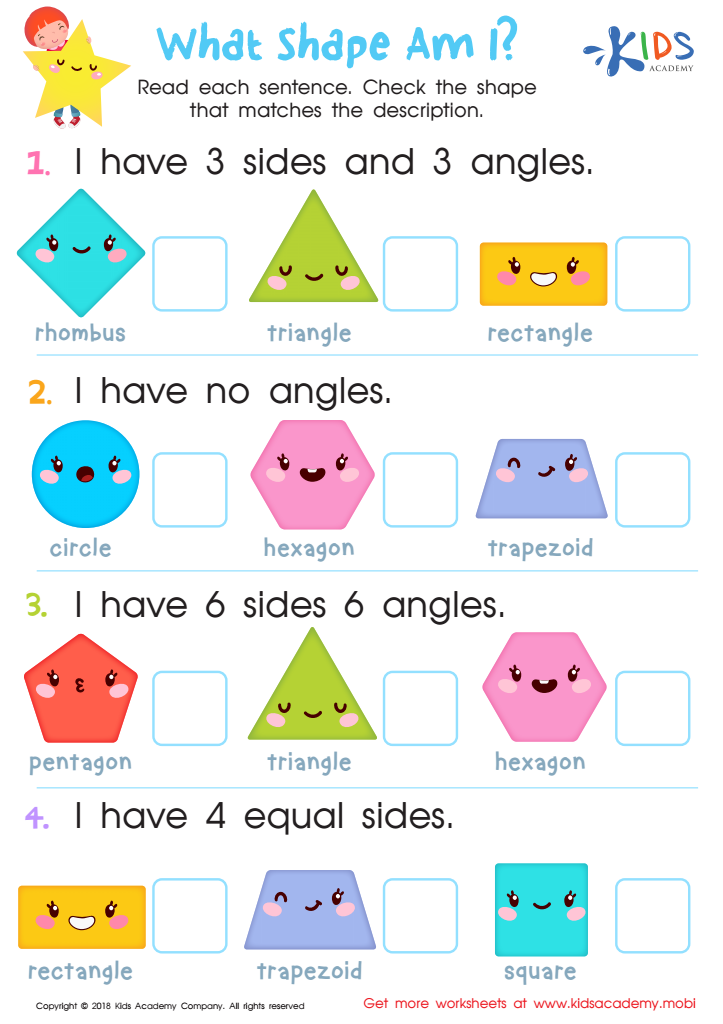
What Shape Am I? Worksheet

What Shape Am I? Worksheet

Help your child read each sentence in this colorful worksheet. Have them identify the shapes described and check the boxes. To prepare, ask simple questions like "How many sides does a triangle have?" and "Which shape has 4 equal sides?" Your child will become more skilled at shapes by the end of this activity.
What Shape Am I? Worksheet
Worksheet
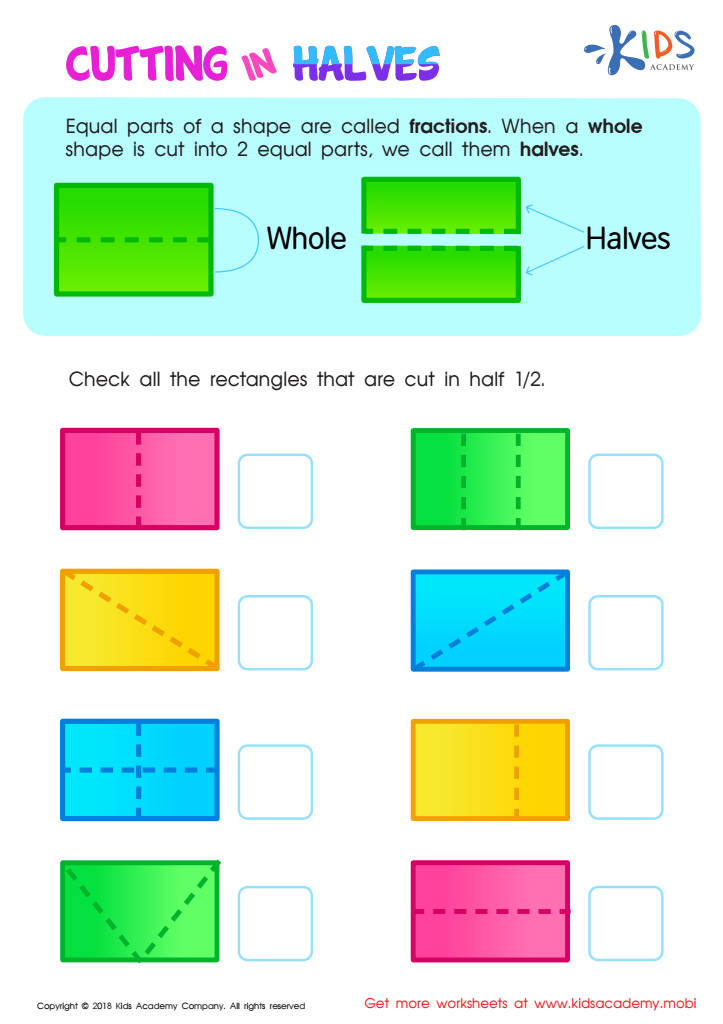
Cutting in Halves Worksheet

Cutting in Halves Worksheet

Show your child how to divide a whole shape, like a square, into smaller pieces to become fractions. Point out when a shape is divided into two equal parts, it's called a half. Look at the worksheet together, and identify all rectangles that are cut in half (½).
Cutting in Halves Worksheet
Worksheet
Piece it together Worksheet

Piece it together Worksheet

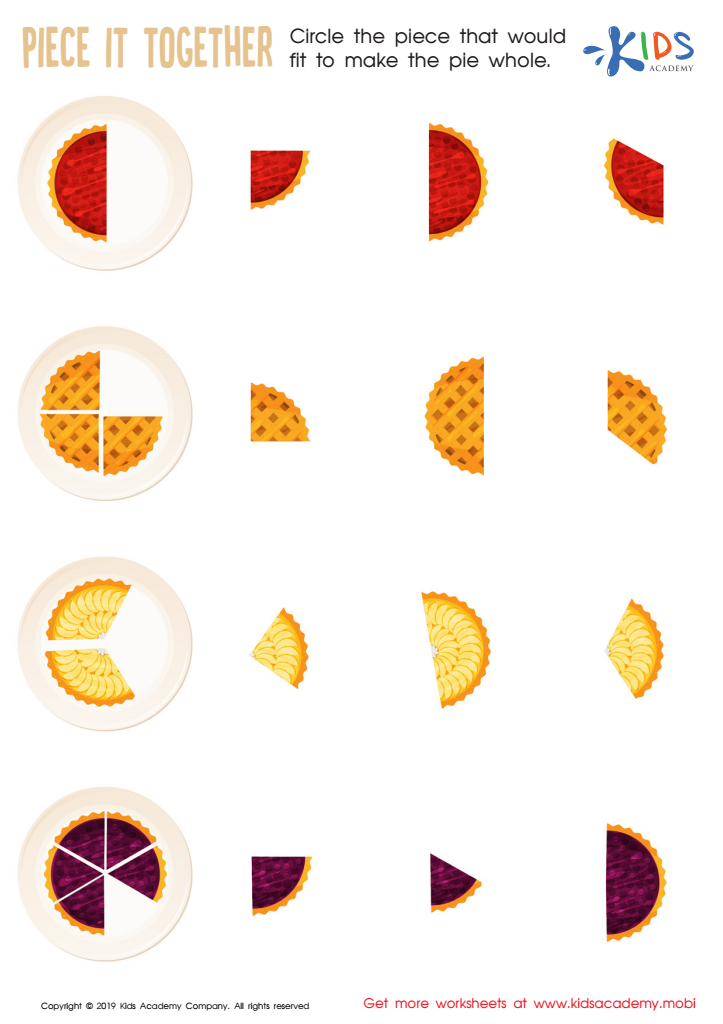
Help your kids learn fractions! Even if they're not eager, teach them as they get older. Teachers will provide enough lessons and homework, but you can go a step further. Look at a worksheet with your kids and help them circle the piece that would make the pie whole.
Piece it together Worksheet
Worksheet
Whole Shape from Halves, Thirds and Fourths Worksheet


Whole Shape from Halves, Thirds and Fourths Worksheet

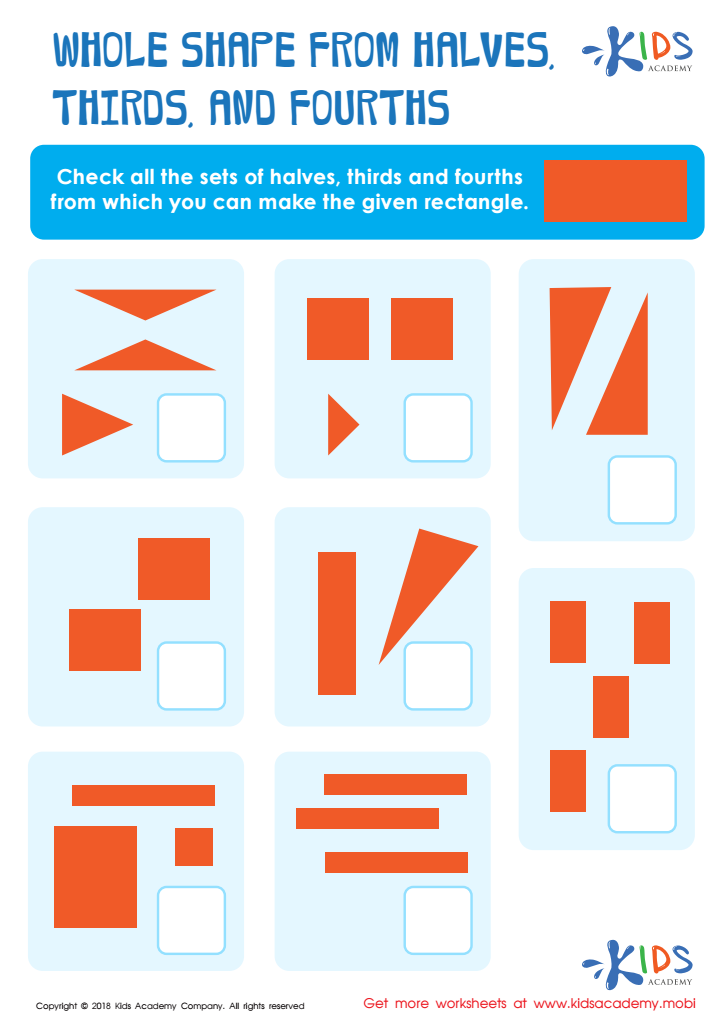
Explain to your students that they can make a new shape by combining halves, thirds, and fourths of a shape. Show them the worksheet with the rectangle at the top and ask them to find which sets of halves, thirds, and fourths make it. Have them check all the correct sets.
Whole Shape from Halves, Thirds and Fourths Worksheet
Worksheet


Shape recognition is a foundational skill in early mathematics education, making it essential for parents and teachers to prioritize in Grade 2. Mastering shape recognition helps children develop critical thinking and problem-solving skills, as they begin to identify, compare, and categorize different shapes in their environment. By recognizing shapes like circles, squares, triangles, and more complex polygons, children also learn to understand spatial relationships, laying the groundwork for geometry concepts they'll encounter later in their education.

Moreover, shape recognition fosters creativity and boosts fine motor skills through activities like drawing, cutting, and building with different shapes. Parents and teachers can integrate fun, hands-on activities, such as shape scavenger hunts or arts and crafts, to engage children and reinforce learning in an enjoyable way.

Additionally, shape recognition nourishes language development; children learn to articulate their observations and establish connections between shapes and real-world objects, enhancing their vocabulary and overall communication skills. As they begin to encounter concepts like symmetry, congruence, and exploring volume in higher grades, a strong foundation in shape recognition will empower them to thrive in more advanced mathematical concepts. Ultimately, encouraging shape recognition is vital in helping students build confidence and a lasting love for mathematics.