Data interpretation Easy Grade 2 Measurement Worksheets
7 filtered results
-
From - To
Unlock the world of data interpretation with our Easy Grade 2 Measurement Worksheets! Perfectly tailored for second graders, these worksheets foster critical thinking by helping young learners understand and analyze measurement data. Featuring engaging visuals and simple instructions, kids will have fun while mastering essential skills. From reading graphs and charts to comparing and organizing data, our worksheets make complex concepts accessible and enjoyable. Ideal for classroom or home use, these resources are designed to build a strong foundation in math and data literacy, inspiring confidence and curiosity in every child. Download now and watch your students excel!
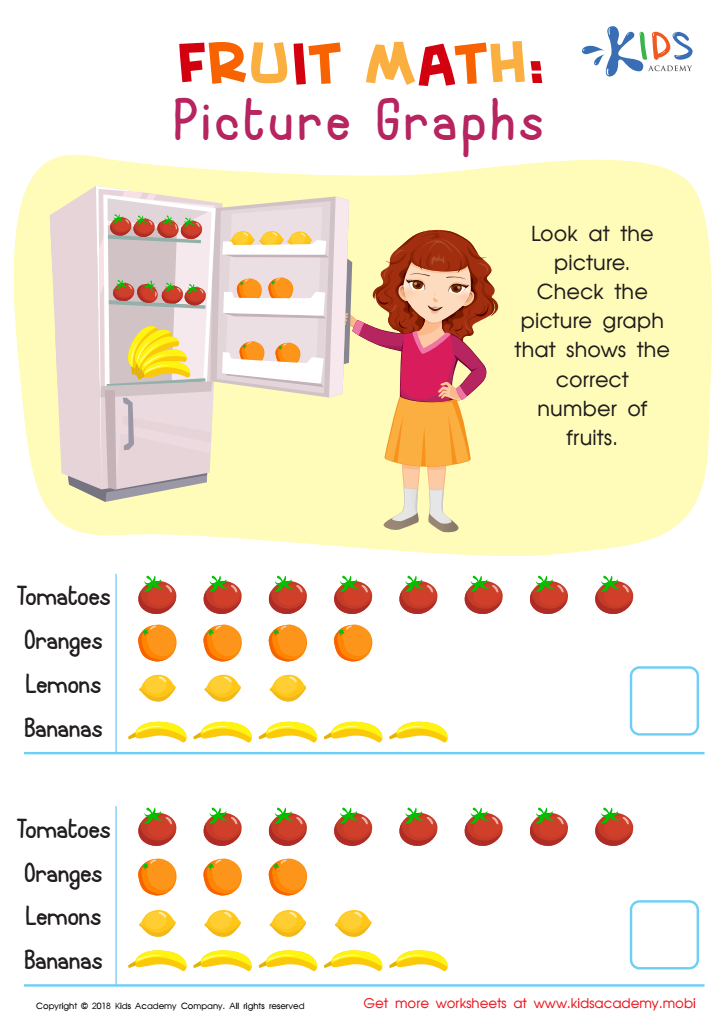
Fruit Math: Picture Graphs Worksheet
 Assign to My Students
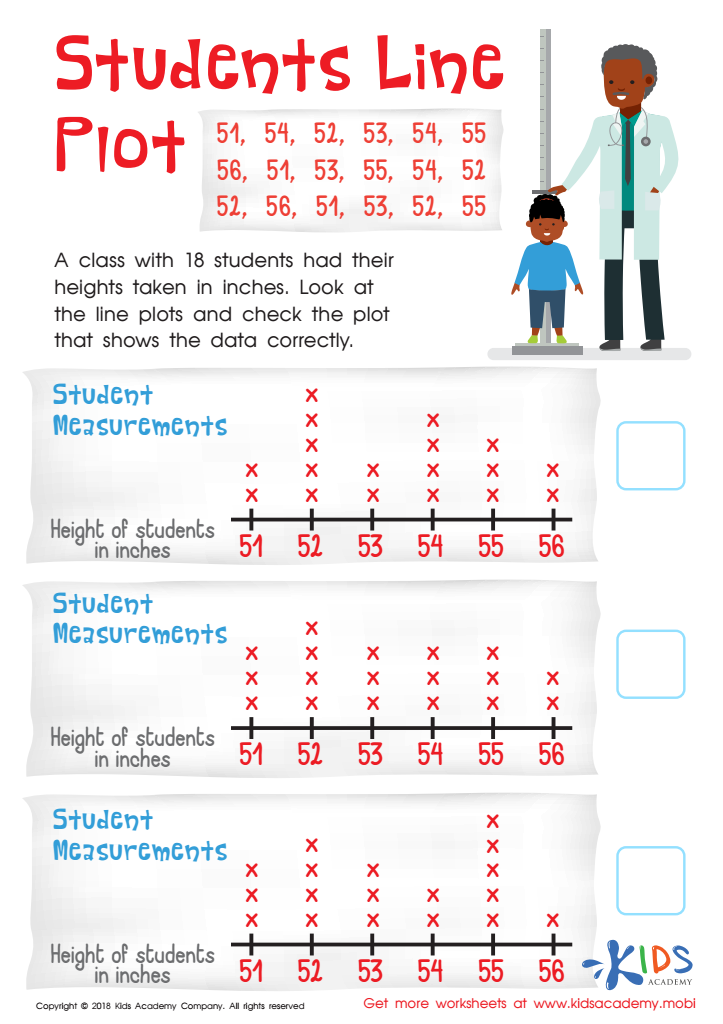
Students Line Plot Worksheet
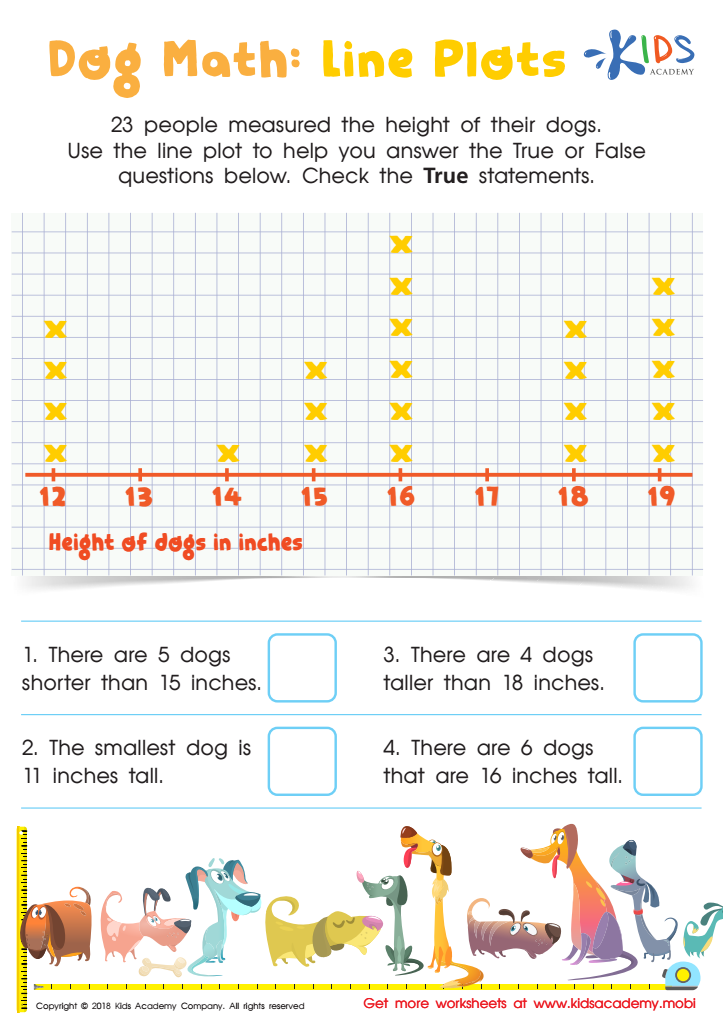
Dog Math: Line Plots Worksheet
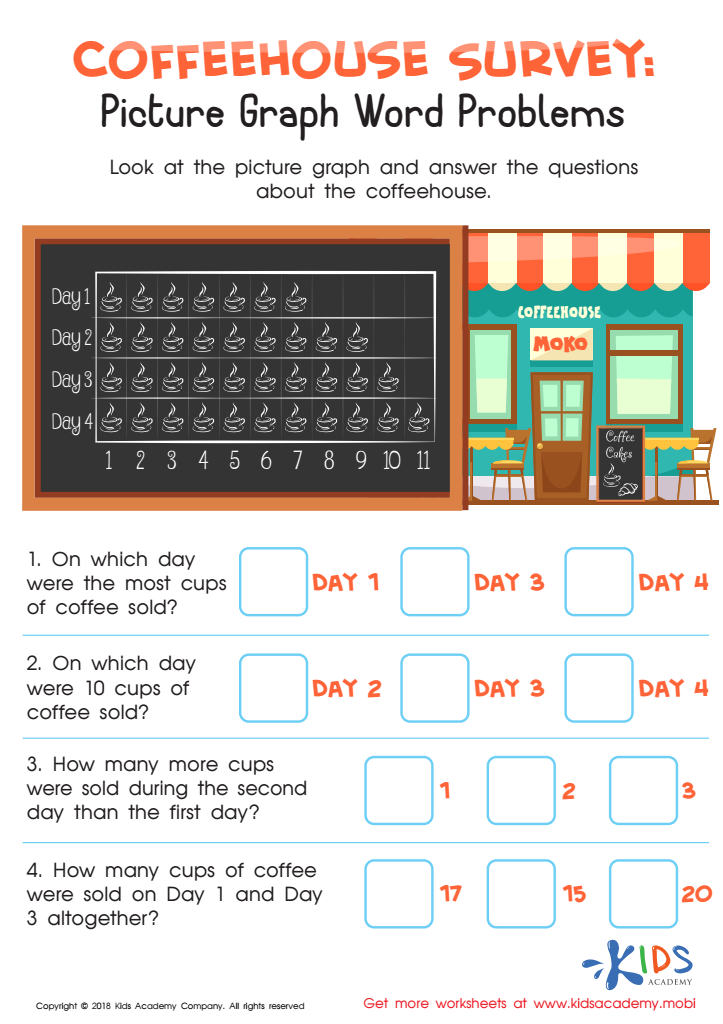
Coffeehouse Survey: Picture Graph Word Problems Worksheet
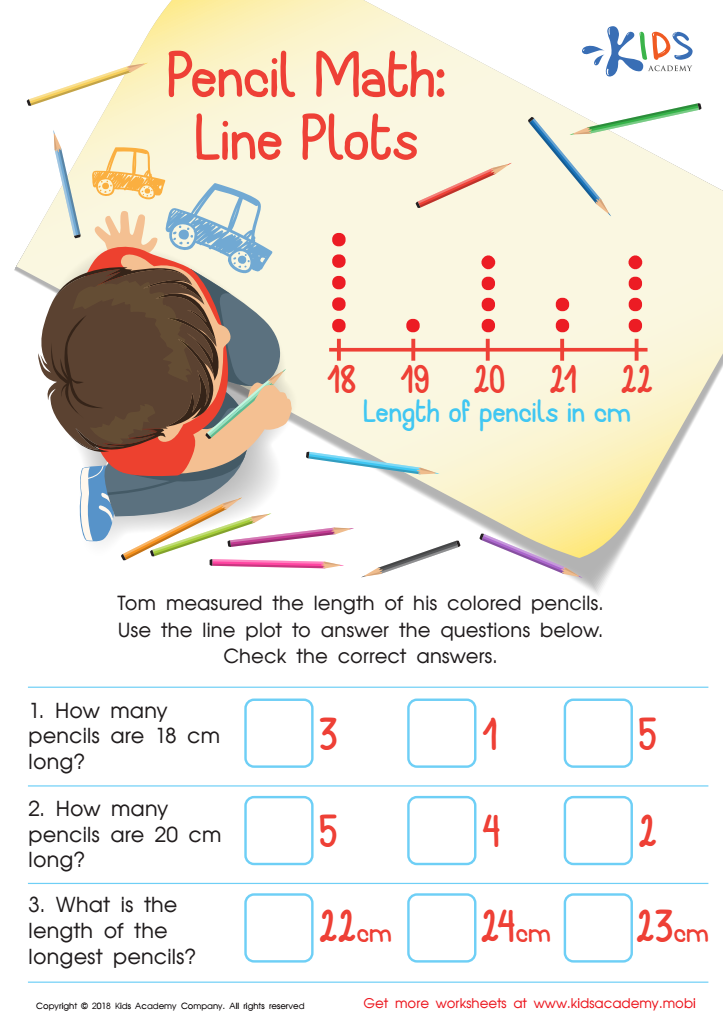
Pencil Math: Line Plots Worksheet
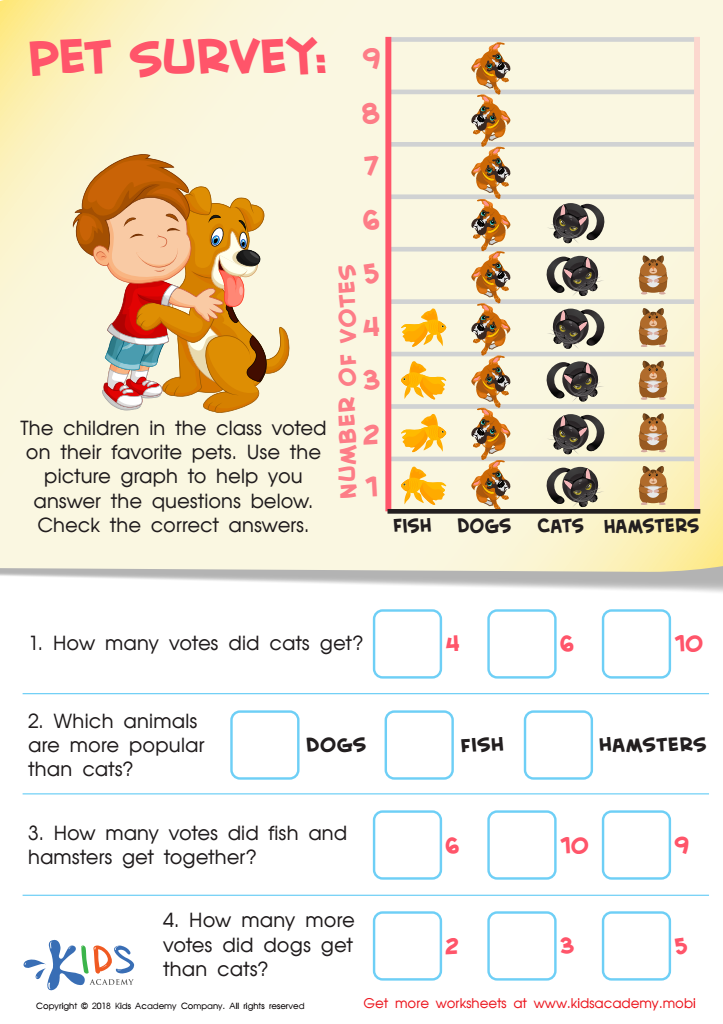
Pet Survey Worksheet
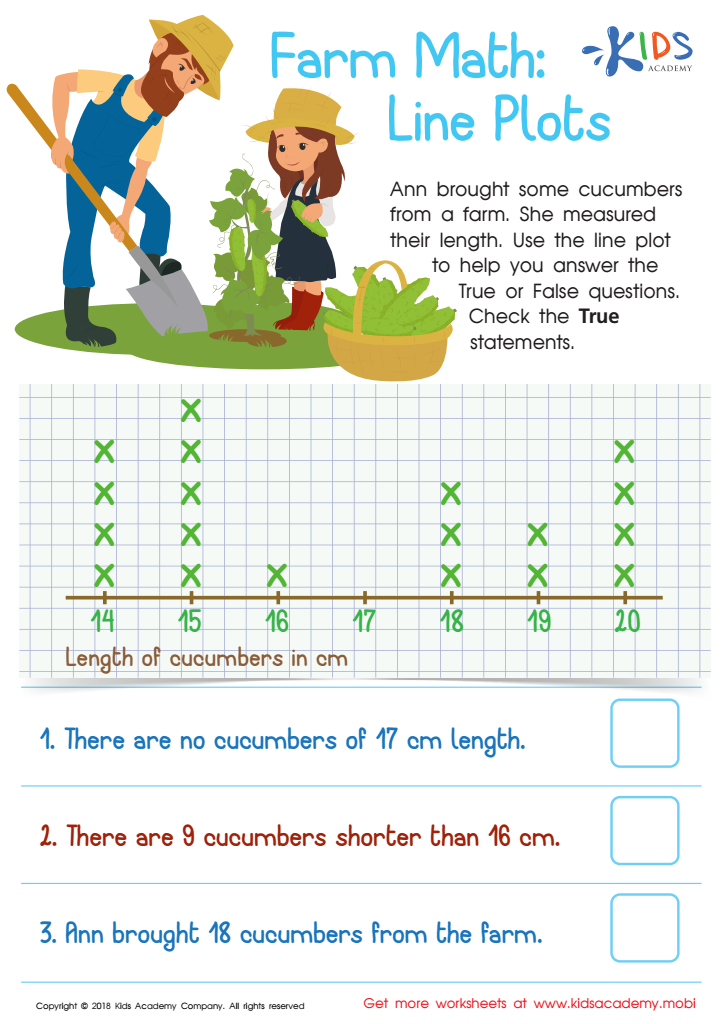
Farm Math: Line Plots Worksheet





Data interpretation is crucial for Grade 2 students learning about measurement because it lays the groundwork for vital analytical and problem-solving skills. At this early stage, children typically engage in activities like measuring objects, understanding units (such as inches, centimeters), and comparing quantities. When parents and teachers emphasize data interpretation, they help children make sense of numerical facts and simple graphs, fostering abilities they will use in everyday decision-making and academic pursuits.
Early exposure to data interpretation can enhance critical thinking. For instance, when students learn to analyze data, they start to ask questions like "Which object is longer?" or "How many more inches is this compared to that?" These foundational experiences nurture logical reasoning and precise understanding.
Moreover, data interpretation in measurement is often hands-on and interactive. When young children measure objects around them and record their findings, they are engaged in experiential learning. This kind of active involvement not only solidifies their grasp of mathematical concepts but also boosts their confidence and curiosity.
By integrating data interpretation skills into early education, parents and teachers equip children with tools that support academic growth and practical life skills. It means nurturing informed, competent individuals who can effectively interact with the quantitative world around them.