Understanding life cycles Easy Grade 2 Science Worksheets
3 filtered results
-
From - To
Explore our "Understanding Life Cycles Easy Grade 2 Science Worksheets" designed specifically for second graders! These engaging worksheets guide students through the fascinating stages of various life cycles, from plants to animals. By using clear visuals and simple explanations, they'll easily grasp the concepts while boosting their critical thinking and observational skills. Perfect for in-class activities or homework assignments, our worksheets provide a hands-on approach to learning science. Developed by education experts, each worksheet aligns with curriculum standards to ensure your child gets the best educational experience. Dive into the world of life cycles and watch your child's curiosity bloom!
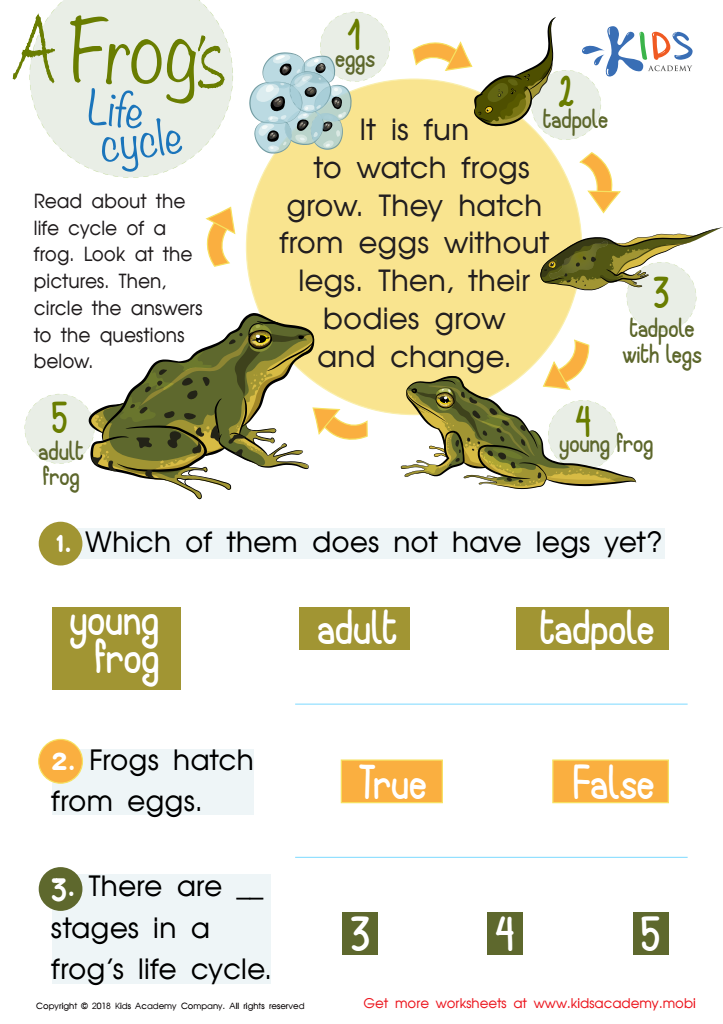
A Frog’s Life Cycle Worksheet
 Assign to My Students
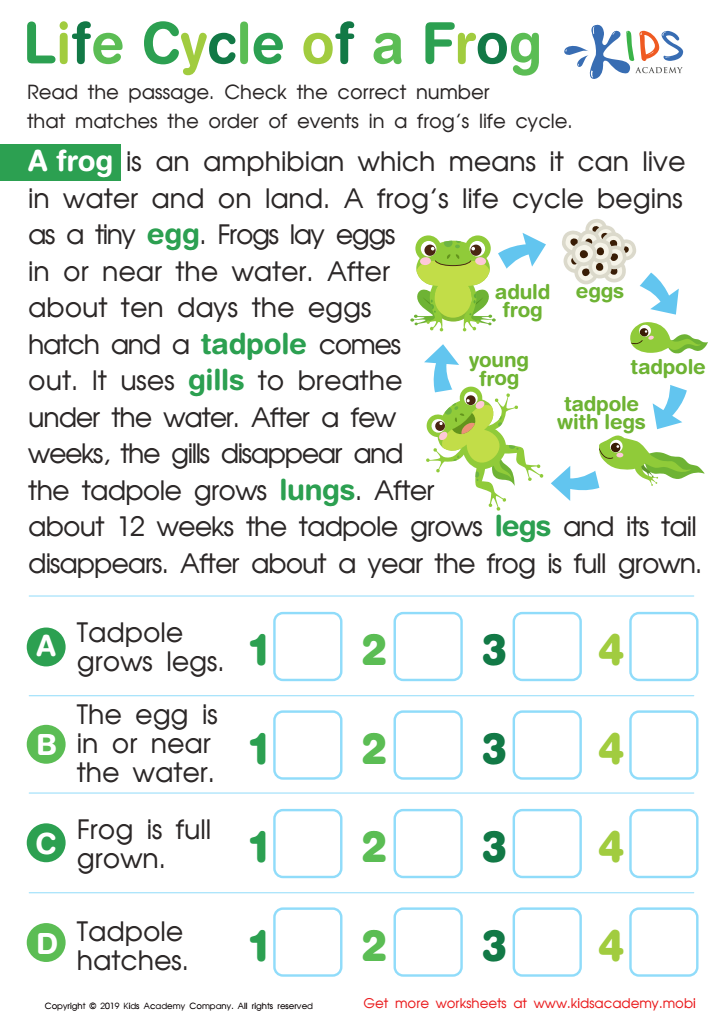
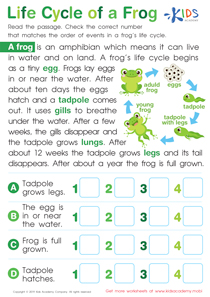
Life Cycle of a Frog Worksheet
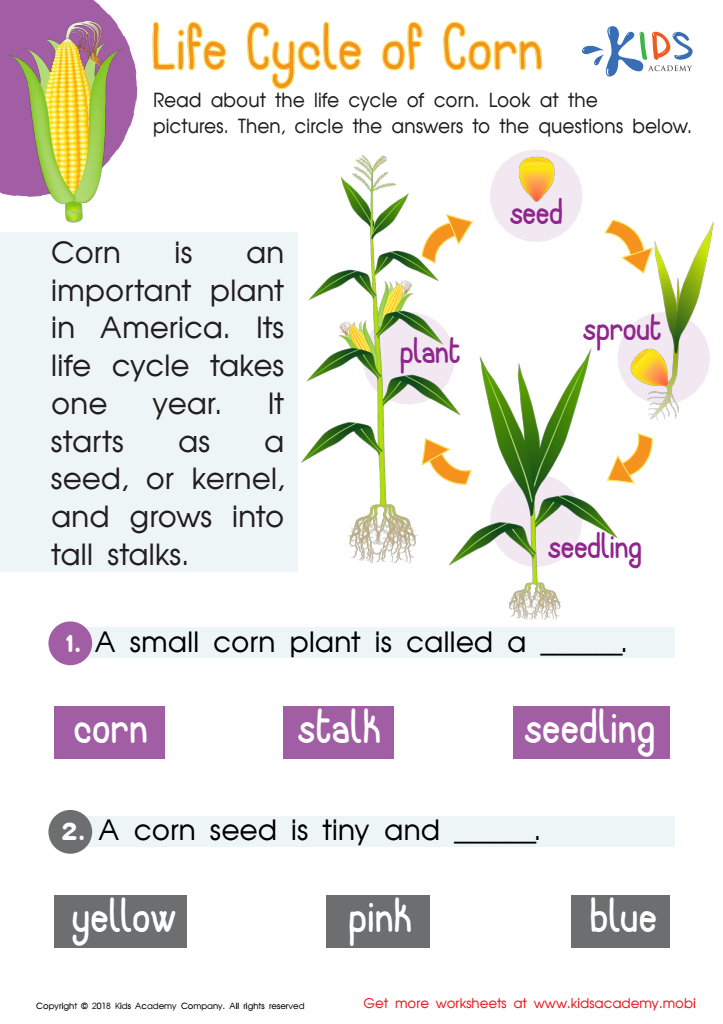
Life Cycle of Corn Worksheet






Understanding life cycles is fundamental in Grade 2 science because it nurtures children's curiosity about the natural world and lays the groundwork for more complex biological concepts.
By studying life cycles, children learn about birth, growth, reproduction, and death, providing them with a concrete example of how living things change over time. This understanding helps to develop their capacity for critical thinking and observation. For instance, observing a butterfly's transformation from a caterpillar or a plant growing from a seed makes abstract concepts tangible and easier to grasp.
Cognitively, this topic supports young learners in developing sequencing skills, as they have to recognize and recall the stages in the correct order. Knowing life cycles also supports literacy and enhances vocabulary, offering terms like "metamorphosis" and "germination," enriching their linguistic ability.
Socially and emotionally, this knowledge fosters empathy and respect for living things. Children understand that life undergoes changes and that these changes are natural and necessary, which can parallel discussions on personal growth and change, promoting resilience.
Finally, parents and teachers can utilize life cycles to integrate lessons across subjects, from storytelling in language arts to data collection in math, making learning holistic and connected. Thus, understanding life cycles is not only a cornerstone of biological sciences but also of well-rounded education.