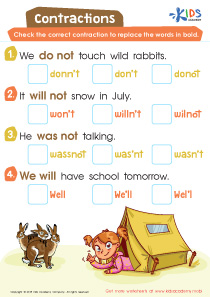
Reading comprehension Grade 1 Consonant Digraphs Worksheets
6 filtered results
-
From - To
Discover engaging Reading Comprehension worksheets focused on consonant digraphs for Grade 1 students at Kids Academy! Our printable resources are designed to enhance early literacy skills, helping young learners recognize and understand consonant digraphs through fun activities. Each worksheet fosters critical thinking and comprehension, allowing students to practice reading in context and improve their language abilities. Perfect for classroom or home use, our worksheets support learning in an interactive manner, making phonics and reading enjoyable. Browse our collection to provide your first graders with the tools they need to develop strong foundational reading skills today!
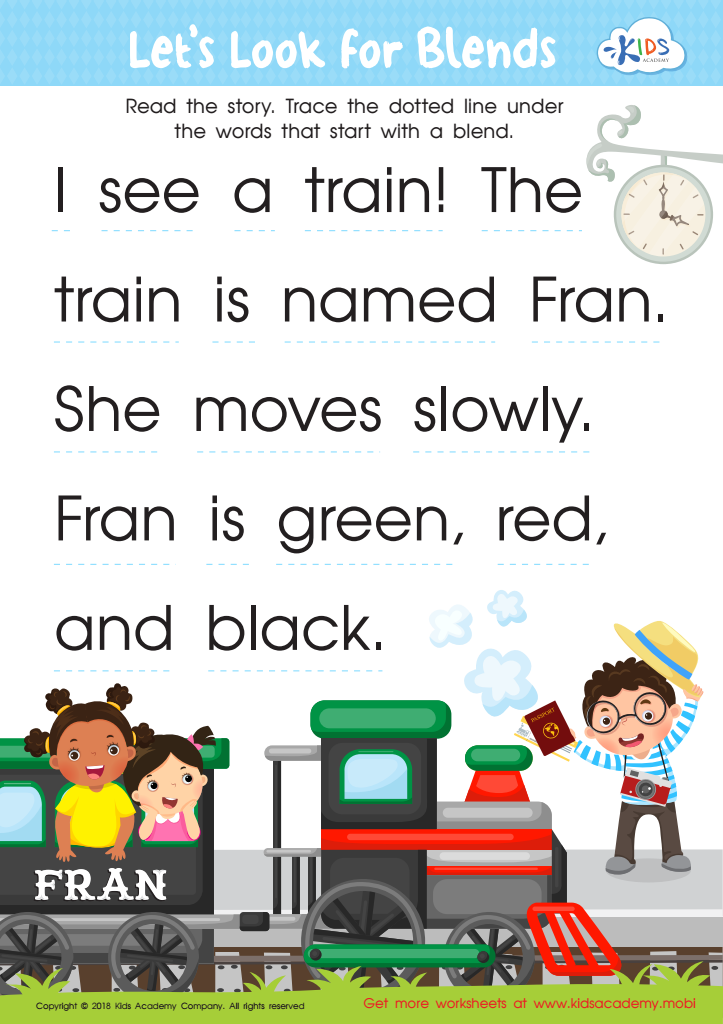
Let's Look for Blends Worksheet
 Assign to My Students
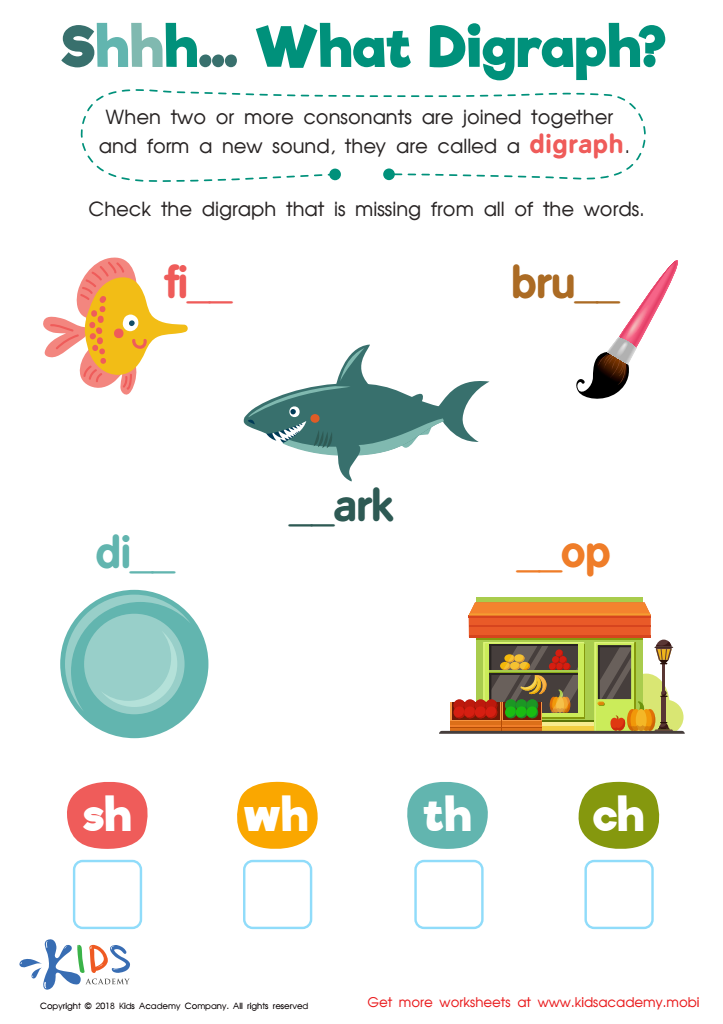
Shhh... What Digraph? Worksheet
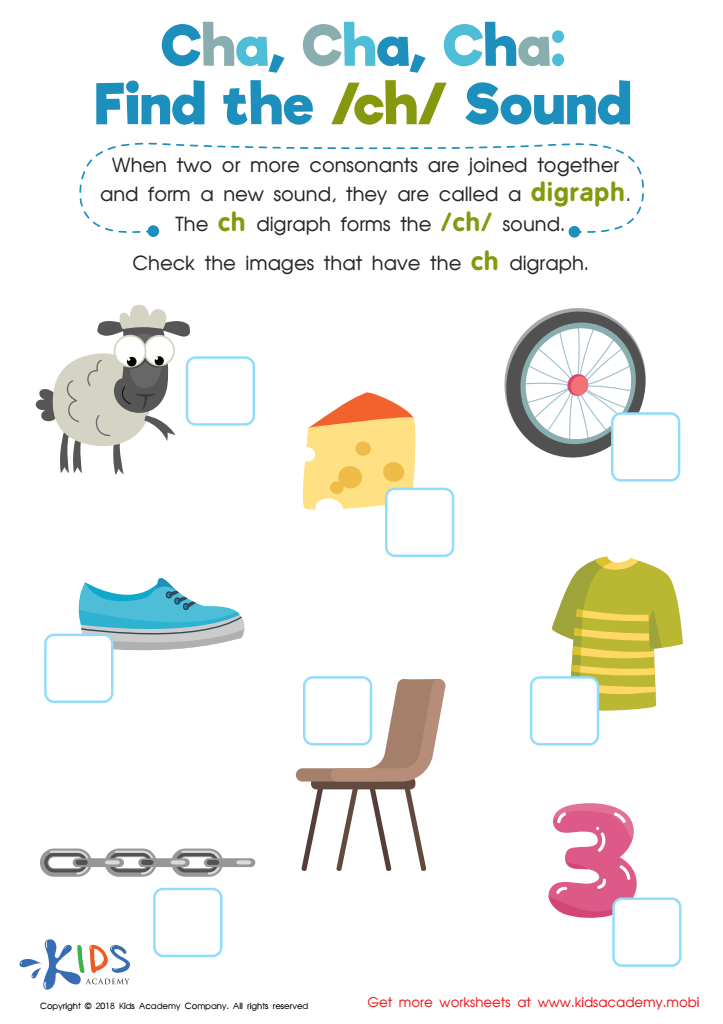
Cha, Cha, Cha: Find the /Ch/ Sound Worksheet
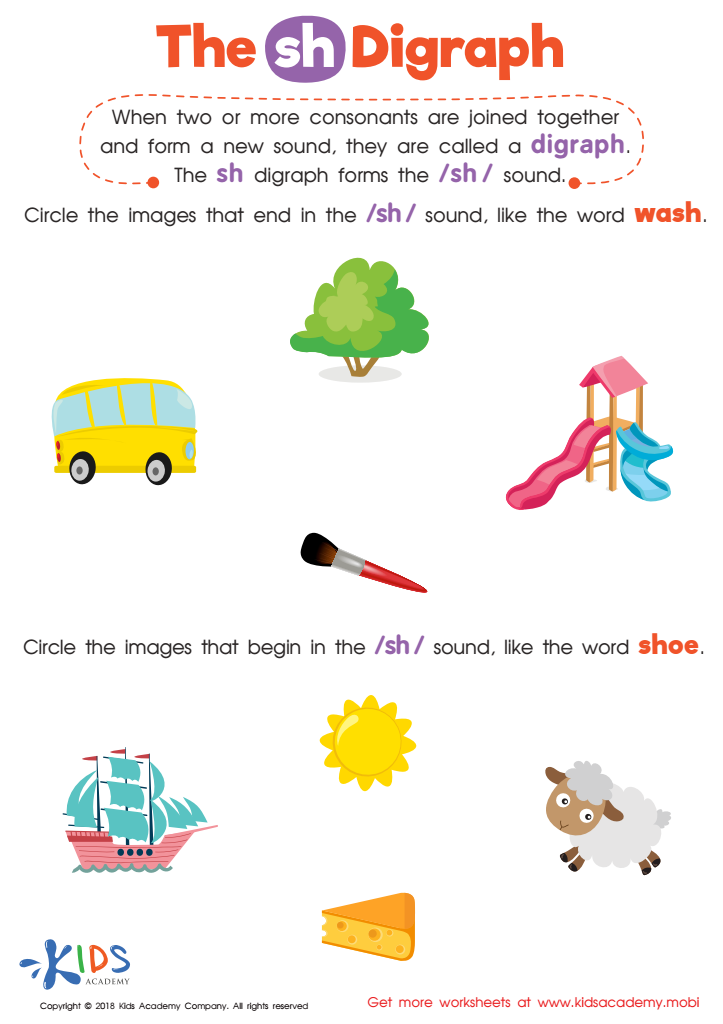
The SH Digraph Worksheet
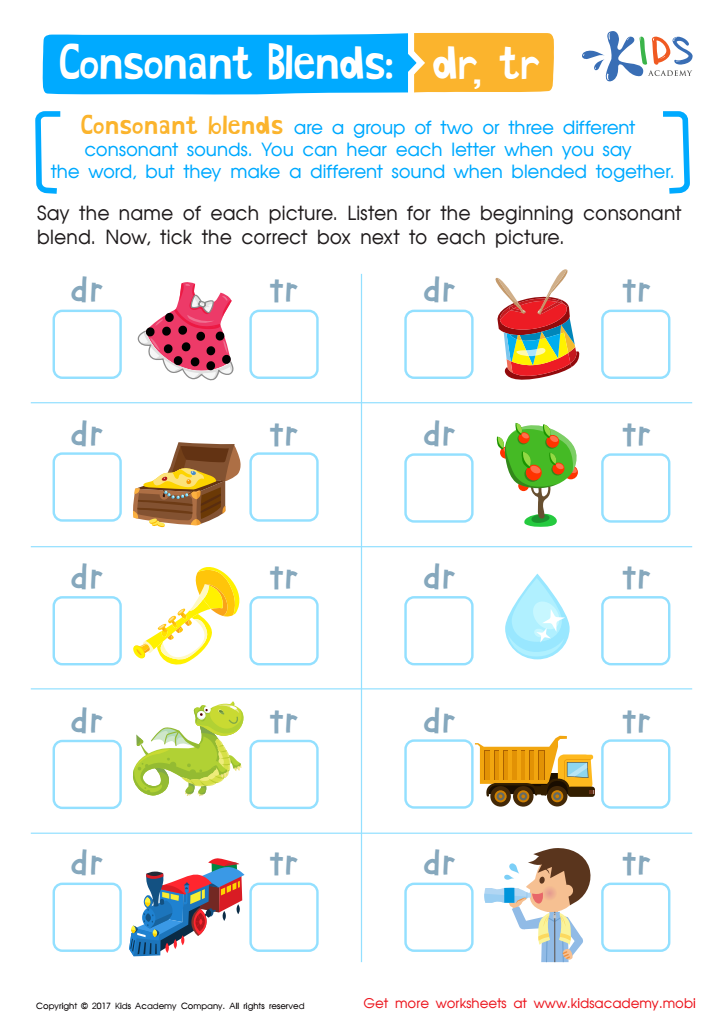
Consonant Blends: "Dr" and "Tr" Printable
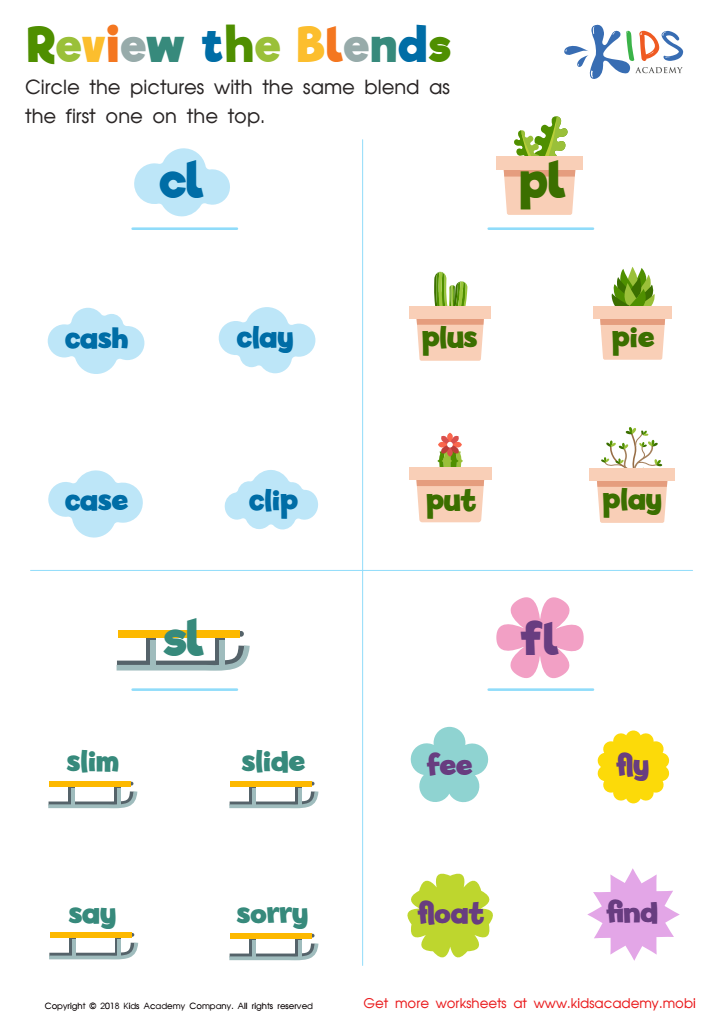
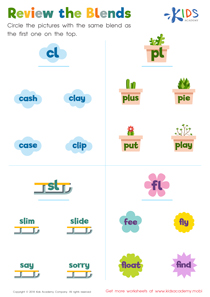
Review the Blends Worksheet


Reading comprehension in Grade 1 is crucial for building a strong foundation for future literacy skills, and consonant digraphs play a significant role in this process. Consonant digraphs are pairs of consonants that blend together to create a unique sound, such as "ch," "sh," "th," and "ng." Understanding and decoding these sounds enhances students' reading abilities and helps them recognize words confidently.
When parents and teachers prioritize mastering consonant digraphs, they set children up for success in reading comprehension. Students who are proficient in recognizing these sounds can decode unfamiliar words, facilitating smoother reading and deeper comprehension of texts. This enables them to expand their vocabulary and understand more complex concepts.
Moreover, solid reading comprehension skills in early education foster a love for reading, encouraging lifelong learners. Parents and teachers can support this development by integrating engaging activities, like read-aloud sessions and phonics games, that focus on consonant digraphs. This collaborative effort creates a nurturing learning environment, ensuring that children develop the necessary skills to approach reading with confidence. Ultimately, early mastery of consonant digraphs lays the groundwork for academic achievement and more meaningful connections with literature.