Memory enhancement Grade 1 Chess Worksheets
3 filtered results
-
From - To
Discover our engaging Memory Enhancement Grade 1 Chess Worksheets designed to boost cognitive skills in young learners. These worksheets combine the strategic fun of chess with practical exercises aimed at enhancing memory retention and recall. Perfect for first graders, they foster critical thinking, concentration, and problem-solving capabilities in a playful manner. Tailored specifically for young minds, each activity progressively builds these essential skills, ensuring an enjoyable and productive learning experience. Great for at-home practice or classroom use, our worksheets are an effective tool to sharpen your child's memory while introducing them to the fascinating world of chess.
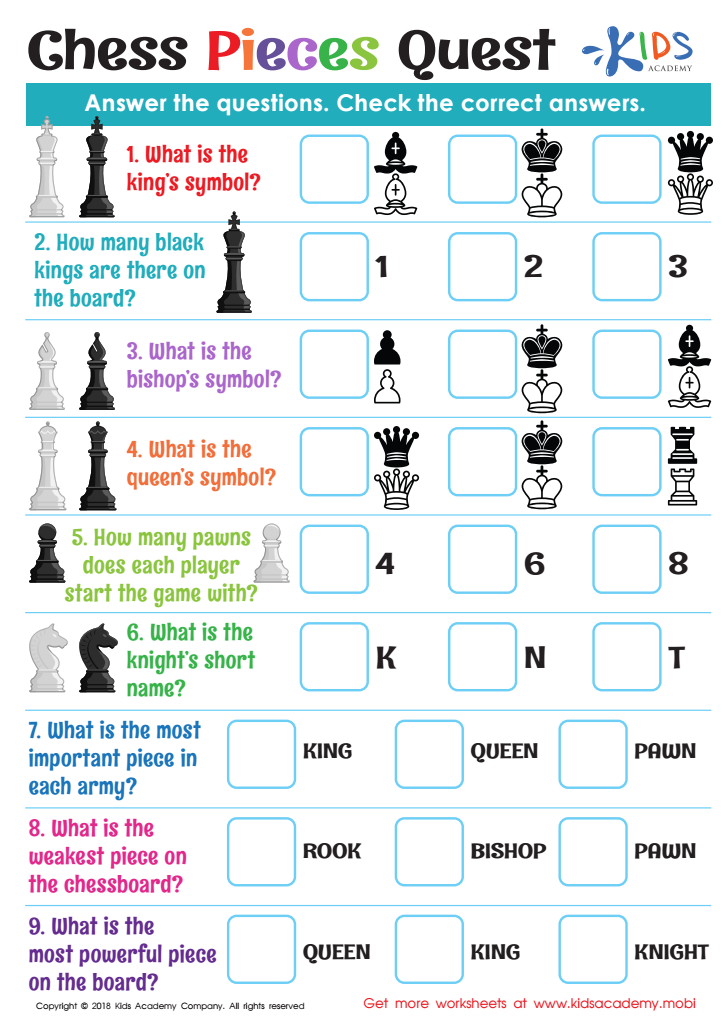
Chess Pieces Quest Worksheet
 Assign to My Students
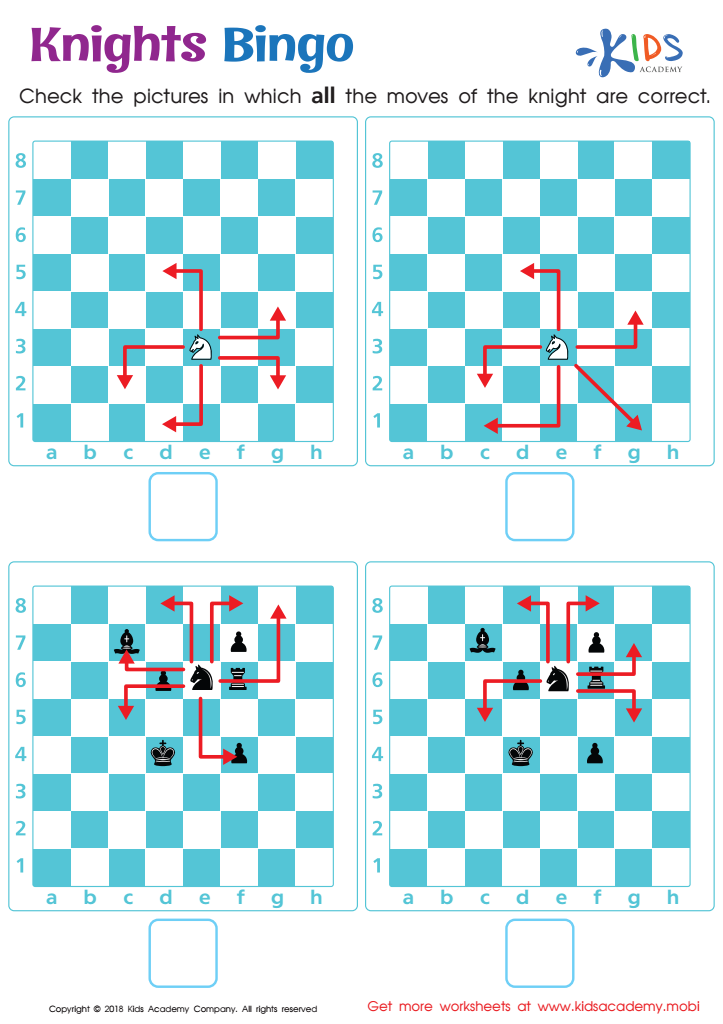
Knights Bingo Worksheet
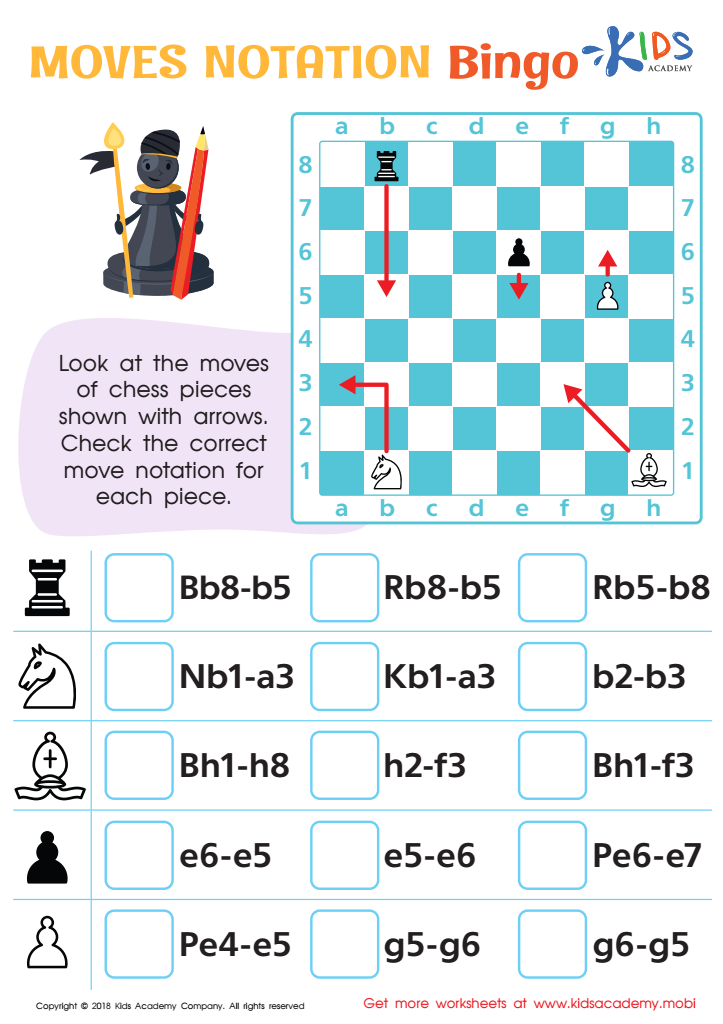
Moves Notation Bingo Worksheet





Memory enhancement using Grade 1 Chess is important for several reasons that significantly benefit both parents and teachers. Firstly, chess is inherently a strategic game that requires players to remember patterns, rules, and sequences, which helps strengthen a young child's memory. When children improve their memory skills, they can better retain academic content and instructions.
Moreover, playing chess promotes cognitive development by enhancing concentration, critical thinking, and analytical skills. For early-grade students, developing these cognitive skills at an essential stage can lead to better performance in all academic areas. So, encouraging chess not only improves memory but also fortifies general intellectual growth.
Furthermore, chess is a valuable tool for teaching patience and discipline. It requires children to think ahead and plan their moves carefully, therefore cultivating a mindset geared toward strategic planning and foresight. Learning these skills early can have a long-lasting positive impact on children's learning habits and problem-solving abilities.
Lastly, incorporating chess into the curriculum or after-school activities engages children in a fun and educational way, blending learning with play. This aspect is vital for maintaining their interest and motivation in a balanced manner. Overall, memory enhancement through Grade 1 Chess supports intellectual and personal growth, benefiting children academically and personally.