Fraction simplification Grade 1 Worksheets
4 filtered results
-
From - To
Explore our engaging Fraction Simplification Grade 1 Worksheets designed to make learning fractions fun and enjoyable for young students! These worksheets will help first-graders grasp the concept of simplifying fractions through interactive exercises and colorful illustrations. With a variety of problems that encourage critical thinking, kids will gain confidence in their math skills. Our easy-to-follow instructions support diverse learning styles, ensuring every child can master fraction simplification at their own pace. Perfect for classroom activities or home learning, these worksheets will ignite a passion for mathematics in your child while laying a strong foundation for future success in math!
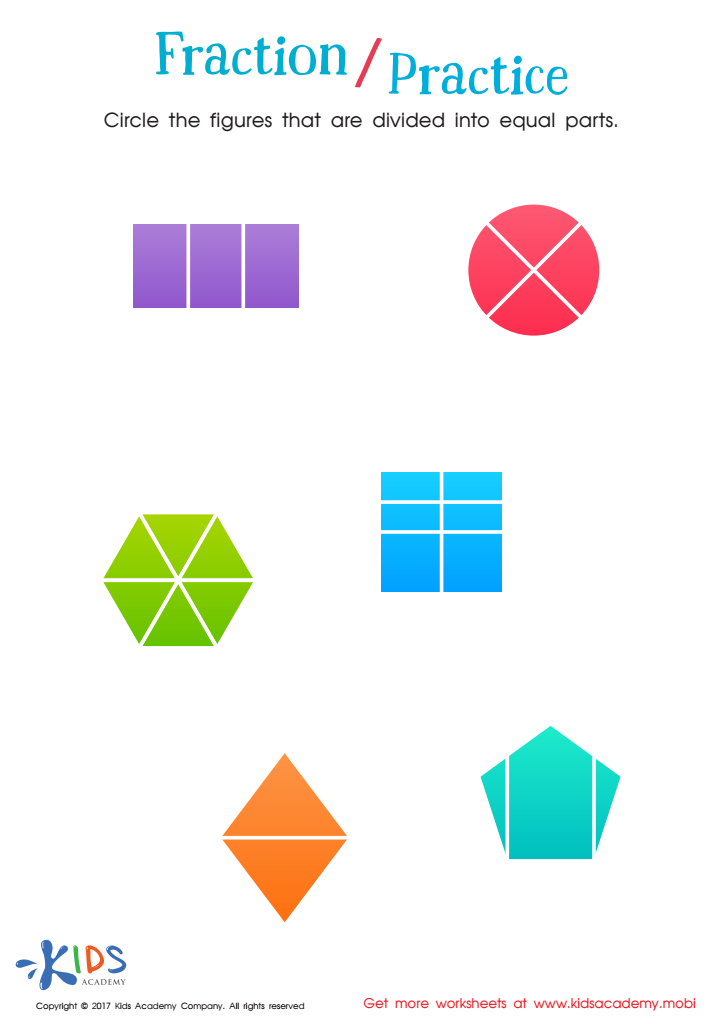
Fractions: Shapes Worksheet
 Assign to My Students
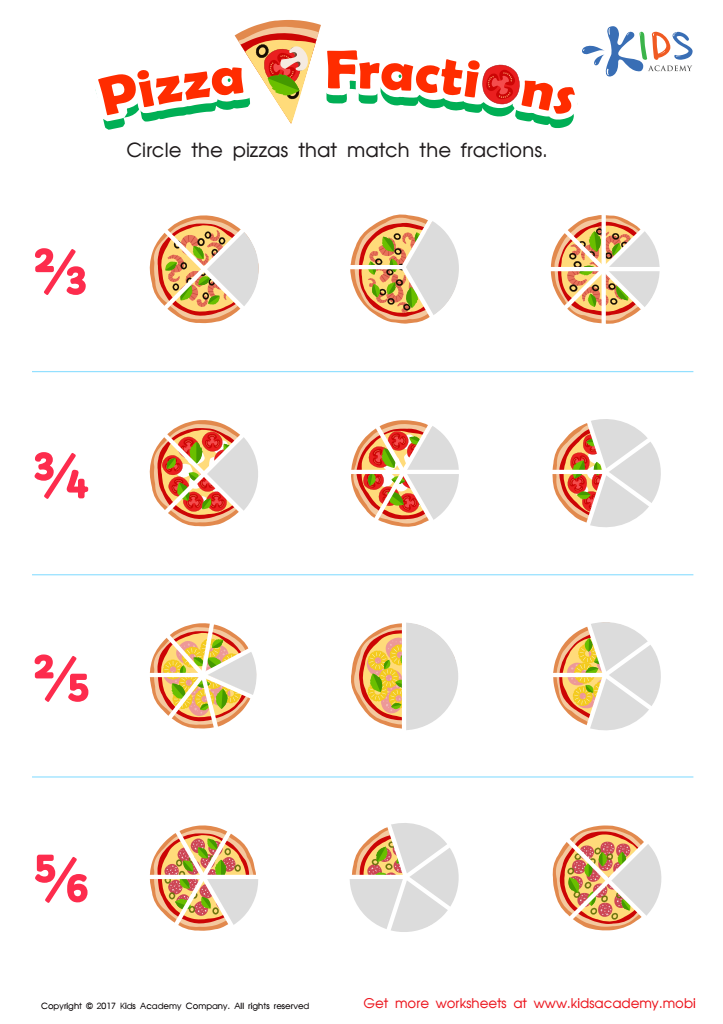
Fractions: Pizza Printable





Teaching grade 1 students about fraction simplification is crucial for several reasons. Firstly, fractions are foundational to understanding mathematics. Simplifying fractions helps young learners grasp the concept that parts can be represented in different ways, fostering a deeper understanding of numbers and their relationships. This lays the groundwork for more complex mathematical topics as they progress.
Secondly, simplifying fractions enhances critical thinking and problem-solving skills. When children learn to simplify, they analyze relationships between numbers and make decisions on how to alter them, which promotes analytical thinking. This is an essential skill not only in math but in everyday decision-making processes.
Moreover, understanding fractions encourages cooperative learning, as students often engage in collaborative activities to solve fraction problems. This interaction promotes social skills and communication, building a supportive classroom culture.
Lastly, as they gain confidence in dealing with fractions, students become more motivated in math, reducing anxiety related to the subject. When parents and teachers emphasize fraction simplification, they foster a positive environment where children can explore mathematical concepts with enthusiasm, engendering a lifelong love for learning. Supporting students in this area ultimately contributes to their academic success and personal development.