Visual representation of fractions Grade 1 Worksheets
3 filtered results
-
From - To
Discover our engaging Visual Representation of Fractions worksheets designed specifically for Grade 1 students! These interactive resources help young learners grasp the concept of fractions using colorful visuals and hands-on activities. Each worksheet encourages children to identify, compare, and create fractions through fun illustrations, making learning enjoyable and effective. With a variety of exercises, students will develop a solid foundation in understanding parts of a whole and relational concepts. Perfect for classroom use or at-home practice, our worksheets promote critical thinking and strengthen math skills in an accessible way. Dive into the world of fractions and spark your child's mathematical curiosity today!
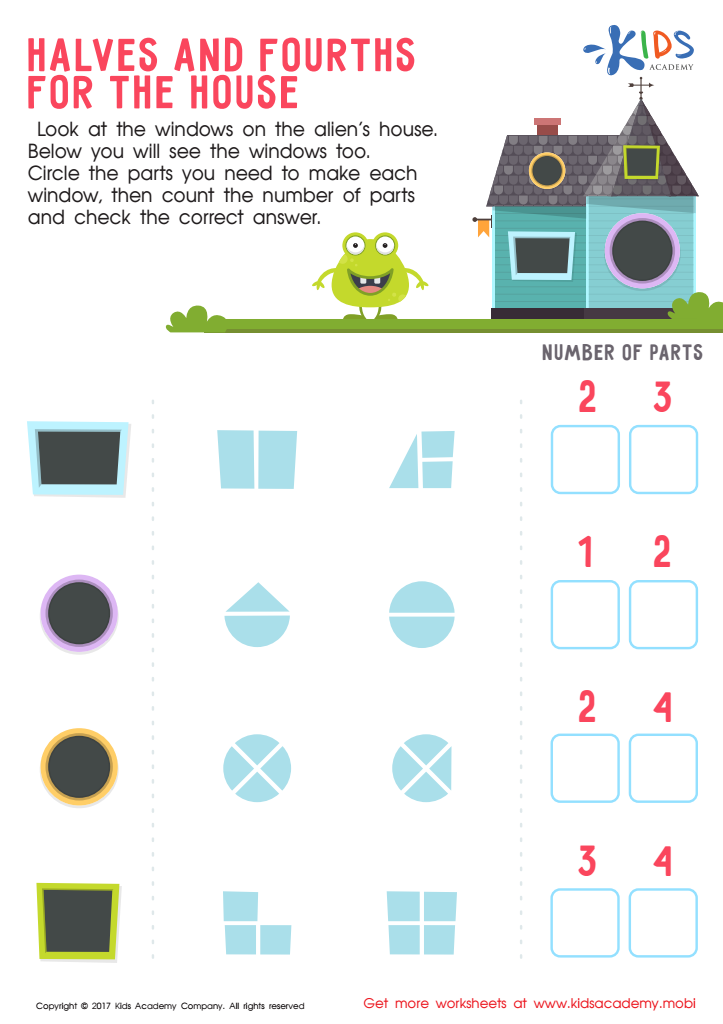
Halves and Fourths for the House Worksheet
 Assign to My Students
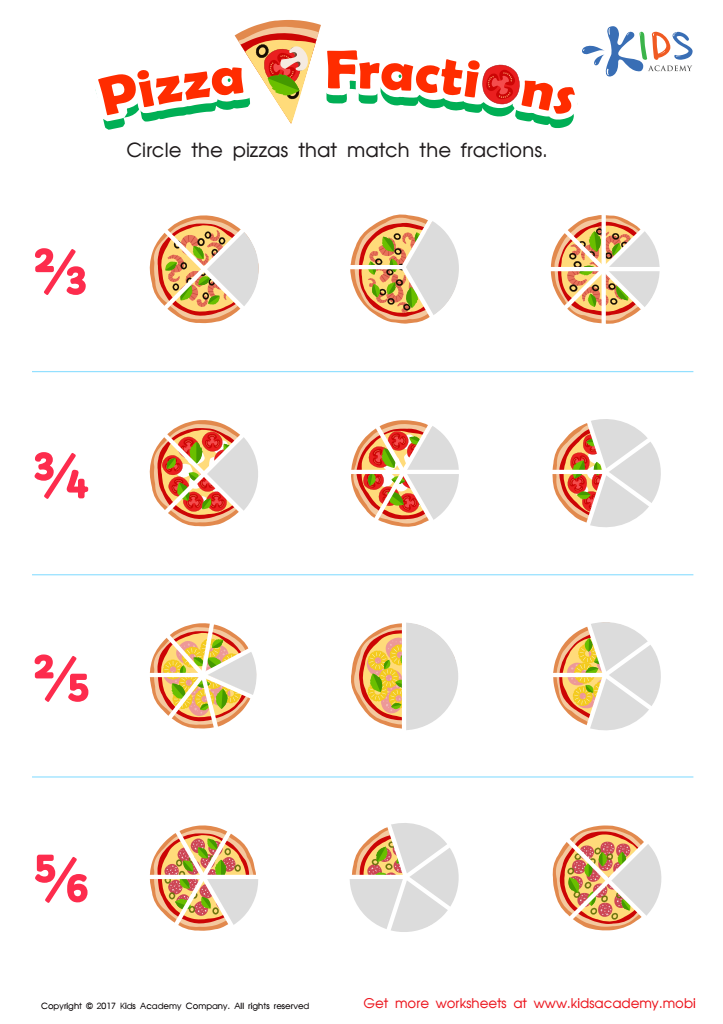
Fractions: Pizza Printable
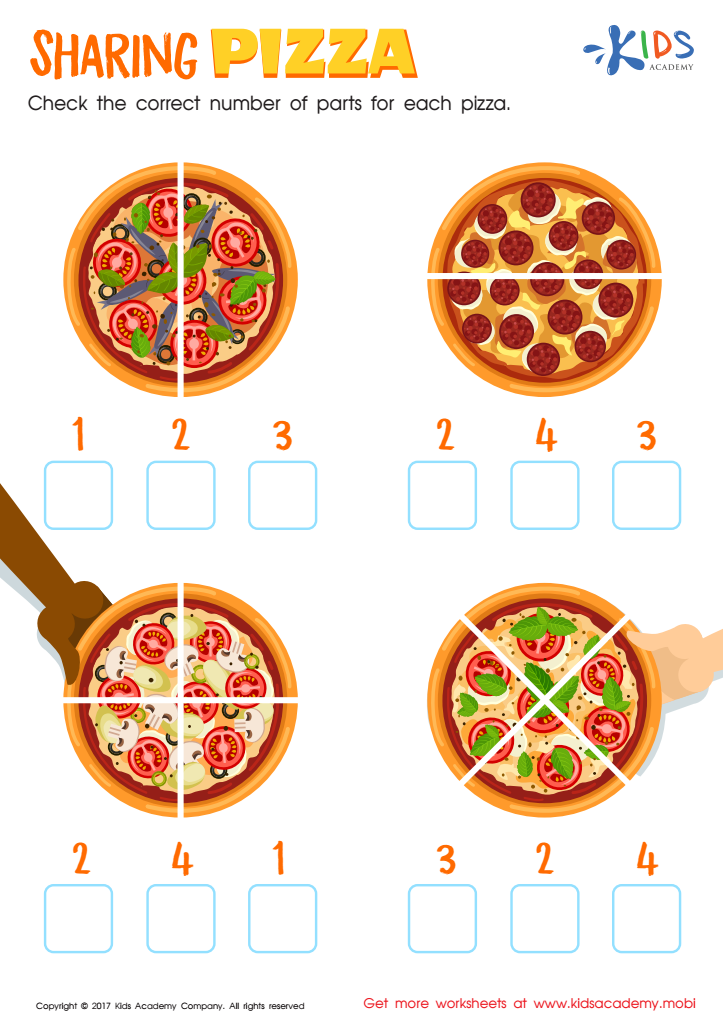
Sharing Pizza Worksheet








Visual representation of fractions is crucial for first graders as it lays the foundation for their understanding of mathematical concepts. At this age, students are typically concrete learners, meaning they grasp ideas best when they can see and manipulate physical objects. Visual tools like pie charts, bar models, and shaded shapes help them visualize fractions concretely; for example, seeing a pizza divided into equal slices can clarify the concept of "half" or "quarter."
Additionally, visual representations cater to diverse learning styles, ensuring that students comprehend fractions regardless of their aptitude in abstract reasoning. When parents and teachers emphasize visualization, they not only make learning more engaging but also enable students to solve problems with confidence. This development is vital as it not only strengthens mathematical skills but also cultivates critical thinking, reasoning, and spatial awareness.
Moreover, building a strong visual understanding of fractions in the early years prepares students for more advanced mathematical concepts. As they progress in their education, they will encounter fractions in various contexts, and a solid visual foundation will make these future challenges less daunting. Ultimately, supporting visual representations fosters a positive and enduring relationship with mathematics among young learners.