Basic geometry understanding Grade 1 Geometry Worksheets
3 filtered results
-
From - To
Unlock your child’s potential with our "Basic Geometry Understanding Grade 1 Geometry Worksheets." At Kids Academy, we focus on engaging and effective learning activities tailored for first graders. Our printable worksheets introduce essential geometry concepts such as shapes, patterns, and spatial understanding. These well-designed exercises help young learners develop critical thinking and problem-solving skills while making learning fun and interactive. Perfect for both classroom and home use, our worksheets are a valuable resource to support your child’s math journey. Give your little one a solid foundation in geometry and watch their confidence soar!
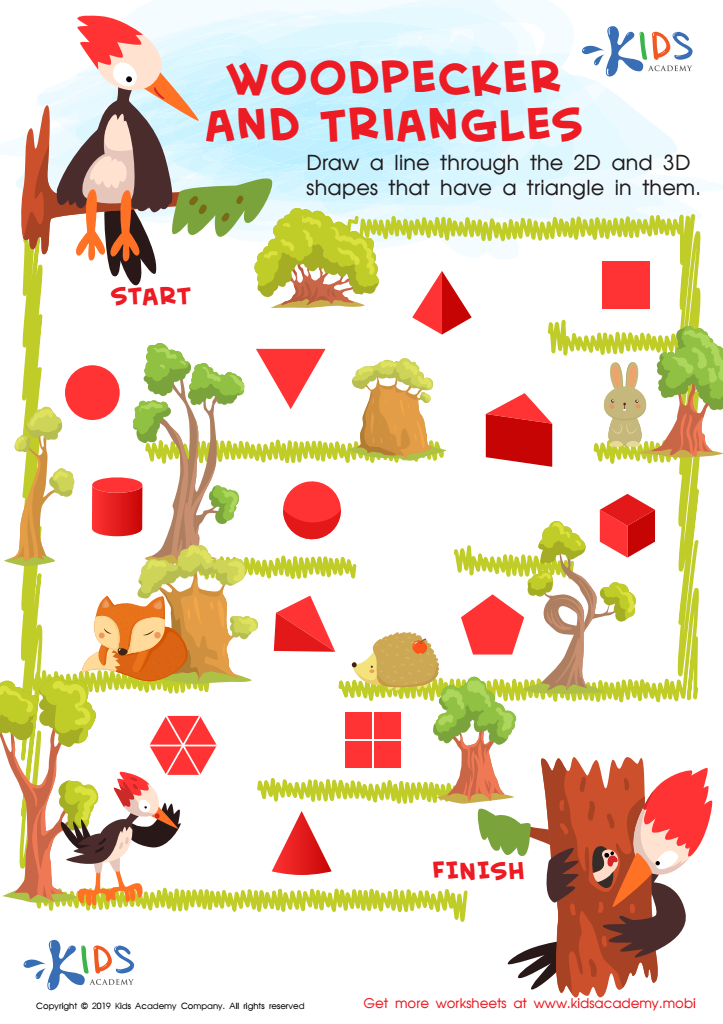
Woodpecker and Triangles Worksheet
 Assign to My Students
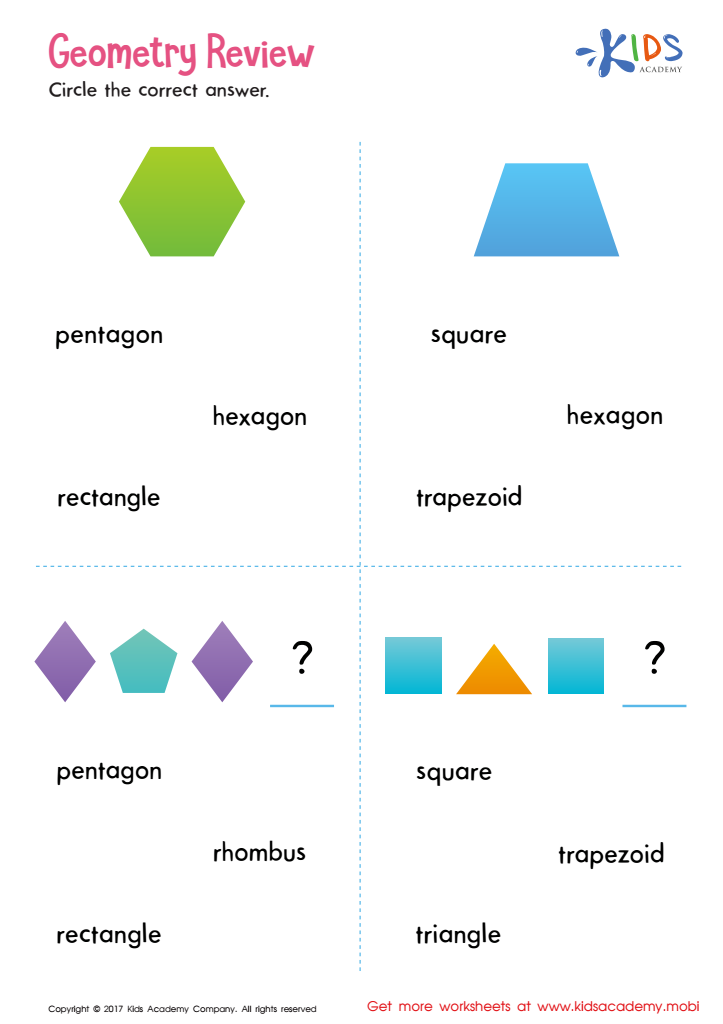
Geometry Review Printable
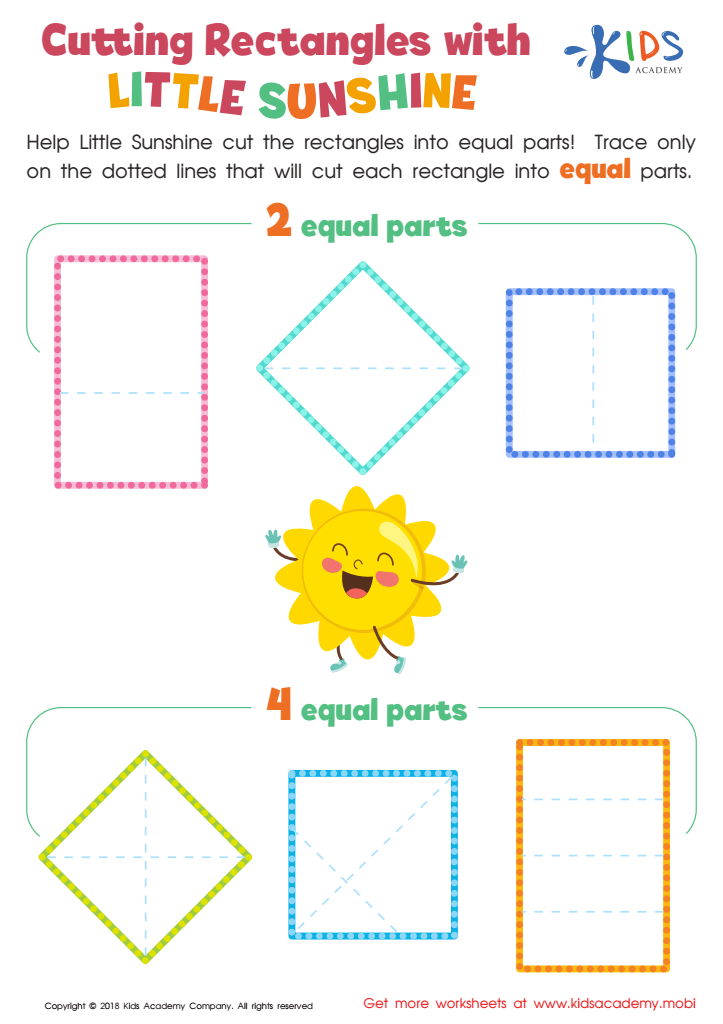
Cutting Rectangles with Little Sunshine Worksheet








Understanding basic geometry in Grade 1 is crucial for a child’s educational foundation and overall cognitive development. Geometry helps young learners grasp spatial relationships, which are essential for interpreting and interacting with the world around them. By learning about shapes, sizes, positions, and orientations, children develop critical thinking and problem-solving skills.
Teachers and parents should care about this aspect of early education because it cultivates a child's ability to visualize and mentally manipulate objects. This skill is commonly applied in everyday life — from organizing their room to comprehending maps and diagrams.
Moreover, early geometry education supports other academic areas, such as mathematics and reading comprehension. Recognizing different shapes aids in differentiating letters and numbers, thus improving literacy skills. In mathematics, geometry lays the groundwork for understanding more complex concepts later on, like measurement, fractions, and algebra.
Additionally, incorporating activities like drawing, building, and playing with geometric shapes can make learning enjoyable, fostering a positive attitude toward education. This motivational boost is often the key to sustained academic success. By emphasizing geometry in early education, parents and teachers can equip children with the tools they need to excel in various areas, building a strong base for their entire educational journey.